Movers › Barrels & Drums
After Barrels and Drums: Maintenance, Follow-Up Costs and the Care Nobody Mentions Up Front
The quote was the easy part. A 55-gallon drum — steel or blue HDPE plastic — is one of the cheapest, toughest containers ever made, which is why farms, workshops, small warehouses, food producers and households storing fuel, water or bulk goods keep buying them. New steel drums run roughly $60 to $120 unlined and $130 to $200 lined or UN-certified; new plastic drums $40 to $90 for standard HDPE, up to $90 to $120 for food-grade or UN-rated models; reconditioned drums of either kind sell for $20 to $80 depending on material and market.
Then the drums arrive, get filled, and disappear from the budget — until a gasket weeps, a steel drum rusts through at the base, a plastic drum that lived outdoors turns chalky and brittle, or someone asks, quite late, whether this drum is still legal to transport what is inside it. This guide is about that second, unquoted life: the inspection rhythm, the small parts, the reconditioning decision, and the follow-up costs that decide whether a drum fleet — or a pair of drums behind a barn — stays cheap or becomes expensive.
The first follow-up: know what you actually bought
Maintenance starts with identity, and drums carry theirs on their skin. Before a drum enters service, record four things: the material and type (tight-head or open-head, steel gauge or HDPE), the UN marking if it has one — a code such as UN 1A1 for a steel tight-head drum or 1H1 for plastic, which states what the drum was tested to carry — the lining, if any, and the previous contents of any reconditioned drum. That last item is the one nobody mentions up front and everybody wishes they had later: a reconditioned drum is only as safe as its history, and a drum that held a solvent is not a water drum, whatever the wash it received. Reputable reconditioners provide documentation; a drum with no history and a chemical smell is a drum for non-critical duty only — drainage, crafts, dry storage — or no duty at all.
Write the record down, on the drum in marker and in a notebook or spreadsheet if you run more than a handful. Date of purchase, source, cost, contents assigned. Every later decision in this guide — inspect, recondition, retire — reads from that record.
The inspection rhythm nobody schedules
Drums fail slowly and then suddenly, and the failures are visible weeks before they are expensive. A workable rhythm for drums in regular service:
Every fill and every emptying: look at the closures. Bung gaskets and flange seals are consumables, not permanent parts; a gasket that is flattened, cracked or chemically swollen is replaced for a few dollars now or explains a leak later. Check that bungs torque down properly and that open-head rings close evenly with the lid seated all the way round.
Quarterly for stored drums: walk the row. On steel, look for rust at the base chime and along the rolling hoops — the points that sit in ground moisture — and for dents that crease the shell. On plastic, look for stress whitening around the bungs and base, cracks at the mould lines, and UV damage: a chalky surface and faded colour on the sun side mean the polymer is degrading and the drum's remaining life is measured in seasons, not decades. Check underneath where you can; drums stored directly on wet ground or concrete that stays damp corrode and degrade from the bottom up, invisibly.
Annually: a deliberate once-over per drum — closures off, interior inspected with a light for rust scale, lining failure or residue build-up, exterior markings checked for legibility. For drums in regulated transport service this is not optional housekeeping; it is the substance of the law below.
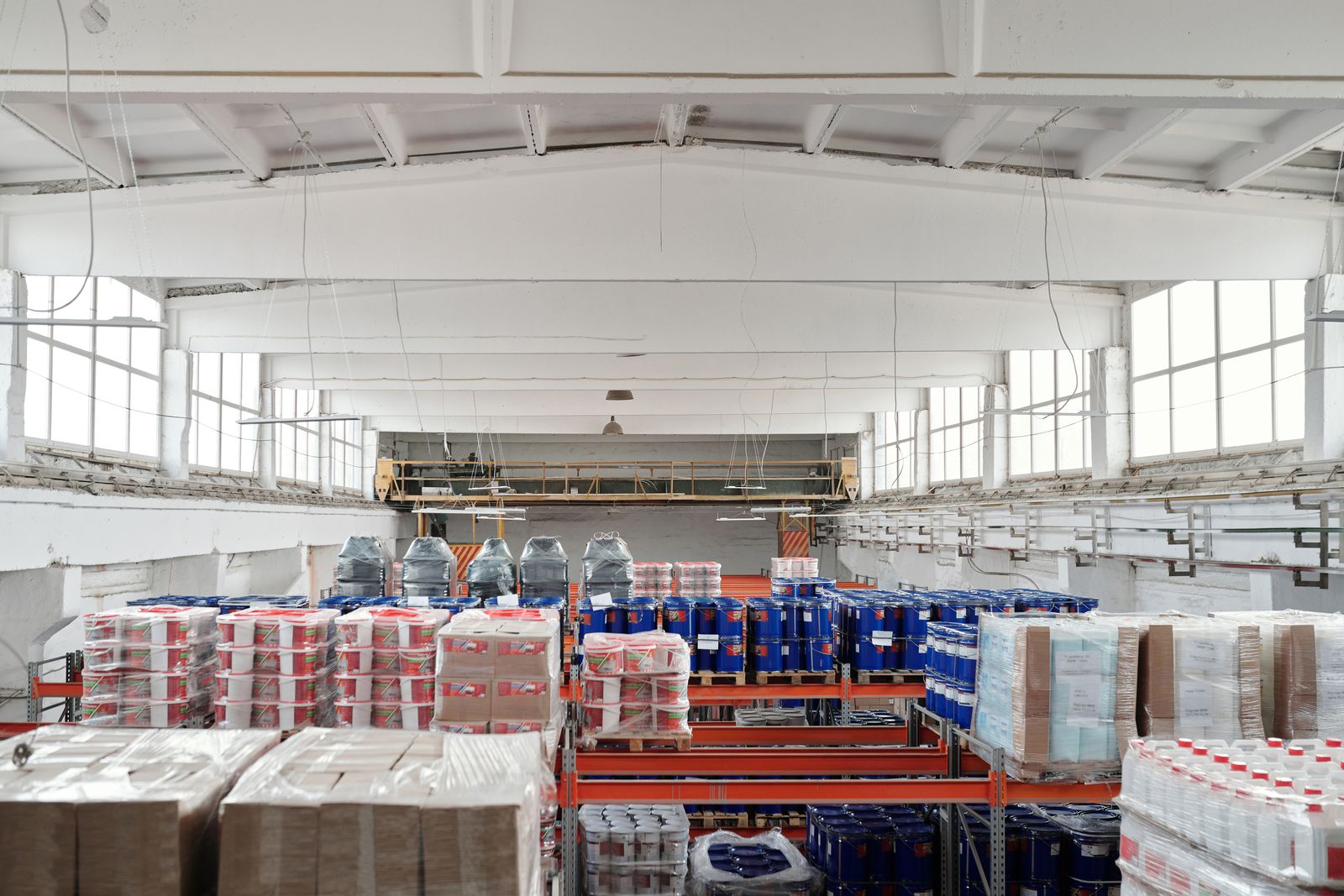
The storage conditions are half the maintenance. Drums live longest under cover, off the ground on pallets or racks, out of standing water, and — for plastic — out of direct sun. A $10 pallet under a steel drum does more for its life than any coating you will buy later.
The legal follow-up, if your drums travel
If drums only sit on your property, most of what follows is prudence. The moment a drum carrying hazardous material goes onto a truck, federal rules attach, and they have a follow-up structure many buyers never hear about at purchase.
Under 49 CFR 173.28, a packaging used more than once must conform in all respects to its original specification. Before reuse it must be inspected, and it may not be reused if it carries incompatible residue, rupture or other damage that reduces its structural integrity. A drum whose integrity is reduced may not go back into service unless it is properly reconditioned. Drums subject to the leakproofness test must be retested before reuse — at an internal air pressure of at least 48 kPa (7.0 psig) for Packing Group I materials and 20 kPa (3.0 psig) for Packing Groups II and III — and marked with the letter "L", the name or registered symbol of whoever performed the test, and the year. Metal and plastic drums must also meet minimum wall-thickness criteria to be reused at all; a drum worn or corroded below those thicknesses may not be reused or reconditioned for hazardous service, full stop.
The practical translation for a small operator on a budget: your reconditioner is not a luxury vendor, they are your compliance system. A certified reconditioned steel drum at $40 to $80 — cleaned, reshaped, repainted, leak-tested and marked — buys you the test, the marking and the paper trail that doing it yourself in a yard does not. Enforcement is real: federal notices of probable violation have been issued to reconditioners for certifying drums without performing the production leakproofness test, which is why the test record, not the fresh paint, is the product to ask about when you buy reconditioned.
Cleaning: the recurring cost in the middle
Between uses, drums need cleaning, and cleaning is where the ongoing money quietly goes. For non-hazardous contents — water, foodstuffs, dry goods — a wash with warm water and mild detergent, a thorough rinse and complete drying is the standard care; abrasive scrubbing of plastic is counterproductive, because scratches harbour bacteria and residue. For anything chemical, the rule hardens: compatibility rules everything. A drum may only be refilled with a material compatible with its previous contents and its lining, residue must be removed properly, and washings from chemical drums are themselves waste to be handled lawfully, not hosed into a drain. This is the second economic argument for professional reconditioning: the reconditioner's price — again, roughly $40 to $80 for a steel drum against $60 to $200 new — includes lawful cleaning infrastructure that a small site would have to build, permit and staff for itself.
Budget the small parts while you are at it. Replacement bung gaskets, flange caps, open-head lids and locking rings, drum faucets and pumps, and a torque wrench that lives with the drums: a modest annual sum per drum that prevents the two classic false economies — over-tightening a bung until the flange distorts, and reusing a dead gasket because the spare is across town.
How long results last: realistic lifespans
A steel drum in indoor, non-corrosive service can be refurbished and returned to service multiple times over many years; its enemies are water at the base, corrosive contents against a failed lining, and mechanical denting. An HDPE drum is tougher against corrosion and casual knocks but ages by sunlight and chemistry: UV exposure embrittles it over seasons outdoors, and some solvents stress-crack it. Reconditioned drums of either material start with a shorter remaining life than new — priced 30 to 50 percent lower for steel, at $25 to $60 in some market guides, precisely because some of the life is spent. The retirement signs are the same for both: leaks that recur, closures that will not seal on a sound flange, cracks or stress whitening in plastic, rust-through or deep pitting in steel, illegible or missing UN markings on a drum in regulated service, and any drum whose history has been lost. A retired drum is not worthless — clean, non-hazardous drums have a scrap and reuse afterlife — but a drum retired late, after a spill, costs more than the drum ever did.
| Follow-up item | Typical cost | Cadence |
|---|---|---|
| Gaskets, caps, rings (per drum) | A few dollars per part | Replace on condition, check every fill |
| Cleaning, non-hazardous, in-house | Labour + detergent | Between contents changes |
| Professional reconditioning, steel drum | $40–$80 (vs $60–$200 new) | When integrity or test status requires |
| Leakproofness retest + marking | Included in certified reconditioning | Before reuse in regulated service |
| Replacement, new HDPE drum | $40–$120 by grade | On retirement signs above |
| Pallet / racking to store off ground | ~$10 per pallet, once | Permanent |
A note for households, not just operators
Most of this guide reads as industrial practice because that is where drums live, but the same calendar scales down to the two drums behind a barn or in a garage — one for diesel, one for water, a third doing quiet duty as a rain barrel. The household version of every rule above is short. Keep the fuel drum off bare ground and out of the weather, and replace its gasket the first time it weeps rather than the fifth. Keep the water drum food-grade in its history, not just in its colour, wash it between seasons, and store it out of the sun that will embrittle it. Never let a drum's contents become a guess: label it, in words, with what is inside and when it went in, because the most common household drum accident is not a leak or a rupture — it is the wrong liquid poured from an unmarked drum by someone who was not there when it was filled. That single habit, a marker and thirty seconds, is the cheapest follow-up care in this entire guide, and the one whose absence causes the most harm.
The care calendar, in one place
On purchase: record identity, markings and history. Every fill: closures and gaskets. Quarterly: walk the row for rust, dents, whitening and leaks. Annually: interiors, markings, and a hard look at which drums are approaching retirement. Before any regulated reuse: inspection, and leakproofness retest with marking where the rules require it. On any doubt about compatibility or history: demote the drum to non-critical duty or retire it — never promote it.
This site lists 232 barrels and drums providers, and the honest ones will recognise this entire guide as their standard advice, because drums are a solved problem — right up to the moment their care is treated as free. The purchase price of a drum is the smallest money you will spend on it. The follow-up — pallets, gaskets, inspections, a reconditioner you trust and the discipline to retire a drum on time — is what makes the first price look as good in year five as it did in the quote.
Sources
- 49 CFR 173.28, Reuse, Reconditioning and Remanufacture of Packagings — the inspection duty before reuse, the prohibition on reusing drums with reduced integrity unless reconditioned, minimum wall-thickness criteria, and the leakproofness retest pressures and "L" marking requirement.
- PHMSA, Notice of Probable Violation to a drum reconditioner (Case 22-0294-PM-EA) — enforcement for certifying reconditioned drums without the production leakproofness test under 49 CFR 173.28 and 178.604.
- SonusGear buying guides, steel and plastic drum market data — new steel drums at $60–$120 unlined and $130–$200 lined or UN-certified, reconditioned steel at $25–$80, new HDPE barrels at $40–$120 by grade, reconditioned plastic at $20–$50, and cleaning and inspection practice.
- FindLaw, 49 CFR 173.28 full text — the reuse provisions, retest marking format and thickness table in readable form.
Warehouse storage — photo by Tiger Lily, https://www.pexels.com/photo/photo-of-warehouse-4481326/ Forklift in a warehouse — photo by ELEVATE, https://www.pexels.com/photo/man-riding-on-yellow-forklift-1267329/
More guides
- How to Hire a Moving Company That Won't Hold Your Furniture HostageMovers › Moving & Storage
- How Much Do Movers Cost? Local vs. Long-Distance Pricing ExplainedMovers › Moving & Storage
- Binding vs. Non-Binding Estimates: The Difference That Decides Your Final BillMovers › Moving & Storage
- Moving Insurance and Valuation: What 'Full Value Protection' Really CoversMovers › Moving & Storage
- Long-Distance Moving: A Start-to-Finish Guide for Household GoodsMovers › Household Goods Moving & Storage
- All Guides & ArticlesBrowse the full guides library