Movers › Piano & Organ Movers
After Piano and Organ Movers: Maintenance, Follow-Up Costs and the Care Nobody Mentions Up Front
The movers did everything right. The piano crossed town without a scratch, the crew placed it exactly where you asked, and you signed the paperwork with a clear conscience. Then, three weeks later, you sit down to play and something is off — a note that buzzes, a key that feels sluggish, a tone that has gone slightly sour. Nothing is broken. This is simply the part of a piano move that nobody quotes you for: the follow-up. A moved piano is not a finished piano, and a moved organ even less so. Movers-Map lists 377 companies under Piano & Organ Moving, and not one of their invoices includes the year of care that decides whether the instrument settles happily into its new room or quietly deteriorates in it. Here is what that year actually involves, and what it costs.
The first follow-up: the tuning you already know you need
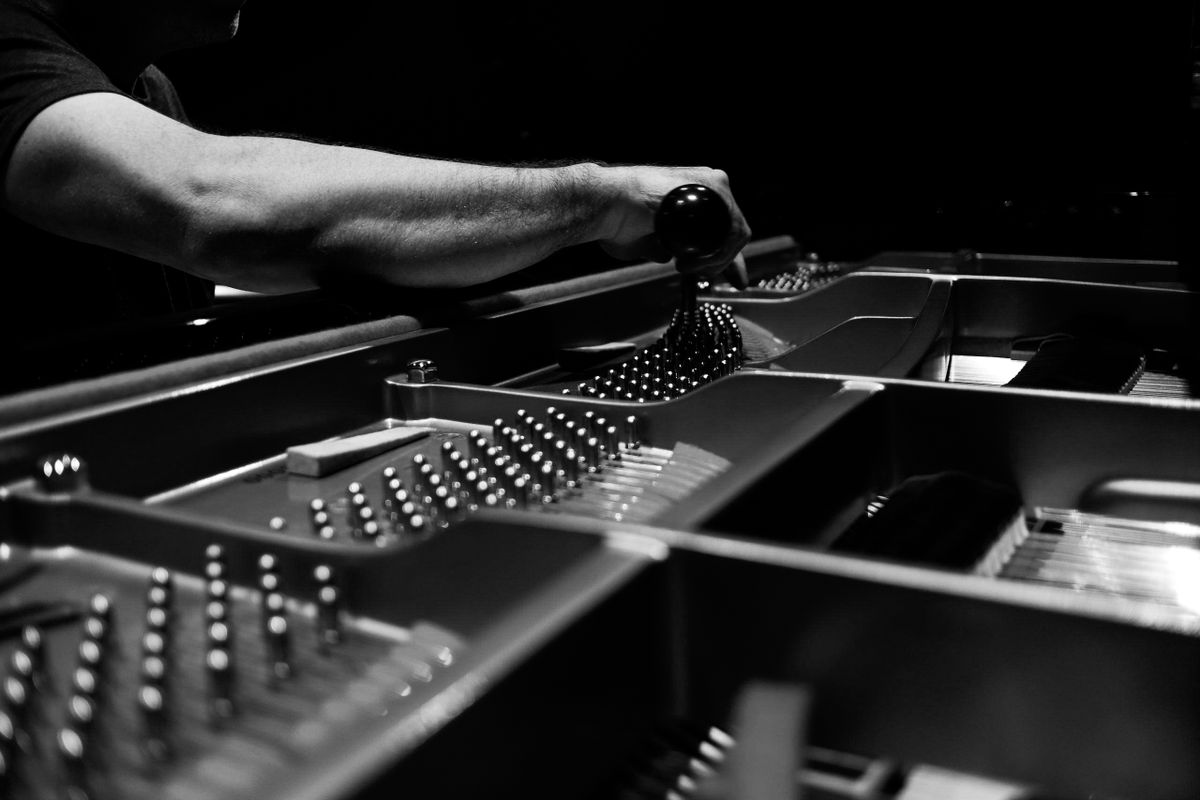
Start with the appointment every mover mentions and many owners still skip. A piano should not be tuned on delivery day. It needs two to four weeks in its new room — heating or cooling running normally, humidity doing whatever that room actually does — before a tuning will hold. Book that tuning for roughly three weeks after the move, and expect to pay around $150 to $250 for a standard visit from a qualified technician.
Two follow-up costs hide inside that appointment. The first is a pitch raise (also called pitch correction). If the piano was already drifting flat before the move — common for instruments that had not been tuned in over a year — the technician may need a preliminary pass to bring all 200-plus strings back near concert pitch, A440, before the fine tuning can start. That adds roughly $50 to $150. The second is small repairs found on the day: a sticking key, a buzzing damper, a pedal that needs adjustment. Individually these are modest, often fixed within the visit or for a small additional charge, but owners who budgeted exactly one tuning fee are reliably surprised by them. Budget for the tuning plus a contingency, and the surprise disappears.
The tuning schedule nobody puts on the invoice
The post-move tuning is not the end of tuning; it is the start of a schedule. Manufacturers and the Piano Technicians Guild converge on the same guidance: a piano in a home should be tuned at least twice a year, timed to the seasons — typically spring and fall — because humidity swings are what pull a piano out of tune. The wooden soundboard swells in humid months and shrinks in dry ones, changing string tension as it moves. A piano that was moved in October and tuned in November will want its next tuning around April, when the house shifts from heating to cooling season, whether or not anyone plays it daily.
At $150 to $250 a visit, that is $300 to $500 a year for tunings alone — which matches the widely cited planning figure that $300 to $500 per year should cover normal service for a home piano in good condition. Instruments that are new, newly rebuilt or heavily played need more: three or four tunings in the first year after a rebuild or a major move are normal, because strings and structure are still settling. Teachers' studios and performance instruments live at the demanding end of that range permanently.
Skipping years does not save the money; it defers it with interest. A piano left untuned for several years falls far enough in pitch to need the pitch-raise surcharge, and chronic neglect lets small mechanical issues compound into repair bills. The twice-a-year habit is the cheapest version of piano ownership there is.
Humidity: the maintenance item that protects everything else
If the tuner could leave you with one purchase, it would be humidity control. The Piano Technicians Guild cites about 42 percent relative humidity as ideal for a piano, and the practical goal is stability — a moderate level that does not swing — more than any exact number. Most homes swing far more than a piano likes: dry winter heating can pull indoor humidity toward 30 percent while summer pushes past 60.
The standard answer is an in-piano climate system such as the Dampp-Chaser Piano Life Saver, which humidifies and dehumidifies inside the instrument automatically. Installed through a technician or dealer, these systems run about $450 to $600 for an upright and $500 to $700 for a grand. Ongoing costs are small but real: the system needs its water reservoir refilled regularly, pads replaced periodically, and a little electricity year-round. Owners consistently under-budget this line because the mover never mentioned it — yet technicians consistently name humidity as the factor that decides whether a soundboard stays sound for decades or eventually cracks, a repair that runs into the thousands. Against that risk, a $500–$700 system plus twice-yearly tunings is the entire economic argument for follow-up care, stated plainly.
Room-level alternatives exist — a hygrometer to watch the level, a room or whole-house humidifier in winter — and they help any wooden instrument in the house, not just the piano. What does not work is ignoring the question because the piano "seems fine." Humidity damage is slow and cumulative; by the time it is audible, it is structural.
Regulation and voicing: the five-to-ten-year items
Beyond tuning sit two services most owners meet for the first time years after a move, usually because the piano has started to feel or sound wrong in ways tuning does not fix.
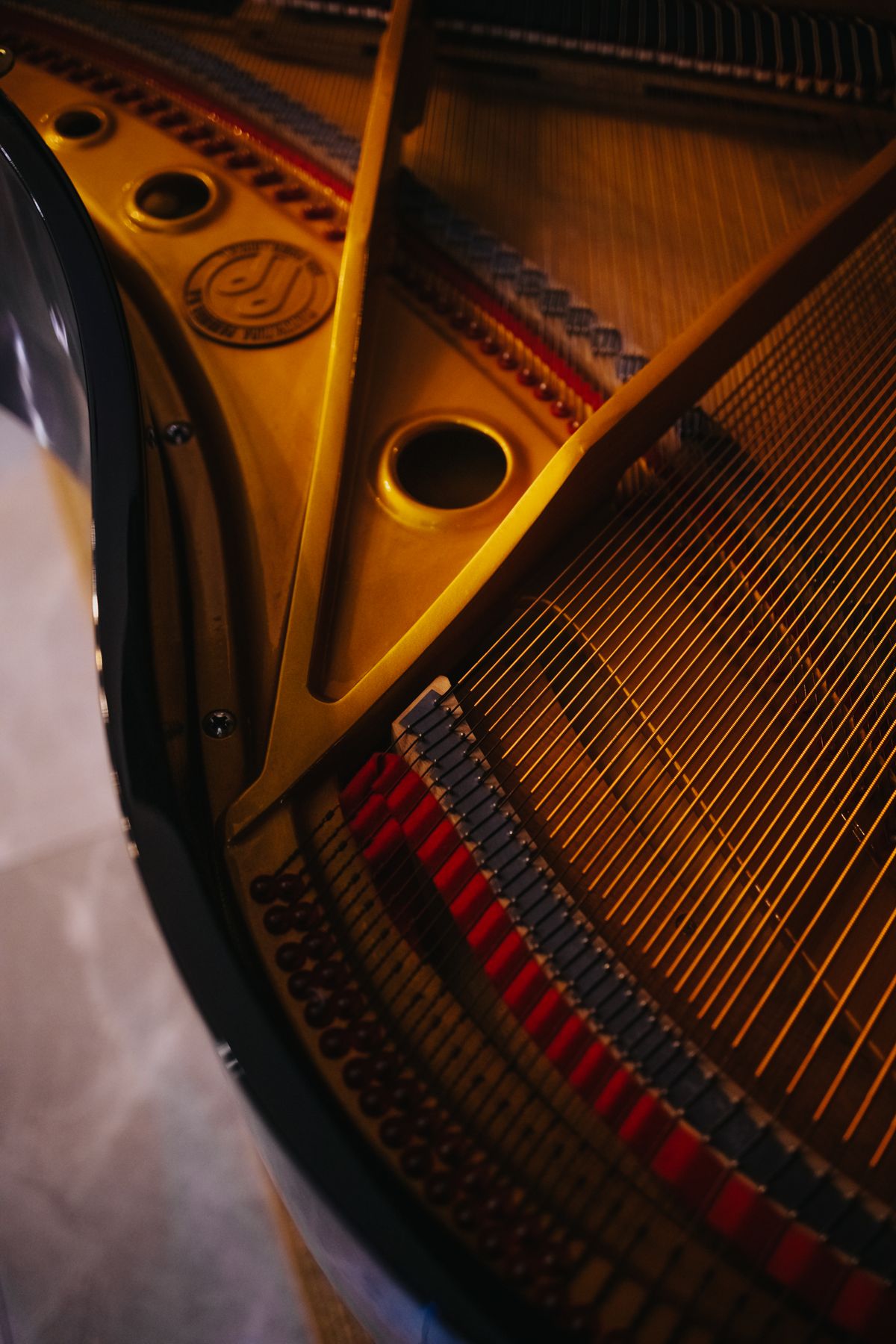
Regulation is the adjustment of the mechanical action — thousands of moving parts of wood, felt and leather between the keys and the strings — back to the manufacturer's specifications. Felt compacts, parts settle, and after a move the action deserves at least a check at the first tuning. A full regulation is a bigger job, typically $800 to $2,500, and a home piano needs one only every five to ten years or so, with small touch-up regulation in between. Pianos in their first years of life, and heavily used instruments, need it sooner and more often.
Voicing shapes the tone itself by working on the hammer felt — softening a piano that has turned bright and harsh, or firming one that has gone dull. It typically costs $300 to $700 and is done when the tone stops pleasing you, not on a fixed schedule. The technician's usual advice applies: tune first, because a properly tuned piano often sounds better enough that voicing can wait.
Neither service is a follow-up cost of the move in the strict sense. But a move is the moment owners discover both exist — often because the tuner, at that first post-move visit, is the first professional to really examine the instrument in years. Ask the tuner for a written condition summary at that visit. It turns future maintenance from a series of surprises into a plan.
Organs: a different follow-up entirely
Everything above is the piano owner's calendar. An organ owner's is heavier, and for pipe organs it is institutional in scale.
A pipe organ should be tuned roughly twice a year, again following the seasons, because its pipes respond to the room's temperature and humidity exactly as a piano's soundboard does. Churches and institutions commonly budget annual maintenance at around 1 to 2 percent of the instrument's value — $2,000 to $4,000 a year for a $200,000 organ, and proportionally more for larger instruments, with annual tuning figures of $2,500 to $5,000 commonly cited for church organs. Many parishes smooth this into a service contract with an organ builder: scheduled tunings, maintenance visits, and priority repairs for a predictable annual premium, sometimes bundled into long-term programs that also fund the big renewals.
The big renewals are the part nobody mentions up front. A pipe organ's leather components — in the windchests and reservoirs — perish over decades, and a comprehensive overhaul, including releathering, cleaning and console work, arrives roughly every 40 to 60 years at a cost that dwarfs annual maintenance: one documented vintage organ's price rose from $53,000 as-is to $475,000 after releathering, new controls and installation. A relocation is often the moment a church discovers where its organ sits in that lifecycle, which is why a builder's condition report after a move is worth paying for. Electronic and digital organs avoid the leather problem but carry their own follow-up: amplifier and speaker servicing, software and electronics refurbishment on a ten-to-fifteen-year horizon, each a four-figure event rather than a tuning fee.

The everyday care that costs almost nothing
Between professional visits, the follow-up is mostly habits. Keep the lid and fallboard closed when the piano is not in use — dust inside the action is slow damage. Dust the case with a soft, dry cloth and keep drinks, vases and plant pots off the top entirely; a single spilled vase can cost more than a year of tunings. If the piano sits on hardwood or another vulnerable floor, fit caster cups under the wheels: a grand concentrates several hundred pounds on three small casters, and the dents they leave in a new home's floor are a classic post-move discovery that costs a floor refinisher's call-out to fix. Play the piano regularly, too — an instrument that is played gets noticed when a note starts sticking or a pedal squeaks, while an unplayed one can drift for years between tunings and arrive at its next service needing the pitch raise and the repairs all at once. None of this appears on any mover's checklist, because none of it is the mover's job. It is the owner's, starting the week the truck leaves.
A realistic first-year budget
Put the follow-up year together for a typical home piano that has just been moved:
| Follow-up item | Timing | Typical cost |
|---|---|---|
| Post-move tuning (after acclimation) | 2–4 weeks after the move | $150–$250 |
| Pitch raise, if the piano had drifted | At that first visit | +$50–$150 |
| Second seasonal tuning | About 6 months later | $150–$250 |
| In-piano humidity system (optional, recommended) | First year | $450–$700 installed |
| Small repairs found at first visit | As needed | Varies; budget a contingency |
That is roughly $350 to $650 for the tunings and likely extras, and $800 to $1,350 in a year when you add humidity control — modest numbers next to the move itself, and very modest next to the repair bills they prevent. The movers' job ended at your door. The instrument's adjustment to its new home takes a year, and it goes measurably better — in pitch, in touch, and in the piano's lifespan — when somebody is paying attention to it.
Sources
- Piano Buyer, Caring for Your Piano — budget of $300–$500 per year for normal service on a home piano in good condition; tuning one to three times per year after the first year (three to four tunings in year one for new or restored pianos); regulation as periodic adjustment of the action to manufacturer specifications; voicing by hardening or softening hammers; 42% relative humidity cited as ideal; Dampp-Chaser climate systems $450–$600 (vertical) and $500–$700 (grand) installed.
- World Class Piano Gallery tuning guidance (Alpharetta, GA) — tuning twice per year, spring and fall, against humidity swings; standard tuning $150–$250; pitch raise $75–$150 add-on; full regulation $800–$2,500; hammer voicing $300–$700; Dampp-Chaser installation $500–$750.
- Tuning cost guides (ArteHow price guide; Safe & Sound Pianos FAQ; Cal's Moving) — standard tuning national average around $160–$175, range roughly $120–$250; pitch correction adds $50–$150; wait two to four weeks after a move before tuning.
- Pipe organ costs and maintenance (The Pricer / Organ Clearing House guidance; church organ buying guides) — tuning roughly twice a year; annual church-organ tuning commonly $2,500–$5,000; maintenance budgeting at 1–2% of instrument value per year; comprehensive overhaul cycle of 40–60 years including releathering; vintage Skinner example rising from $53,000 as-is to $475,000 after releathering, new controls and installation.
Photographs
- Photo by Patrick Pecome via Pexels, https://www.pexels.com/photo/29039292/
- Photo by Luan Gracioli via Pexels, https://www.pexels.com/photo/14494758/
- Photo via Pexels, https://www.pexels.com/photo/18845890/
More guides
- How to Hire a Moving Company That Won't Hold Your Furniture HostageMovers › Moving & Storage
- How Much Do Movers Cost? Local vs. Long-Distance Pricing ExplainedMovers › Moving & Storage
- Binding vs. Non-Binding Estimates: The Difference That Decides Your Final BillMovers › Moving & Storage
- Moving Insurance and Valuation: What 'Full Value Protection' Really CoversMovers › Moving & Storage
- Long-Distance Moving: A Start-to-Finish Guide for Household GoodsMovers › Household Goods Moving & Storage
- All Guides & ArticlesBrowse the full guides library