Movers › Barrels & Drums
Booking Barrels and Drums Online vs. In Person: What Changes, What Does Not
Barrels occupy a strange corner of a move. Renters between leases buy them to pack what boxes handle badly — the garage chemicals that turn out to be mostly staying behind, the tools, the bulk dry goods, the household overflow that needs a rigid, stackable, weather-shedding container — and to ship household goods the slow way, by freight, where a 55-gallon drum is a unit of cargo in its own right. However they enter the move, they arrive through one of two doors: a screen, or a yard.
The two channels sell the same steel and plastic. They do not sell the same information, the same accountability, or — once freight enters the picture — the same price. I investigate the complaints that result from confusing the two, and the pattern is consistent enough to write down: online wins on specification and paper trail, in person wins on inspection and immediacy, and the expensive mistakes happen when a buyer expects one channel to provide the other's virtues. Here is the honest comparison.
What you are buying, in either channel
A drum is specified by five things, and every dispute I have seen traces back to one of them being assumed instead of confirmed. Size: 55 gallons is the standard (about 23 inches across, 35 inches tall), with 30- and 15-gallon sizes below it. Material: HDPE plastic at roughly 20 to 25 pounds empty, steel at roughly 38 to 50 pounds, fiber (paperboard) lightest and cheapest and useless around water. Head type: open-head, with a removable lid on a bolt or lever-lock ring — the only kind you can pack household goods into by hand — versus closed-head (tight-head), with a fixed top and two small bung openings, built for liquids and nearly useless for packing a household. Condition: new, reconditioned (cleaned, tested, sometimes recertified), or used as-is. History and rating: what the drum held before — the single most important fact about a used drum — and whether it carries a UN performance marking (1H1 for a closed-head plastic drum, 1H2 for open-head, 1A1/1A2 for steel), which matters if the drum will ever travel as freight with regulated contents.
Prices, to anchor the comparison: new 55-gallon plastic drums commonly run about $60 to $150 depending on food-grade and certification, with retail water-barrel kits at $60 to $85 for the barrel alone; used drums on industrial marketplaces list at roughly $9 to $32, reconditioned closed-head drums around $31; and a local yard's used food-grade drums typically sit somewhere in the same $15 to $40 band. The barrel, in other words, is a $10 to $150 product. The channels differ in everything wrapped around that number.
Price: online looks cheaper until freight testifies
The online headline price is real and it is not the price. A used drum listed at $15 is an industrial-exchange price, quoted where the drum sits, and a 55-gallon drum is the definition of an expensive shape to ship: one drum can cost more in parcel or freight charges than the drum itself, which is why the serious online sellers sell in multiples, quote freight separately, or deal in local pickup from regional depots. Run the delivered math before concluding anything: four used drums at $20 each plus $120 of freight is $50 a drum — yard money, for drums you have not seen.
In person, the arithmetic is transparent and the ceiling is your fuel: the yard's price is the price, today, loaded into your vehicle. What the yard cannot do is match the online market's depth — if you need eight matching open-head food-grade drums by Friday, the internet's aggregated supply is a real advantage, and for new drums with a specific certification, online industrial suppliers are often the only shelf that stocks them at all.
Two price traps recur in complaints, one per channel. Online: the photograph is a representative photo, and the listing's condition grade ("used," "reconditioned") is the seller's own vocabulary — there is no referee. In person: the cash-and-carry yard's price is firm and fair, but there is no receipt worth the name unless you ask for one, and without a receipt there is no return, no dispute, and no story that survives the drive home. Ask. A yard that sells fifty drums a day can write a receipt.
Information quality: specifications vs. your own eyes
Online wins the specification war outright. A good listing states size, material, head type, condition, previous contents, and UN rating in text you can search, screenshot, and hold the seller to — the industrial marketplaces make previous contents a listing field precisely because it decides what a used drum may safely hold next. For a renter, that field matters more than any other: a drum that held food syrup is a packing barrel; a drum that held industrial chemicals is, for household purposes, a liability with a lid. The CDC's guidance is blunt about the extreme case — never store drinking water in a container that held toxic chemicals — and the same logic, diluted, applies to packing a household in one. Online, that history is a data field. In person, it is a question — and the answer is only as good as the person in the yard, who may genuinely not know, because drums arrive at yards in mixed loads from mixed plants.
In person wins the inspection war just as outright, and for a used drum, inspection is not a nicety. The checks take two minutes and cannot be done from a photograph: open the lid and smell — chemical residue announces itself, and no cleaning claim survives a sharp solvent smell; look inside with a light for residue, rust, and standing liquid; check the chime (the rim) for dents that will keep a lid from sealing; work the ring and the bungs; look for the UN stamp if you need it, embossed in the plastic or steel, not promised in a description. Online, you are buying the seller's inspection. In person, you are doing your own — and for a product whose whole job is to be a sealed, sound container, that difference is the heart of this comparison.

Accountability: where each channel actually protects you
Online, accountability is structural. A marketplace or card-backed purchase leaves a record: the listing text, the messages, the payment trail. If the drums that arrive are closed-head when the listing said open-head, or reek of solvent when the listing said food-grade, the dispute process has something to grip — the seller's own words, timestamped. Chargeback rights ride along with card payment. The weaknesses are time and freight: returns on bulky goods are often impractical, refunds stall on who pays the return shipping, and a move has a date. Online accountability is strong and slow.
In person, accountability is relational and immediate. The yard is there tomorrow; a wrong drum discovered in the driveway goes back the same afternoon, and a local seller who supplies every mover, landscaper, and farm in the county has a reputation that functions as a warranty. The weaknesses are the mirror image: cash leaves no trail, verbal claims leave no evidence, and "you picked it out yourself" is a complete defense against a condition complaint. In-person accountability is fast and thin.
The complaints file teaches the synthesis plainly: the channel matters less than the trail. An in-person purchase with a written receipt describing the drums — size, head type, previous contents, condition — has better accountability than an online purchase from a no-name listing paid by wire. An online purchase from an established seller, on a card, with the listing saved, beats a cash handshake at a yard you've never visited. Choose the channel for its strengths, then deliberately import the other channel's virtue: inspect like a yard buyer even when the freight arrives (before the driver leaves, ideally), and document like an online buyer even when you're standing in the yard.
| Question | Online | In person |
|---|---|---|
| Delivered price | Low headline, freight can double it; best in multiples | The price you see; your fuel is the freight |
| Specification detail | Excellent — searchable, saveable, quotable back | Verbal; bring your own checklist |
| Previous contents | A stated listing field at good sellers | A question; answer quality varies |
| Inspection before paying | The seller's, from photographs | Yours — smell, light, lid, ring, stamp |
| If it's wrong | Documented dispute, slow, freight-heavy | Same-day return, if you have a receipt |
| Availability | Deep — matching sets, certified new stock | Whatever the yard has this week |
What does not change
The drum itself, obviously — a 55-gallon open-head HDPE drum is the same object in both channels. But three deeper things don't change either. The inspection checklist is identical whenever you finally stand in front of the barrel, and doing it on delivery day is only slightly worse than doing it in the yard. The safety rule is identical: previous contents govern what a used drum may hold, in any channel, and a seller who waves the question away has answered it. And the total-cost discipline is identical: price per usable drum, delivered, inspected, and documented — the only number that has ever meant anything, in a yard or on a screen.

The verdict, by renter
Buy in person when you need a handful of used drums this week, your load is household goods you will pack by hand, and you can inspect: the yard wins on immediacy, inspection, and same-day remedies, and for used drums the smell test alone is worth the drive. Buy online when you need new or certified drums, a matching quantity, or a specification — food-grade, UN-rated, a particular head type — that local yards stock thinly, and when your timeline can absorb freight and a possible return. Split the difference the way experienced movers do: research specifications and prices online, where the information is deep and saveable, then buy the drums themselves wherever the inspection and the paper trail are strongest — and in either channel, walk away from the same two things: a used drum with no stated history, and a seller, at a screen or across a counter, who won't put the description in writing.
Sources
- Container Exchanger, plastic drums marketplace guide — used 55-gallon plastic drums listing at about $9–$32, reconditioned closed-head drums at about $31, open-head and closed-head definitions, and previous contents stated as a listing field because a used drum's food-grade status depends on a known food-safe history
- Alibaba product-insights cost overview for 55-gallon drums — new plastic drums commonly $50–$150, HDPE drums $60–$120, food-grade versions $100–$150, reconditioned and used drums $25–$50
- New World Survival, 55-gallon water barrel review — new food-grade barrels at $60–$85 standalone and $100–$130 as a kit with pump and bung wrench; the CDC guidance against storing drinking water in containers that held toxic chemicals
- Repackify plastic and steel drum buying guides — head types and UN markings (1H1 tight-head and 1H2 open-head plastic; 1A1 and 1A2 steel), bung sizes, reconditioned drums as cleaned, pressure-tested, and recertified, and empty weights of about 20–25 pounds for HDPE and 38–50 pounds for steel
- Air Sea Containers, drum materials guide — fiber, steel, and plastic drum trade-offs: fiber lightest and cheapest but unsuited to water and most hazardous contents; steel strongest and fire-resistant; HDPE leak-proof, UV-resistant, and widely used for food and pharmaceutical contents
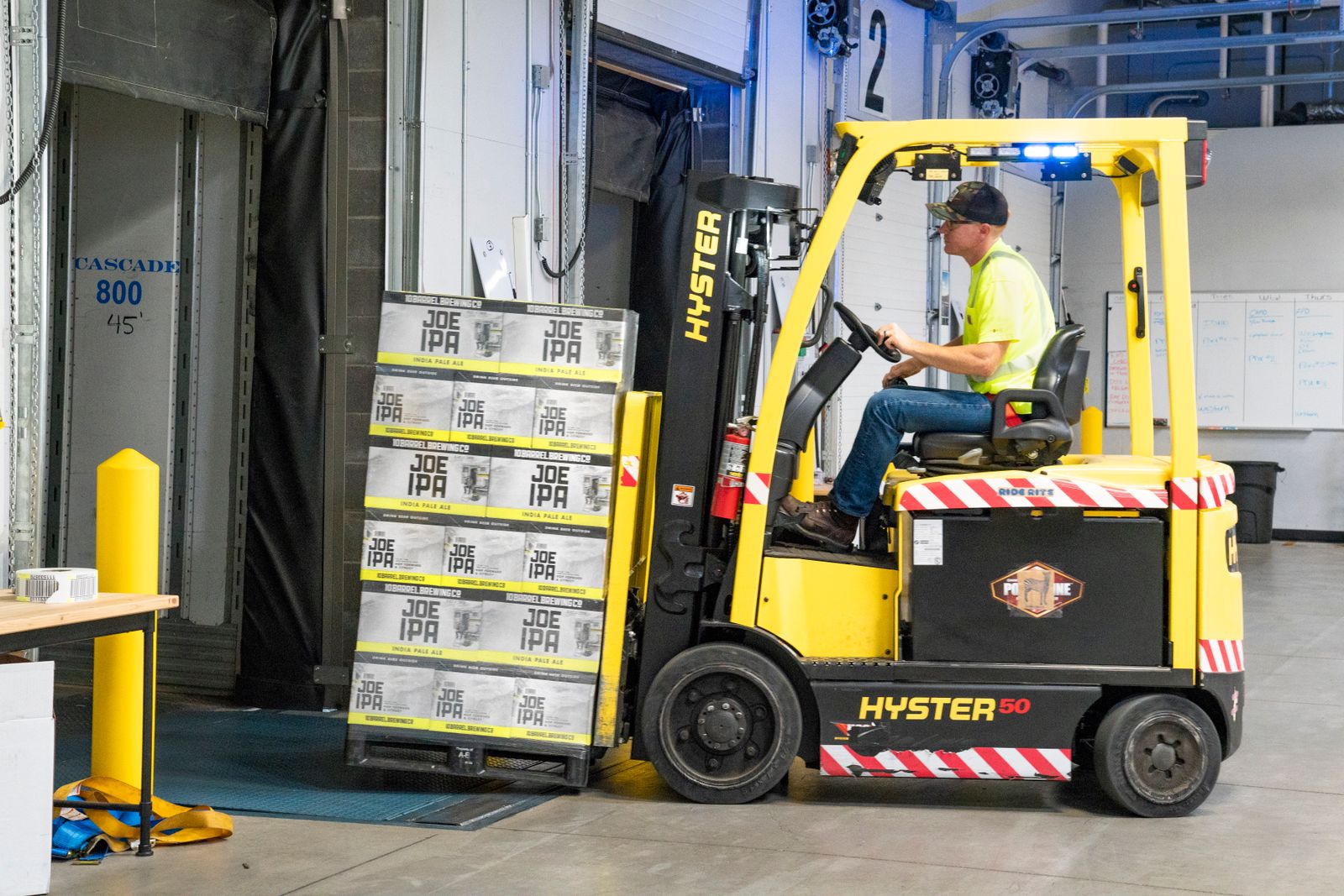
Photographs: forklift lifting boxes, photo by ELEVATE, https://www.pexels.com/photo/man-riding-a-yellow-forklift-lifting-boxes-1267324/ — labeled boxes, photo by cottonbro studio, https://www.pexels.com/photo/4554242/ — storage facility aisle, photo by Tiger Lily, https://www.pexels.com/photo/warehouse-with-concrete-floors-4483610/
More guides
- How to Hire a Moving Company That Won't Hold Your Furniture HostageMovers › Moving & Storage
- How Much Do Movers Cost? Local vs. Long-Distance Pricing ExplainedMovers › Moving & Storage
- Binding vs. Non-Binding Estimates: The Difference That Decides Your Final BillMovers › Moving & Storage
- Moving Insurance and Valuation: What 'Full Value Protection' Really CoversMovers › Moving & Storage
- Long-Distance Moving: A Start-to-Finish Guide for Household GoodsMovers › Household Goods Moving & Storage
- All Guides & ArticlesBrowse the full guides library