Movers › Car Storage
Booking Car Storage Online vs. In Person: What Changes, What Does Not
Renters between leases store cars for the most ordinary reasons: the new building has one space and the household has two cars, the driveway is gone for six weeks, the lease gap turned a second vehicle into a logistics problem. When they book storage, they now face a choice that did not exist a generation ago. You can reserve a space entirely online — compare prices at midnight, pay, get a gate code by email — or you can drive to the facility, walk the lot with a manager, and sign on paper. Both end with your car behind a gate. They are not the same transaction, and the differences are specific enough to name.
This site lists 458 car storage listings. This guide compares the two channels honestly: where online genuinely wins, where in person still wins, and what does not change no matter how you book — because the car, the contract, and the lien do not care which screen or desk you signed at.

What you are buying, in either channel
Car storage comes in tiers, and the tier matters more than the channel. Published 2026 pricing guides put uncovered outdoor parking at roughly $17 to $100 a month at the low end — one national operator's October 2026 web rates run $57 to $183 for outdoor uncovered — covered, carport-style parking at about $50 to $200, indoor enclosed units at about $150 to $270, and climate-controlled indoor space at a premium of $25 to $150 a month over standard indoor. Most renters pay around $200 a month overall, billing is usually month-to-month, and there is typically no proration: three weeks of need still buys a full month. A standard car needs a 10×20 space in most facilities; a compact fits a 10×15, and larger vehicles push into 10×25 and 10×30.
None of those facts change with the booking channel. What changes is how much of them you can verify before you pay.
Where online wins — and by how much
Price, visibly. Online is the comparison channel. You can line up a dozen facilities in an evening, filter by size and tier, and see introductory offers that are often web-only. The difference is measurable: one national vehicle-storage operator notes that its online web rates run about $20 a month below its standard rates. Marketplaces that list neighbours' garages and driveways alongside commercial facilities widen the field further, with the same car costing very different money a mile apart. In person, you negotiate against one price at a time, with no shelf of alternatives in front of you.
Availability, in real time. A website knows — or should know — whether a 10×20 indoor unit exists today. A phone call relies on whoever answers remembering the lot correctly. For a renter between leases, working to a move-out date, booking the actual unit online at the moment it is available is a real advantage, and the confirmation email with the unit number, gate process, and move-in window is a better record than a name scribbled on a dispatch pad. I say that as someone who kept the pad.
Paperwork without the trip. Licence, insurance details, the rental agreement itself — online flows collect them in advance, so move-in day is a gate code and a drive, not an office queue. For a straightforward rental of a standard space for a standard car, that convenience is genuine and the risk is low.
Where in person wins — and why it still does
Fit is a physical fact. Listings describe spaces by nominal size, but a car does not live in a nominal size. It lives in a space with a door clearance — about 8 feet is typical for enclosed units — a turning approach, a surface, and, for outdoor spaces, a slope and a drainage pattern. Dispatch taught me the failures: the SUV whose mirrors made a "10-foot" door a lie, the low car that could not take the ramp angle into an indoor unit, the covered space that turned out to be gravel that flooded at one end. Online, you learn these things on move-in day, with the old lease already over. In person, you learn them with a tape measure, in five minutes, while alternatives still exist.
Photographs are marketing, not evidence. A facility's online gallery shows its best row on its best day. It does not show the lighting at the far corner where your space is, whether the cameras on the poles are real, how the gate behaves, or whether the lot's "covered" section keeps its roof in good repair. A visit answers all of that at a glance, and it answers the accountability question too: you meet the human who will hold your keys problem, your billing problem, and your access problem. When something goes wrong at 7 p.m. on a Sunday, a renter who has met the manager and has a direct number is in a different position from a renter with a confirmation email and a call centre.
Negotiation is a conversation. Online prices are set by a system, and the system offers what it offers: a first-month discount, a web rate. In person, a manager with empty spaces in a slow month can discuss a prepayment discount, a longer-term rate, or waiving a fee — especially for the multi-month rental a lease gap can become. Not every facility will move, and corporate locations may have no discretion at all, which is itself useful to learn before you sign rather than after.
| Question | Online | In person |
|---|---|---|
| Price comparison across facilities | Excellent — many prices, instantly | Poor — one facility at a time |
| Headline price | Often lower; web rates can run ~$20/month under standard rates | Standard rate, but negotiable face to face |
| Is this exact space right for my car? | You find out on move-in day | Verified with a tape and your own eyes |
| Security and condition | Gallery photographs | Walked and seen, including at the far corner |
| Accountability | Confirmation email, call centre | A named manager and a direct number |
| Speed to booked | Minutes, at midnight | Office hours, plus the drive |
What does not change with the channel
This is the part renters get wrong in both directions, assuming online bookings are somehow lighter contracts, or that a handshake in an office adds protection the paper does not contain.
The contract is the contract. The rental agreement you accept with a click is the same legal instrument as the one signed in the office: it governs rent, increases, late fees, access, prohibited uses, and the facility's lien on stored property under your state's storage law. Read it in whichever channel puts it in front of you — and online, that means actually opening the agreement before the payment screen, because the clickwrap version is exactly as binding as the paper one.
The car's needs are the car's needs. However you book, a car stored for more than a few weeks needs preparation: washed and dried, interior cleared of anything edible, oil changed if it will sit for months, fuel tank filled with stabiliser added, tyres inflated — a common recommendation is about 10 psi over normal, without exceeding the sidewall maximum — parking brake released and wheels chocked so pads do not fuse to rotors, and the battery on a maintainer where the facility allows an outlet, or disconnected if it does not. Ask about that outlet before you book, in either channel; many facilities have none in the unit, and a dead battery is the most common way a storage stay ends.
Insurance and registration follow the car, not the booking. Insurers commonly let you drop a stored car to comprehensive-only cover after about 30 days in storage, which is real money — but some states will move to suspend a registration they believe is uninsured, and the fix is a non-use filing with the motor vehicle office, not an argument after the letter arrives. Restore full cover before you drive the car out, not after. None of this is affected by whether a website or a manager took your reservation.
Rules about the vehicle itself still apply. Facilities commonly require stored vehicles to be operable, registered, and insured, and to not leak fluids onto the space. A non-running project car that sails through an online booking flow can still be refused at the gate — or accepted and then become a contract problem. If your car is borderline in any of those ways, that is an argument for booking in person, where the conversation happens before the money does.

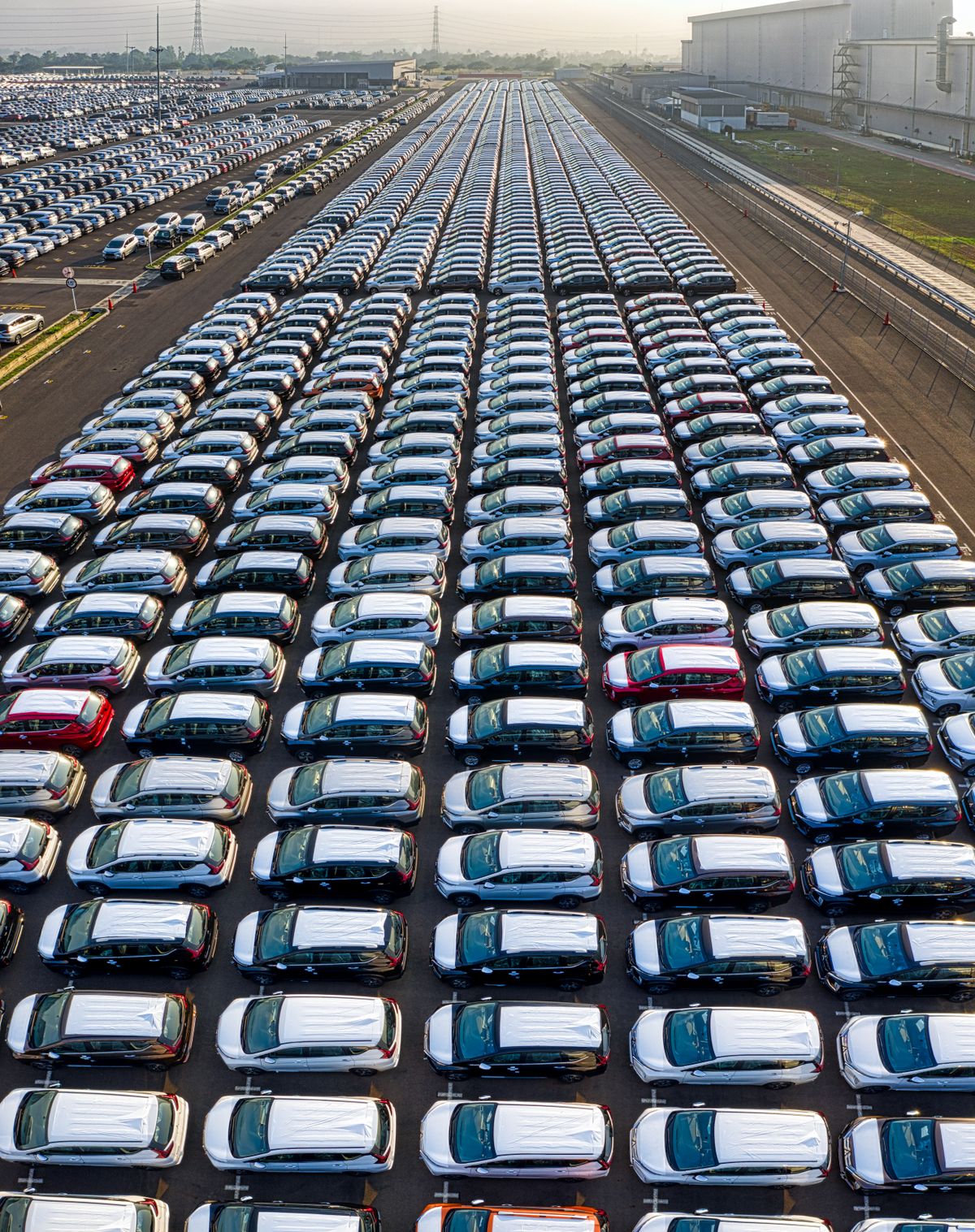
A hybrid that gets both
The renters who do this best, in my dispatch experience, split the job. They shop online — comparing tiers, sizes, and web rates across the whole area, shortlisting two or three facilities — and then they visit the winner before paying, tape in hand, at the hour they would actually come and go. They check the specific space or at least its row, the door clearance, the surface, the lighting, and the gate; they ask about outlets, rate increases, and the manager's direct number; and then, if the online price for that same facility is lower, they go home and book it online with their eyes open. You keep the $20-a-month web saving and the confirmation email, and you give up nothing except one short drive.
Book purely online when the rental is simple, short, and standard — a running car, a common size, a facility with deep reviews. Insist on the visit when the car is valuable, low, large, non-standard, or staying for a season. And in both channels, do the unglamorous thing that protects you most: photograph the car in its space on move-in day, keep the agreement and every receipt, and put the renewal date in your calendar. Storage is month-to-month, which means the meter runs until you stop it — in person, online, and everywhere in between.
Sources
- Neighbor, How Much Is a Storage Unit for a Car, 2026 pricing guide — establishes typical monthly costs by storage type, average spend of around $200 a month, and month-to-month billing without proration.
- RecNation Storage, vehicle storage cost guide — establishes October 2026 web rates for outdoor, canopy, and indoor storage, and that online web rates run about $20 a month below standard rates.
- Extra Space Storage, car storage guide — establishes average indoor and outdoor costs by vehicle size and typical unit clearance.
- USAA and State Farm, long-term vehicle storage guidance — establishes preparation steps including fuel stabiliser, tyre pressure, parking brake release, and battery care, and the comprehensive-only insurance option with registration non-use filings.
Photos: photo by Rangga Aditya Armien, https://www.pexels.com/photo/cars-parked-outside-on-concrete-road-235222/; photo by Mike Bird, https://www.pexels.com/photo/classic-car-parked-beside-a-building-3791376/; photo by Tom Fisk, https://www.pexels.com/photo/large-parking-with-cars-of-manufacture-5982900/
More guides
- How to Hire a Moving Company That Won't Hold Your Furniture HostageMovers › Moving & Storage
- How Much Do Movers Cost? Local vs. Long-Distance Pricing ExplainedMovers › Moving & Storage
- Binding vs. Non-Binding Estimates: The Difference That Decides Your Final BillMovers › Moving & Storage
- Moving Insurance and Valuation: What 'Full Value Protection' Really CoversMovers › Moving & Storage
- Long-Distance Moving: A Start-to-Finish Guide for Household GoodsMovers › Household Goods Moving & Storage
- All Guides & ArticlesBrowse the full guides library