Movers › Containers Industrial
Booking Containers Industrial for Someone Else: Adult Children, Parents and Caregivers
The call usually goes like this. A daughter, two states away, books a 20-foot container for her father's downsizing: the house is sold, the retirement community has a move-in date, and the container will hold everything while the family sorts what goes where. She pays. She signs. She chooses the delivery day. Three weeks later the container is in a driveway her father cannot park in, full of furniture he never agreed to store, under a rental clock nobody is watching — and the one person whose home it actually is has quietly stopped opening the boxes, because none of this felt like his decision.
Booking an industrial container for someone else — a parent, a relative, a person in your care — is a logistics task wrapped around a consent task. The logistics are genuinely simple: a steel box, a truck, a patch of ground. Families get those right. What they get wrong, and what this guide is about, is everything around the box: whose permission matters, whose money is being spent and how that is documented, who the company will and will not talk to, and how to keep a helpful act from becoming the moment an older person loses control of their own move.
Consent first, and get it in the right shape
The container goes on someone's property and holds someone's belongings. If that someone is not you, your authority to arrange it comes in exactly three forms, and it is worth knowing which one you hold before you sign anything:
- Their direct agreement. The parent or relative is competent, involved, and says yes — ideally to the specifics, not just the idea. "A container in the driveway for a month while we sort the house" is a decision. "We'll handle the move, Dad" is not.
- A legal instrument. If you act under a power of attorney or a similar authority, the container contract is the kind of everyday transaction such documents usually contemplate — but check that the document exists, that you actually hold it, and that the company can note your capacity on the account. Companies become very interested in this paperwork later, when there is a dispute, a payment problem, or a request to release the container to someone else. Produce it early, when it is a formality, not late, when it is an argument.
- Caregiving reality. Many arrangements run on neither — an adult child "just handling it" for a parent whose capacity is fading but undocumented. This is where families should pause. If capacity is genuinely in question, the container is the smallest problem on the table, and a few thousand dollars of rental and stored property is exactly the scale at which undocumented arrangements turn into family disputes. A conversation with the parent's attorney or bank is worth more than any discount a container company can offer.
One practical rule covers all three: the person whose belongings go in the box should be a named party to the arrangement, or should have named you in writing as their agent for it. If the account is solely in your name, you may find you have accidentally become the legal owner of the problem — liable for the rental, responsible for the contents, and the only person the company will speak to, even about your father's own furniture.
The mistakes families actually make
Booking the box before the sorting plan. A container is not a decision; it is a deferral with a monthly charge. Families book it to relieve the pressure of a house full of unsorted belongings, and the pressure moves into the box, where it sits at rental rates. The downsizing literature of hard experience says: sort first, at the house, room by room, with the owner deciding. Book the container for what survives the sort — usually half of what you first imagined, which is the difference between a 20-foot container at roughly $1,400–$2,500 to buy used, or a 40-foot unit the family never needed.
Choosing the size for the house they had, not the life they are moving to. Industrial containers come in standard sizes — 20 feet is the workhorse, 40 feet is a warehouse — and grade matters more than gloss: wind-and-watertight is the standard used grade for storage, cargo-worthy costs more and matters mainly if the box will ship again. For a parent moving to two rooms, the honest container is often no container at all, plus a small storage unit for the genuinely undecided items. Ask what the box is for, in one sentence, before you ask how big it should be.
Ignoring the property rules. A container on a parent's driveway is regulated almost everywhere, and the rules are local to the point of absurdity. Towns commonly require a permit for a residential container, limit how long it may stay — 30 days is a typical allowance in the ordinances dealers track, sometimes far less — require setbacks from the street and property lines, and prohibit street placement entirely. Homeowners' associations add their own layer. The person who gets the violation notice is the property owner: your parent. Check the town and the HOA before delivery day, and calendar the removal deadline the day the box lands.
Putting the delivery somewhere the truck cannot go. Container delivery trucks need a long, clear, firm run — the box slides off the back of a tilt-bed, and soft lawns, tight gates, low branches, and steep gravel drives defeat them. When you book for someone else, you are often booking for a property you have not stood in recently. Get someone local to walk it, photograph the approach, and confirm where the box will sit and how the parent will reach its doors — which open at one end, swing wide, and are heavy. A container your father cannot physically open is storage in name only.

Payment, paperwork, and the paper trail
Paying for a parent's container is generous. Paying for it undocumented is a future argument — with siblings, with an estate, occasionally with a benefits agency. Keep it clean:
- One payer, named plainly. The contract should show who is paying and who owns the contents. If you pay, keep the invoices; if the parent's funds pay, the payment should come from their account or be reimbursed transparently, with a note of what it was for.
- Watch the rental clock in writing. Rental containers bill monthly and the meter runs whether the family is sorting or avoiding sorting. Set the pickup date when you book the delivery, and put the deadline in the shared family calendar — extensions are easy, forgotten months are expensive.
- Insurance and value. A container is a steel box, not a vault, and the rental agreement will typically make the contents your family's risk. If what goes inside matters — documents, photographs, the good furniture — ask what the company's coverage actually is, check whether the parent's homeowners or renters policy extends to belongings in storage, and do not store the irreplaceable in a box in a driveway if a safer option exists.
- Access, agreed in advance. Who holds the lock combination? Who may open the box, and who may take things out of it? In a calm family these questions feel insulting. In a stressed one — which is to say, in most families mid-downsizing — an unspoken access arrangement is how a brother's "helpful" tip run becomes a sister's accusation. Say it out loud, once, kindly, and early, before the first disagreement makes it sound like an accusation: the box is Dad's, we open it with Dad or with his okay, and that rule protects everyone, including whoever does most of the work.
Communication: run it like a relocation, because it is one
Corporate relocation works because one person coordinates, everyone affected gets the same information at the same time, and decisions are written down. Family moves fail on the absence of all three. Steal the professional structure:
- One coordinator, named. Siblings can share labor, but one person holds the contract, the calendar, and the company relationship. Two coordinators means the company gets contradictory instructions and the parent gets asked the same question four times.
- One shared note. A single document — dates, costs, what is in the box, what has been decided, what is still open — that every sibling can read. Most family conflict in a downsizing is not disagreement; it is asymmetric information wearing the costume of disagreement.
- The parent gets the plan first, not the summary afterward. Every decision that affects their home or belongings is proposed to them before it is booked, in plain language, with time to object. This is slower. It is also the entire point: a downsizing that happens to a parent, however efficiently, costs the family something no container company can refund.
- Schedule around the person's stamina, not the truck's. Sorting a lifetime's house is grief work disguised as logistics. Short sessions, decisions in the morning, nothing irrevocable on a tired evening. The container's great virtue, used well, is that it buys unhurried time. Used badly, it just moves the unhurried time into a steel box with a monthly bill.
The short version
If you are booking a container for a parent or someone in your care, do the consent before the contract, the sorting before the size, the permit check before the delivery, and the access agreement before the first box goes in. Keep the parent a named party and the first audience for every plan, keep one coordinator and one shared note, and pay in a way you could explain to any sibling or auditor without flinching. This site lists 476 industrial containers, so the box will not be hard to find. The families who do this well are not the ones who found the best box. They are the ones whose parent, at the end of it, still felt the move was theirs.
Sources
- Local container placement rules as tracked in Yardbox's city guides (Lancaster, Ohio; Poquoson, Virginia; Schererville, Indiana; Fort Thomas, Kentucky) — establishes that residential container placement commonly requires a local permit, is often time-limited (30 days is a typical allowance, with some towns allowing far less), carries setback and placement requirements, and may prohibit street placement.
- Published national container price guides (Tuff Shipping Containers cost calculator; shipping-containers.com price index) — establishes standard sizes and grades and the used wind-and-watertight 20 ft price range of roughly $1,400–$2,500.
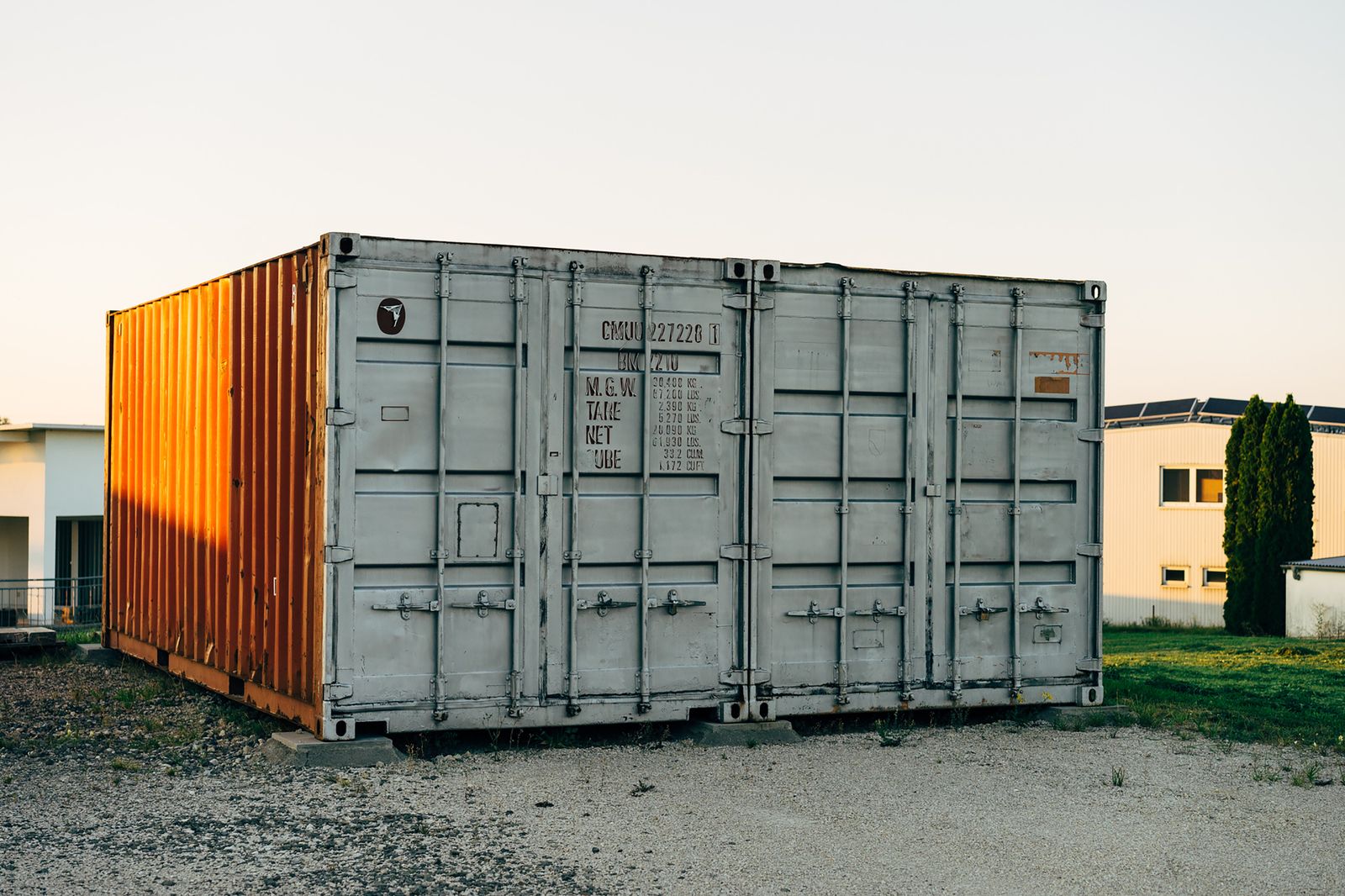
Photo credits: woman carrying boxes — photo by Andrea Piacquadio, https://www.pexels.com/photo/3791617/ — shipping containers — photo by Markus Winkler, https://www.pexels.com/photo/two-shipping-containers-sitting-in-front-of-a-building-18609057/
More guides
- How to Hire a Moving Company That Won't Hold Your Furniture HostageMovers › Moving & Storage
- How Much Do Movers Cost? Local vs. Long-Distance Pricing ExplainedMovers › Moving & Storage
- Binding vs. Non-Binding Estimates: The Difference That Decides Your Final BillMovers › Moving & Storage
- Moving Insurance and Valuation: What 'Full Value Protection' Really CoversMovers › Moving & Storage
- Long-Distance Moving: A Start-to-Finish Guide for Household GoodsMovers › Household Goods Moving & Storage
- All Guides & ArticlesBrowse the full guides library