Movers › Storage
Booking Storage Online vs. In Person: What Changes, What Does Not
The storage unit does not care how you booked it. A 10×10 is a 10×10, the roll-up door sticks the same way, and the rental agreement waiting at the end is the same document whether you arrive from a website or a walk-in. And yet the two routes produce measurably different outcomes — different prices, different information, different leverage when something goes wrong — because what you are really choosing is not a unit but a sales channel, and the storage industry prices and presents itself very differently in each one.
I spend a lot of time reading storage complaints, and a pattern runs through them: the angriest renters are usually not the ones who paid the most. They are the ones who discovered, after move-in, that the thing they thought they had bought — a price, a size, a level of security — was not the thing the facility thought it had sold. That gap between expectation and paperwork is exactly where the booking channel matters. Here is what genuinely changes online, what genuinely changes in person, and what stubbornly does not change at all.
What changes online: the price, and how it is framed
The headline price is a different price. Storage has two rates: the street rate, the standard monthly price, and the web rate, the price shown online. Operators discount the web rate to win renters who compare before they ever call, and on top of it they stack move-in specials — first month free, 50 percent off for one to three months, first month for $1. Inside Self Storage, the industry's own trade publication, reports web-rate discounts ranging from 25 percent to as high as 80 percent in some markets, with the big national chains the most aggressive. The in-person equivalent of that pricing exists, but you have to ask for it across a desk; online, it is the first number you see.
Which means the online number is the least honest number in the transaction. A worked example from a price study of a large national chain's Los Angeles listing makes the shape of it: a 5×10 advertised at $77 a month online, rising to $154 — the regular rate — from month five, plus a $29 admin fee. Nothing about that is hidden, exactly; it is all in the listing, in smaller type, in the right order to be missed. The fix is arithmetic, not suspicion: price every unit by its 12-month total — promotional months, the regular rate after them, one-time fees, and the monthly protection plan — and compare facilities on that figure alone. A $1 first month attached to a high street rate loses to an undiscounted lower rate somewhere around month four of a year-long rental.
Prices move. Large operators use dynamic pricing that adjusts rates with occupancy, season, and local demand — sometimes daily. The unit you priced on Tuesday may not carry Tuesday's price on Friday, and the reservation confirmation, not the search-results page, is the only version of the price worth keeping. Screenshot it, with the date.
Comparison gets easy; verification gets hard. Online you can line up six facilities in twenty minutes — sizes, prices, features, reviews. What you cannot do is verify any of it. "Climate controlled" spans everything from true humidity control to a building that is merely indoors. Security claims — cameras, gate access, lighting, on-site manager — are marketing copy until eyes confirm them. And size guidance is optimistic in a specific direction: facility size calculators describe what fits in a unit when it is packed like a shipping container by someone who does it for a living. First-time renters packing a one-bedroom apartment into the "perfect for a one-bedroom" 5×10 discover the difference with the truck already loaded.

What changes in person: the information, and the negotiation
You see the actual unit — or at least the actual building. A walk-in visit answers questions no listing will: Is the unit interior or drive-up? How far is it from the elevator, and how big is that elevator, really? Is the corridor wide enough for your sofa's turning radius? Does the facility smell of mildew? Are the cameras real and the gate actually closed? Experienced renters ask to see the specific unit or at least its corridor before signing; a facility that will not show you one is telling you something.
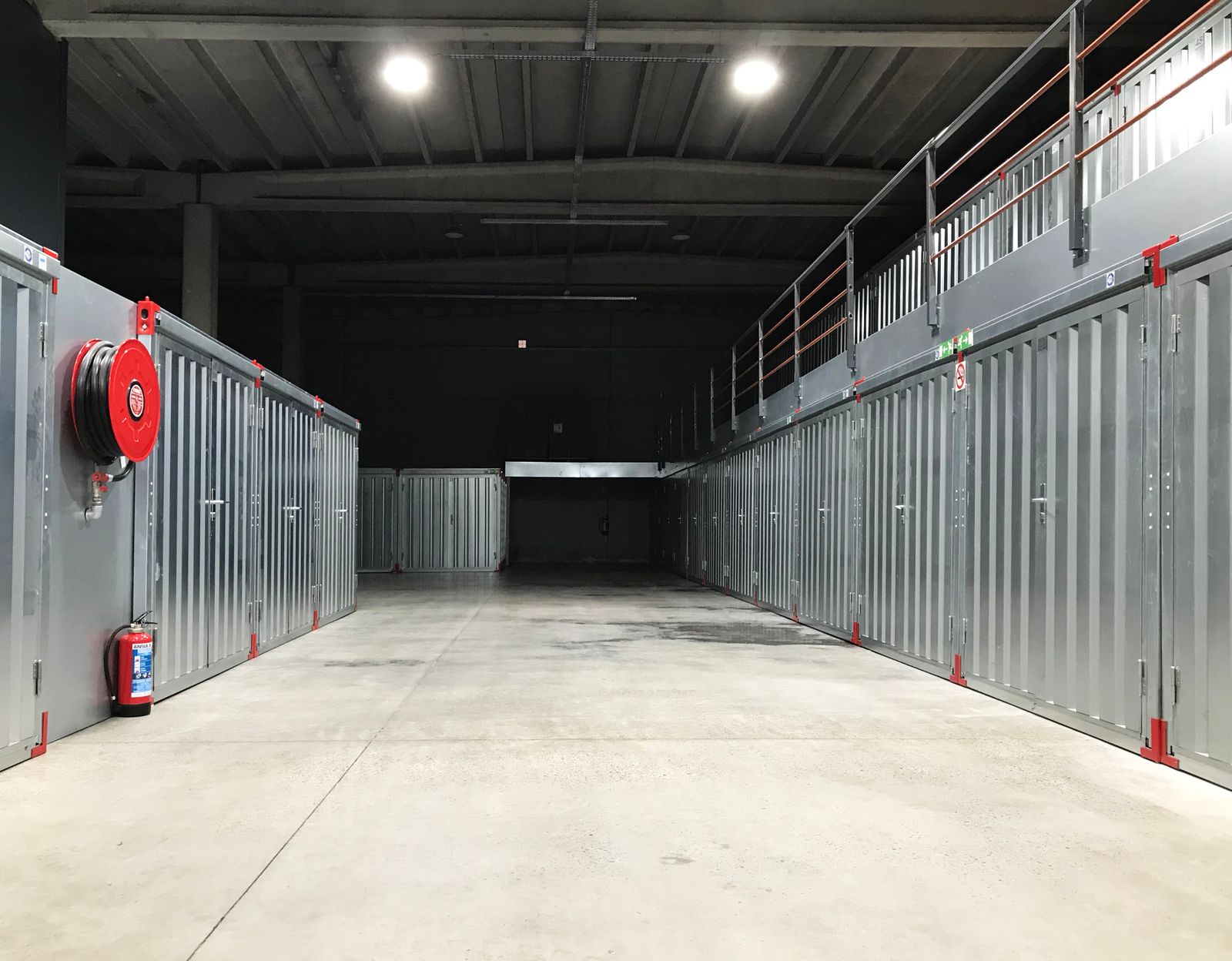
Sizes become physical. Standing inside a 10×10 with your arms out recalibrates the size calculator instantly. Managers, whatever their other incentives, have watched a thousand people under- and over-rent, and a good one's size advice — given while looking at your inventory list — is worth more than the website's tool.
A person can bend things a computer cannot. Managers commonly have discretion the website does not expose: matching a competitor's rate, waiving or reducing the admin fee, holding a unit a few extra days, upgrading you to a drive-up unit at the interior price when the building is quiet. None of this is guaranteed, and none of it appears online, because it is not a policy — it is a negotiation, and negotiations need a human on the other side. The reverse is also true: the office keeps office hours. If your lease gap closes on a Sunday evening, the website is open and the desk is not, and several large chains now complete the entire rental — agreement, payment, gate code — online or at a kiosk, with no office visit at all.
Accountability changes shape. Online, your evidence is documentary: confirmations, screenshots, the terms as displayed. In person, your evidence is relational: the manager who promised the rate is standing there next month when the bill disagrees. Complaint files suggest both fail in characteristic ways — online renters discover the call center cannot see what the website showed them; in-person renters discover the manager who made the promise has transferred. In both cases, the written rental agreement is what survives, which brings us to what does not change.
What does not change, whichever door you walk through
| The same either way | Why it matters |
|---|---|
| The rental agreement | Month-to-month terms, late fees, and the facility's rights are identical; the channel never amends the contract |
| State lien law | Miss payments and the path to your unit being auctioned runs on the same statute |
| The fee stack | Admin fee (typically $15–$50), a lock ($10–$30), and a protection plan ($10–$30/month) exist in both channels — sometimes waived online, sometimes negotiable in person, never imaginary |
| Rate increases | Rent typically rises 5–10% every 6–18 months after move-in, for online and walk-in tenants alike |
| The insurance requirement | Most facilities require coverage — their plan or proof of your own policy — regardless of how you booked |
| The unit itself | Same building, same door, same corridor. The channel changes the deal around the unit, never the unit |
Two of these deserve emphasis because they surprise people in both channels. First, an online reservation is usually a hold, not a rental: at many facilities the agreement is only executed at move-in, with ID shown — which means the unit, and occasionally the price, is not fully yours until that moment, and it also means you can still walk away after seeing the place. Second, the promotional rate expires for everyone: the teaser is a move-in device, and from month two or five onward the online renter and the walk-in pay the same street rate and face the same increases. Over a long rental, the channel's price advantage mostly evaporates; what remains is the information advantage, and that one belongs to whoever visited.

The third door: marketplaces and aggregators
Between the facility's own website and its front desk sits a third channel worth knowing about: the marketplaces — SpareFoot and its rivals — that list many operators' units side by side and take the reservation centrally. For the renter, the appeal is real comparison: competing facilities, one screen, standardized size and price displays, and sometimes marketplace-exclusive rates, because operators bid for placement the way hotels bid on travel sites.
The cautions are equally specific. The marketplace is an agent, not the landlord: your agreement is still with the facility, your rent still goes up on the facility's schedule, and a dispute about the unit itself is settled at the property, not with the website that took the booking. Listings are only as current as the operator's feed, so a marketplace can show a unit — and a teaser price — that the property sold yesterday; the confirmation from the facility is the document that counts. And marketplace prices inherit every distortion of the web rate, with one more layer of marketing on top. Used as a comparison engine and a way to discover facilities you would not have found, the marketplaces are genuinely useful. Used as a substitute for the facility's own confirmation and a look at the building, they are just the online channel wearing a second hat.
The sensible sequence: use both, in the right order
The channels are not rivals; they are tools for different stages. Use the internet for what it is good at — building the shortlist, learning the street rates behind the teasers, computing 12-month totals, reading reviews with an eye for the recurring complaint rather than the angriest one. Then use your feet for what they are good at: visit the top one or two facilities, see a unit, test the corridor, and ask the two questions that separate honest operations from the rest — "What is my total move-in cost, in writing?" and "What will my rent be in month six?" If the answers come back clean and match the website, book through whichever channel gives you the better documented price, and keep the confirmation.
If distance makes the visit impossible — a cross-country move, storage booked ahead in a new city — then book online but protect yourself the way a visitor would: choose facilities with recent, specific reviews; favor a reservation over a completed rental where the operator offers both, so the agreement is signed after you have seen the unit; and photograph everything at move-in.
However you book, the directory work is the same: compare real facilities on real totals. This site lists 148 storage services under movers alone, alongside the self-storage categories — enough, in most towns, to make the first facility that answers the phone a choice rather than a necessity. The unit will not care how you found it. Your wallet, and your first month, will.
Sources
- Inside Self Storage, "How to Safely Use Self-Storage Discounts and Specials" — the prevalence of first-month-free, 50%-off and $1-first-month promotions; web-rate discounts of 25% to 80% in some markets; dynamic pricing by occupancy and demand.
- Stuf Storage, "Cheap Storage Units: How to Pay Less" — street rate vs. promotional rate definitions; the Los Angeles 5×10 example ($77/month online, $154 regular rate from month five, $29 admin fee) and the 12-month-total comparison method; StorageCafe average street rates.
- Stitch Storage, glossary: web rate vs. street rate — the web rate as a standing online price distinct from temporary move-in specials.
- Storage Unit Costs, "Storage Unit Fees and Insurance" — typical fee ranges (admin about $50 one-time at some chains; protection plans $10–$30/month; locks $10–$20) and SpareFoot's reporting of 5–10% rent increases every 6–18 months.
- Vail Airport Storage, hidden-fees guides — administrative fees of $15–$50 (national average about $25 in SpareFoot data), mandatory insurance of $10–$25/month, and promotional rates rising 30–100% after the first one to three months.
Photos
- Photo by Steve A Johnson, https://www.pexels.com/photo/851305/
- Photo by David Slaager, https://www.pexels.com/photo/5759147/
- Photo by David Slaager, https://www.pexels.com/photo/5759037/
More guides
- How to Hire a Moving Company That Won't Hold Your Furniture HostageMovers › Moving & Storage
- How Much Do Movers Cost? Local vs. Long-Distance Pricing ExplainedMovers › Moving & Storage
- Binding vs. Non-Binding Estimates: The Difference That Decides Your Final BillMovers › Moving & Storage
- Moving Insurance and Valuation: What 'Full Value Protection' Really CoversMovers › Moving & Storage
- Long-Distance Moving: A Start-to-Finish Guide for Household GoodsMovers › Household Goods Moving & Storage
- All Guides & ArticlesBrowse the full guides library