Movers › Car Storage
Car Storage Emergencies: What to Do in the First 24 Hours
A stored car sits still, out of sight, sometimes for months. So when something goes wrong — the car is gone, the roof leaked onto it, a lien-sale notice lands in your mailbox, the facility itself is closing — you usually find out late, all at once, and far from the vehicle. The panic is understandable. It is also, in almost every case, counterproductive, because the first 24 hours of a car-storage emergency are mostly paperwork, and paperwork rewards calm.
This is the playbook I have walked relocating families through more times than I wanted to: what to do first, what to document before anyone touches anything, and who gets called in what order. The details differ by emergency, but the spine of the response never does.
Hour zero: verify, photograph, touch nothing
Before you call anyone, establish what actually happened. Facilities relocate vehicles more often than you'd think — for repaving, for a burst pipe two rows over, because your space was reassigned. A car that is "gone" is sometimes a car that is forty feet away. Ask the office, in person or by phone, where the vehicle is and whether it was moved, and check your email and mail for notices you may have missed. If the facility confirms it wasn't moved by them, you have a real emergency and the clock starts.
Then document, before anything is cleaned, repaired or driven:
- Photograph everything — the empty space, the lock and gate, the damage, the waterline, the neighboring units — wide shots and close-ups, with your phone's timestamps on.
- Write down the timeline: when you last saw the car and its condition, when you discovered the problem, who you spoke to and what they said.
- Do not wash, move or "check if it still runs." An insurer's adjuster wants the scene as found, and driving a flood- or fire-damaged car can turn a covered loss into a mechanical argument.
Know which emergency you have
| Emergency | First call | The thing people get wrong |
|---|---|---|
| Car stolen or broken into | Police (non-emergency line where the car is stored) | Calling the insurer first — most won't process a theft claim without a police report number |
| Fire, flood or storm damage | Your auto insurer's claims line | Assuming the facility's insurance covers your car — it almost never does |
| Lien-sale or tow notice in the mail | The facility, in writing | Panicking — you have weeks of statutory process left, and it can be stopped by paying or disputing in writing |
| Facility closing or sold | The facility / new operator | Assuming your car is stranded — a sale usually just transfers your agreement |
| Car damaged or dead at pickup | Your insurer (damage) or a mobile mechanic (dead) | Driving it anyway, or signing a release before documenting |
If the car is stolen or broken into
Police first. Call the department where the facility is located — the non-emergency line unless you watched it happen. Have the VIN, plate number, make, model, color and year ready, plus any tracker details. You will get a case number; guard it, because everything downstream asks for it. The report also does quiet protective work: it puts law enforcement on notice that you no longer have the car (so its crimes are not yours) and freezes clean title transfer against that VIN.
Insurer second, within 24–48 hours. Most policies have notification deadlines, and theft claims are built on the police report. Whether you get paid depends on one word: comprehensive. Comprehensive coverage is what pays for theft, vandalism, fire, flood and weather — the entire list of things that can happen to a parked car. Liability-only coverage pays nothing for a stolen car. If the car is financed or leased, call the lender too: you owe them notice, payments continue regardless, and when a comprehensive claim settles, the insurer pays the lienholder first, up to the car's actual cash value. (This gap — value versus balance — is exactly what GAP coverage exists for.)
Ask the facility, in writing, for two things the same day: their incident report, and preservation of the gate and camera footage for the relevant window. Footage is routinely overwritten on a cycle; a written request in the first 24 hours is often the difference between video existing and not existing when the adjuster or police ask for it. Break-ins also mean inventorying what was in the car — personal items are usually a claim on your homeowners or renters policy, not the auto policy.
If police recover the car into an impound lot, move fast: towing commonly runs $150 or more and impound storage $25 to over $75 a day, billed to you as owner. Comprehensive coverage generally reimburses reasonable tow and storage after recovery, minus your deductible; state crime-victim compensation programs are a backstop some owners don't know exists.

If the car is damaged: fire, water, storm, collapse
Document the scene, then call your insurer — and understand whose insurance is actually in play, because this is the most expensive misconception in vehicle storage.
The facility's insurance does not cover your car. Their property policy covers their buildings; their general liability covers damage their negligence causes — a roof that collapses, an employee who clips your car with a forklift. Theft by a third party, fire from another tenant's unit, flood, hail and vandalism are contractually yours: standard storage agreements, following the model language used across the industry, state that property is stored at the owner's sole risk, and some state statutes say it outright — Washington's law, for instance, provides that insurance on stored property "is the responsibility of the occupant" and the owner is under no obligation to provide it.
So the claim runs on your comprehensive coverage, which is why the single most important storage decision happens months before any emergency: never let comprehensive lapse while a car is stored. Dropping to liability-only — or cancelling the policy to save money during a long storage — leaves the car naked against precisely the risks storage concentrates. If negligence is in play (the collapsed roof, the staff-caused damage), ask the facility in writing for their general-liability carrier's details and give them to your insurer; insurers sort out fault between themselves far better than owners do at a fence line.
If the emergency is a piece of paper: lien sale or tow notice
A lien-sale notice feels like the worst emergency and is usually the most manageable, because it runs on a statutory clock with your rights built in. State storage lien laws require written notice, a payment window and an advertised sale; the earliest lawful sale is typically four to ten weeks after the first missed payment — around 29 days in fast states like Florida, 90-plus days end-to-end in slow ones like Nebraska. Vehicles get extra process in many states: notice must also go to lienholders named on the title, and some states let the operator tow a delinquent vehicle (after 60 days unpaid in Nebraska) rather than sell it.
In the first 24 hours: call the facility, then confirm everything in writing — the exact amount claimed, itemized; the sale date; and what payment stops it. Paying the amount owed redeems the vehicle at any point before the sale, full stop. If the balance is wrong, dispute it in writing now (states like California even provide a formal declaration-in-opposition that forces the dispute into court). If you are a servicemember and the debt accrued around a deployment, the federal Servicemembers Civil Relief Act bars enforcement of a storage lien during service and for 90 days after without a court order — say so, in writing, and contact a legal assistance office. And if the notice went to an old address, that is worth raising: notices must go to your last-known address, which is also why keeping it current is on the prevention list below.
If the facility itself is the emergency
Facilities get sold constantly, and a sale is not an emergency: the buyer normally assumes existing rental agreements, your access continues, and changes require notice. A true closure — liquidation, no buyer — is rarer and still runs through the lien-law framework: formal notice to your last-known address, a window to pay anything owed and remove the car, and only then a public sale, with any surplus over the debt held for you. The 24-hour moves are simple: confirm in writing where the car goes and by when, retrieve it promptly rather than testing deadlines set by a business that is disappearing, and photograph its condition at pickup. A closing facility's last month is not when you want a damage dispute.
The 24-hour checklist
- Confirm the emergency is real (ask whether the facility moved the car).
- Photograph and timestamp everything; write the timeline.
- Police report for any theft or break-in — get the case number.
- Insurer notified within 24–48 hours; confirm comprehensive is active.
- Written request to the facility: incident report + footage preservation (+ their liability carrier's details if negligence is possible).
- Lender or leasing company notified if the car is financed.
- Every facility conversation confirmed in writing the same day.
- For a lien notice: itemized balance and sale date obtained; pay, or dispute in writing, inside the window.
Before the next emergency: the boring prevention list
Every step above gets easier if three things were done at drop-off. Take dated, walk-around photos of the car the day it goes in — adjusters believe pictures, not memories. Keep comprehensive coverage active for the entire storage term (suspend collision or liability if your insurer and state allow, never comprehensive), and consider an agreed-value policy for anything collectible. And keep your mailing address, email and an alternate contact current with the facility, because nearly every storage catastrophe — lien sale, closure, even a theft discovered by staff — reaches you by notice first. The directory behind this guide lists 458 car-storage businesses; the twenty minutes of prevention costs the same at all of them, and it is the cheapest insurance in this entire article.
Sources
- StowHelp, "Vehicle Storage Insurance: What Is Actually Covered" (claims steps, facility vs. owner coverage, settlement timelines) — https://stowhelp.com/blog/vehicle-storage-insurance-costs
- Capital One, "Your Car Just Got Stolen. Now What?" (police report, insurer and lender notification) — https://www.capitalone.com/cars/learn/finding-the-right-car/your-car-just-got-stolen-now-what/2226
- LegalClarity, "Do I Have to Pay to Get My Car Out of Impound if It Was Stolen?" (tow and daily storage fees, comprehensive reimbursement) — https://legalclarity.org/do-i-have-to-pay-to-get-my-car-out-of-impound-if-it-was-stolen/
- RV Storage Finder, "RV Insurance While in Storage: What Coverage You Actually Need" (facility liability limits, negligence exception) — https://www.rv-storage-finder.com/blog/rv-insurance-while-in-storage
- Washington State Legislature, RCW 19.150.130 (insurance on stored property is the occupant's responsibility) — https://app.leg.wa.gov/rcw/default.aspx?cite=19.150.130
- StorageUnitsNear.me, "What Happens to My Storage Unit if the Facility Goes Out of Business?" (sale vs. liquidation process) — https://www.storageunitsnear.me/blog/what-happens-to-my-storage-unit-if-the-facility-goes-out-of-business/
- State lien timelines, vehicle towing and SCRA § 3958 rules as researched for this site's storage-regulations guide (Stitch Storage lien-law research; Neb. Rev. Stat. § 76-1607; 50 U.S.C. § 3958).
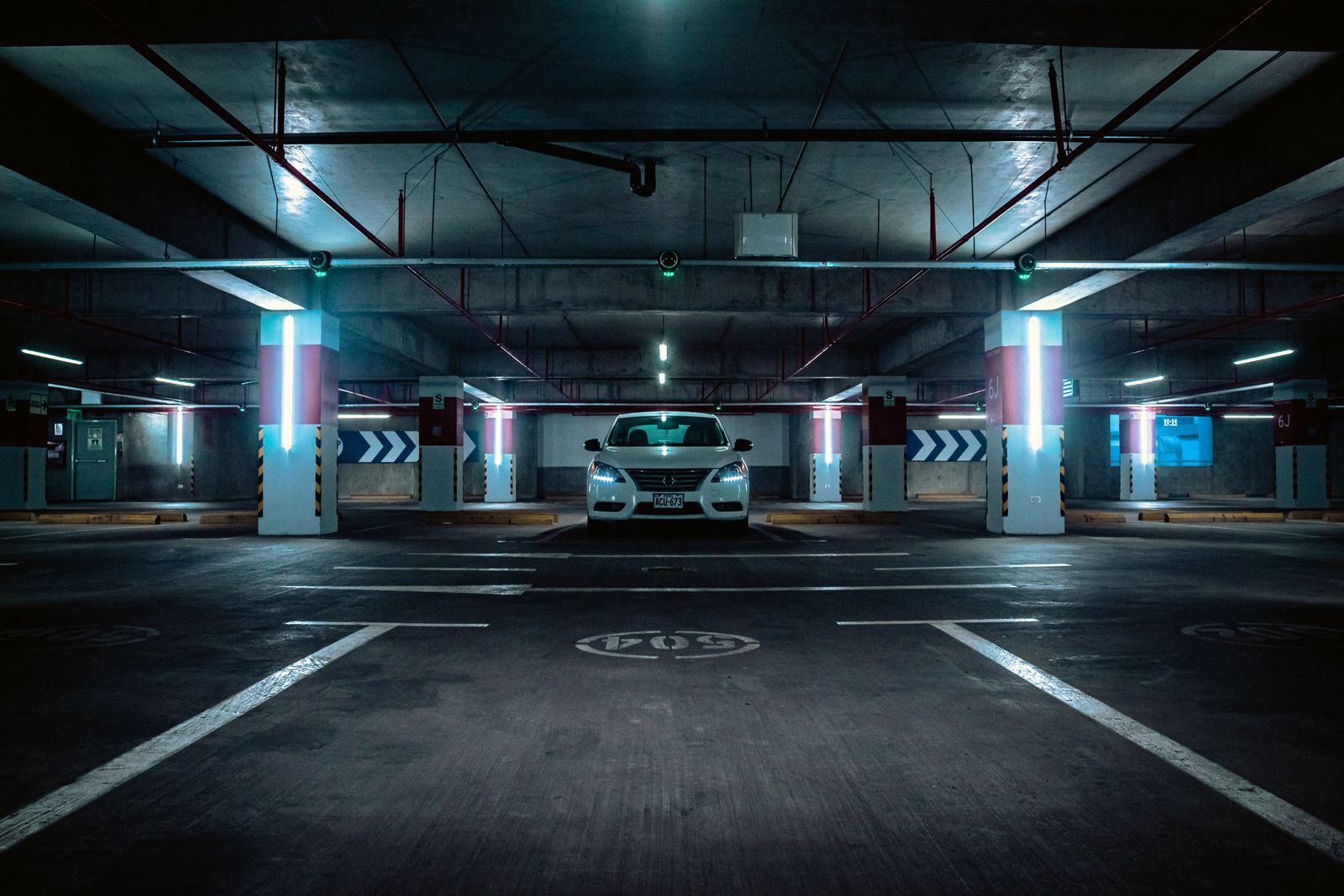
- Photos: white sports car in a garage — photo by Erik Mclean, https://www.pexels.com/photo/4732652/ ; sedan in an underground garage — photo by Joaquin Delgado, https://www.pexels.com/photo/16304132/
More guides
- How to Hire a Moving Company That Won't Hold Your Furniture HostageMovers › Moving & Storage
- How Much Do Movers Cost? Local vs. Long-Distance Pricing ExplainedMovers › Moving & Storage
- Binding vs. Non-Binding Estimates: The Difference That Decides Your Final BillMovers › Moving & Storage
- Moving Insurance and Valuation: What 'Full Value Protection' Really CoversMovers › Moving & Storage
- Long-Distance Moving: A Start-to-Finish Guide for Household GoodsMovers › Household Goods Moving & Storage
- All Guides & ArticlesBrowse the full guides library