Movers › Car Storage
Car Storage Jargon, Translated: The Terms Providers Use and What They Mean for Your Bill
Families planning a move meet car storage at the worst possible moment: the house is sold or the lease is ending, one car has to go somewhere for three months, and a provider is explaining, kindly and at speed, the difference between covered and enclosed, what a trickle charge runs, and why the rate quoted assumes no in-and-out. The vocabulary is not complicated. It is simply never defined, and nearly every term in it moves your bill in one direction or the other.
Here is the dictionary I wish every relocating family had open on the counter — term by term, with what each one costs.

The space itself
Outdoor (uncovered). A parking space in a fenced, usually gated lot. The cheapest product in the industry: roughly $17–$100 a month for a car. Your car gets weather, sun and whatever the season does. Fine for a daily driver between homes; unkind to paint and seals over a winter.
Covered. A roof — carport-style — with open sides. Roughly $50–$200 a month. It stops direct sun, rain and snow load, and nothing else. The jump from uncovered to covered is the best-value upgrade in the whole menu for most family cars.
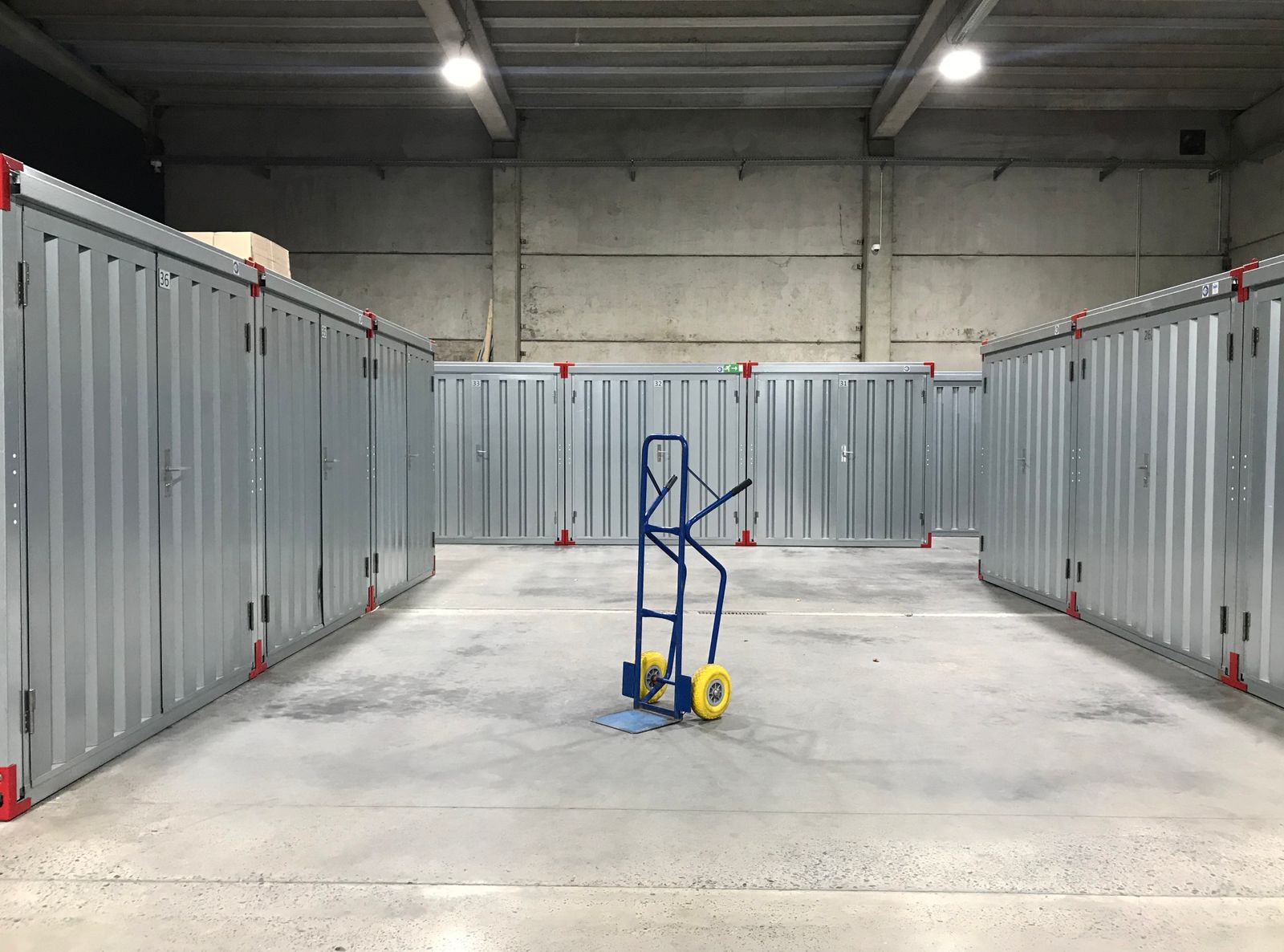
Indoor / enclosed. Four walls and a door: a garage-like unit, often drive-up. Roughly $150–$270 a month at self-storage facilities. Weather and casual theft largely leave the conversation.
Climate-controlled. Indoor space with temperature and, more importantly, humidity held in a band — typically 55–80°F. Priced as an add-on of roughly $25–$150 a month over indoor at dedicated facilities, or $25–$50 over a standard unit at self-storage sites. Worth it for collector cars, leather interiors and long stays in humid or freezing climates; mostly wasted on a three-month stay by a family hatchback in a mild season. Jargon alert: "climate-controlled" has no single industry standard definition — ask for the actual temperature and humidity range in writing.
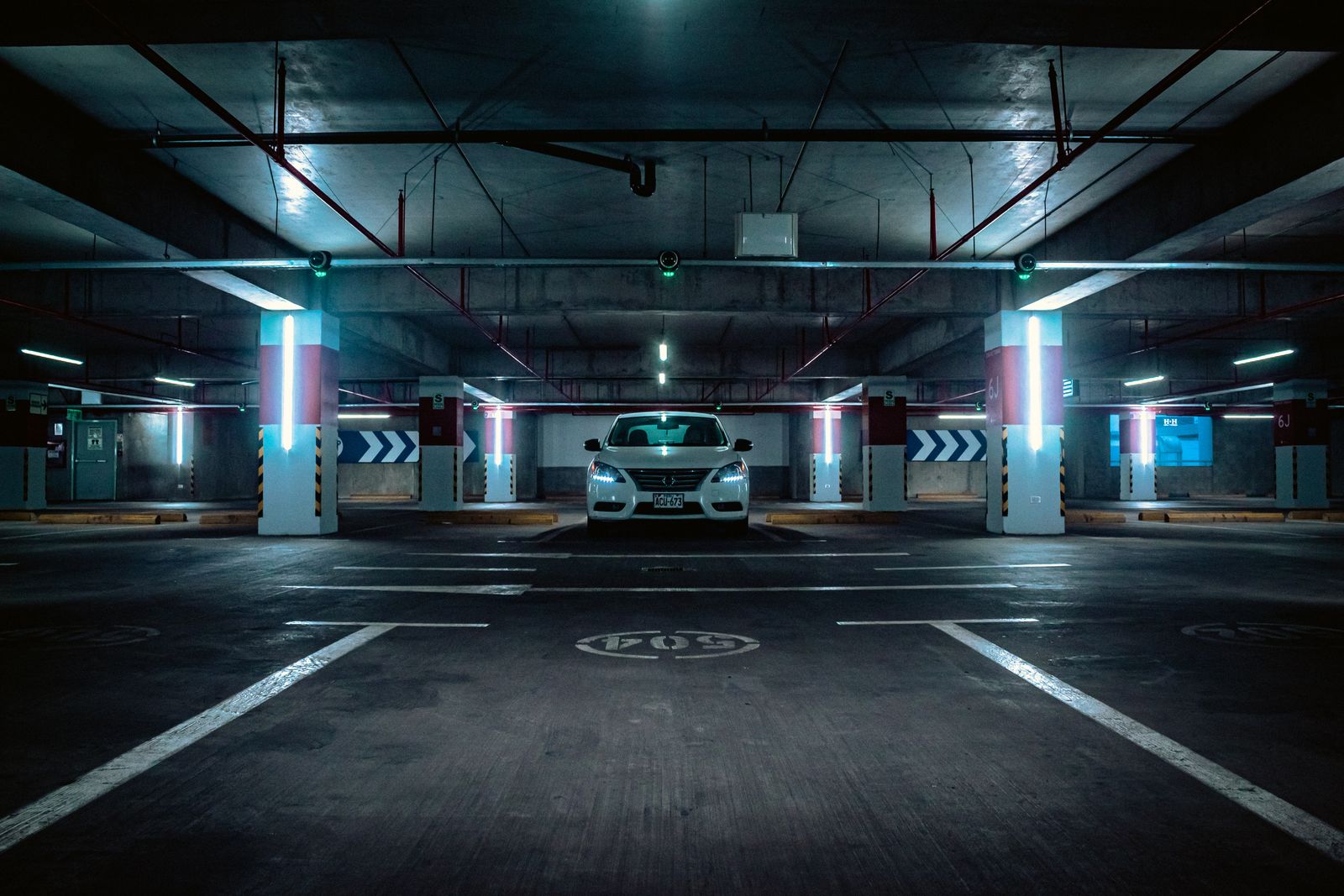
Drive-up access. You drive to the unit door rather than carrying (or pushing) through a building. For cars it is close to essential; confirm the door width and height against your vehicle, with mirrors, and remember that opening the car's doors inside needs two to three feet of clearance on each side — a 10-foot-wide unit is a squeeze, a 10×20 is the standard car unit for a reason.
Stacked / valet storage. At specialist facilities, cars are parked by staff, sometimes densely or on lifts, and retrieved on request. Cheaper per car for the provider, and the reason for the next term.
Access: the terms that decide whether the car is yours
In-and-out privileges. The right to take the car out and bring it back during the term — the single most consequential phrase for a family mid-move, who may need the second car back for a fortnight in the middle of storage. Some contracts include it; some charge per movement; valet and stacked facilities may restrict it heavily. If the quote assumes the car never moves, and your life assumes it does, you do not have a quote. You have a first invoice.
Retrieval notice. How far ahead you must ask for the car — 24 hours is typical at staffed facilities, with after-hours or priority retrieval sold as extras (one specialist prices after-hours access at $75 and priority retrieval as a top-tier perk). Self-storage units with gate access have no retrieval concept at all, which is their quiet advantage.
Gate hours / access hours. When you may reach the car. "24-hour access" and "gate access 6 a.m.–10 p.m." are different products wearing similar brochures.
The care menu: where small numbers live
Specialist facilities unbundle care into priced services, and the à la carte list is the clearest window into the dialect. From one published rate card: trickle charging — a battery maintainer keeping the battery topped up — $50 a month (the alternative, disconnecting the battery, is free, and the choice matters because a battery left discharged for months can be permanently damaged). Tire rolling — moving the car slightly so tyres do not flat-spot — $40 a service. Exercise drive — the car actually driven, fluids circulated, seals kept honest — $75 a drive. Engine start-up, $35. Dusting weekly, $85 a month; car-cover rental, $50 a month; fluid and visual inspections, $25–$30 each. Packages bundle these: at that same facility, storage-only runs $525 a month, a preservation tier with trickle charging, rolling and dusting runs $750, and a white-glove tier reaches $895.
Translate all of that against the self-storage alternative, where none of it exists: you are the care plan. For a move of a few months, the honest family calculation is usually simple — a full tank with fuel stabilizer (which keeps petrol from degrading and gumming the fuel system), fresh oil, tyres inflated to the upper recommended range, the battery disconnected or on your own maintainer if power is available, the parking brake left off with wheel chocks instead (brakes seize in storage), and rodent deterrents placed. Thirty minutes of preparation, most of the benefit, none of the monthly menu.
The contract words
Minimum term. Commonly one month at self-storage, sometimes a season at specialist and rural facilities (one farm facility prices winter storage as a single October–May block at $420–$450). Month-to-month flexibility elsewhere may carry a surcharge — that same facility adds 10 percent for it. A family whose move date can slip should price the minimum term as carefully as the rate.
Billed in advance / due at start. Storage is commonly paid at the start of the contract or month, not in arrears. Seasonal contracts may be due in full up front.
Lien. The word nobody reads. Storage operators hold a statutory lien on stored property for unpaid charges under state law; non-payment leads, through a regulated notice process, to lockout and eventually sale. It applies to a car exactly as it applies to a sofa, which is why autopay and a current mailing address are storage equipment, not admin.
Liability limit. Facilities commonly cap their liability for your car at a figure like $5,000–$10,000 unless you arrange otherwise. Your own auto policy usually continues to cover a stored car — confirm it, and ask whether a storage or garaging endorsement applies, before assuming either way.
Running condition and no-work rules. Facilities typically require the car to be registered, insured, in your name and in running condition, and prohibit working on it in the unit. A project car that does not run is a different product, sold by different people, at different prices.
Protection plan versus insurance. As elsewhere in storage, a facility "protection plan" is usually an agreement about the facility's own liability, not an insurance policy on your car. The words sound identical in a sales conversation. On paper they are not.
| Term | Plain meaning | Bill impact |
|---|---|---|
| Covered | Roof, open sides | ~$50–$200/mo vs $17–$100 uncovered |
| Climate-controlled | Held temperature/humidity band | +$25–$150/mo; ask for the actual range |
| Trickle charging | Battery kept topped up by staff | ~$50/mo, or free if you disconnect |
| In-and-out privileges | You may take the car and return it | May be included, per-move, or absent |
| Retrieval notice | Advance warning the facility needs | 24 hrs typical; priority costs extra |
| Minimum term | Shortest contract sold | A season can beat 6 monthly payments |
| Lien | Operator's legal claim for unpaid charges | Autopay is the cheapest protection |
More terms you will meet at the counter
Administration fee. A one-time charge for setting up the contract, commonly folded into the first payment. It is small, it is rarely negotiable in isolation, and it is exactly the kind of line that should appear in the written total rather than at the till.
Proof of insurance required. Most facilities, and nearly all specialist ones, require the car to remain insured while stored — your policy, running, with the facility sometimes asking to be notified of cancellation. Budget for keeping the policy alive; letting it lapse to save money can breach the storage contract itself, and leaves the car uninsured against fire and theft in the one place you are paying to keep it safe.
Seasonal rate. A single price for a defined season rather than a monthly rate — winter storage priced October to May is the classic northern example. Seasonal rates usually beat the same months bought monthly, and usually assume the car stays put; winter access at seasonal facilities may be restricted by weather, snow load or simple locked-barn practicality. For a family storing a convertible through a northern winter while they settle elsewhere, it is often the best product on this page. For a family that might need the car in February, it is a trap with a friendly price.
Flat-spotting. The tyre deformation that develops where a stationary car rests on the same patch of rubber for months — the physical reason "tire rolling" exists as a paid service. Modern tyres usually recover within the first miles of driving; older tyres and long, cold stays are less forgiving. Over-inflating slightly before storage and rolling the car a quarter-turn on any visit are the free versions of the $40 service.
Concierge. At the premium end, a human who does the surrounding errands: collecting or delivering the car locally (one rate card charges from $95 each way), refuelling it ($35 plus fuel), taking it for inspection or registration ($65 plus fees), coordinating servicing ($50). During a move, when the family's scarcest resource is afternoons, one concierge trip can be worth its fee. As a standing habit, it is how a storage bill learns to resemble a car payment.
Dust-free / dust-controlled. A claim about the building, not a standard: sealed floors, filtered air, fewer openings. It is the honest cousin of climate control — genuinely kinder to paint and interiors, genuinely priced — and like climate control, it means whatever the specific facility does. Ask what, exactly, is controlled, and how you would know.
Asking in plain language
You do not need to learn the dialect. You need five questions, asked of any provider, in words neither of you can misunderstand. Is the space covered, enclosed, or climate-controlled — and what temperature range does that mean here? Can I take the car out and bring it back during the term, and what does that cost? What must I do, and pay, before the car is handed back to me — and how much notice do you need? What is the shortest contract, what is due on day one, and what happens if my move slips a month? And what is your liability if something happens to the car — and what do you need from my insurer?
This site lists 458 car storage providers, and the good ones answer those five questions in the same plain language you asked them in. The jargon was never the product. It was only ever the wrapping — and now you can read the label.
Sources
- Storage.com, "How Much Does Vehicle Storage Cost?" — outdoor storage at $17–$100 a month, covered at $50–$200, indoor at $150–$270, and climate control as a $25–$50 premium, with a blended average near $105.
- Neighbor, "How Much Is a Storage Unit for a Car? A 2026 Pricing Guide" — most renters paying around $200 a month, indoor enclosed at $150–$270, and climate control adding $25–$150.
- TSFMC Vehicle Storage, South Hackensack, NJ — a published specialist rate card: storage-only $525 a month, preservation $750, white-glove $895; trickle charging $50 a month, tire rolling $40, exercise drive $75, after-hours access $75, 24-hour retrieval notice and a one-month minimum.
- Storage Atlas, "Vehicle Storage 101" — preparation steps (fuel stabilizer, battery disconnect or trickle charger, parking brake off with chocks, rodent deterrents) and contract clauses including liability caps of $5,000–$10,000.
- SpareFoot, "Find the Best Car Storage For You" — unit sizing and door clearances for cars, preparation steps, and the registration, insurance and running-condition requirements facilities impose.
- Photo by Erik Mclean, https://www.pexels.com/photo/4732652/
- Photo by Joaquin Delgado, https://www.pexels.com/photo/16304132/
- Photo by David Slaager, https://www.pexels.com/photo/5759145/
More guides
- How to Hire a Moving Company That Won't Hold Your Furniture HostageMovers › Moving & Storage
- How Much Do Movers Cost? Local vs. Long-Distance Pricing ExplainedMovers › Moving & Storage
- Binding vs. Non-Binding Estimates: The Difference That Decides Your Final BillMovers › Moving & Storage
- Moving Insurance and Valuation: What 'Full Value Protection' Really CoversMovers › Moving & Storage
- Long-Distance Moving: A Start-to-Finish Guide for Household GoodsMovers › Household Goods Moving & Storage
- All Guides & ArticlesBrowse the full guides library