Movers › Car Storage
Car Storage on a Tight Budget: Where to Save, and Where Saving Backfires
Downsizing produces a particular automotive problem. The house is sold or about to be, the new place has one parking space or none, and there is a car — the second car, the late spouse's car, the car a grandchild might want next year — that nobody drives but nobody is ready to sell. Storage is the pause button. It is also a monthly charge that starts the moment you press it, on a fixed income, for a duration nobody can honestly predict.
So the budget question is real, and it has a sharper edge than most cost-cutting: some savings in car storage are pure gain, and some are loans taken out against the car's future, at bad rates. A dead battery, a set of flat-spotted tires, a fuel system full of varnish, a rodent nest in the wiring — each costs more than the months of premium storage that would have prevented it. This guide separates the two kinds of saving, with current prices, for people storing a car while a household gets smaller.
The price ladder, and what each rung actually buys
Car storage is sold in four tiers, and the honest way to read them is by what can still hurt your car on each one:
| Tier | Typical monthly cost | What still reaches the car |
|---|---|---|
| Outdoor, uncovered | $17–$100 (most guides cluster at $50–$100) | Everything: sun, rain, hail, dust, temperature swings |
| Outdoor, covered (canopy/carport) | $50–$200 | Wind, dust, humidity and cold — but not direct sun or rain |
| Indoor, enclosed (non-climate) | $150–$270 | Temperature and humidity swings, moderated; weather and casual theft largely excluded |
| Indoor, climate-controlled | Enclosed price plus roughly $25–$150 | Very little; temperature and humidity held in a managed range |
Most renters across all tiers pay around $200 a month in one national guide's accounting; another puts the all-types average for a standard car nearer $150, and a third finds most people paying about $105 — the spread tells you how much location matters. Urban enclosed space can run $180 to $380 for a 10x20 unit where the suburban or rural equivalent is $80 to $200. Two budget facts follow immediately. First, geography is the biggest discount in car storage: the same car, in the same tier, can cost half as much twenty minutes further from the city, and a stored car is by definition one you do not need to visit weekly. Second, size is the second discount: a compact car in a 10x15 space pays less than the same car parked in a 10x20 or 10x30 out of habit. Measure the car, rent the space it needs, and no more.
Where saving is safe
Choose the tier by duration and climate, not by anxiety. Storage guidance is consistent on the logic: outdoor or covered storage is a reasonable economy for a sound, ordinary car stored for a few months in a dry climate — especially if it will be driven every few months. Indoor storage earns its premium in specific situations: a classic or higher-value car, a long idle period, or more than about six months sitting in a humid or coastal climate. Paying climate-controlled rates to store a ten-year-old sedan for one winter in a dry state is buying protection against risks that barely exist. Paying outdoor rates to store a car for a year on the Gulf Coast is the opposite error, and the more expensive one.
Use a good cover instead of a roof — when the stay is short. A quality weatherproof cover over a clean, waxed car in a gated outdoor space closes much of the gap between uncovered and covered storage for a fraction of the difference in rent. Edmunds' long-term storage guidance makes the cover the standard outdoor defence, along with cleaning the wheels and fender undersides and waxing before storage. The cover must be a real outdoor cover, fitted and breathable — a tarp is not a saving, it is a moisture trap with straps.
Rent from a person, sometimes. Peer-to-peer storage marketplaces list garages, driveways and spare space rented by neighbours, often below facility rates for the same tier. For a downsizing household, a trusted neighbour's unused garage bay — arranged in writing, with access terms and a monthly price both parties sign — can be the best value in the whole market. The saving is safe when the arrangement is written and the space is genuinely dry and secure. It stops being safe when it rests on a handshake with someone whose plans can change.
Prepay and off-season discounts, taken carefully. Facilities commonly discount web rates — one large operator's published figures run about $20 a month below standard rates online — and longer commitments sometimes carry a lower monthly price. Take the discount when your timeline is firm. Decline the twelve-month prepay when the whole point of storage is that a family decision is pending; flexibility is worth more than the discount when a grandchild may take the car in March.
Do the preparation yourself. The prep work below takes an afternoon and basic supplies. Paying a facility or a detailer to do it is paying trades rates for washing, filling and plugging in. This is the one place where an older owner's own labour is worth exactly what it saves, in full.

Where saving backfires
Skipping preparation to save an afternoon. Long-term storage — anything over about 30 days — punishes an unprepared car in predictable, priced ways. The standard preparation, drawn from Edmunds and Kelley Blue Book guidance, is short and cheap:
- Clean it, inside and out, and wax it. Dirt and crumbs left on and in a car become scratches, stains and pest invitations.
- Change the oil if it will sit longer than a month; used oil's contaminants work on the engine while it sleeps.
- Fill the fuel tank and add stabilizer. A full tank leaves little room for moisture; stabilizer keeps fuel from deteriorating into gum and varnish for up to about twelve months. One storage guide prices a clogged, rusted fuel system repair at over $1,000 — against a bottle of stabilizer.
- Protect the battery. Either arrange for the car to be started and driven about fifteen minutes every two weeks, disconnect the negative cable, or — best, where the space has power — connect a battery maintainer (trickle charger). A battery left to sit dead for months often will not take a full charge again; its replacement costs more than the maintainer.
- Mind the tires. Inflate to the recommended pressure, or above it for a long sit, since tires lose air standing still. A car left in one position can develop flat spots that thump and vibrate and, in the worst case, mean a new set of tires. For storage of several months, tire cradles or jack stands remove the weight entirely; moving the car a few feet every couple of weeks is the free version.
- Leave the parking brake off and chock the wheels instead; pads left against rotors for months can fuse.
- For an electric car, different rules: store it at roughly 40 to 60 percent charge, with any built-in storage mode on — not full, not empty.
Every item on that list costs little. Skipping the list is the single most reliable way to turn $80-a-month storage into a $1,500 recommissioning.
Choosing a space with no security to save $30. A fenced lot with cameras and gate access is the baseline in even the cheapest published tier descriptions. A car is the most portable valuable thing most households own, and a downsizing household is often away from it for weeks at a time. Storage far below market rate, in an unsecured space, is not a saving; it is an uninsured bet. While you are pricing risk: tell your insurer the car is going into storage and ask what coverage should stay in force. Many owners keep comprehensive cover — the part that responds to theft, weather and fire while a car sits — even when other coverages change, and the conversation costs nothing.
Ignoring the access question. The cheapest space is often the one furthest away or with the narrowest access hours. For a car you will truly not touch for six months, that is fine. For a car a family member may need to check, start, or retrieve for a sale, a distant facility converts every small task into a trip — and missed battery checks are how the flat battery happens anyway. Price your own travel and attention honestly.
Letting the months drift. The deepest budget trap in storage is not the rate but the calendar. Six months at $150 is $900; two years is $3,600 — approaching the value of many second cars, spent to avoid a decision. Set a decision date when you sign: the car is sold, gifted or returned to use by that date, or the storage renews only by an active choice. Seniors downsizing are exactly the customers facilities count on to forget a unit, and the kindest version of this advice is a calendar entry, made now, while the reasons are clear.
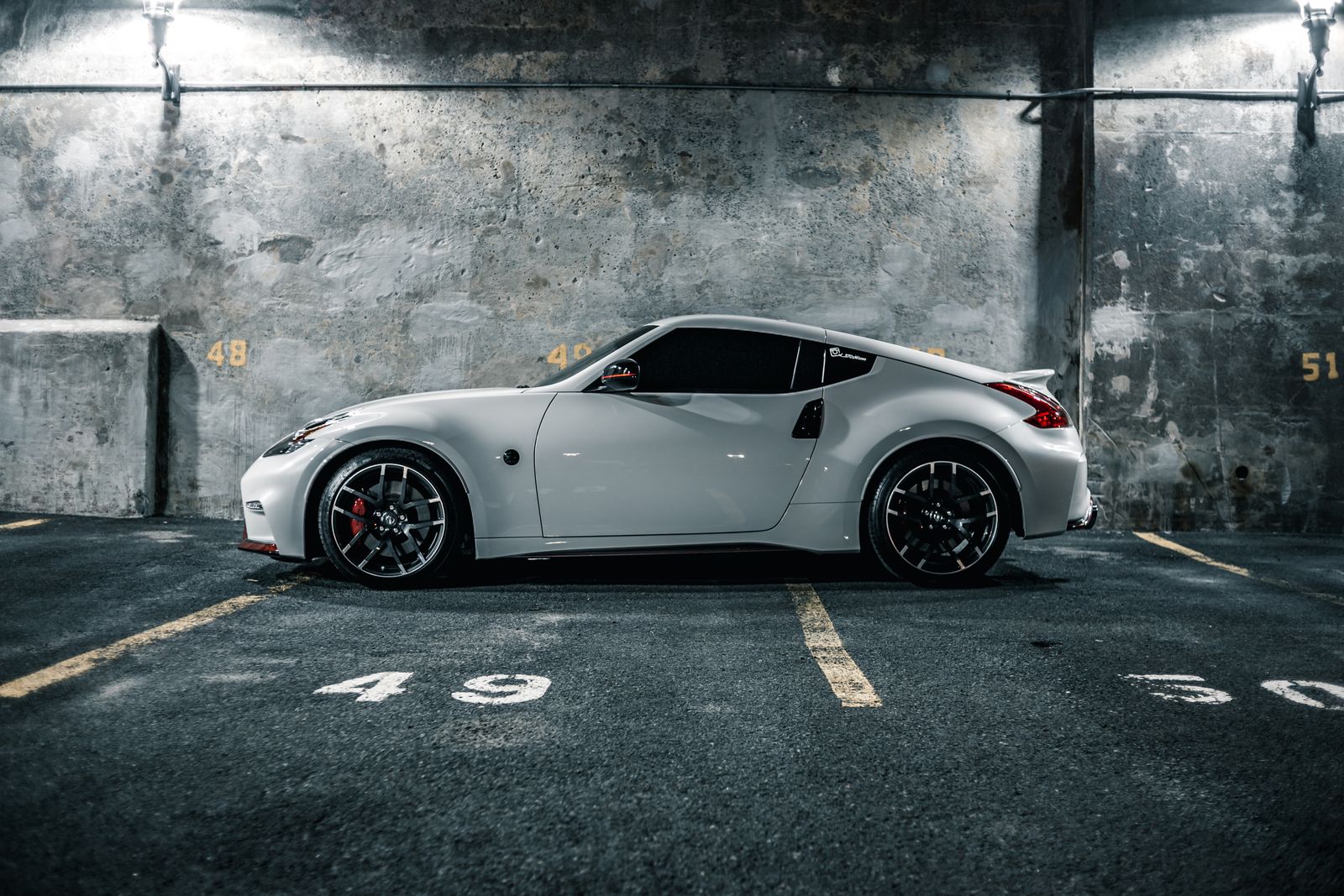
A budget storage plan, in order
- Decide why the car is being kept, and until when. A car awaiting a named person or a dated decision can be stored cheaply and briefly. A car being kept because deciding is painful needs the decision date most of all.
- Pick the tier by duration and climate. Under a few months, dry climate, ordinary car: covered outdoor with a good cover. Over six months, humid or coastal, or a car with real value: enclosed indoor.
- Shop distance before features. Price facilities twenty to thirty minutes out before pricing premium features in town; then rent the smallest space the car fits.
- Prepare the car yourself, in one afternoon, following the list above — and photograph it, inside and out, on the day it goes in.
- Put the arrangement in writing, including access, price increases and what happens if a payment is missed, whether the space is a facility's or a neighbour's.
- Set two calendar entries: a monthly or fortnightly start-and-check reminder if the car needs one, and the decision date.
This site lists 458 car storage providers — enough, in most regions, to make the tier-and-distance shopping above a real exercise rather than a theory. The budget goal in car storage is not the lowest monthly number. It is the lowest total cost of getting the car back, running, when the pause ends — and by that measure, preparation and a decision date save more than any discount ever printed.

Sources
- Neighbor, "How Much Is a Storage Unit for a Car? A 2026 Pricing Guide" — establishes the four storage tiers and typical monthly costs (outdoor $17–$100, covered $50–$200, indoor $150–$270, climate control adding $25–$150) and unit-size pricing by urban versus suburban and rural location.
- RecNation Storage, "How Much Does Car Storage Cost? 2026 Vehicle Storage Prices" — establishes October 2026 web-rate ranges by tier, that indoor storage earns its premium for classic cars and for long idle periods in humid or coastal climates, and that web rates run about $20 a month below standard rates.
- Storage.com, "How Much Does Vehicle Storage Cost?" — establishes that most people pay around $105 a month for vehicle storage across types and locations.
- Edmunds, "How to Prep Your Car for Long-Term Storage" — establishes the preparation steps: clean and wax, change oil for storage over 30 days, fill the tank and add fuel stabilizer effective up to 12 months, battery options including a tender, leaving the parking brake off, and preventing flat spots.
- Kelley Blue Book, "How to Store a Car Long-Term" — establishes fuel, battery, tire and cover guidance, jack stands and tire cradles for long storage, and electric-car storage at 40 to 60 percent charge with storage mode on.
- Neighbor, "10 Long Term Car Storage Tips and Checklist" — establishes that fuel-system repairs from unstabilized storage can run over $1,000 and that a battery left dead for months may not take a full charge again.
- Photo by Jose Mueses, https://www.pexels.com/photo/1280560/
- Photo by Erik Mclean, https://www.pexels.com/photo/4732652/
- Photo by Stephan Müller, https://www.pexels.com/photo/753876/
More guides
- How to Hire a Moving Company That Won't Hold Your Furniture HostageMovers › Moving & Storage
- How Much Do Movers Cost? Local vs. Long-Distance Pricing ExplainedMovers › Moving & Storage
- Binding vs. Non-Binding Estimates: The Difference That Decides Your Final BillMovers › Moving & Storage
- Moving Insurance and Valuation: What 'Full Value Protection' Really CoversMovers › Moving & Storage
- Long-Distance Moving: A Start-to-Finish Guide for Household GoodsMovers › Household Goods Moving & Storage
- All Guides & ArticlesBrowse the full guides library