Movers › Car Storage
Car Storage Timelines: How Long It Actually Takes, Stage by Stage
Every corporate relocation I have coordinated had the same awkward object in it: the car that does not fit the calendar. The old lease ends on the 31st. The new one starts on the 15th. The employee is in a hotel, the furniture is in storage, and the car — which cannot be put in a box, left with a friend indefinitely, or parked on a street with a two-hour limit — needs somewhere legal, insured, and secure to be for six weeks.
Renters between leases face the same problem without the relocation department. The good news is that car storage is genuinely fast to arrange when it goes well: people do go from first phone call to a parked, locked car in under a week. The bad news is that almost every delay in the process comes from a small set of predictable places — paperwork, preparation, and the billing calendar — and none of them announce themselves until you are standing at a facility office with a car you have nowhere else to put. This guide walks the timeline stage by stage, with honest durations for each, so you can count backwards from the day your lease ends.
The whole timeline at a glance
| Stage | Realistic duration | What stretches it |
|---|---|---|
| 1. Finding and reserving a space | Same day to 3 days | Peak summer availability; needing indoor space in a tight market |
| 2. Paperwork and eligibility | 30 minutes to 2 days | Missing registration or insurance documents; a car that does not run |
| 3. Preparing the car | One afternoon (2–4 hours), plus errands | Oil change and service appointments; buying a cover, tender or stabilizer |
| 4. Drop-off day | 1–2 hours at the facility | First-visit paperwork, measuring mistakes, a unit the car does not fit |
| 5. The storage period itself | Weeks to months, billed monthly | No proration: leaving mid-month rarely refunds the month |
| 6. Getting the car back | 30 minutes to half a day | A flat battery or flat-spotted tires — the retrieval nobody prepared for |
Total elapsed time, first call to stored car: two days if you have your documents and the car needs nothing, about a week if it needs a service first, and two weeks or more if you are shopping for indoor space in a busy market in June. Everything below explains where those numbers come from.
Stage 1: Finding and reserving — same day to three days
Car storage comes in four forms, and the timeline depends on which you need. Outdoor uncovered parking — a space in a fenced, gated lot — is the most plentiful and the cheapest: published 2026 pricing guides put it anywhere from about $17 to $100 a month at the low end, with one national operator's October 2026 web rates clustering at $78–$126 for a standard car space. Covered parking, with a roof but open sides, runs roughly $50–$200. An enclosed indoor unit — usually a 10×20 drive-up unit, the footprint of a single garage — runs about $150–$270 a month in facility guides, and climate-controlled indoor space adds roughly $25–$150 more.
For a gap between leases of a few weeks, outdoor or covered parking is usually available the day you call. Indoor units are the bottleneck: there are fewer of them, they turn over monthly, and in peak moving season they are claimed by people storing whole households. If you need indoor space and your lease ends in summer, start this stage two weeks early. Reservations are normally free or cheap to hold, and a reservation you release costs nothing; a unit you need and do not have costs a great deal of improvisation.
Measure before you reserve. A 10×20 unit fits most sedans, crossovers, and smaller SUVs; a full-size truck or a large SUV may need a 10×25 or 10×30. What actually stops people is rarely the floor — it is the door. Ask for the roll-up door's clear height and width, and look at the drive aisle in front of the unit: you need room to line the car up and drive straight in. Ten minutes with a tape measure at home prevents the single most embarrassing drop-off delay there is.
Stage 2: Paperwork — half an hour, or two days if a document is missing
Facilities that accept vehicles almost universally require the same four things, and listings on the major storage marketplaces state them flatly: registration, insurance, title or proof of ownership, and a vehicle that must be drivable. The name on the registration should match the name on the rental agreement. The car must be currently registered and actively insured — the facility's own insurance covers its building, not your car — and it must run, because a non-operating vehicle reads to a facility (and to its insurer and local fire code) as an abandoned one.
Assembling this takes half an hour if your documents are where documents should be. It takes days if your registration renewal is sitting unopened in a pile of moving paperwork, or if you had planned to drop the car's insurance during the gap between leases. Do not drop it. Apart from the facility requirement, a lapse can raise your premium when you reinstate, and an uninsured stored car that is stolen or damaged by a facility fire is simply a loss. If cost matters, ask your insurer about reducing to comprehensive-only "storage" cover for the period — that conversation takes one phone call and should happen in this stage, not at the facility desk.

Stage 3: Preparing the car — one afternoon that decides how retrieval goes
How much preparation your car needs depends entirely on how long it will sit, and the honest threshold used by Edmunds, Kelley Blue Book, and State Farm alike is about 30 days. Under a month, in a car you drive regularly, preparation is light: wash it, fill the tank, check the tires, and park it. Over a month, the full routine applies, and it takes an afternoon:
- Wash and wax it. Dirt and road film left on paint for months do damage; a clean car under a cover is the goal.
- Change the oil if the car will sit longer than 30 days — used oil carries contaminants you do not want sitting in the engine.
- Fill the fuel tank and add fuel stabilizer. A full tank limits moisture and keeps seals from drying out; stabilizer keeps fuel usable for up to about 12 months. Drive a few miles afterward so it circulates.
- Decide the battery plan. A battery left unattended discharges, and one that sits dead for months may never hold a full charge again. Your options, in order of convenience: a battery tender (which needs a power outlet — confirm your space has one before you rely on this, because many units do not), disconnecting the negative terminal (free, and you will lose clock and stereo settings), or having someone start and drive the car for about 15 minutes every two weeks.
- Inflate the tires to the recommended pressure — some guides suggest adding several pounds for a long sit — because tires lose air and a stationary car can develop flat spots. For storage of several months, jack stands or tire cradles are the thorough answer, but ask the facility first: not all allow cars on stands.
- Leave the parking brake off and use a wheel chock instead; pads left against rotors for months can fuse.
- Keep pests out and cover the car. Block obvious entry points, remove every trace of food, and use a breathable cover indoors or a weatherproof one outdoors.
Electric cars have their own version: Kelley Blue Book and Chase's guidance agree that an EV should be stored at roughly 40–60 percent charge, with any built-in storage or deep-sleep mode switched on — not full, not empty, and not left plugged in on a schedule meant for daily use unless the manufacturer says so.
The delay hiding in this stage is services. If the car is due an oil change, a tire repair, or a recall visit, those appointments have their own queues. Book them the same day you reserve the space, not the day before drop-off.
Stage 4: Drop-off day — one to two hours
With documents in hand and the car prepared, drop-off is short: sign the rental agreement and any vehicle-storage addendum, pay the first month and the administration fee (commonly in the $10–$30 range), get your gate code and lock, drive in, chock the wheels, disconnect or tender the battery, cover the car, photograph it in place, and leave. The photographs are not paranoia; they are your condition record, the same discipline as a mover's inventory sheet.
Drop-off stretches when something was assumed rather than checked: the car does not fit the door, the facility will not accept it because the registration expired last month, or the space turns out to be outdoors when you reserved "covered." Every one of those failures was preventable in Stages 1 and 2, which is the entire argument for doing them in order.
Stage 5: The storage period — billed in months, whether you use them or not
The fact that shapes every between-leases plan: car storage is usually month-to-month with no proration. Facility pricing guides say it plainly — you pay for the full month even if you only need three weeks. So the real timeline question is not "how many days do I need?" but "how many billing months does my gap touch?" A gap from the 28th of one month to the 3rd of the next is six days of need and, depending on the facility's billing cycle, potentially two months of charges. When you reserve, ask when the billing date falls and time your drop-off to it if you can; moving a drop-off by three days can delete a whole month from the bill.
Budget the stay with the same realism. At the published averages — around $150–$200 a month across storage types nationally, with indoor space in expensive metros running far higher (operator city tables show Los Angeles and New York ranges reaching into the $300s) — a two-month gap in an indoor unit is a $300–$600 decision, not an afterthought. Add the one-time costs: a lock, a cover if you do not own one, fuel stabilizer, and possibly a battery tender.
During the stay, the car needs little: a check every few weeks if you are nearby, and nothing at all if you are not — which is precisely why Stage 3 exists.
Stage 6: Getting the car back — the half-day people forget to plan
Retrieval is the mirror of preparation, and it takes longer than driving in did. Before the first drive: reconnect the battery and check its charge; check tire pressures cold, and look for flat spots, bulges, or cracking; check fluid levels and look underneath for leaks; remove anything you used to block vents or the exhaust; and let the engine idle briefly before driving gently. State Farm's retrieval checklist adds the wipers and a careful first inspection of belts and hoses.
If the battery is dead — the most common retrieval failure — you need a jump pack or a second car and cables, inside a facility, during its access hours. Build that possibility into the day you collect the car, especially if you are collecting it because your new lease starts and you need it. The renter who plans retrieval as "pick up car, drive to new home" and meets a dead battery, a closed office, and a moving van arriving in an hour has met the true cost of skipping Stage 3.

Counting backwards: a worked example
Say your lease ends Friday, June 26, and the new one begins Monday, July 13 — a 17-day gap that touches two billing months at most facilities.
- By June 12 (two weeks out): reserve the space; indoor if you want it. Confirm door measurements and the billing date.
- By June 19: documents assembled; insurer called if you are adjusting cover; oil change or service done.
- June 24–25: the preparation afternoon — wash, fuel and stabilizer, tires, battery plan bought and tested.
- June 26–27: drop off, photograph, sign, pay month one.
- July 13–14: retrieve in the morning, not the afternoon, with a jump pack in your other vehicle or your bag — and drive the car before the furniture arrives, not after.
Seventeen days of storage, roughly three hours of your active time, spread across a month. That is what car storage actually takes when it is treated as a small project instead of an emergency. This site's directory lists 458 car storage listings under the Movers category — enough, in most areas, that the binding constraint is never finding a facility. It is the calendar: yours, the facility's billing cycle, and the car's own slow chemistry while it sits. Plan for all three, and the car will be the least dramatic part of the gap between your leases.
Sources
- Neighbor, "How Much Is a Storage Unit for a Car? A 2026 Pricing Guide" — outdoor uncovered $17–$100/month, covered $50–$200, indoor enclosed $150–$270, climate control adding $25–$150; unit sizes by vehicle (10×20 urban $180–$380); month-to-month billing with no proration. https://www.neighbor.com/storage-blog/car-storage-cost/
- Extra Space Storage, "Your Guide to Car Storage Costs" — indoor averages by vehicle size (compact $151 indoor / $71 outdoor; mid-size $206 / $90; full-size $265 / $102); fully enclosed units $150–$270; city price ranges including Los Angeles $164–$356. https://www.extraspace.com/blog/self-storage/your-guide-to-vehicle-storage-rates/amp/
- RecNation Storage, "How Much Does Car Storage Cost? 2026 Vehicle Storage Prices" — October 2026 web rates: outdoor uncovered most commonly $78–$126/month; indoor garage most commonly $114–$216. https://www.recnationstorage.com/blog/vehicle-storage-cost-guide/
- Edmunds, "How to Prep Your Car for Long-Term Storage" — oil change if storing over 30 days; full tank plus fuel stabilizer (protects up to 12 months); battery tender or disconnecting the negative cable; parking brake off, use a chock; tire flat spots. https://www.edmunds.com/car-maintenance/how-to-prep-your-car-for-long-term-storage.html
- Kelley Blue Book, "How to Store a Car Long-Term" — the 30-day preparation threshold; stabilizer, battery, and tire steps; EVs stored at 40–60% charge with storage mode on. https://www.kbb.com/car-advice/car-storage-what-to-know/
- State Farm, "Preparing for Long Term Car Storage" — preparation checklist (stabilizer, fluids, battery, +10 lb tire pressure, cover openings against pests) and the retrieval checklist used in Stage 6. https://www.statefarm.com/simple-insights/auto-and-vehicles/preparing-for-longterm-car-storage
- SpareFoot facility listings (representative vehicle-storage pages) — stated vehicle requirements: registration required, insurance required, title required, vehicle must be drivable; administration fee $29 at the listed facility. https://www.sparefoot.com/Grand-Blanc-MI-self-storage/Storage-Rentals-of-America-Grand-Blanc-Fenton-Rd-223368.html?searchType=vehicle&unitSizeFilters=10x20&unitType=parking&unitId=34385765
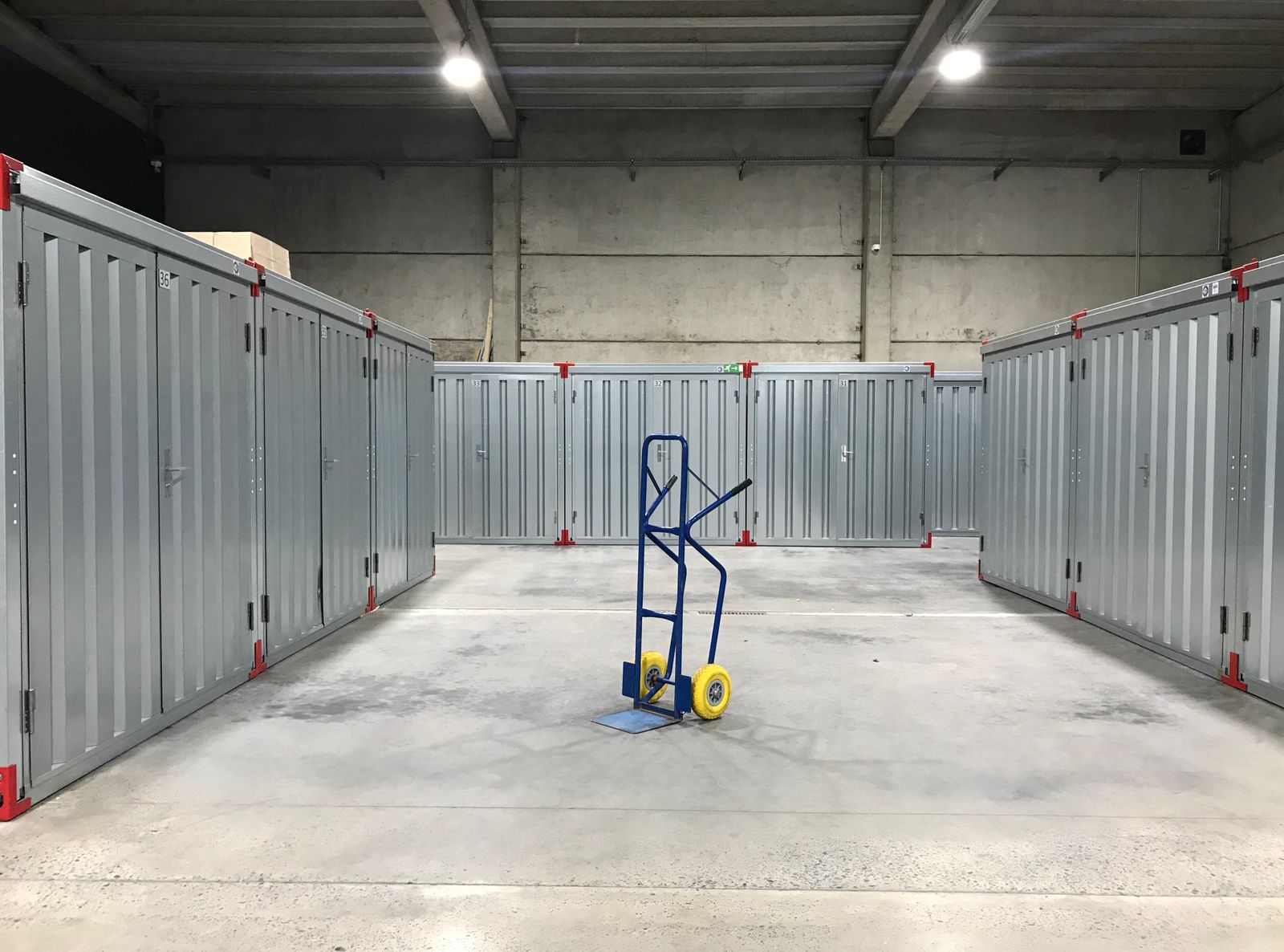
Photos: loading a van — photo by Pexels contributor, https://www.pexels.com/photo/6169056/ ; storage corridor — photo by David Slaager, https://www.pexels.com/photo/5759145/ ; warehouse interior — photo by Tiger Lily, https://www.pexels.com/photo/4483610/ . All Pexels License, free to use.
More guides
- How to Hire a Moving Company That Won't Hold Your Furniture HostageMovers › Moving & Storage
- How Much Do Movers Cost? Local vs. Long-Distance Pricing ExplainedMovers › Moving & Storage
- Binding vs. Non-Binding Estimates: The Difference That Decides Your Final BillMovers › Moving & Storage
- Moving Insurance and Valuation: What 'Full Value Protection' Really CoversMovers › Moving & Storage
- Long-Distance Moving: A Start-to-Finish Guide for Household GoodsMovers › Household Goods Moving & Storage
- All Guides & ArticlesBrowse the full guides library