Movers › Cargo Services
Cargo Services at Three Budgets: What Budget, Mid-Range and Premium Really Buy
Every cargo quote is a bundle of five things: speed, handling, certainty, liability and help at the ends. Budget, mid-range and premium services do not sell different transportation — the truck, the terminal and the highway are largely the same. They sell different amounts of those five things, wrapped around the same movement. Once you see the bundle clearly, the tiers stop being a sales ladder and become a set of honest trades, some of which are worth making and some of which are pure waste for the shipment in front of you.
This guide prices the three tiers on real 2026 numbers, using the shipment renters and small shippers actually send: pallets of belongings, boxes, furniture and goods too big for parcel and too small for a moving truck. It shows what each step up buys, what it does not buy, and how to tell which tier your cargo belongs in.
The baseline: what a pallet costs before tiers
Less-than-truckload — LTL — is the default cargo service in America: your pallets share a trailer with other shippers' freight, priced by weight, distance and freight class. In 2026, LTL runs about $0.20 to $0.45 per pound; a single standard pallet typically costs $120 to $250 on shorter lanes, $400 to $800 at 300 to 1,000 miles, and $900 to $1,800 beyond 1,000 miles. One widely tracked benchmark of open-market quotes for a 500-pound, class 70 pallet puts the national average near $608, with a median of $534 — spot prices for occasional shippers sit well above the contract rates regular shippers negotiate.
Freight class is the silent multiplier. Since July 2025, the national classification system has rated most freight by density: pounds per cubic foot. Dense freight — 15 pounds per cubic foot and up — rates class 50 to 70 and ships cheaply. The same weight spread over a bulky, half-empty pallet drops below 6 pounds per cubic foot and lands in classes 200 to 500, at two to three times the per-pound price. Stacking a pallet tighter is, literally, a tier change you perform yourself with stretch wrap.
On top of linehaul sit a fuel surcharge — typically 15 to 35 percent of the linehaul, repriced weekly — and accessorials: liftgate $75 to $200, residential delivery $80 to $175, limited access $100 to $250, inside delivery $75 to $200, appointments $50 to $100, detention $75 to $150 an hour. Accessorials now run 20 to 30 percent of total freight spend for many shippers, and they are where budget quotes go to be reborn as mid-range invoices: one documented 1,200-pound shipment quoted at $541 invoiced at $826 after reweighs, reclassification and unflagged accessorials — a 53 percent variance on an ordinary pallet.
Tier one: budget — standard LTL, dock to dock
What you pay. The linehaul numbers above, at the slow end: standard LTL transit of three to seven days depending on distance, with economy and deferred services below even that. For a 500-pound domestic shipment, standard LTL runs roughly $200 to $400.
What you get. A shared trailer, a hub-and-spoke network, and freight that is handled four to six times between pickup and delivery — loaded, sorted at an origin terminal, linehauled, sorted again, delivered. You get a dock-to-dock service: the carrier's responsibility begins and ends at the tailgate, and everything beyond it — a liftgate, a trip inside, a delivery appointment — is an accessorial you either pre-buy or get billed for.
What you do not get. A guaranteed delivery date (standard LTL transit times are estimates), gentle handling (six touches is six chances), or meaningful liability. Carrier liability in LTL is a per-pound cap set by the tariff and class, not the value of your goods; a released rate can value your cargo at a small fraction of its worth. Budget tier also buys you the least help: you palletise, wrap, label, measure and weigh, and any error in those numbers returns as a reweigh or reclassification charge.
Who it fits. Dense, durable, replaceable cargo with a flexible deadline: boxed household goods in a lease-gap move, tools, stock that a warehouse can receive at a dock. Budget is a rational tier — when the cargo can survive it.
Tier two: mid-range — expedited LTL, guarantees and proper liability
What you pay. Roughly 30 to 100 percent over standard on the same lane. Expedited LTL for that 500-pound shipment runs about $350 to $600; guaranteed-day services, partial truckload for larger shipments, and white-glove-lite options (appointment delivery, inside placement) stack within this band. Declared-value coverage or third-party cargo insurance priced on the shipment's actual worth also lives here — typically bought per shipment, and cheap relative to the loss it covers.
What the extra money actually buys. Four concrete things. Certainty: a guaranteed transit time with a refund remedy if the carrier misses it, and one to two days shaved off standard transit. Fewer touches: expedited and partial-truckload freight is handled less — partial loads often move on one trailer without terminal sorts — which is a damage-rate purchase disguised as a speed purchase. The ends, handled: liftgate, residential and inside delivery bought up front at quoted prices instead of invoiced later at tariff prices. Liability that resembles your cargo: declared value or insurance that pays what the goods were worth, not what they weighed.
What it does not buy. A dedicated vehicle, same-day anything, or immunity from your own paperwork. A mid-range shipment with a wrong weight or class still gets rebilled; the guarantee covers the carrier's clock, not your measurements.
Who it fits. Most real cargo, honestly: furniture and household pallets that matter, small-business stock with a delivery window, anything whose damage or delay would cost more than the tier difference — which, at a 30 to 100 percent premium on a few hundred dollars, is a low bar.
Tier three: premium — dedicated, expedited ground and air
What you pay. A step change, not an increment. For the same 500-pound domestic shipment: a dedicated truck runs $800 to $2,000, hot-shot service $500 to $1,500, and air expedited $1,500 to $4,000 for next-day delivery. Air freight generally prices at four to ten times ground — a 500-pound Atlanta-to-Los Angeles shipment at $1,800 to $2,500 by air against $250 to $400 by standard ground — and international air runs $4 to $7 per kilogram against $0.30 to $0.80 per kilogram for ocean LCL, with express couriers at $8 to $15 per kilogram above that.
What the money buys. Time, in its purest form: same-day regional delivery by dedicated truck, one to two days coast-to-coast with team drivers, next flight out for genuine emergencies. Exclusivity: your cargo is the only cargo — no terminal sorts, no other shipper's forklift, one vehicle, one chain of custody, which is why premium is also the low-damage tier. Control: direct routing, live tracking that means something, a driver or courier whose schedule is your schedule.
What it does not buy. Forgiveness for bad packing, or value on cargo that did not need it. Air prices on chargeable weight — the greater of scale weight and dimensional weight — so bulky light cargo pays a savage premium for its volume; a wardrobe of clothes flown cross-country is the classic premium-tier waste. And premium speed cannot recover a deadline already missed at the booking desk: next flight out still needs the freight at the airport, documented, before cutoff.
Who it fits. Line-down parts, medical and event cargo, high-value dense goods, and any shipment where a day of delay costs more than the freight difference. That test — price the delay, not the freight — is the entire premium decision.
| Budget | Mid-range | Premium | |
|---|---|---|---|
| Typical service | Standard LTL, dock to dock | Expedited / guaranteed LTL, partial truckload | Dedicated truck, hot shot, air |
| 500 lb domestic example | $200–$400 | $350–$600 | $800–$4,000 by mode |
| Transit | 3–7 days, estimated | 1–3 days, often guaranteed | Same day to next day |
| Handling touches | 4–6 | 1–3 | 0–1 |
| Liability | Per-pound tariff cap | Declared value / insurable | Declared value, single custody |
| Ends of the trip | On you, or accessorial | Liftgate / inside bought up front | Included, door to door |
One shipment, three quotes: a worked example
Make it concrete. A renter between leases ships six boxes and a disassembled bed frame as one palletised load — 480 pounds, moderately bulky — from a Denver apartment to a house in Austin, about 900 miles, with no dock at either end and a delivery deadline set by the new lease.
The budget quote comes back at $310 for standard LTL. It is also, as written, fictional: the pickup is residential (add about $80 to $175), there is no dock at the house in Austin (liftgate, $75 to $200), and the delivery needs an appointment because nobody will be home on a weekday (about $50 to $100). Invoiced honestly, budget lands near $520 to $780 and arrives on an estimated day somewhere in a five-day window, with liability capped by weight. The mid-range quote, expedited LTL with residential pickup, liftgate and appointment delivery bought up front and declared-value coverage added, prices the same shipment at roughly $640 to $720 — inside the budget tier's real range, but fixed, guaranteed to a day, and insured for what the load is worth. The premium quote, a dedicated small truck or hot shot, is $1,100 to $1,600 for next-day, door-to-door, single-custody service: defensible if the lease start were immovable and the bed were the only bed, hard to defend for a load that could wait three days in a friend's garage.
The lesson is not that budget lies. It is that tiers must be compared equipped: same ends, same liability, same certainty. Stripped quotes make the cheapest tier look cheaper than it is; equipped quotes reveal that the real spread between budget and mid-range, for most household-scale cargo, is often under $150 — while the spread between either of them and premium is the price of time itself.

How dispatchers actually choose
Three questions, in order. What does a day of delay cost? If the answer is near zero, premium is waste and mid-range is a luxury; if it is a lease penalty, a dark shop or a missed event, the maths invert. What does the cargo cost to replace — and can it be replaced at all? Irreplaceable and fragile pushes you up a tier for handling and liability reasons that have nothing to do with speed. How dense and how dock-friendly is it? A dense pallet delivered dock-to-dock is budget tier's home turf; a bulky, residential, inside-delivery shipment collects accessorials until it has paid mid-range prices for budget service — buy the tier that includes your ends.
This site lists 361 cargo services, and the spread between them is mostly these five variables wearing different logos. Price your shipment at two tiers, with the ends and the liability written into both quotes, and the right tier usually identifies itself: it is the cheapest one that still answers the delay question and the replacement question honestly.
Sources
- ShipBid and Pinnacle LTL guides, 2026 — LTL pallet cost ranges by distance, the density-based freight class scale in effect since July 2025, fuel surcharges, accessorial price lists, and the $541-to-$826 rebilling example.
- WarehousingCosts, LTL vs FTL Shipping Costs 2026 — LTL at $0.20–$0.45 per pound, single-pallet pricing, and accessorials adding 15–40 percent over linehaul.
- Warp 2026 pallet benchmark, via Miami Beauty Wholesale's LTL guide — a national average of $608 and median of $534 for a 500-pound class 70 pallet on open-market quotes.
- ExFreight, Expedited Freight and Domestic Air Freight guides — the 500-pound service ladder from standard LTL at $200–$400 to air expedited at $1,500–$4,000, transit times by tier, and dimensional-weight pricing.
- Adcom Worldwide, Domestic Air Freight Services — air at four to ten times ground cost, with worked lane examples including Atlanta to Los Angeles.
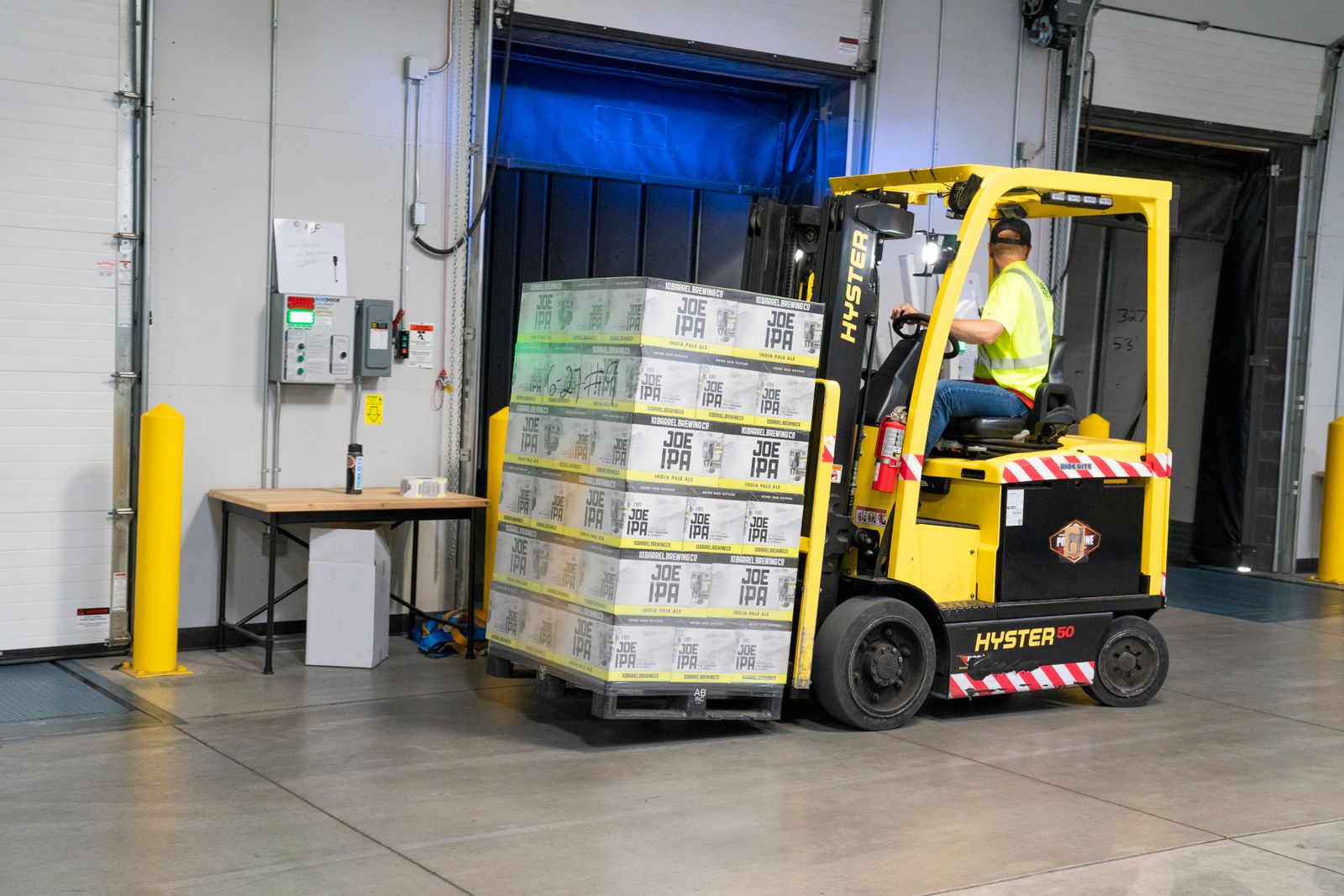
Forklift loading a pallet — photo by ELEVATE, https://www.pexels.com/photo/man-riding-on-yellow-forklift-1267329/ Warehouse aisle — photo by Tiger Lily, https://www.pexels.com/photo/photo-of-warehouse-4481326/
More guides
- How to Hire a Moving Company That Won't Hold Your Furniture HostageMovers › Moving & Storage
- How Much Do Movers Cost? Local vs. Long-Distance Pricing ExplainedMovers › Moving & Storage
- Binding vs. Non-Binding Estimates: The Difference That Decides Your Final BillMovers › Moving & Storage
- Moving Insurance and Valuation: What 'Full Value Protection' Really CoversMovers › Moving & Storage
- Long-Distance Moving: A Start-to-Finish Guide for Household GoodsMovers › Household Goods Moving & Storage
- All Guides & ArticlesBrowse the full guides library