Movers › Containers Industrial
Containers Industrial for Small Businesses: What Changes When It Is Not Personal
A homeowner renting a container is buying time and space. A small business buying or leasing one is making a capital decision, a tax decision, and a logistics commitment at the same time — usually without noticing it made any of them. The steel is identical. This site lists 476 industrial container suppliers alongside the consumer storage world, and the difference between the two markets is not the product. It is that in the business market, the container shows up in your books, your lease negotiations, your insurance, and your year-end conversation with your accountant.
Dispatch sees the operational side of that difference first: a business delivery that misses its window does not inconvenience a family, it idles a crew. Here is what actually changes when the container is for a business — volumes, contracts, tax treatment, and service levels — and the questions to settle before the truck rolls.
Volume changes the unit economics
A consumer rents one box. A business thinks in fleet, even when the fleet is three. The pricing rewards it, because the industry's basic geometry is generous: a 40-foot container gives you twice the floor space of a 20-foot for nowhere near twice the money, and one delivery and one pickup instead of two.
| 20 ft standard | 40 ft standard | 40 ft high-cube | |
|---|---|---|---|
| Buy, wind & watertight (used) | $1,400–$2,500 | $2,000–$3,200 | $2,300–$3,700 |
| Buy, cargo-worthy (used) | $1,800–$3,000 | $2,500–$4,000 | $2,800–$4,500 |
| Buy, new one-trip | $3,000–$5,000 | $4,500–$7,000 | $5,000–$7,500 |
| Rent, per month | $75–$150 | $95–$220 | $110–$250 |
Delivery is quoted separately — roughly $150 to $800 for a 20-foot within about 50 miles of a depot, $300 to $1,200 for a 40-foot — and pickup at the end costs about the same again. For a business ordering several units, those delivery lines are negotiable in a way a single consumer delivery never is: staged deliveries, combined drops, and pickup bundled into the rate are all normal asks once you are a multi-unit account.
Grades matter differently, too. A consumer storing furniture needs wind and watertight — sealed against weather, structurally sound, cosmetically honest. A business that might ever ship its container, or load it for a carrier, needs cargo-worthy: certified to international freight standards with a valid CSC plate. One-trip units — a single voyage from the factory, near-new — earn their 40 to 60 percent premium over used when the box will sit in front of customers or be modified into workspace. Buying an as-is unit for business inventory is the classic false economy: the saving is a few hundred dollars and the risk is your stock.
The rent-or-buy line sits at about two years — and your books move it
The arithmetic first. A 20-foot rental at $75 to $150 a month passes the cost of a decent used purchase in roughly 18 to 30 months; several worked examples put the crossover nearer 18 months once delivery is counted on both sides. Rent for a project measured in months. Buy for anything permanent — and remember that a used container barely loses value, so the net cost of owning is the purchase price minus a resale value that is usually a large share of it.
Then the part consumers never face: how the cost is booked changes what it costs.
| Rent / operating lease | Buy | |
|---|---|---|
| On the books | A monthly operating expense on the P&L | A fixed asset on the balance sheet |
| Tax handling | Payments deductible as a business expense in the period paid | Depreciated over useful life — typically 5 to 7 years under MACRS — unless expensed up front |
| Cash and credit | Cash stays free; nothing on the balance sheet | Cash tied up unless financed; an asset you can modify and resell |
A purchased container used more than 50 percent for business generally qualifies as tangible personal property for Section 179 expensing — used equipment counts, provided it is new to your business and bought from an unrelated seller — and 100 percent bonus depreciation is also available for qualifying property under current rules. Two operational catches, both of which dispatch has watched businesses learn the hard way. First, the deduction follows the placed-in-service date: the container must be delivered and ready for use by December 31 to count for that tax year, and a factory-fresh one-trip unit still on the water in November is a January asset whatever the invoice says. Buy the yard unit in December, not the boat unit. Second, modifications can change the tax classification — a box is equipment; a box permanently fitted out and fixed in place starts to argue it is something else. If you plan to cut doors, wire it, or set it on a foundation, have the classification conversation with your accountant before the work, not after. None of this is tax advice; it is the list of questions a container purchase should trigger, and they are questions no consumer ever has to ask.
One more business-only tax wrinkle: if your business is on the other side of the fence — renting containers out, or charging customers for on-site storage — the rental of a container is generally a rental of tangible personal property, not of real estate, and many states tax it accordingly, unlike fixed-site self-storage rent. The classification follows control of the box, and it is worth one conversation with your tax adviser before your first invoice, not after your first audit.

Contracts and service levels: where business deals are actually different
A consumer rental is a month-to-month form with a delivery date. A business arrangement has moving parts a consumer never sees:
- Term structure. Month-to-month rental, an operating lease (the box stays on the lessor's balance sheet; payments are expensed; you hand it back), or a finance lease (the box sits on your balance sheet as an asset with a matching liability, structured more like a loan). For one to five standard storage units, an operating lease is the usual structure — simplest accounting, full deduction, no asset to dispose of.
- Damage and condition terms. Who pays for a door that will not seal in year two? Business agreements spell out maintenance responsibility, swap-out rights for a failed unit, and the condition standard on return. Get the swap clause: a supplier who will exchange a leaking unit within days is worth a higher rate than one who will schedule an inspection.
- Delivery windows and site readiness. A tilt-bed or roll-off delivery needs a firm, level run of clear space roughly twice the container's length and a surface that will take the truck after rain. Business contracts allocate the cost of a failed delivery — the truck that arrives to a blocked yard bills the trip anyway. Consumers learn this once; businesses should learn it from the contract.
- Insurance and liability. Your inventory inside a container on your site is your risk. Confirm your commercial property policy covers stock in an on-site container — some treat it as contents at the premises, some as property off-premises with a sublimit — and check what the supplier's contract says about theft and damage to the box itself.
- Placement permission. A container dropped on commercial property can run into zoning, setback, screening, and time-limit rules that vary by municipality, and into your own lease, which may prohibit one outright. This is the one check that cannot be undone by a phone call after delivery: clear it with the landlord and the city before the truck is booked, because an illegal box still bills rent while you argue about it.
The dispatch view: what to settle before the truck rolls
Everything above reduces to a short pre-delivery discipline. Confirm the grade in writing — cargo-worthy if it will ever travel loaded, wind and watertight if it will not. Confirm the all-in number: unit, delivery, pickup, and any minimum term, on one page. Confirm the tax treatment with your accountant while the placed-in-service date is still yours to choose. Confirm the site: level, firm, clear, permitted, and insured. And confirm the exit — swap rights, return condition, and who collects — because the end of a business container's stay is a scheduled event with a truck in it, not a consumer's quiet cancellation.
Do that, and the container does for a business what it promises: warehouse space at roughly $100 to $200 a month, or a permanent asset for the price of a decent used car, without a lease on a building you do not need. Skip it, and the same steel box becomes what dispatch always knew it could be — somebody else's problem, delivered on time, to a yard that was not ready.
Sources
- Tuff Shipping Containers, Shipping Container Cost Calculator — purchase prices by size and grade, including 20 ft wind and watertight at $1,400 to $2,500, cargo-worthy at $1,800 to $3,000, and one-trip at $3,000 to $5,000; rentals of $75 to $150 a month for a 20 ft and $95 to $220 for a 40 ft; rent-versus-buy break-even at roughly 18 to 30 months.
- Easy Storage Search, Shipping Container Cost Calculator (2026) — delivery of $150 to $800 for a 20 ft within about 50 miles of a depot and $300 to $1,200 for a 40 ft; grade definitions, with wind and watertight as the value choice for storage and cargo-worthy required for shipping.
- Soni Containers, "Shipping Container Prices in 2026" — one-trip containers have made a single voyage and carry a premium of typically 40 to 60 percent over used units; cargo-worthy units meet international freight standards and carry a valid CSC plate.
- Giant Lock Box, "Container Section 179 Deadline" — a container must be delivered and placed in service by December 31 to count for that year's Section 179 deduction; the 2026 deduction limit of $2,560,000; used equipment qualifies when new to the business and bought from an unrelated seller; business use must exceed 50 percent under IRS Publication 946; 100 percent bonus depreciation restored for qualifying property; modifications can change a container's tax class.
- Container Compass, "Shipping Container Lease Rates & Terms (2026)" — operating leases keep the container on the lessor's balance sheet with payments expensed as operating costs, while finance leases place the asset and a liability on the lessee's books; purchased containers are depreciated over typically 5 to 7 years under MACRS, subject to Section 179 and bonus depreciation.
- RentalModo, "Renting vs. Buying a Storage Container" — the rent-versus-buy crossover at around 18 months on worked 2026 figures; renting as operating expense against buying as a capital asset; used containers retaining a large share of their value on resale.
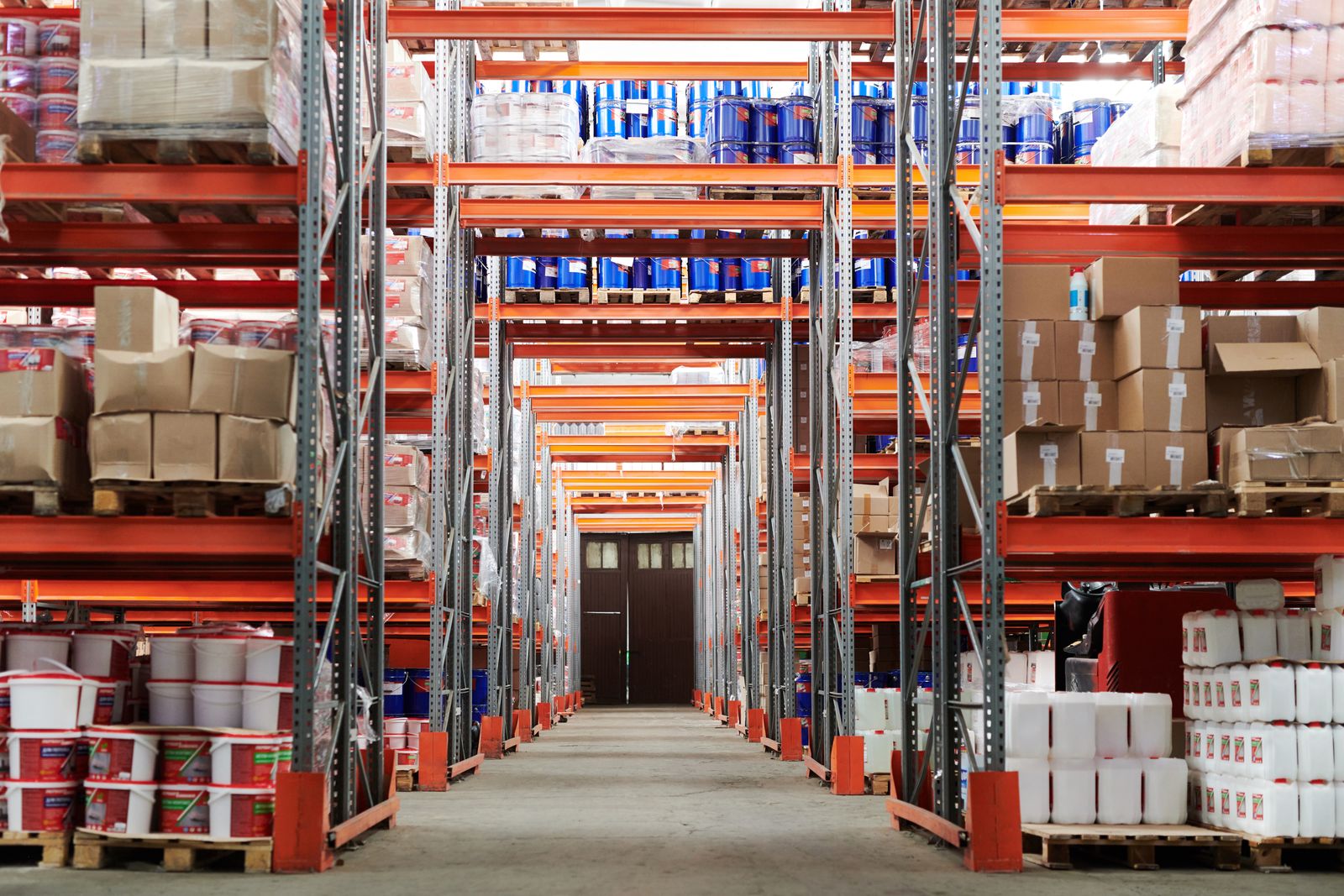
Photos: empty industrial plant floor — photo by Pexels photo 236698, https://images.pexels.com/photos/236698/pexels-photo-236698.jpeg; warehouse aisle — photo by Tiger Lily, Pexels photo 4483610, https://www.pexels.com/photo/warehouse-with-concrete-floors-4483610/
More guides
- How to Hire a Moving Company That Won't Hold Your Furniture HostageMovers › Moving & Storage
- How Much Do Movers Cost? Local vs. Long-Distance Pricing ExplainedMovers › Moving & Storage
- Binding vs. Non-Binding Estimates: The Difference That Decides Your Final BillMovers › Moving & Storage
- Moving Insurance and Valuation: What 'Full Value Protection' Really CoversMovers › Moving & Storage
- Long-Distance Moving: A Start-to-Finish Guide for Household GoodsMovers › Household Goods Moving & Storage
- All Guides & ArticlesBrowse the full guides library