Movers › Containers Industrial
Containers Industrial in a Small Town or Rural Area: Fewer Choices, Different Math, Better Tactics
An industrial container — the standard 20-foot or 40-foot steel shipping box, bought or rented for storage, worksites, farms, and freight — looks like the most commodified purchase in the moving world. Same steel, same sizes, same twist locks, everywhere on earth. In a port city, that is nearly true, and prices behave like a commodity. In a small town, it is not true at all. The box is identical; everything around the box — how far it travels, who delivers it, what truck can reach your site, and how long you will wait — is local, scarce, and priced accordingly.
This site lists 476 industrial container listings, which is a starting map, not a delivered price. I investigate complaints, and the container files follow a script: a buyer celebrates a cheap box three states away, then meets the delivery bill, the site the tilt-bed cannot reach, or the rental that quietly ran two years past its break-even. Here is the rural math, honestly stated, and the tactics that beat it.
The prices everyone quotes — and what they leave out
National dealer pricing in 2026 gives you the baseline. To buy, a used wind-and-watertight 20-foot container typically runs about $1,400–$2,500 before delivery in calculator pricing, with dealer "delivered" prices for a used 20-footer commonly $2,000–$3,600; a used 40-footer runs roughly $2,000–$3,200 as a box, or $2,800–$5,000 delivered depending on grade and market. New one-trip containers cost more: roughly $4,200–$5,500 for a 20-foot and $5,500–$7,200 for a 40-foot in one national guide's figures. To rent, expect roughly $100–$250 a month for a 20-foot and $150–$350 for a 40-foot from one national rental analysis, with other dealers quoting tighter bands of $75–$150 and $95–$220 — the spread itself is the lesson: monthly rent is negotiable and market-dependent in a way the box price is not.
Then comes the line rural buyers underestimate: delivery. Published delivery guides price it by distance from the depot — roughly $250–$500 under 50 miles, $500–$900 for 50–200 miles, and $900–$1,500 for 200–500 miles — with per-trip delivery and pickup fees on rentals commonly $150–$400 each way. Read that table as a rural customer and the whole market reorganises itself. A container is priced where it sits, and it sits in depots near ports, rail terminals, and metros. Your price is the box plus the road.
| Your situation | Box-only thinking | Rural reality |
|---|---|---|
| Depot 30 miles away | Delivery a few hundred dollars | The national price roughly holds |
| Depot 180 miles away | Same box, same website price | Add roughly $500–$900 delivery; on a rental, the same again to return it |
| Tight or soft site | Standard tilt-bed drop | May need a smaller truck, a crane, or site work first — each priced separately |
| Need it this week | Metro depots deliver in days | Rural routes consolidate; your delivery joins a run, on the run's schedule |
Rent or buy: the break-even moves against you in the country
In a city, rent-versus-buy is a simple division: purchase price divided by monthly rent. Published analyses put the crossover anywhere from about 4–6 months on some rental pricing to 18–30 months on cheaper rental bands — which tells you the honest answer is "run your own numbers," because the inputs vary that much.
Rural delivery changes the division in a specific way: it taxes renting twice. A rental is delivered for a fee and collected for a fee. A purchase is delivered once. The farther you are from the depot, the more those two freight charges load onto the rental side of the ledger, and the sooner buying wins — even before you count that a used container retains real resale value, with one national seller estimating a used wind-and-watertight box resells at roughly 50–75 percent of its purchase price. Conversely, for a genuinely short need — a three-month renovation, one harvest season — renting still wins on cash outlay even in the country, provided the delivery and pickup fees are in the quote from the start. The complaint version of this story is the rental quoted as "$129 a month" that arrived with $700 of freight attached and left with $700 more.
Ask, in writing, for four numbers before anything else: monthly rent or purchase price, delivery fee to your actual address, pickup fee if renting, and the minimum rental term. A dealer who will not put delivery in writing before taking a deposit is telling you where their profit lives.
Delivery is a site problem before it is a price problem
A 40-foot container arrives on a tilt-bed or trailer that needs room to work — one cost guide notes roughly 100 feet of straight clearance for a 40-foot drop. Rural land feels spacious and still fails this test constantly: the gate is wide but the turn off the county road is not; the field is flat but soft after rain; the lane is firm but lined with trees at exactly mirror height. Before you order, walk the route the truck will take, from the public road to the exact pad, and photograph it. Send the dealer the photos and the measurements — gate widths, turn, overhead lines, ground condition — and get them to confirm the truck type that will deliver. If a crane or a smaller truck is needed, you want that priced now, at a desk, not improvised in your driveway with the meter running.
Prepare the resting place properly, too. A container should sit level, on blocks, beams, or a gravel pad that keeps its floor off standing water and lets air move underneath. On rural ground, drainage is destiny: a box set in a low spot in October is a box sitting in a pond in March, rusting from the bottom up and quietly ruining whatever is inside. Half a day of gravel and levelling is the cheapest insurance in the whole transaction.

Permits and zoning: rural is easier, not exempt
The good news is real: a container used for storage, sitting level on blocks on your own rural land, movable and unoccupied, is treated in many rural counties as a movable accessory — closer to a trailer or shed than a building — and often needs no permit at all, particularly on agricultural and rural-residential land. The traps are equally predictable, and they are the ones rural buyers walk into precisely because "out here nobody cares":
- Town limits change everything. Inside a municipality, containers may be allowed only as temporary construction storage, for a capped period, with screening or condition requirements.
- HOAs and deed restrictions can ban or restrict visible containers even where the county allows them, and they are enforced privately.
- Permanence triggers building rules. Anchor it to a slab, add power, windows, or a workshop fit-out, and you have built a structure in the eyes of most codes — permit territory.
- Setbacks still apply. Distance from property lines and the road is the most common rural requirement, and the cheapest to respect before delivery and the most expensive after.
One phone call to the county planning or zoning office, before you pay, resolves which side of every one of these lines you are on. Make the call, note the name and date, and keep it with the paperwork. That note has ended more disputes than any lawyer letter I have seen in a complaint file.
Buying tactics that work where choice is thin
Buy distance, not just price. Get the delivered-to-your-pad total from at least two sellers, including any regional dealer whose depot is closer even if their box price is higher. A $2,200 box 40 miles away routinely beats a $1,700 box 300 miles away once the road is paid for.
Shop the grade, honestly. Containers are sold by condition grade — one-trip (nearly new), cargo-worthy, wind-and-watertight, and as-is. For rural storage, wind-and-watertight is usually the value grade: sealed against weather, structurally tired in ways that do not matter for a stationary box. Paying one-trip prices for a feed store is vanity; buying as-is to store anything that hates damp is false economy. Ask for photos of the actual unit — doors, seals, roof, floor — not a stock picture of its better-looking sibling.
Time it with freight, not against it. Rural deliveries consolidate. If your timing flexes by a week or two, say so and ask to join an existing run toward your area; an empty return leg is the dealer's problem you can solve for them, and the saving is real. Harvest, construction season, and spring are peak rural demand — a winter purchase, when the box will sit on frozen, firm ground and dealers are quiet, often prices and delivers better, provided your site drains when the thaw comes.
Consider the local secondhand market. Farm auctions, closing businesses, and the classifieds of rural life regularly surface containers already in your county — which means the expensive part, the long delivery, has already been paid by someone else. You will still need a local tilt-bed or trailer to move it, and you must inspect in person: door seals, roof pinholes against the light, floor condition, and the smell test for chemical history. A twenty-minute inspection replaces every warranty a distant dealer was never going to honour cheaply anyway.
Get the whole deal in one document. Box identity or grade, total delivered price, delivery window, what happens if the truck cannot place the box, rental term and pickup fee if renting, and who pays for a failed delivery attempt. In a thin market you cannot threaten to walk to a competitor — but you can refuse to sign a vague paper, and that refusal is available in every market on earth.
If it goes wrong
Container disputes are usually delivery and condition disputes, and they are won with evidence created before the truck arrived: the written quote with delivery included, the site photos you sent, the photos of the unit you were promised, and your photos of the unit and the placement on the day. Complain in writing promptly, keep the box and its contents undisturbed where condition is the issue, and use the ordinary channels — your state consumer-protection office for deceptive practices, and the contract itself for everything else. The rural customer's disadvantage is distance; the rural customer's advantage is that dealers serving thin markets live on reputation in a way a port-city volume seller does not. A calm, documented complaint, copied to the places their next customers will look, carries weight.
The industrial container rewards rural buyers who think like dispatchers. The box is a commodity; the delivery is a route; the site is an engineering question you can answer with a walk and a camera; and the rent-or-buy line moves with your distance from the depot. This site lists 476 industrial container listings — use them to find who is genuinely near you, then negotiate the only number that matters: the total, sitting level on your pad, in writing.
Sources
- Container One, rent vs buy a shipping container — rental bands of $100–$250 a month for 20-foot and $150–$350 for 40-foot units, delivery and pickup fees of $150–$400 per trip, purchase prices delivered, resale retention of roughly 50–75 percent, and a 4–6 month crossover on its pricing.
- Soni Containers, shipping container prices 2026 — used and one-trip purchase ranges by size, monthly lease bands, and delivery priced by distance: about $250–$500 under 50 miles, $500–$900 for 50–200 miles, $900–$1,500 for 200–500 miles.
- Tuff Shipping Containers, cost calculator — condition-grade price bands, delivery as the hidden line item, roughly 100 feet of clearance for a 40-foot drop, and an 18–30 month rent-versus-buy break-even on its rental pricing.
-
Containers Delivered, permit guide for VA, WV and NC — rural storage containers on blocks often need no permit; HOAs, town limits, permanent foundations and occupancy trigger permit requirements; setbacks still apply.
-
Photo by cottonbro studio, https://www.pexels.com/photo/family-unpacking-after-moving-4569340/
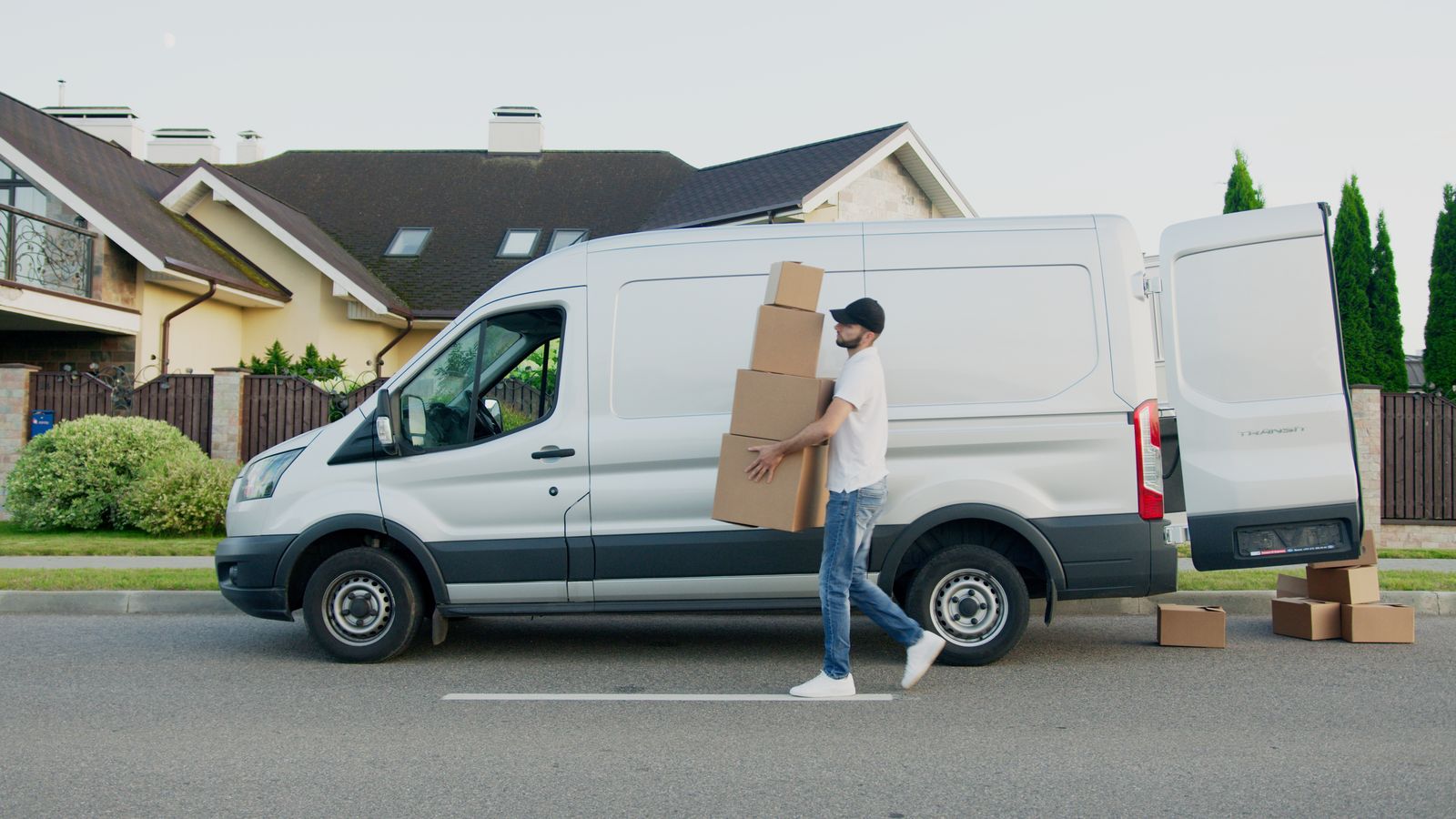
- Photo by Artem Podrez, https://www.pexels.com/photo/man-carrying-boxes-beside-a-van-5025669/
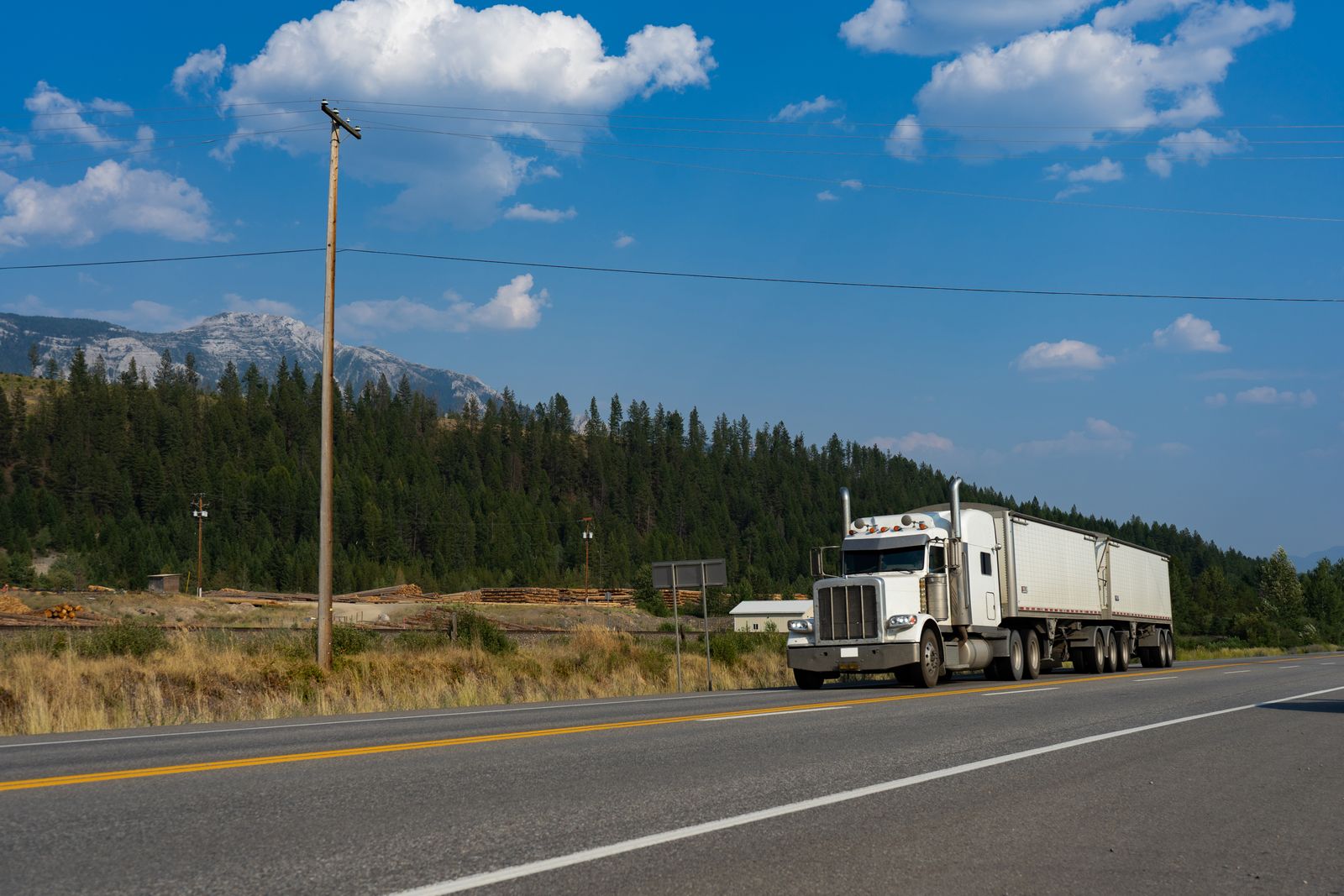
- Photo by Braeson Holland, https://www.pexels.com/photo/a-truck-on-the-road-8994766/
More guides
- How to Hire a Moving Company That Won't Hold Your Furniture HostageMovers › Moving & Storage
- How Much Do Movers Cost? Local vs. Long-Distance Pricing ExplainedMovers › Moving & Storage
- Binding vs. Non-Binding Estimates: The Difference That Decides Your Final BillMovers › Moving & Storage
- Moving Insurance and Valuation: What 'Full Value Protection' Really CoversMovers › Moving & Storage
- Long-Distance Moving: A Start-to-Finish Guide for Household GoodsMovers › Household Goods Moving & Storage
- All Guides & ArticlesBrowse the full guides library