Movers › Packaging
DIY or Professional for Moving Packaging and Supplies? The Honest Decision Guide
From the dispatch desk, the packing argument always sounded like a money argument. It is not, quite. It is three arguments wearing one coat: what does professional packing cost, what does your own time cost, and — the one nobody prices until it is too late — who carries the blame when something breaks. A box you packed yourself and a box the crew packed look identical on the truck. On a claim form, they are different species.
This guide is for people moving on a tight budget, which means the answer will not be "hire the professionals for everything." It will be a split: pack most of your house yourself, and spend your limited professional money exactly where it buys protection you cannot give yourself.

What professional packing actually costs
Published 2026 figures cluster into a usable picture. ConsumerAffairs' packing cost guide, as summarized by movers citing it, puts most companies at $60 to $80 per packer per hour; This Old House, using HomeAdvisor data, lists $25 to $40 per packer per hour. Total job figures are easier to budget against:
| Service | Typical published cost |
|---|---|
| Full pack, 1-bedroom | $280–$650 (labor + materials) |
| Full pack, 2-bedroom | $530–$1,000 |
| Full pack, 3-bedroom | $1,030–$2,200 |
| Fragile-only partial pack | $200–$700 |
| Kitchen + selected rooms | $400–$1,200 |
| DIY supplies only, 2–3 bedroom | ~$150–$400 |
A real crew rate card shows how the totals are built: one Fort Worth company bills two packers at $160 an hour, three at $220 and four at $300, plus materials at cost — a 2–3 bedroom full pack at three packers for five to six hours lands at $1,300 to $1,520. And speed is the professionals' genuine product: a crew packs a whole home in a day, while one packing guide puts the DIY equivalent at two to six weeks of evenings and weekends, or roughly 30 to 50 hours of labor. If your constraint is a deadline — a job start, a lease end, kids and work leaving no evenings — that time figure, not the hourly rate, is the honest comparison.
What DIY actually costs (all of it)
The supplies are the visible part: boxes, paper, tape and bags for a two-to-three-bedroom home run roughly $150 to $400 bought at retail, and you can hold that down with a disciplined list and free boxes where they are safe. The invisible parts:
Time at the worst moment. Packing expands into exactly the weeks when you are also changing addresses, transferring utilities and finishing a job or a lease. People do not fail at DIY packing because it is hard. They fail because Tuesday's boxes are still unpacked on Friday, and the last 20 percent gets thrown into bags and open cartons the night before the truck. Rushed packing is where the breakage lives.
Materials at retail vs. at cost-plus. When a mover packs, materials are billed too — sometimes at cost, sometimes at carrier prices that run well above retail (standard cartons at $3 to $8 each from a professional price list, against roughly $1.40 to $2.50 at a big-box store). Ask whether materials are included, at cost, or marked up, and get it in the estimate. A "cheap" hourly pack rate with marked-up materials is a familiar dispatch trick.
The PBO problem. This is the decisive one, below.
The clause that should decide it: Packed By Owner
On the mover's inventory, boxes you packed are marked PBO — Packed By Owner. United Van Lines' own claims guidance states the consequence plainly: because the mover cannot verify how those boxes were packed, liability for damage to the contents inside may be limited, and PBO is one of the most common reasons claims get complicated or denied. Carrier guides are blunter: a plate broken inside a sealed PBO box that arrives without external crush damage will almost always be denied, even under Full Value Protection. The mover never saw the item, the wrap or the fill, so the mover will not pay for the outcome.
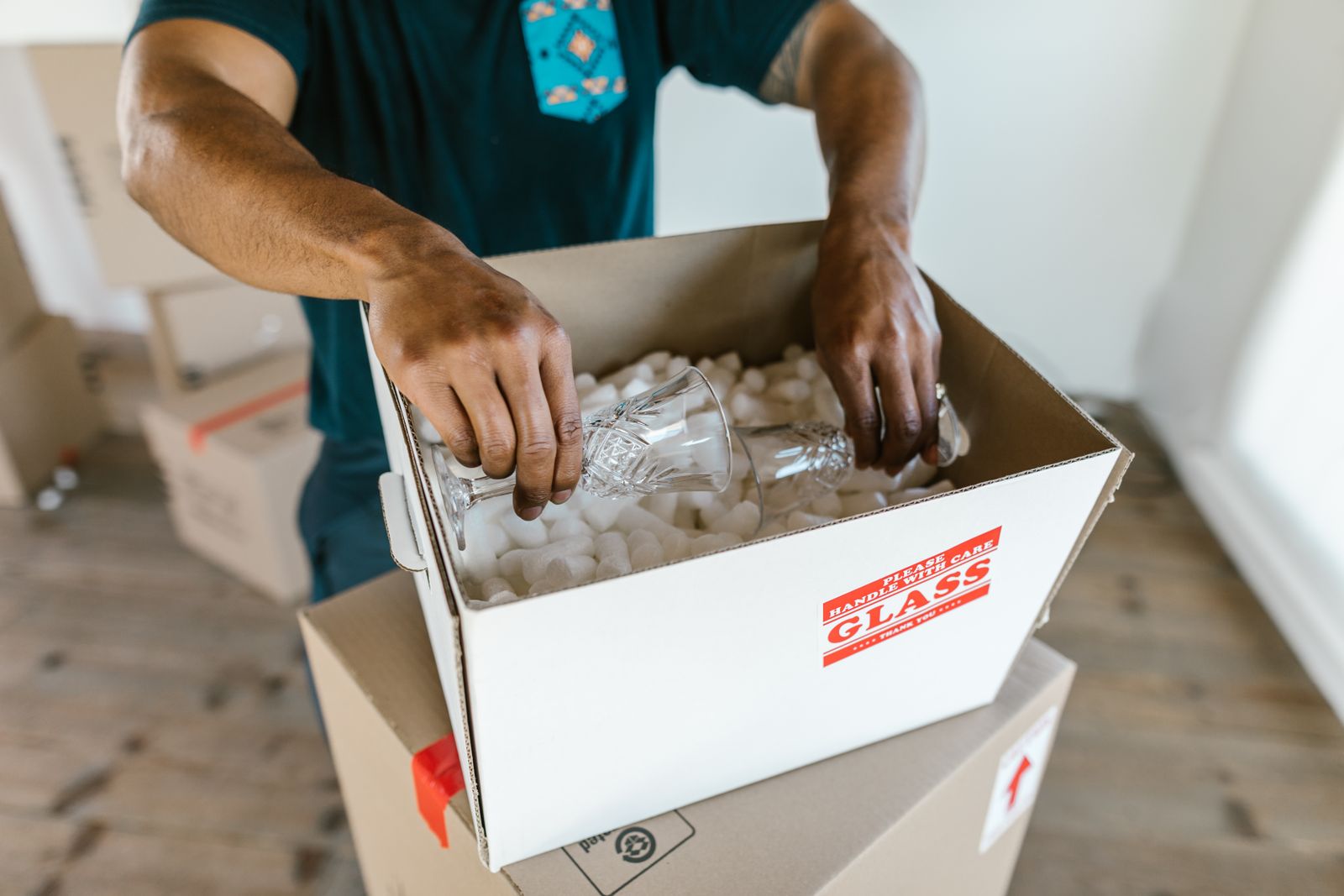
Flip it around and you see what professional packing really buys. When the crew packs a box, the carrier owns the result: the contents are inventoried, the packing is theirs, and a breakage claim has a chain of custody. You are not mainly buying cardboard technique — most careful adults can learn to wrap a plate in an evening. You are buying liability transfer on the items where a loss would actually hurt.
That logic produces the split that dispatchers, off the record, recommended for years:
Pay professionals to pack: the kitchen's glassware and china (the densest breakables in the house, in the worst shapes); framed art and mirrors; large electronics without their original boxes; anything you would file a claim over — genuinely valuable, fragile, or both. A fragile-only or kitchen-plus pack at $200 to $1,200 buys coverage and competence exactly where the risk concentrates.
Pack yourself: clothes, linens, books, toys, shoes, pantry dry goods, bathroom non-breakables, and anything you would shrug over if it broke. A T-shirt cannot be packed wrong in any way that matters. Paying $60 to $80 an hour for someone to fold yours is the single most wasteful line in a full-pack quote.
Nobody should pack: hazardous materials, perishables and plants, which movers will not carry; and cash, jewelry, documents and medications, which should ride with you regardless of who packs the rest.
When full professional packing is genuinely worth it
Four situations flip the answer from "partial" to "full," even on a budget:
- A hard deadline with no slack. If the truck date cannot move and your evenings are gone, a one-day crew pack is not a luxury; it is the difference between packed and not packed.
- A long-distance move with expensive, fragile contents. The longer the haul, the more vibration and handling, and the more the liability transfer matters. This Old House's guide notes professional packing typically adds 15 to 30 percent to the cost of a move — weigh that against the replacement value of what is fragile.
- An employer or insurer is paying. If a relocation package covers packing, take it, and take full value protection with it. Declining paid packing to be frugal with someone else's budget buys you risk and nothing else.
- Physical limits. Packing is lifting, bending and stairs, for hours. An injury in moving week costs more than any crew.
And the honest counter-case: for a short, local move of mostly sturdy furniture and few breakables, full professional packing is money for nothing. Pack it yourself, carefully, and spend the savings on good materials and a proper dolly rental.
If you DIY, pack like a claim adjuster is watching
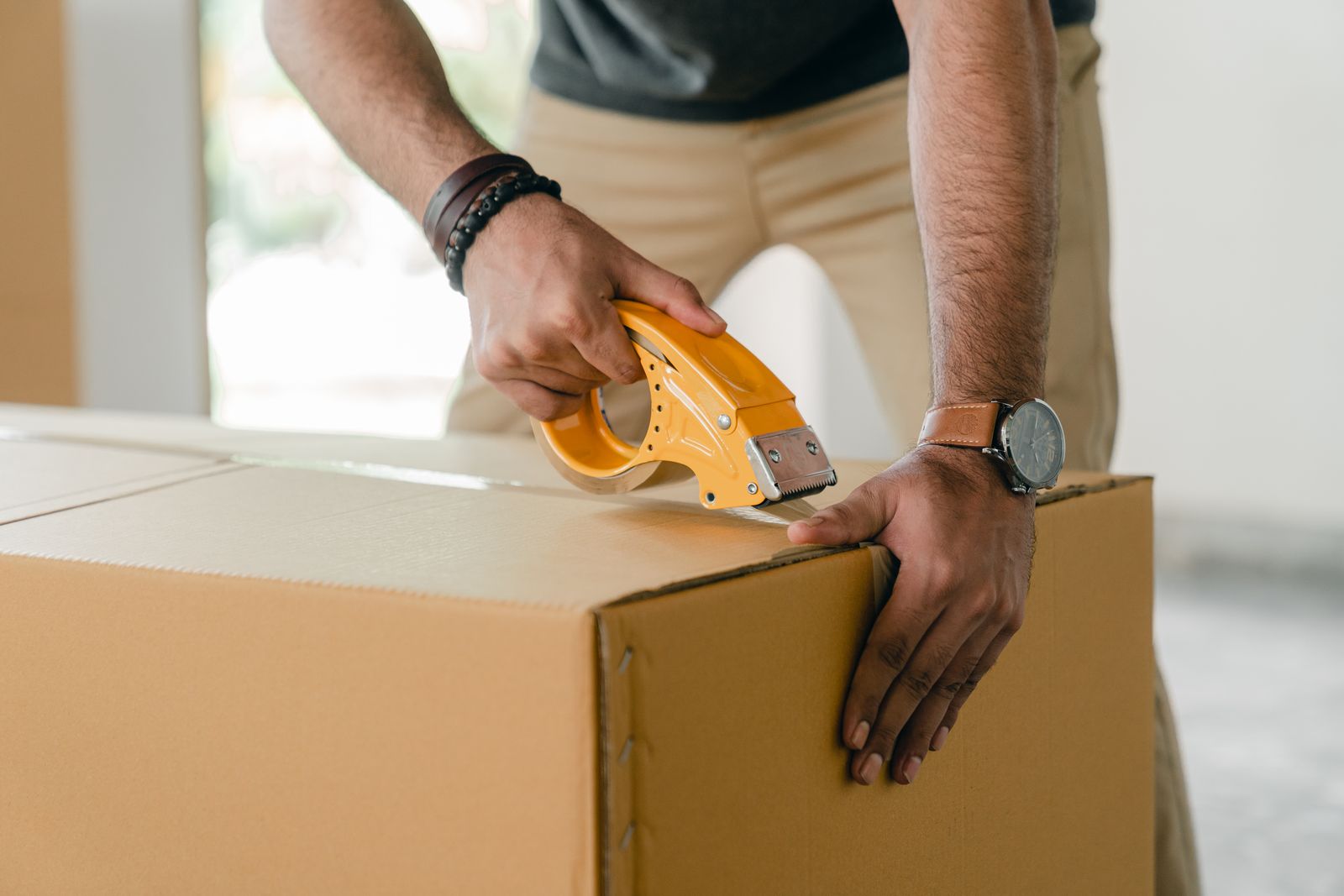
Since PBO boxes live or die on evidence, pack defensively. Use new or sound boxes, paper between every plate, no voids — a box should not rattle, flex or feel hollow. Keep heavy items in small boxes. Photograph valuable contents as you pack them, and keep a simple list of which box holds what; if a box does arrive crushed — the one PBO scenario where claims are reviewed — your photos and list are the claim. Note any damage on the delivery paperwork before the crew leaves, keep damaged items and their boxes for inspection, and remember the federal clock: for interstate moves you have nine months from delivery to file a written claim, the carrier must acknowledge it within 30 days and settle, deny or offer within 120.
A worked hybrid, priced
Take a two-bedroom home moving about 800 miles, with a normal kitchen, one large TV, two framed prints and a lot of ordinary everything else. Full professional packing, from the table above, runs $530 to $1,000. The hybrid version: you spend four evenings on bedrooms, books, clothes and linens, using about $120 of retail supplies, and the crew comes for a fragile-only pack — kitchen glassware and china, the TV, the prints — at two packers for two to three hours. At $60 to $80 per packer per hour that is roughly $240 to $480 of labor, plus their materials for those boxes. Total outlay: about $400 to $600, against $530 to $1,000 for the full pack — and, crucially, every item you would actually claim for was packed by the carrier and sits inside its liability, not yours. The saving against full service is real but modest; the coverage gain against full DIY is the larger prize, and it costs less than one replaced television.
And unpacking? The service nobody needs to buy whole
Crews also sell unpacking, and it follows the same logic in reverse. Full unpacking — every box emptied, items to surfaces, debris hauled away — is a convenience purchase, priced like one, and for most budgets it fails the test: you will want to decide where things live yourself anyway. The two slices worth buying are debris removal alone, if your building or street makes disposing of forty broken-down boxes a genuine problem, and unpacking of the same fragile items the crew packed, in the first hours, so any breakage is discovered and noted while the crew and the paperwork are still in the room. Discovery timing matters: damage written on the delivery documents before the crew leaves is the strongest claim you will ever file, and a shattered glass found three weeks later in a box you opened alone is the weakest. If you buy nothing else professional, buy the sequence — crew-packed fragiles opened first, at delivery, with the inventory sheet in hand.
The decision, in one pass
Ask three questions. How many evenings do I truly have? (If fewer than the job needs — roughly 30 to 50 hours for a family home — buy hours.) What would I actually claim for if it broke? (Have professionals pack exactly that list, so it is covered.) And what is the distance? (The longer the haul, the more weight the first two answers carry.) Most tight budgets land on the hybrid: your labor on the unbreakable 80 percent, professional hands — and professional liability — on the fragile 20. That is not a compromise. Done deliberately, it is the best-priced packing job in the industry. If you want to test that against local quotes, this directory lists 234 packaging businesses within its mover categories, alongside the full-service companies that bundle packing into the move.
Sources
- College Bound Movers, "Do Movers Pack for You? Packing Service Costs Explained" — ConsumerAffairs 2026 figures ($60–$80 per packer per hour; $280–$2,200 by home size) and This Old House/HomeAdvisor rates ($25–$40), with labor-plus-materials and materials-only tables. https://collegeboundmovers.com/do-movers-pack-for-you/
- Evolution Moving, Fort Worth packing services rate card — 2 packers $160/hr, 3 at $220, 4 at $300, materials at cost; full-pack totals by home size. https://evolutionmoving.com/fort-worth/packing-services/
- Jordan River Moving, packing cost guides — full packing $300–$4,500 by home size, DIY supplies $50–$400, professional crews finishing in a day vs. 2–6 weeks DIY, partial-pack tiers and 40–60 percent hybrid savings. https://jordanrivermoving.com/tag/moving-time-estimates/
- United Van Lines, "What to Do If Something Breaks: How Moving Company Damage Claims Work" — PBO (Packed By Owner) liability limits, nine-month claim window, high-value declaration. https://www.unitedvanlines.com/moving-tips/blog/how-moving-claims-work
- LegalClarity, "What Happens If Movers Break Something" — PBO claim denials absent external damage; claim acknowledgment in 30 days and resolution in 120 days. https://legalclarity.org/what-happens-if-movers-break-something/
Photos: Couple packing — photo by Ketut Subiyanto, https://www.pexels.com/photo/4246193/ . Packing glassware — Pexels photo 7464230, https://www.pexels.com/photo/7464230/ . Taping a box — photo by cottonbro studio, https://www.pexels.com/photo/4246120/
More guides
- How to Hire a Moving Company That Won't Hold Your Furniture HostageMovers › Moving & Storage
- How Much Do Movers Cost? Local vs. Long-Distance Pricing ExplainedMovers › Moving & Storage
- Binding vs. Non-Binding Estimates: The Difference That Decides Your Final BillMovers › Moving & Storage
- Moving Insurance and Valuation: What 'Full Value Protection' Really CoversMovers › Moving & Storage
- Long-Distance Moving: A Start-to-Finish Guide for Household GoodsMovers › Household Goods Moving & Storage
- All Guides & ArticlesBrowse the full guides library