Movers › Specialty Movers
DIY or Professional for Specialty Moving Services? The Honest Decision Guide
Every dispatch desk in the moving business keeps an informal list, and it is not of difficult customers. It is of difficult objects: the things that generate the rescue calls, the damage claims and the Saturday-afternoon emergencies. Pianos. Slate pool tables. Hot tubs. Gun safes. Aquariums. The pattern in those calls is so consistent that it can be written down as a rule: people do not get into trouble moving specialty items because the items are heavy. They get into trouble because each of these objects has one specific way it wants to be moved, one specific way it breaks or hurts someone when moved any other way, and the difference between the two is knowledge and equipment, not strength.
This guide goes through the specialty list item by item, with real prices, and gives you the honest verdict dispatch would give a friend: what you can genuinely do yourself, what you can do yourself with rented equipment and enough adults, and where the professional fee is not a luxury tax but the cheapest version of the job. It also covers the hybrid that budget movers underuse — doing the preparation and the simple items yourself, and hiring the specialist for the one object that can ruin your month.
The three questions that decide almost everything
Before the item-by-item verdicts, the framework. A specialty item is safe to DIY when all three answers are friendly:
- Can it be made lighter or smaller? Items that disassemble into pieces two people can carry — a trampoline, most gym equipment, a sectional — are logistics problems. Items that are one indivisible mass — a slate bed, a cast-iron tub, a safe — are physics problems.
- What breaks, and what does the break cost? A dropped bookshelf costs a bookshelf. A dropped piano can cost the piano, the floor, the stairwell and someone's foot in a single second. Compare the professional fee not to zero but to the realistic failure cost.
- Is the route forgiving? Ground floor to ground floor, wide doors, no stairs, a short carry: DIY risk falls off a cliff. Every flight of stairs, tight turn and long carry multiplies it. Professionals price exactly this — stairs add roughly $60–$130 per flight to a piano move, and per-step surcharges exist — because the route, more than the object, is where injuries and damage happen.
Pianos: hire it, with one narrow exception
An upright piano weighs 300–500 pounds; a grand can weigh up to about 1,200. The weight is concentrated, the centre of gravity is treacherous, and the instrument inside the case is a tensioned structure that does not forgive being dropped, twisted or left on its side wrongly. A grand must travel on its side on a piano board, with legs, lid and pedal lyre removed in the right order and reassembled the same way.
Prices for the professional job are well documented: ConsumerAffairs' survey of piano movers puts the average local flat rate at $275 for an upright and $450 for a grand; Thumbtack's national data averages $269–$472 overall; broader guides put local uprights at $250–$550 and grands at $400–$900, with stairs and long carries on top. Against that, the DIY version requires a piano dolly or board, straps, blankets, a liftgate truck and four strong adults who have agreed in advance who calls the turns — and carries a failure cost measured in thousands, plus the injury risk that fills the dispatch log.
Verdict: hire it. The narrow exception is a small spinet or console, ground floor to ground floor, no stairs, with a proper piano dolly and four adults — and even then, price the professional first, because at the $185–$275 end of the market the saving is thinner than it looks.
Pool tables: hire the slate work, always
A pool table is not one heavy object; it is a frame built around a slate playing surface, usually three slabs of 150–250 pounds each, machined flat and unforgiving of being flexed, chipped or carried assembled. Moving one properly means stripping the felt, separating and individually wrapping the slate, dismantling frame and pockets, then reassembling and re-levelling at the destination — a skill closer to instrument setup than to furniture moving. Professional disassembly, move and reassembly runs about $300–$700 locally.
Verdict: hire it. There is no honest DIY version of the slate work for anyone who has not done it before, and a cracked slab costs more than the move. What you can do yourself is everything around it: clear and prepare both rooms, and be ready to re-felt or hire the technician's setup separately if a quote unbundles it.
Hot tubs: the genuine borderline
An empty hot tub weighs roughly 500–1,000 pounds but is bulky rather than dense, and it moves on its side on a spa dolly with a crew of at least four. Local professional moves with good access run $300–$700; Angi's 2026 national average is about $600, within a $300–$1,200 range. The job turns professional-only when the route does: a tub that arrived by crane over the fence will leave by crane, at $800–$1,500 or more as a separate line item, and decks, gates narrower than the tub's height, and soft ground all push the same way.
Verdict: DIY is honestly possible for a drained tub, a flat route, a spa dolly and four or five committed adults — this is the one big item where dispatch saw home attempts succeed routinely. Price the professional anyway, do the sell-versus-move arithmetic on an older tub (a new owner may value it in place more than the move costs), and hire without hesitation the moment a crane, a deck or a slope enters the picture.
Gun safes: the 500-pound rule
Safes run from 300 to well over 1,200 pounds, are top-heavy, and tip with a commitment that surprises everyone the first time. The professional market prices by weight: standard local safe moves run roughly $175–$525 on Liberty Safe's published figures, with weight-tiered quotes climbing to $500–$1,000 for 800–1,200 pound safes and beyond that for the heaviest. The pros bring stair-climbing dollies and powered equipment, and some specialist firms simply refuse stairs at any price — a policy worth respecting as information about the risk, from the people who carry it.
Verdict: under about 300 pounds, ground floor, with a quality appliance dolly, straps and three adults — doable. Over 500 pounds, or any stairs at any serious weight — hire it, full stop. Between the two, let the route decide, and remember the safe must be emptied first either way; the contents travel separately, in your vehicle, under your control.
Aquariums, artwork and the fragile list
Aquariums invert the problem: the tank is fragile rather than heavy, the livestock are the real cargo, and the professional market is thin — published figures put small aquarium moves at $50–$100 and large ones at $300 and up, often from specialists rather than general movers. Most successful aquarium moves are substantially DIY by necessity: fish and plants travel in bags and buckets in a climate-stable car, the emptied tank travels padded and level, and the system is re-established the same day. Verdict: DIY the biology, hire or borrow experienced hands for a large tank's physical move, and never let a general crew treat a stocked tank as furniture.
Artwork, antiques and grandfather clocks follow the value rule rather than the weight rule: crating and climate-controlled, insured transport cost real money — grandfather clock moves are quoted anywhere from $400 upward — and are worth it exactly when the object's value or fragility makes a general mover's standard valuation, famously 60 cents per pound, an absurdity. Verdict: pack soft goods and sturdy décor yourself; crate and professionally move anything whose loss you would actually grieve or claim.
| Item | Typical professional cost (local) | DIY verdict |
|---|---|---|
| Upright piano | $250–$550 (survey average ~$275) | Hire — except small spinet, flat route, proper dolly, four adults |
| Grand piano | $400–$900 (survey average ~$450) | Hire, always |
| Pool table | $300–$700 incl. disassembly and re-levelling | Hire the slate work, always |
| Hot tub | $300–$700 (national average ~$600) | Borderline — DIY on flat routes with 4–5 adults; hire for crane/deck/slope |
| Gun safe | $175–$525 standard; $500–$1,000+ for 800–1,200 lb | DIY only under ~300 lb, ground floor; hire over 500 lb or on stairs |
| Aquarium | $50–$100 small; $300+ large | DIY livestock and setup; help for the tank itself |
| Grandfather clock / fine art | $400+ with crating | Hire crating and transport for high value |
What dispatch wished every caller knew
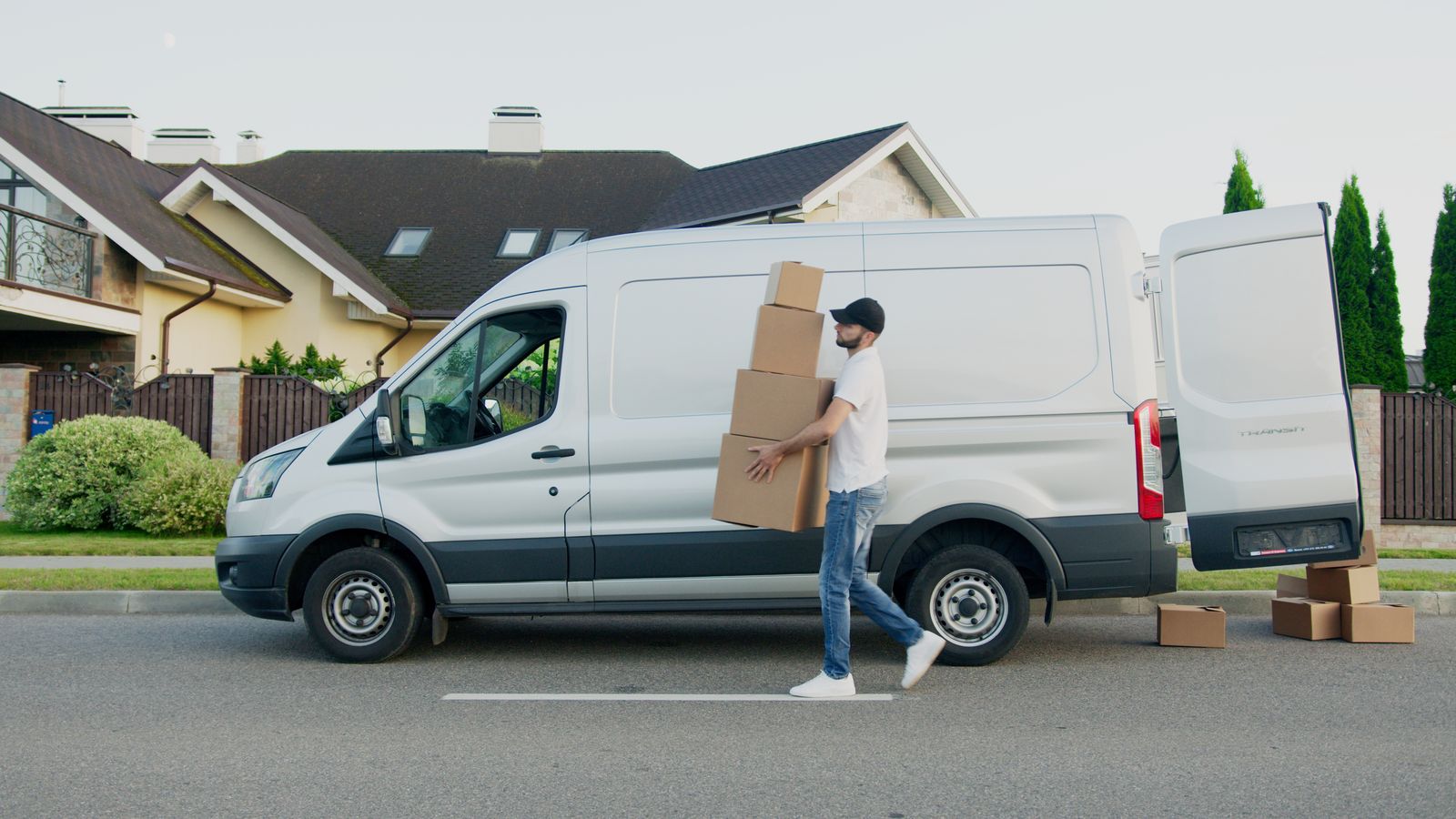
Two patterns recurred so often they deserve their own warning. The first is the mid-job rescue: a crew hired at short notice to finish a specialty move that has already gone wrong costs more than the same crew booked calmly in advance, because now there is a piano wedged in a stairwell, a safe on its side in a hallway, or a hot tub balanced on a dolly in the rain — the job has acquired an emergency, and emergency pricing follows. If you start a borderline item yourself, set the abort point in advance: the moment it needs a fifth person, a second attempt at a turn, or any improvisation involving planks and hope, stop, stabilise the item, and make the call while it is still a booking rather than a rescue. The second pattern is the unprepared professional job: a specialist crew that arrives to find the item still full, still connected, or behind a room of unpacked furniture bills waiting time or reschedules, and either way the saving you negotiated evaporates. Drain the tub, empty the safe, clear the piano's route and have the destination room ready. Preparation is the one discount that is always available, on every specialty job, and it is entirely yours to claim.
The hybrid: how budget movers actually save money here
The cheapest safe version of a specialty move is rarely all-DIY or all-professional. It is this: you pack the household, you move the ordinary furniture with a rented truck and labour-only help if you want it — loading help from two movers without a truck runs roughly $200–$520 in published rate guides — and you hire the specialist for the single dangerous object, as a standalone job, on a weekday, with both rooms prepared. Standalone specialty jobs price better than most people expect precisely because the crew does one thing: the $275 upright, the $500 pool table, the $400 safe. Bundled into a full-service household move, the same items often appear as vaguer, larger "specialty handling" lines. Get the specialty quote separately, in writing, with stairs and carries counted, and let it compete.
Two closing checks before you decide any item is a DIY. First, your own cover: a friend injured helping you move is not covered by the mover's insurance you declined to buy, and your household policy's answer to that scenario is worth one phone call before, not after. Second, your own valuation: if the item is damaged under a professional's care, you have a claim under the valuation you selected; if it is damaged under yours, you have a story. Dispatch has heard both versions many times. The callers telling the second one rarely saved what they thought they would.
This site's directory lists 178 businesses under Specialty Movers and 377 under Piano & Organ Moving in the Movers category alone — in most towns, the specialist is neither rare nor hard to get a competing quote from. Get two. Then DIY the items this guide clears you for, with a clear conscience and the right dollies, and let the professionals take the ones that fill the dispatch log.
Sources
- ConsumerAffairs, "Cost to Move a Piano (2026)" — survey of 13 piano movers: average local flat rates $275 upright, $450 grand; long-distance $500–$2,000; adding an upright to a household move $75–$150: https://www.consumeraffairs.com/movers/cost-to-move-piano.html
- Thumbtack, "2026 Piano Movers Cost" — national average range $269–$472; per-type example rates; uprights at least 500 lb, grands up to about 1,200 lb: https://www.thumbtack.com/p/piano-movers-cost
- Coastal Moving Services, "Piano Moving Cost" — local ranges by type ($250–$600 full uprights, $450–$900 baby grands), stairs adding $60–$130 per flight, grand disassembly requirements: https://coastalmovingservices.com/moving-tips/piano-moving-cost/
- MovingRated, "Piano, Pool Table + Specialty Moving Costs (2026)" — pool table professional move $300–$700 local with three-piece slate slabs of 150–250 lb; hot tub $300–$700 local, crane service $800–$1,500+ extra: https://movingrated.com/guides/specialty-item-moving-costs
- Angi, "How Much Do Hot Tub Movers Cost?" — 2026 national average $600, typical range $300–$1,200; tubs weigh 500–1,000 lb empty: https://www.angi.com/articles/hot-tub-movers-cost.htm?entry_point_id=39477421
- HomeAdvisor / Angi cost guide — specialty item table: gun safe $200–$500, aquarium $50–$100 small and $300+ large, grandfather clock moving among specialty add-ons: https://www.homeadvisor.com/cost/storage-and-organization/hire-a-moving-service/
- USA Gun Shop, "How to Move a Gun Safe: Complete Guide (2026)" — professional safe moves $175–$525 (Liberty Safe figures), weight-tiered pricing to $1,000+ at 800–1,200 lb, and the over-500-lb-or-stairs hire-a-pro rule: https://www.usa-gun-shop.com/how-to-move-gun-safe/
- Lift My Boxes, "Moving Services Cost by Service Type" — labour-only loading help from two movers at $200–$520 local; specialty crew rationale for grands, slate tables and hot tubs: https://liftmyboxes.com/moving-services-cost/
- Photos: mover carrying boxes — photo by Artem Podrez, https://www.pexels.com/photo/5025669/ ; labeled moving boxes — photo by cottonbro studio, https://www.pexels.com/photo/4554242/
More guides
- How to Hire a Moving Company That Won't Hold Your Furniture HostageMovers › Moving & Storage
- How Much Do Movers Cost? Local vs. Long-Distance Pricing ExplainedMovers › Moving & Storage
- Binding vs. Non-Binding Estimates: The Difference That Decides Your Final BillMovers › Moving & Storage
- Moving Insurance and Valuation: What 'Full Value Protection' Really CoversMovers › Moving & Storage
- Long-Distance Moving: A Start-to-Finish Guide for Household GoodsMovers › Household Goods Moving & Storage
- All Guides & ArticlesBrowse the full guides library