Movers › Containers Industrial
Green Containers Industrial: The Lower-Impact Options, Their Real Costs and the Greenwash to Avoid
An industrial container is a steel box with a past. Every one of them was manufactured once, shipped cargo for a decade or more, and then arrived at the moment your family meets it: retired from the sea, sitting in a depot, being sold as storage for a renovation, a workshop, a business overflow unit, or the staging box for a complicated move. That biography is exactly why containers attract green claims — and why those claims need auditing. Reuse is a real environmental good. It is also the easiest story in the world to exaggerate, because the box looks virtuous before you have done a single virtuous thing.
I have sat through the vendor presentations. Here is the honest version: which container choices genuinely lower your impact, what they cost against the standard route, and which eco claims dissolve the moment you ask a follow-up question.
The one green fact that holds up
A shipping container embodies a large amount of already-spent industrial energy. Building one means mining, smelting, rolling, and welding tonnes of steel. When a retired container is reused as-is — for storage, a site office, a workshop shell — that manufacturing cost is not spent again. Research comparing upcycled containers with newly built steel and timber structures, published in the International Journal of Life Cycle Assessment, found overall environmental benefits for container reuse, driven mainly by avoided extraction and production of new structural materials and by steel's high recycling value at end of life.
The industry numbers point the same way. Containers typically stay in active shipping service for about 10 to 15 years, but remain structurally viable for decades in stationary use. And steel recycling itself is energy-frugal: the World Steel Association figures recycling can cut energy use by up to roughly 74 percent versus making steel from raw materials — which means even a container's final chapter is comparatively clean. The greenest container decision, in other words, is almost always: use an existing box, in as close to its existing form as possible, for as long as possible.
Everything else in this guide is a footnote to that sentence — including the ways sellers complicate it.
The grades, and what green actually costs
Containers are sold by condition grade, and the grade ladder is where green intent meets price. Published national price ranges for the common sizes look like this:
| Grade | 20 ft | 40 ft | What it means |
|---|---|---|---|
| Wind & watertight (WWT) | $1,400–$2,500 | $2,000–$3,200 | Retired from cargo service; weatherproof, cosmetically worn — the classic reused box |
| Cargo-worthy (CW) | $1,800–$3,000 | $2,500–$4,000 | Inspected and certified still fit to ship cargo; better condition |
| One-trip / near-new | $3,000–$5,000 | $4,500–$7,000 | Has carried a single load; essentially a new container with a story |
Read the table the green way and it delivers the best news in this whole market: the most reused option is also the cheapest. A wind-and-watertight 20-footer — a box that has genuinely lived a full first life at sea — costs roughly half of a one-trip unit. The environmental and financial incentives point in the same direction, which almost never happens, and which makes the marketing of the premium tier worth examining.
Because here is the industry's open secret, stated plainly by container suppliers themselves: most buyers of containers for buildings and customer-facing projects choose one-trip or new units, because on a large project the price difference feels small, and a pristine box photographs better. A one-trip container is a fine product. But calling it the green choice is a stretch — it is new steel, manufactured for the construction and storage market as much as for shipping, that happened to carry one load on its way to you. If a vendor's eco pitch leads with one-trip units, the pitch is selling you the newest box with the oldest box's halo.
Where reuse genuinely helps — and where it stops helping
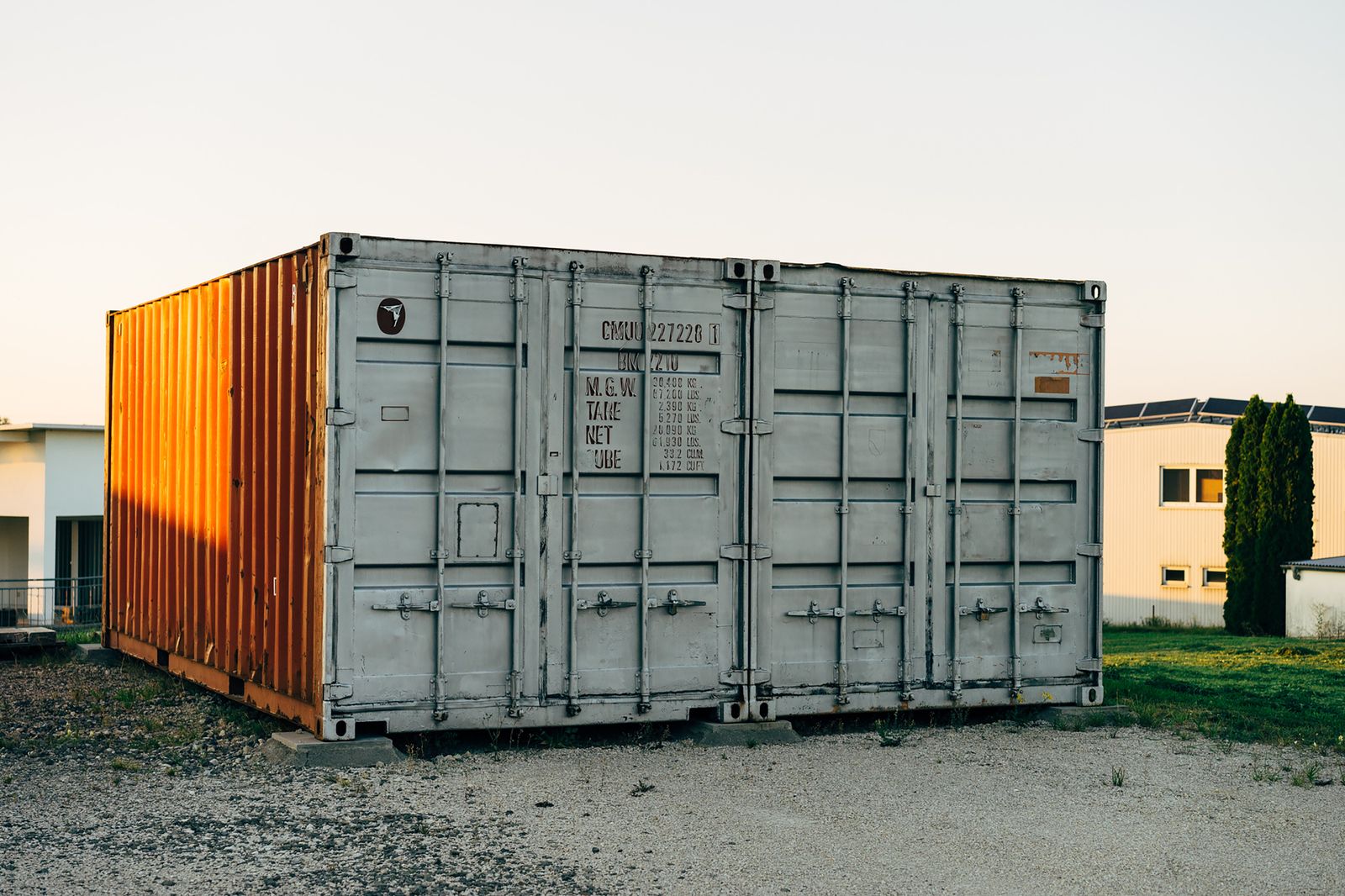
Storage and simple shelter: the strongest case. A WWT container dropped on a pad, used unmodified for storage during a move or renovation, is reuse in its purest form. No new structure is built, no materials are cut away, and when you are done, the box can be resold to the next user — a chain of reuse that can repeat for decades. For families, this is the realistic green win: buy used, buy the grade your contents actually need, and plan to sell the box on rather than abandon it.
Modified containers: the case weakens with every cut. The life-cycle research carries a caveat that marketing rarely quotes: a container building uses substantially more structural steel than a comparable purpose-built frame — the study found about 2.33 times the structural material — so the benefit depends on the reuse displacing new construction, not on the container being magically light. Every window and door cut into corrugated walls removes strength that must be replaced with new steel framing; heavy modification, insulation, and fit-out can consume much of the avoided-impact advantage. A lightly modified used container still usually wins. A container "home" that is mostly new construction wearing a container skin may not.
Transport distance: the quiet footprint. A container is heavy, and it arrives on a truck. Buying a box from a distant depot because it is advertised as a special eco unit can spend a meaningful share of your savings on diesel. The genuinely lower-impact purchase is usually the ordinary used container at the nearest depot. Local and boring beats branded and shipped.

Renting versus buying, in carbon and in cash
For a family whose container need has a known end date — a six-month renovation, a house sale that needs a staged garage, a move split across two closings — renting deserves to be the default, and not only for environmental reasons. A rented container is almost always a used container: rental fleets are built from retired boxes, because no operator puts new steel into a fleet that customers will fill with gravel and furniture. One box in a rental fleet serves dozens of households across its second life, which is the deepest form of the reuse this market offers. When your project ends, the box goes back to work for someone else, and you carry no resale hassle, no collection problem, and no steel stranded in your yard.
Buying wins on a longer horizon. If the container will work for you for five years or more — farm storage, a business that is not moving, a workshop you are genuinely building — ownership lets you choose the grade precisely, modify lightly without a landlord's permission, and sell into the same deep used market when you finish. The crossover is mostly arithmetic: compare the total rental over your realistic timeline against the purchase price minus a conservative resale value, remembering that used containers in sound grades hold their value unusually well precisely because the next buyer's greenest option is your box. What does not pencil out, in either ledger, is buying a one-trip container for a one-season job: new steel, premium price, and a resale conversation in which you explain to the next buyer why your nearly new box should cost more than the depot's honestly worn ones.
There is also a middle route worth asking about, because families rarely hear it offered: rent-to-own and buy-back arrangements, in which a dealer rents you a used unit and credits part of the rent against purchase, or guarantees a buy-back price if you return the box in similar condition. Both structures keep the container circulating, cap your downside, and align the dealer's incentive with selling you a box sound enough to take back. A dealer who will not discuss buy-back on a container they describe as durable is telling you something about the container.
The delivery and the exit are part of the footprint
Two line items never appear in eco marketing, and both belong in your decision. The first is delivery: a container travels on a tilt-bed or flatbed truck, burns diesel by the mile, and may need a crane or a second vehicle on a difficult site. Every quote should separate the box price from the delivery price, and the environmental comparison between two dealers is often decided entirely by which depot is closer — a WWT box from twenty miles away will beat a marginally better-graded box from two hundred miles away on cost, on emissions, and usually on arrival time. Ask where the actual unit sits, not where the sales office is; national sellers routinely dispatch from partner depots, and the box you receive may travel much farther than the website implied.
The second is removal. A container's second life only counts if there is a third one. Before you buy, confirm that a truck can get back in to collect it — gates widen, trees grow, and additions get built in the years a box sits in a yard — and keep the ground under it accessible and drained, because a container that rusts out from below, sitting in standing water, has been converted from a reusable asset into scrap by neglect. A gravel pad, a slight slope, and airflow underneath are the cheapest environmental measures in this entire guide: they are what let your used container be someone else's used container afterward.
The greenwash checklist
These are the claims I have learned to translate on sight:
- "Eco container" with no grade stated. The grade is the environmental story. If the listing will not say whether the box is WWT, cargo-worthy, or one-trip, the eco label is decoration.
- "Saves containers from landfill." Retired containers are a valuable commodity with an active resale and scrap market; steel this recyclable was never landfill-bound. You are participating in a healthy reuse market — good — but you are not rescuing anything from a dump.
- "Carbon-neutral delivery." Ask what is being offset, by whom, and whether the offset is bundled or audited. On a heavy, low-value item delivered by diesel truck, an unexamined carbon-neutral badge is usually the cheapest line in the quote.
- New "green" containers. A newly manufactured container with low-VOC paint or a sustainability certificate is still newly manufactured steel. It may be a responsible product; it is not reuse, and it should not be priced or praised as if it were.
- Bamboo floors and solar kits as headline proof. Nice features, small numbers. The footprint of a container decision lives in the steel, the modifications, and the miles — not in the accessories.
What to do instead: a family's buying order
- Decide whether you need to own at all. For a move or a single renovation, renting a used container keeps one box circulating among many users — reuse multiplied — and removes your end-of-project disposal problem entirely.
- Buy the lowest grade that keeps contents dry. For household storage, that is usually wind-and-watertight. Pay for cargo-worthy when the box must travel by sea or rail again, or when you plan structural modification and want the soundest shell.
- Buy near. Get quotes from the closest depots first; treat a distant "eco" premium as a cost, not a virtue.
- Modify lightly. Doors, vents, and a lock box preserve both the structure and the resale value. Every major cut spends steel and money to replace strength the box already had.
- Plan the exit before the entrance. A container you can resell locally in five years is a genuinely circular purchase. A container placed somewhere it cannot be collected from is a future problem with good branding.
This site lists 476 industrial containers among its listings, alongside thousands of storage and moving providers, so the used market is deep enough that no family needs to buy new steel to get a sound box. The lower-impact choice here is not a specialty product. It is the ordinary retired container, honestly graded, bought close to home, used hard, and passed on — and any seller who tells you the greener option costs twice as much is selling you the paint, not the planet.
Sources
- Bertolini and Guardigli, "Upcycling shipping containers as building components: an environmental impact assessment," International Journal of Life Cycle Assessment — establishes that container reuse shows overall environmental benefits versus new steel and timber structures, driven by avoided material production, and that a container structure carries about 2.33 times the structural material of a comparable steel frame.
- World Steel Association figures via Conexwest's sustainability analysis — establishes that steel recycling can reduce energy consumption by up to about 74 percent versus primary production, and that containers serve about 10–15 years in shipping while remaining viable for decades in stationary use.
- Published national container price guides (Tuff Shipping Containers cost calculator; shipping-containers.com price index) — establishes the grade definitions and price ranges for wind-and-watertight, cargo-worthy, and one-trip containers in 20 ft and 40 ft sizes.
- Conexwest and industry reporting via KSMU/NPR — establishes that most buyers for building projects choose one-trip or new containers over heavily used ones, grounding the greenwash discussion.
Photo credits: shipping containers — photo by Markus Winkler, https://www.pexels.com/photo/two-shipping-containers-sitting-in-front-of-a-building-18609057/ — freight containers from above — photo by Tom Fisk, https://www.pexels.com/photo/birds-eye-view-photo-of-freight-containers-2226458/
More guides
- How to Hire a Moving Company That Won't Hold Your Furniture HostageMovers › Moving & Storage
- How Much Do Movers Cost? Local vs. Long-Distance Pricing ExplainedMovers › Moving & Storage
- Binding vs. Non-Binding Estimates: The Difference That Decides Your Final BillMovers › Moving & Storage
- Moving Insurance and Valuation: What 'Full Value Protection' Really CoversMovers › Moving & Storage
- Long-Distance Moving: A Start-to-Finish Guide for Household GoodsMovers › Household Goods Moving & Storage
- All Guides & ArticlesBrowse the full guides library