Movers › Mini & Self Storage
Green Mini and Self Storage: The Lower-Impact Options, Their Real Costs and the Greenwash to Avoid
Storage is an oddly honest industry about most things and a suddenly poetic one about the environment. Facilities that would never dream of rounding down your rent will happily describe themselves as "eco-friendly," "carbon neutral" or "powered by nature" on the strength of a rooftop array and a hopeful logo. Some of it is real. Storage genuinely is one of the lighter real-estate uses — buildings full of other people's furniture do not flush, cook or commute — and the big operators have done measurable work. Some of it is vocabulary in search of a fact.
This guide sorts the two. This site lists 2,753 mini and self storage listings; if lower impact matters to you, here is what to choose, what it actually costs, and how to test a green claim the way a procurement department would — politely, and with the Federal Trade Commission's rulebook open.
The options that genuinely help
Rooftop solar, at real scale. Storage buildings are nearly ideal solar hosts: vast flat roofs, modest energy demand underneath. The largest operator reports more than 1,000 properties with solar installed and a goal of cutting its Scope 1 and 2 greenhouse-gas emissions 45 percent by 2032; its programme began with a stated aim of solar at 1,000 of its then 2,600-plus locations. A competitor's programme reached 150 projects across 12 states and about 15 megawatts of capacity, producing roughly 20 million kilowatt-hours a year, with individual installations offsetting 80 to 100 percent of a facility's energy demand. That is the genuine article: named capacity, named property counts, generation figures you can divide by each other. It also costs you nothing extra — one operator notes the panels do not change the experience of visiting at all, and the savings case runs the other way, with the competitor estimating $600,000 saved in the first year of one expansion and $15 million over the systems' 25-year life. Solar in storage is a landlord's investment that pays the landlord. Your benefit is real but free, which is exactly why you should refuse to pay a "green premium" for it.
LED and motion-sensor lighting. The same large operator replaced all exterior fluorescent lighting with LEDs across its locations and has been retrofitting interiors, adding motion sensors that light corridors only when someone is in them. In a building whose corridors stand empty most of the day, occupancy lighting is a large, boring, verifiable saving. You can verify this one yourself, on your first visit, by walking down a dark corridor and watching it wake up.
Choosing the non-climate unit, when your goods allow it. Climate control is the biggest energy decision a storage customer personally makes, and it is priced like one: climate-controlled units commonly cost 10 to 25 percent more than standard units in national rate data, and fee guides put the premium higher still on some sizes. Furniture, documents, electronics, instruments and anything that moulds or warps may genuinely need it. Christmas decorations, tools, sports gear, plastic bins and most of what fills a garage do not. The lowest-impact unit is frequently the cheaper one, and the honest question is about your goods, not the facility's brochure.
Storing less, for less time. The unglamorous summit of green storage is a smaller unit vacated sooner. Every month a unit stands rented, it occupies heated, lit, maintained commercial space whether or not its contents still earn their place there. No operator will market this option to you, which is how you know it works.
Reusable packing, around the storage. The storage decision drags a packing decision behind it: rented reusable crates and blankets you return beat a small mountain of single-use cardboard, tape and wrap bought for one move and binned at the other end — provided the crates are genuinely reused many times and collected on a route that already exists, rather than delivered by a dedicated van trip per household. The arithmetic is in the repetitions, not the material.

What the real options cost, side by side
| Option | Cost versus standard | Real impact | Watch for |
|---|---|---|---|
| Solar-powered facility | No tenant premium — savings accrue to the operator | High, when capacity and generation are published | Claims with no property count, capacity or generation figures |
| LED / motion-sensor lighting | No tenant premium | Moderate and verifiable on a visit | Being sold as a headline rather than a building detail |
| Non-climate unit | 10–25% cheaper than climate-controlled, sometimes more | High — your largest personal lever | Storing mould- or heat-sensitive goods in it to save money |
| Smaller unit, shorter stay | Cheaper by the month and the square foot | The highest of all | Nobody will suggest it; set your own exit date |
| Reusable crates and blankets | Rental cost versus buying disposables | Moderate, if reused many times | "Eco" kits of new single-use products in green packaging |
The greenwash: a field guide
The FTC's Green Guides — the federal rulebook for environmental marketing — give you the tests, because they were written against exactly these habits.
The unqualified adjective. The Guides state that marketers should not make broad, unqualified general-benefit claims like "green" or "eco-friendly," because such claims are difficult if not impossible to substantiate. A facility calling itself eco-friendly without immediately qualifying the claim with a specific, significant benefit is not describing itself. It is decorating itself. Ask "in what way, specifically?" and grade the answer.
The seal that certifies nothing. Certifications and seals can function as endorsements: the Guides require disclosure of material connections to the certifying body, and warn against seals that do not clearly convey the basis of the certification. A leaf-shaped badge invented by the company's own marketing department, or issued by an organisation the company funds, fails that test even if every word beside it is true. Look for named, independent, checkable certification — or for plain data, which needs no badge.
The offset that offsets the question. Carbon-offset claims require competent and reliable scientific evidence, accounting that does not sell the same reduction twice, and disclosure if the funded reduction will not occur for at least two years; an offset cannot rest on activity the law already requires. "Carbon-neutral storage" bought with cheap, undisclosed offsets, offered by a business whose actual energy use is modest to begin with, is a claim to admire in proportion to its paperwork. Ask what was offset, by what project, verified by whom. Silence is also an answer.
The cherry-picked attribute. The Guides give the pattern directly: highlighting one small genuine benefit — recycled content in a minor component, say — while the overall picture goes unexamined can mislead even when the highlighted fact is accurate. In storage, the classic form is a facility trumpeting its recycling bins and LED car park while its climate-controlled halls run at full tilt through an empty August. Small true things are still small.
The community-solar sleight. Rooftop community-solar projects — where a facility's roof hosts panels whose power is sold to local subscribers, including lower-income households — are a real and growing good; one operator's northern Illinois programme spans 60 projects and 44 megawatts, with subscriber savings estimated at $750,000 a year. But note whose electricity it is: in grid-feed arrangements, the building may still draw its own power from the local utility while the panels export everything they make. That is a legitimate contribution to the grid. It is not the same sentence as "this facility is powered by the sun," and a careful operator will not make you confuse the two.
The converted building: adaptive reuse, with one caveat
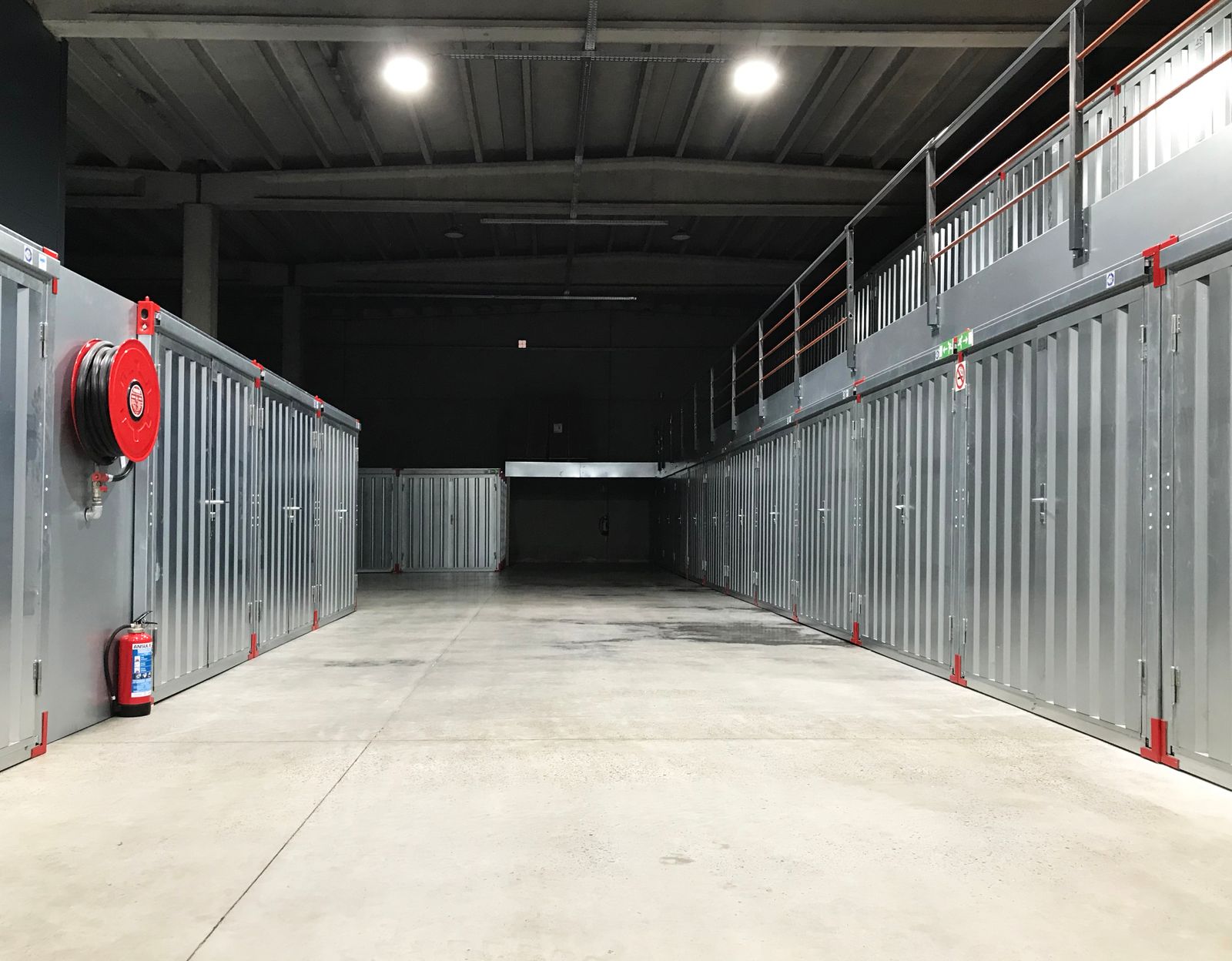
There is one more option worth naming, because families encounter it in every city: the converted facility — the old warehouse, department store or factory reborn as storage. Reuse avoids the embodied carbon of a new building, and in land terms it recycles a structure that already exists rather than paving a fresh site at the edge of town. It is a legitimate point in a facility's favour, and the better conversions say so in those plain terms. The caveat is performance: an old shell can be an energy sieve, and a converted building with poor insulation and elderly climate systems may cost the grid more each year than a tight new build. The claim to credit is not "converted" by itself. It is converted and retrofitted — lighting, insulation and systems brought up to current practice, with the operator able to say what was done. That pairing, reuse plus retrofit, is the version that survives the same substantiation test as everything else in this guide.
How to choose, in practice
Visit, and let the building testify: panels visible on the roof or acknowledged honestly as grid-feed; corridors that light as you enter; a manager who can state the solar capacity or the efficiency measures in numbers rather than adjectives. Then make the two decisions that are actually yours — unit size and climate — on the basis of your goods, and set the exit date when you sign, not when the rate increase reminds you. Finally, hold the claim to the FTC's standard: specific, qualified, significant and substantiated. The operators doing the real work — and there are many, at genuine scale — pass that test easily and usually publish the figures to prove it.
Storage will never be a wilderness experience, and it does not need to be. It needs a roof that earns its keep, lights that sleep when nobody is there, and a customer who rents the space they need for the months they need it. Choose those, from the 2,753 facilities this site lists, and you have taken the green option that survives auditing — which is the only kind there is.
Sources
- Public Storage, sustainability reporting and solar programme articles — establishes more than 1,000 properties with solar, the goal of a 45 percent cut in Scope 1 and 2 emissions by 2032, portfolio-wide exterior LED replacement and interior motion-sensor retrofits, and grid-feed versus direct-power solar arrangements.
- Inside Self Storage, reporting on Extra Space Storage's solar programme with Pivot Energy — establishes 150 projects across 12 states reaching about 15 megawatts and roughly 20 million kilowatt-hours a year, installations offsetting 80–100 percent of a facility's demand, and estimated operator savings of $600,000 in the first year and $15 million over 25 years.
- Inside Self Storage, reporting on Public Storage's community solar expansion in northern Illinois — establishes 60 rooftop community-solar projects totalling 44 megawatts and estimated subscriber savings of $750,000 a year.
- Federal Trade Commission, "Environmental Claims: Summary of the Green Guides" — establishes that broad unqualified claims such as "green" or "eco-friendly" should not be made, the evidence and disclosure standards for carbon offsets, and the rules on certifications and seals.
- GetCostPrice, storage unit cost analysis — establishes climate-controlled units costing about 10–25 percent more than standard units.
- Photo by Steve A Johnson, https://www.pexels.com/photo/851305/
- Photo by David Slaager, https://www.pexels.com/photo/5759147/
- Photo by David Slaager, https://www.pexels.com/photo/5759037/
More guides
- How to Hire a Moving Company That Won't Hold Your Furniture HostageMovers › Moving & Storage
- How Much Do Movers Cost? Local vs. Long-Distance Pricing ExplainedMovers › Moving & Storage
- Binding vs. Non-Binding Estimates: The Difference That Decides Your Final BillMovers › Moving & Storage
- Moving Insurance and Valuation: What 'Full Value Protection' Really CoversMovers › Moving & Storage
- Long-Distance Moving: A Start-to-Finish Guide for Household GoodsMovers › Household Goods Moving & Storage
- All Guides & ArticlesBrowse the full guides library