Movers › Shelving Commercial & Industrial
Green Shelving Commercial and Industrial: The Lower-Impact Options, Their Real Costs and the Greenwash to Avoid
Shelving is the least glamorous purchase in any move, and the most durable one. The truck is gone in a day. The boxes are gone in a month. The industrial shelving a family puts in a garage, a basement, or a rented storage space — and the racking a business installs in a warehouse — will still be standing, holding weight, in ten or twenty years. That longevity is exactly why the green question here is different from the green question in most product categories. With shelving, the lowest-impact option is rarely a special eco product. It is, overwhelmingly, a used steel system that already exists, bought once, inspected honestly, and kept in service instead of being scrapped and replaced with new steel that marketing calls sustainable.
This site lists 363 shelving commercial and industrial providers, and their catalogs now carry the full vocabulary: recycled content, eco coatings, carbon-neutral delivery, sustainably sourced decks. Some of that is real. Some of it is a property of all steel, repackaged as a premium. Here is how to tell the difference, and what each genuine option costs against the standard route.
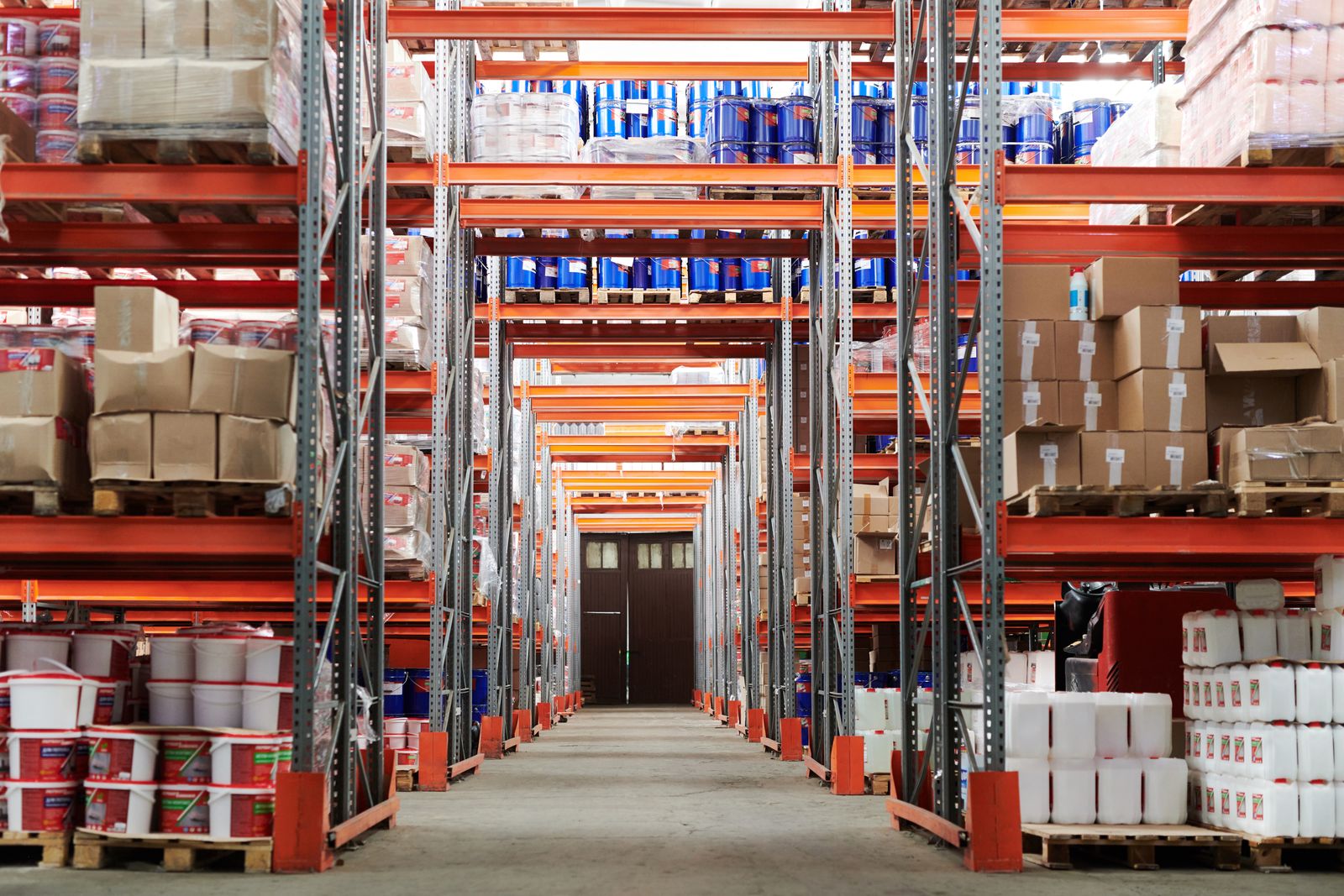
Option one, and it is not close: used steel
Start with the material itself. Steel is the most recycled material in the world, and North American steelmaking is already a recycling industry: steel made in an electric arc furnace is produced from more than 90 percent scrap, common reinforcing steels exceed 97 percent recycled content, and the United States recycles more than 70 million tons of steel scrap a year. Even conventional furnace steel carries a recycled fraction — North American steel contains a minimum of about 28 percent recycled material. Steel also recycles without degrading: melted and reformed, it loses none of its strength, which is why a thirty-year-old upright is not a worn-out product. It is a product whose manufacturing impact was paid, in full, decades ago.
That is the case for used commercial and industrial shelving, and the market prices it plainly. Published warehouse cost guides put sound used selective pallet racking at about 40 to 60 percent of the price of new material, with other installed-cost guides putting the used saving at 30 to 50 percent below new. Against the standard route — new selective racking materials at roughly $50 to $200 per pallet position, or a complete new starter bay at roughly $900 to $1,480 — a used system in good condition is the rare green choice that is also the cheap choice, by a margin no eco-labeled new product approaches.
There is one condition, and it is not optional: inspection. A used upright’s value depends entirely on its condition, because rack damage is capacity damage. The Rack Manufacturers Institute’s standard, ANSI MH16.1-2023, governs the design and use of industrial steel storage racks, and manufacturer safety guidance is blunt about the failure points: a damaged or overloaded rack’s capacity is compromised, beams with visible deformation or cracked connectors should be unloaded and replaced, and allowable beam deflection is the beam’s length divided by 180 — a 96-inch beam deflecting more than about half an inch is an overloaded beam. OSHA has no single shelving standard; it enforces rack safety through its general duty clause and storage rules, which means the legal responsibility for a collapsed rack sits with the facility owner, not with whoever sold the used steel.
So buy used the way an insurer would want you to:
- Reject bent, twisted, or cracked uprights and beams outright. Cosmetic rust and faded paint are negotiable; deformed steel is not a discount, it is a derating nobody has calculated.
- Buy from a dealer who grades and inspects, and can tell you the manufacturer, the beam and frame capacities, and the configuration the system was rated for — over a private sale of unidentified rack with no load data at any price.
- Budget the safety hardware new: anchors, beam safety clips, and column guards are cheap, wear- and installation-specific, and are not the place to inherit someone else’s history.
- In seismic country, ask the hard question early. Older used rack may not meet current local requirements, and engineering and permits for a larger installation can run from about $2,000 to $8,000 — a cost that can narrow the used saving and must be in the comparison from the start.
Do that, and used steel is not the budget substitute for the green option. It is the green option, the budget option, and — because industrial shelving is a standardized, repairable system — usually the practical one.
Option two: buy new once, and buy it to be the last one
Not every installation can use used rack — an unusual configuration, a compliance requirement, a system that must match an existing engineered layout. The genuinely lower-impact new purchase is defined less by its materials claims than by its lifespan decisions:
All-steel construction, including the decks. The component of a shelving system that actually reaches landfill is rarely the frame; it is the deck. Particleboard and fiberboard decks swell with moisture, sag under point loads, and get replaced — repeatedly — while the steel around them lasts. Wire decks and steel decks cost more at purchase and end that cycle: they spread loads, survive wet environments, and are themselves recyclable at end of life. A provider selling a “green” frame with disposable board decks has located the sustainability in the part that was never the problem.
Bolted, adjustable, and reconfigurable systems. A system whose beam levels adjust and whose bays can be reconfigured when the inventory changes gets reconfigured. A welded or proprietary system that no longer fits gets replaced. In relocation work this was the pattern I watched for years: the adjustable systems moved buildings with us; the fixed ones were sold for scrap at every change of tenancy. Standard profiles from major manufacturers also keep spare beams and uprights available for decades, which is what makes repair — the greenest maintenance decision there is — actually possible.
Capacity bought with headroom. A system loaded permanently at its limit gets damaged, overloaded, and replaced early. A system bought one capacity step up runs for decades inside its rating. That is not an argument for overspending; it is the observation that in steel storage, durability is a specification, and the cheapest system that fails in five years has roughly twice the lifetime impact of the one that lasts twenty — before you count the cost of the collapse risk in between.

The greenwash shelf: claims to discount
The Federal Trade Commission’s Green Guides set the standard American marketers are judged against, and their core rule applies to shelving word for word: unqualified general benefit claims — a bare “green,” “eco-friendly,” or “sustainable” — should not be made, because they are difficult, if not impossible, to substantiate; a legitimate claim is limited, clearly, to the specific benefit the seller can prove. Against that rule, these are the claims doing the most work in shelving catalogs:
| The claim | Why it is weaker than it sounds | What to ask instead |
|---|---|---|
| “Made with recycled steel” (unqualified) | Nearly all North American steel carries recycled content — a minimum of about 28 percent, and electric-arc-furnace steel runs above 90 percent scrap. The claim describes the material, not the product’s virtue | “What percentage, and is it post-consumer?” A number is an answer; the adjective is not |
| “Eco / low-VOC coating” as the headline green feature | The finish is a tiny fraction of a steel system’s footprint, and the claim conveniently ignores the decks, the packaging, and the freight | “What else is different about this system?” If the answer is only the paint, you are looking at a paint upgrade priced as a philosophy |
| “Carbon-neutral shelving” | Neutrality is purchased with offsets whose quality, accounting, and timing the FTC requires to be substantiated and disclosed — including whether the reductions occur now or years in the future | “Which registry, how many tonnes, and when do the reductions occur?” |
| “Sustainably sourced wood decks” | A certified deck is still the shortest-lived, most-replaced component in the system, and the one most likely to be landfilled at each replacement | “What do steel or wire decks cost on this same frame?” Compare lifetime cost, not first cost |
| A green certification seal with no basis stated | The FTC expects a certification’s basis to be stated; an unexplained seal may certify one attribute — or be a paid badge | “Certified by whom, for what attribute?” |
| “Recyclable!” | Steel is recyclable essentially by definition, and has been for a century. The claim is true of every competitor on the page | Nothing. File it with “made of metal” as information content |
Notice the pattern: the greenwash in this category does not usually lie. It selects — a true fact about steel in general, presented as a distinction of one product in particular. The defense is the same question in every row: compared to what, by how much, and where is the number?
What the honest options cost, side by side
| Route | Typical cost against new standard | Impact, honestly stated |
|---|---|---|
| Used selective racking / used industrial shelving, inspected | About 40–60 percent of new material cost | The largest saving available: no new steel made at all. Conditional entirely on condition — damaged components must be rejected, not discounted |
| New all-steel system, wire or steel decks, adjustable | Standard new price, plus a modest premium for steel/wire decks over board | Longest service life; the purchase you make once. Recycled content is real but is a property of steel generally |
| New system marketed as eco, board decks, proprietary fittings | Standard price to a premium | The frame’s claims may be true and still miss the point: the decks and the short replacement cycle are the footprint |
| The system you already own, repaired and reconfigured | Parts and labor only — the cheapest row in this table | Always the first option to price. Beams, uprights, and decks for standard systems are replaceable individually |
A buyer’s plan, in order
- Inventory what you already have and price the repair and reconfiguration first. In relocation fit-outs, the most common green failure was a perfectly serviceable system scrapped because nobody priced keeping it.
- Shop used from an inspecting dealer, with manufacturer and capacity data, and reject deformed steel at any discount. Put anchors, clips, and guards in the budget as new parts.
- If buying new, specify for lifespan: all-steel with wire or steel decks, adjustable beam levels, a standard profile with long-term parts availability, and capacity with headroom over your real loads.
- Interrogate exactly one green claim — the one that is doing the selling — with the “compared to what, by how much” question. A provider with a real answer will give you a percentage, a standard, or a registry. A provider without one will give you the leaf again.
- Plan the end at the beginning. Steel shelving has resale and scrap value that board-decked, proprietary systems do not. The system you can sell to the next warehouse is the system that does not become waste when you move — which, for families and businesses planning a move, is the whole point of buying it well.
Shelving will never be a glamorous sustainability story, and that is its virtue. It is heavy, standardized, repairable steel that the world already knows how to recycle, reuse, and keep in service for decades. The greenest system on offer is usually the used one, inspected without sentimentality; the second greenest is the new one bought to be the last one. Everything else is paint.
Sources
- Concrete Reinforcing Steel Institute, Green Attributes of Rebar, citing American Iron and Steel Institute data — electric arc furnace steelmaking reduces energy required by about 65 to 70 percent against virgin production, common reinforcing steels exceed 97 percent recycled content, and U.S. producers recycle more than 70 million tons of scrap a year.
- Steel Recycling Institute figures, as published by steel manufacturers — North American steel contains a minimum of about 28 percent recycled material, and electric arc furnace alloys are made from more than 90 percent scrap.
- WarehousingCosts and Hammerhead warehouse cost guides, as compiled in this program’s shelving research — used selective pallet racking at about 40 to 60 percent of new material prices, new selective racking materials at $50 to $200 per pallet position, a new starter bay at about $900 to $1,480, and engineering and permits at about $2,000 to $8,000 for larger installations.
- Steel King, Pallet Rack Safety guide, and Rack Manufacturers Institute ANSI MH16.1-2023 — that damage and overloading compromise rack capacity, that beams with visible deformation or cracked connectors should be unloaded and replaced, and that maximum beam deflection is the beam length divided by 180.
- Material Handling USA, warehouse racking safety guide — that OSHA enforces rack safety through the General Duty Clause and general industry storage rules rather than a single shelving standard, with responsibility resting on the facility owner.
- Federal Trade Commission, Green Guides — that unqualified general environmental benefit claims should not be made, that carbon-offset claims require competent and reliable substantiation including disclosure of reductions occurring in future years, and that the basis of a certification should be stated.
- Photo by Tiger Lily — https://www.pexels.com/photo/4483610/
- Photo by Alexander Isreb — https://www.pexels.com/photo/1797428/
More guides
- How to Hire a Moving Company That Won't Hold Your Furniture HostageMovers › Moving & Storage
- How Much Do Movers Cost? Local vs. Long-Distance Pricing ExplainedMovers › Moving & Storage
- Binding vs. Non-Binding Estimates: The Difference That Decides Your Final BillMovers › Moving & Storage
- Moving Insurance and Valuation: What 'Full Value Protection' Really CoversMovers › Moving & Storage
- Long-Distance Moving: A Start-to-Finish Guide for Household GoodsMovers › Household Goods Moving & Storage
- All Guides & ArticlesBrowse the full guides library