Movers › Heavy Equipment Movers
Heavy Equipment Movers and Your Taxes: Deductions, Credits and the Paperwork Worth Keeping
Downsizing, later in life, is not the move the brochures picture. Alongside the house and the furniture there is often a working life's worth of heavy things: a tractor and its implements, a skid steer, a lathe, a compressor the size of a wardrobe, a boat lift, a workshop built tool by tool over forty years. When those things have to move — to a smaller property, to a child's farm, to a buyer three counties away — the bill from a heavy equipment mover can run to thousands of dollars, and the first question at the kitchen table is a hopeful one: surely some of this is deductible?
The honest answer is: sometimes, in specific ways, for specific people — and almost never in the way the hopeful question imagines. The second honest answer matters just as much: whatever tax treatment your move does qualify for, it will stand or fall on paperwork gathered at the time, not reconstructed the following April. I investigate moving complaints for a living, and the tax version of the complaint I hear is always the same shape: the deduction was real, the records were not.
This guide explains the tax side of hiring heavy equipment movers as it applies to seniors downsizing: what may be deductible, what must be capitalised instead, what is simply a personal cost, and the file of documents worth keeping for each. It is general information, not tax advice — your own return deserves a qualified professional — but it will tell you which questions to bring that professional, and which folder to bring with you. This site lists 2,791 heavy equipment movers, so getting quotes is easy. Getting the paperwork right is the part nobody quotes for.
First, the bad news: the household moving deduction is gone
Many seniors remember a time when moving costs were deductible, because for decades they were — if you moved for work and passed a distance test and a time test, you could deduct the cost of transporting your household goods and travelling to the new home. That deduction shaped a generation's filing habits, and outdated articles and well-meaning relatives still recommend it.
It no longer exists for civilian moves. The Tax Cuts and Jobs Act of 2017 suspended the federal moving expense deduction from 2018, and although the suspension was originally due to expire at the end of 2025, the One Big Beautiful Bill Act of 2025 removed the sunset and made the suspension permanent. IRS Publication 521 and Form 3903 now serve essentially two groups: active-duty members of the Armed Forces moving under permanent change of station orders, and, from 2026, certain intelligence community employees relocating on a change of assignment.
So if you are downsizing from the family home to a smaller house, a retirement community or a child's property, the cost of moving your household goods — including hiring professionals to move the heavy pieces — is a personal expense on your federal return, however far you move and however necessary the move. The same applies if an adult child or a former employer pays: employer-paid moving costs are now taxable wages to the employee rather than a tax-free benefit, outside those same two excepted groups. Some states kept their own moving expense rules when the federal one closed, so a state-level check is worthwhile — but plan your budget on the federal answer, which is no.
Why does this section lead the guide? Because the most expensive tax mistake in this whole subject is not an aggressive claim. It is a family that spends freely all autumn believing a deduction is coming in April, and meets the truth at filing time. Know it in advance and the rest of this guide — the parts where money genuinely can be recovered — gets your full attention.
Where heavy equipment is different: when the move is a business move
A tractor in a barn is household property. The same tractor, used in a farming or contracting business you report on your taxes, is a business asset — and the tax code treats moving business assets very differently from moving household goods.
IRS guidance in Publication 535 draws the line that decides most cases: the cost of moving machinery and equipment you already own from one place of business to another — one plant to another, one city to another — is generally a deductible business expense, reported as an ordinary and necessary cost of the business. A sole proprietor reports such costs on Schedule C, in the "other expenses" area; a farm operation reports on its own schedule. If your downsizing includes relocating a still-operating business — moving the workshop equipment to a smaller commercial unit, hauling machinery to a son or daughter who is taking over the operation as a going concern — the hauling bill for the business assets may be deductible in the year of the move.
Three cautions belong with that good news:
- The business must be real and continuing. A business that has already closed, sold its assets or stopped filing is not moving its equipment; its owner is moving personal property that used to be business equipment. The timing of the move against the timing of the closure is exactly what an examiner would look at, and exactly what your records should make clear.
- Mixed loads must be split. One truck carrying the business lathe and the household freezer produces one invoice and two tax treatments. Ask the mover to itemise, or keep your own contemporaneous note of what was business and what was household, with the charge divided on a reasonable basis — weight or volume are the usual ones.
- Personal use after the move changes the story. Equipment moved at business expense and then quietly retired into purely personal use invites questions. If the plan is genuinely mixed, tell your tax professional before the move, not after.
The trap in the other direction: new equipment must be capitalised
The mirror-image mistake involves newly bought equipment. If you buy a machine — a replacement tractor for the smaller property's acreage, say, bought as part of a business — and pay a heavy equipment mover to haul it from the seller to its place of service, that transport cost is not a current deduction. Under the IRS's basis rules in Publication 551, the cost of property you buy includes amounts you pay for freight, along with sales tax and installation and testing. The hauling charge is added to the machine's cost basis and recovered over time through depreciation.
That is not necessarily bad news. Basis is money you get back — through depreciation deductions year by year, through a Section 179 election to expense qualifying property in the year it is placed in service (freight included in the basis is part of the amount eligible, subject to the annual dollar and taxable-income limits), through bonus depreciation where it applies, or as a reduction of gain when you eventually sell. What it cannot be is both: a cost deducted immediately and counted in basis. Claiming the freight as a moving expense in year one and then depreciating the full invoice including freight is the kind of double benefit that unravels returns.
The practical habit that avoids the trap is simple: when equipment is purchased, file the mover's invoice with the purchase paperwork, not with the household moving receipts, and note on it "freight — add to basis." Your future self, or your accountant, will be grateful in whichever year the machine is sold.
| Situation | Federal treatment | Paperwork that proves it |
|---|---|---|
| Household move while downsizing | Personal expense; no federal deduction | Keep invoices anyway for state rules and your own records |
| Moving equipment of a continuing business | Generally deductible business expense | Itemised mover invoice, business records showing the relocation |
| Hauling newly purchased equipment to its first place of service | Added to the equipment's cost basis; recovered via depreciation, Section 179 or on sale | Purchase invoice plus mover's freight invoice filed together |
| Selling equipment as part of downsizing | Hauling you pay may reduce amount realised / factor into gain or loss — ask your preparer | Sale agreement, invoice, settlement statement |
| Donating equipment to charity | Charitable deduction rules, Form 8283 over $500 | Acknowledgment, appraisal over $5,000, Form 8283 |
Selling and donating: the downsizing exits have their own paperwork
Most downsizing moves end with less equipment than they started with, and the exits are tax events in their own right.
Selling. When you sell a tractor, implement or machine, the sale is reportable: equipment used in a business or held for investment is generally sold on Form 4797, and the gain or loss is measured against your adjusted basis — which is why the freight you capitalised years ago, and the depreciation you claimed, both matter now. If you pay a mover to deliver the machine to the buyer, or the buyer pays and nets it off the price, get that arrangement in the written sale agreement. A sentence in the agreement is worth a folder of explanations later.
Donating. Equipment given to a qualified charity — a school, a museum, a community farm — can support a charitable deduction, but the documentation ladder is steep and it is climbed before the truck leaves. For noncash contributions over $500 in total, Form 8283 is required. For an item or group valued over $5,000, you need a qualified appraisal by a qualified appraiser, the charity's signed acknowledgment on Form 8283, and the appraisal obtained within the window the rules set — signed no earlier than 60 days before the donation and received by the return's due date. For a donation of $250 or more, a written acknowledgment from the charity is required in any case. If the charity sells the equipment within three years, it files Form 8282 and sends you a copy — one more reason to keep the file open rather than shredded.
The recurring heartbreak in donation cases is sequencing: the equipment is hauled away in a burst of goodwill, and the appraisal is commissioned afterwards, when the machine is gone and the timing rules can no longer be met. If a donation over $5,000 is even a possibility, appraise first, sign second, haul third.

Credits: the short, honest section
There is no general federal tax credit for moving costs, for seniors or anyone else — not for hiring movers, not for downsizing, not for relocating heavy equipment. Anyone who sells you a move by promising a "senior relocation credit" is inventing a provision. State programmes vary, and energy-related credits attach to qualifying property and installations, not to hauling them. If a credit is part of your decision, name it, read its current IRS or state page, and confirm transport is an eligible cost — before the move, from someone who is not being paid to move your tractor.
The file worth keeping
Everything in this guide reduces to one folder — paper or scanned — assembled while the move happens:
- Every mover's quote, contract and final invoice, itemised where possible, with business and household items separated on mixed loads.
- Proof of payment — bank or card records matching the invoices, not just the invoices alone.
- Purchase paperwork for any new equipment, with freight invoices clipped to it and marked for basis.
- Business records showing continuity if you claim a business moving deduction: the filings, licences or accounts that show the operation moved rather than closed.
- Sale agreements and settlement papers for equipment sold, noting who paid for delivery.
- Donation acknowledgments, Form 8283 and appraisals for anything given away, obtained in the right order.
- A one-page timeline in your own words: what moved, from where, to where, on what date, and why. Contemporaneous notes carry weight that reconstructions never do.
Keep the file at least three years after filing the return it supports — longer where basis is involved, because equipment records matter for as long as you own the equipment and for years after you sell it; seven years is the safer household habit.
Downsizing is emotional enough without a tax surprise. The rules, seen plainly, are not cruel: the household move is yours to pay for, the business move may be deductible, the new machine's freight belongs in its basis, and the generous exits reward those who do paperwork first. Hire the mover for the heavy things — a tractor is not a job for a borrowed trailer and optimism — and decide, before the truck arrives, which tax story each load belongs to.
Sources
- LegalClarity, IRS Publication 521 moving expense rules — the federal moving expense deduction suspended by the Tax Cuts and Jobs Act and made permanent by the One Big Beautiful Bill Act of 2025, with exceptions for active-duty Armed Forces members on permanent change of station orders and, from 2026, certain intelligence community employees.
- IRS Publication 551, Basis of Assets — the cost basis of purchased property includes amounts paid for sales tax, freight, and installation and testing.
- Fyle, equipment mobilisation and demobilisation costs, summarising IRS Publication 535 — moving existing business machinery between places of business is generally a deductible business expense, while transporting newly purchased machinery to its place of service must be capitalised into basis.
- BlueJ, shipping and delivery fees under Section 179 — freight is included in the cost basis eligible for Section 179 expensing, subject to annual and business-income limits.
- LegalClarity, Form 8283 noncash charitable contributions — Form 8283 required over $500, a qualified appraisal and signed donee acknowledgment over $5,000, and appraisal timing rules.
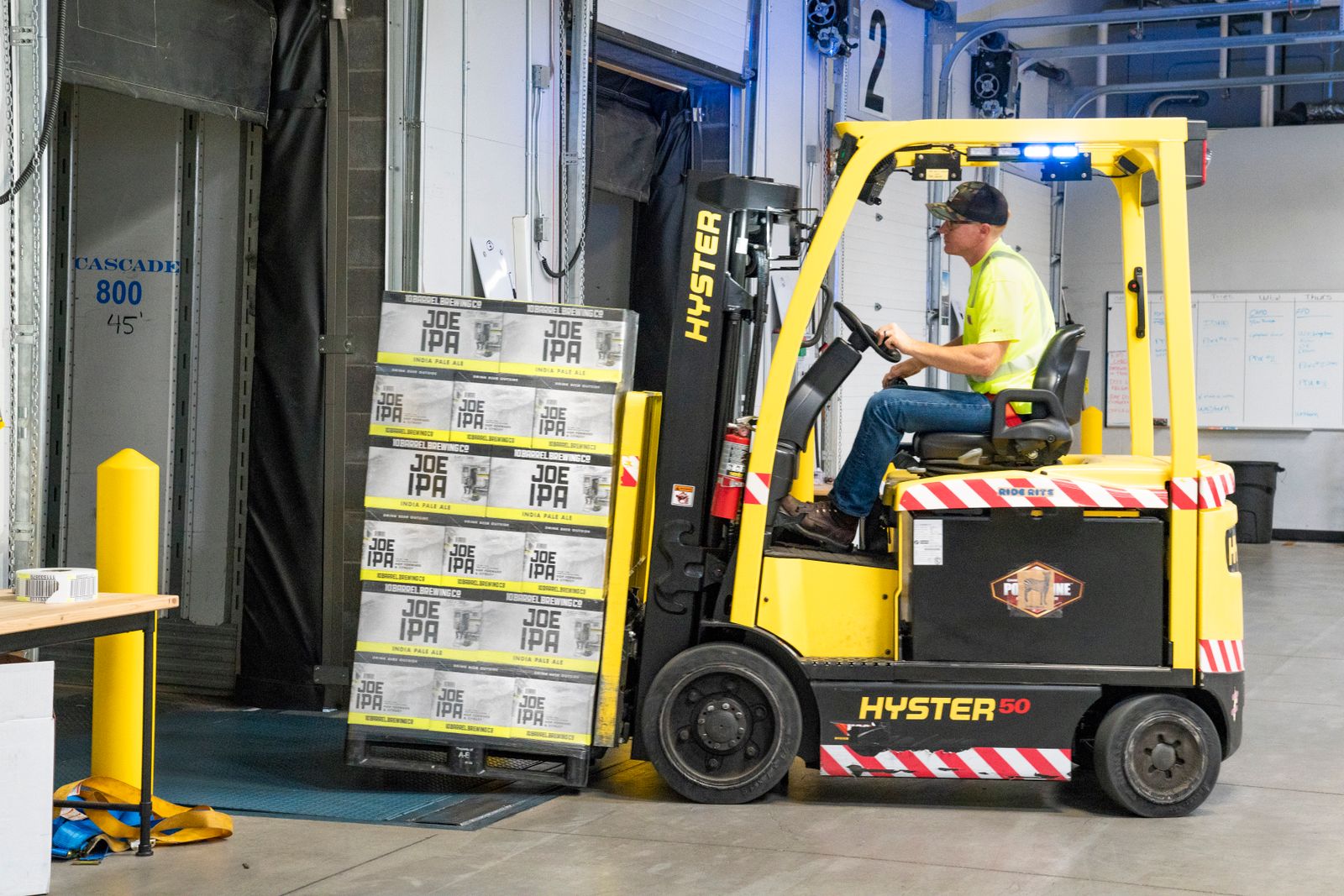
- Photo by ELEVATE, https://www.pexels.com/photo/man-riding-a-yellow-forklift-lifting-boxes-1267324/
- Photo by Tiger Lily, https://www.pexels.com/photo/warehouse-with-concrete-floors-4483610/
More guides
- How to Hire a Moving Company That Won't Hold Your Furniture HostageMovers › Moving & Storage
- How Much Do Movers Cost? Local vs. Long-Distance Pricing ExplainedMovers › Moving & Storage
- Binding vs. Non-Binding Estimates: The Difference That Decides Your Final BillMovers › Moving & Storage
- Moving Insurance and Valuation: What 'Full Value Protection' Really CoversMovers › Moving & Storage
- Long-Distance Moving: A Start-to-Finish Guide for Household GoodsMovers › Household Goods Moving & Storage
- All Guides & ArticlesBrowse the full guides library