Movers › Heavy Equipment Movers
Heavy Equipment Movers for Renters: What You Can Arrange, What Needs Permission and What the Landlord Covers
Renters call dispatch about heavy equipment more often than anyone expects. A mini excavator bought for a side business and kept behind a rented house. A workshop lathe, a gun safe, a hot tub, a compact tractor on a leased acre, a commercial smoker for a food truck that lives in the driveway. The machine is yours. Almost everything the machine has to cross to leave — the driveway, the lawn, the septic field, the gate, the street in front — is not.
That distinction runs this entire subject. This site lists 2,791 heavy equipment movers, and any of them will quote your job in a day. What the quote cannot settle is whose property absorbs the risk of a 26,000-pound truck doing its work. Here, from the dispatch side of the desk, is what a renter can arrange alone, what needs the landlord's written permission first, and what is the landlord's cost when something underneath it all gives way.
What you can arrange on your own
The haul itself. Booking a carrier, choosing the trailer, agreeing the date and the price for moving your machine between two points — that is your property and your contract. No lease gives a landlord a vote on who carries your excavator away, any more than on who carries your sofa.
Loading on a hard surface you already use for vehicles. If the truck can load from the street or from the existing driveway, in the ordinary way, without crossing lawns, adding cribbing or bringing in a crane, the job stays inside what tenants do every day. Tell the carrier at booking that it is a rental property and the access is driveway-and-street only; a good dispatcher will plan the trailer and approach around exactly that constraint, and would rather hear it on Tuesday than at the gate on Friday.
Small heavy things, moved small. The safe, the lathe, the smoker — items that travel by appliance dolly, liftgate or a standard moving crew across floors and thresholds — are a normal moving job. Protect the floors, mind the stairs, and the landlord's interest is the same as in any move: you return the property as you found it.
What needs written permission — before the truck is booked
Anything crossing the lawn. The moment a truck, trailer or machine leaves the paved surface, you are asking the ground to hold weight it may not be able to hold — and the ground belongs to the landlord. Ruts are the visible, cheap version. The expensive version is underground, and it deserves its own paragraph below. Permission for a lawn crossing should be written, should name the route, and should be paired with ground protection — mats or plywood specified by the carrier, whose cost belongs in your quote, not in a later argument.
A crane, a boom lift or any set-down on the property. Hot tubs and safes increasingly arrive and leave by crane over the house. A crane set-up puts outrigger loads on driveway or lawn that dwarf a truck's, may overhang a neighbour's airspace, and turns a moving job into a small construction operation. Landlords can reasonably insist on approving it, on seeing the carrier's insurance certificate, and on choosing where the outriggers stand. Standard leases back them up: heavy installations such as hot tubs and above-ground pools are commonly prohibited unless explicitly authorised, precisely because of weight, liability and the landlord's insurance.
Storing the machine there in the first place. Many renters discover, at moving time, that the argument is not about the haul but about the years before it. Leases routinely restrict vehicle repair, business operations and heavy items that affect the landlord's insurance. If your arrangement to keep equipment at the property was never written down, fix that before you book its removal — a landlord who learns about the excavator from the lowboy in the street is a landlord reading the lease's damage clauses with fresh interest.
Gate, fence or tree work for access. Removing a fence panel, cutting back a tree, widening a gate swing: all alterations to the landlord's property, all needing consent, all needing a plan to restore. Carriers will happily do the minimum necessary and leave; the restoration bill lands on the tenancy.
Disconnecting anything plumbed, wired or bolted. A landlord-owned appliance, a hard-wired workshop fitting, a bolted-down safe in a landlord's garage — if it is attached to the building, detaching it is the landlord's call, and often the landlord's contractor.

The underground problem: septic, and who pays when it breaks
Here is the call dispatch dreads. A loaded truck crosses a rural rental's lawn on a damp morning, feels fine, and leaves. Six months later the drains back up. Vehicle weight over a septic drain field compacts the soil the field depends on, can collapse its perforated pipes and crack distribution boxes — damage that published septic guidance puts at $5,000 to $20,000 to fix, and that may not show symptoms for six to eighteen months. A standard residential septic tank is engineered for earth cover and foot traffic, not axle loads; even the tank lid can fail under a vehicle it was never rated for. The Environmental Protection Agency's SepticSmart guidance is blunt: never drive or park on a drain field.
For a renter, the consequences stack. If your carrier crossed the field with your knowledge and without the landlord's consent, expect the repair to be laid at your door — it is damage caused by your contractor, and leases typically make a tenant answer for their contractors as for themselves, with liability that is not capped at the deposit. If the landlord directed the route, or the field's location was never disclosed and no reasonable tenant could have known, the argument runs the other way. Which is why the permission conversation must include one specific question — where is the septic tank and field, and where must wheels never go? — asked in writing, answered in writing, and passed to the carrier as a marked route. A landlord who cannot say where the system is has given you the strongest reason to keep every wheel on pavement.
The same logic covers the driveway itself. A sound driveway that cracks under an overweight axle is your carrier's — and therefore your — problem; a driveway already crumbling at move-in, documented in your move-in photographs, is the landlord's pre-existing condition. Photograph the pavement before the truck arrives. In dispatch, we called those photos "the whole claim file," because they usually were.
What the landlord covers
The property's own systems, failing on their own. A septic system that fails from age, a driveway that deteriorates from ordinary use, a fence that rots — normal wear and the property's infrastructure are the landlord's cost of owning the asset, and a tenant cannot be billed for them merely because a move happened nearby in time. Causation is the whole argument, which is why dates, photographs and the written route matter more than opinions.
Landlord-owned heavy items. If the fridge, the laundry pair or a fixture came with the property, moving, disconnecting or replacing it for the landlord's purposes is the landlord's arrangement and the landlord's bill — agree it in writing rather than folding it into your carrier's job, where it will be priced as your work and insured as nobody's.
Undisclosed hazards. A landlord who knows the drain field sits under the only lawn route, or that the driveway bridges a culvert, and says nothing, carries a share of what follows. You cannot protect against a risk you were never told existed — but you can create the record that you asked. Ask.
| Situation | Who arranges | Who pays if it goes wrong |
|---|---|---|
| Haulage of your machine, street or driveway loading | You | You and your carrier, under the haul contract |
| Lawn crossing with mats, written consent, marked route | You, with landlord's consent | Shared by the paperwork: carrier for its work, you for your contractor — consent and route decide the argument |
| Crane lift or outriggers on the property | You, only with written approval and carrier's insurance on file | You and the carrier; expect the landlord to require proof of insurance first |
| Septic or driveway failure from age and ordinary use | Landlord | Landlord |
| Damage by your carrier to lawn, drive or systems | Your carrier, arranged by you | The carrier's insurance, pursued by you — the landlord will look to you first |
| Moving or disconnecting landlord-owned appliances and fixtures | Landlord | Landlord |
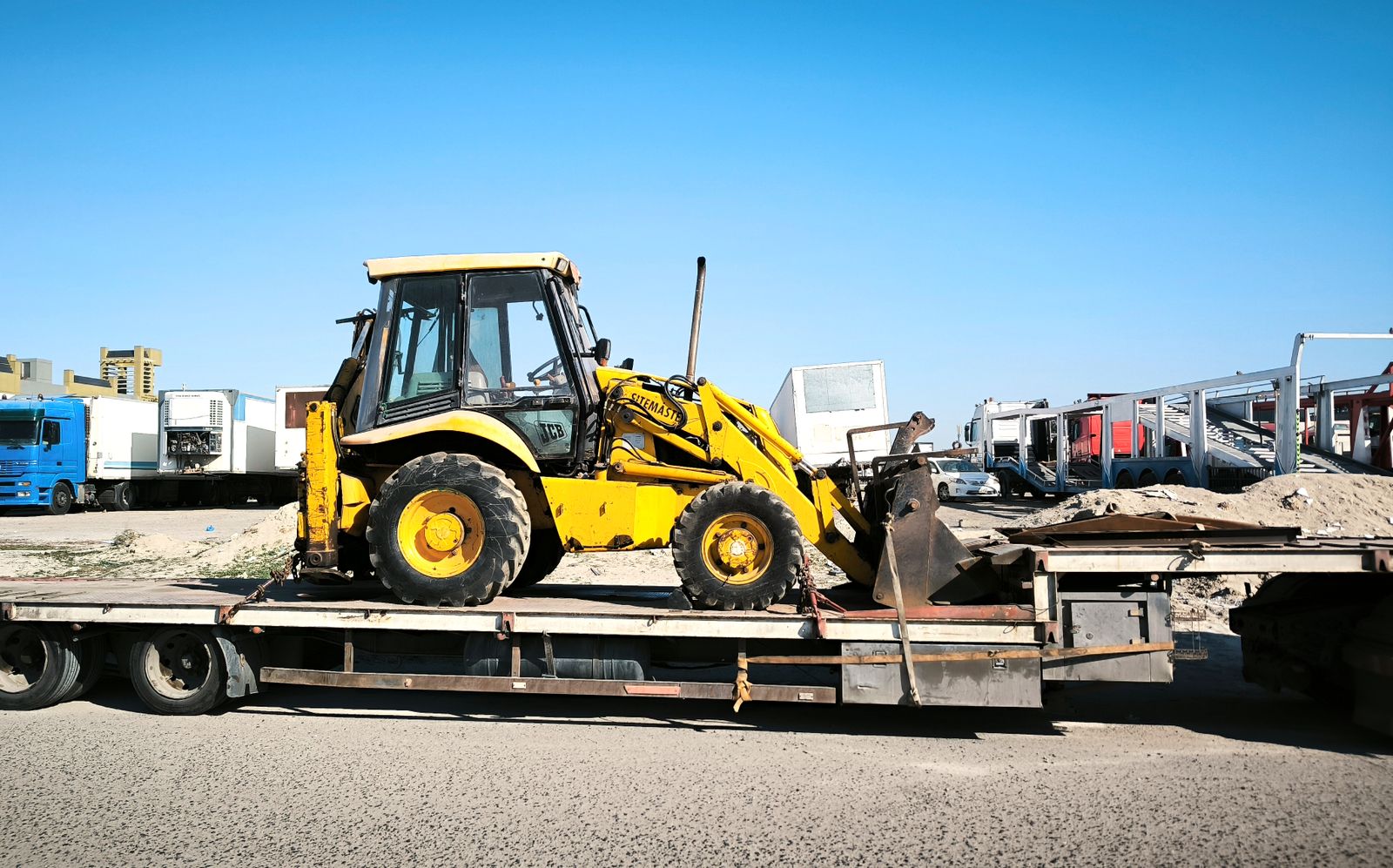
The permission request that works
Send it before you book, keep it short, and make it easy to say yes to. It names the machine, its weight, the carrier and its insurance, the date, the exact route wheels will take, the ground protection to be used, any gate or fence work and how it will be restored, and it asks the two questions only the landlord can answer: where are the septic tank and field, and is there anything else underground or overhead — lines, culverts, easements — the carrier should know about? Attach the carrier's insurance certificate to the request rather than offering to fetch it later. In dispatch we watched landlords approve in a day requests that arrived like that, and stall for weeks the ones that began "a truck is coming Friday."
The short version
You can hire the mover; you cannot volunteer the landlord's ground. Book the haul freely, load from pavement where you can, and treat every wheel off the hard surface, every crane, every gate panel and every buried system as a written-permission item with the landlord's knowledge priced in. The landlord covers the property's own ageing systems and their own appliances; you cover what your machines and your carrier do to the place. This site lists 2,791 heavy equipment movers — the good ones ask about access and ground before they quote. When the customer is a renter, that question is not small talk. It is the job.
Sources
- SepticMind, "Can You Drive Over a Septic Drain Field?" — establishes that vehicle weight compacts drain-field soil, collapses pipes and cracks distribution boxes, that a single heavy-truck pass can cause $5,000–$20,000 of damage with symptoms delayed six to eighteen months, and the EPA SepticSmart rule never to drive or park on a drain field.
- EngineerFix, "Can You Drive Over a Septic Tank?" — establishes that standard residential tanks are engineered for soil cover and foot traffic rather than axle loads, and that traffic-rated components are a separate engineering class.
- Adam Timothy Group, guide to standard Texas lease prohibitions — establishes that standard leases prohibit hot tubs, above-ground pools and similar heavy installations unless explicitly authorised, restrict vehicle repair and business operations, and bar items that affect the landlord's insurance.
- Photo by mali maeder, https://www.pexels.com/photo/69483/
- Photo by Tayssir Kadamany, https://www.pexels.com/photo/38095094/
- Photo by R9 Media Photo Collective, https://www.pexels.com/photo/40840366/
More guides
- How to Hire a Moving Company That Won't Hold Your Furniture HostageMovers › Moving & Storage
- How Much Do Movers Cost? Local vs. Long-Distance Pricing ExplainedMovers › Moving & Storage
- Binding vs. Non-Binding Estimates: The Difference That Decides Your Final BillMovers › Moving & Storage
- Moving Insurance and Valuation: What 'Full Value Protection' Really CoversMovers › Moving & Storage
- Long-Distance Moving: A Start-to-Finish Guide for Household GoodsMovers › Household Goods Moving & Storage
- All Guides & ArticlesBrowse the full guides library