Movers › Heavy Equipment Movers
Heavy Equipment Movers in a Small Town or Rural Area: Fewer Choices, Different Math, Better Tactics
The complaint pattern is so consistent it could be a form letter. A farmer, a small contractor, a family that has bought a tractor at auction two counties away gets a quote that sounds reasonable. Then the machine arrives — or worse, does not — and the final bill carries lines nobody mentioned: a charge for the truck's empty drive to the pickup, a permit nobody priced, an escort car, a second day because the load could not travel after dark, waiting time while a gate was unlocked and a field dried out. Nothing on the invoice is invented. It was simply never in the quote.
Heavy equipment moving is specialised work everywhere. Outside the big metros it is also thin work: fewer carriers, fewer suitable trailers within reach, longer empty miles, and seasons — harvest, planting, construction — when every lowboy in the region is spoken for. This site lists 2,791 heavy equipment movers, but they are not evenly spread across the map, and the distance between you and the nearest available trailer is a price, whether it appears on your bill as a line or hides inside the rate. This guide is how rural customers get the real number before the truck rolls.

What you are actually buying: linehaul is only the first line
A heavy haul quote is built from the same stack wherever you live: a per-mile rate for the truck and trailer, fuel, a permit for every state (and sometimes city) where the load is oversize or overweight, pilot cars or escorts where width, length or height requires them, and accessorials — loading help, waiting time, overnight layovers, special crossings. Brokers and carriers who publish their arithmetic are blunt about it: the per-mile number is rarely the invoice.
The published rate bands, from 2026 industry guides, give you the shape of the market:
| Load type | Typical per-mile rate | Notes |
|---|---|---|
| Legal load on a lowboy / RGN trailer | $3.50–$6.00 | Machine inside legal size and under 80,000 lb gross; no permits needed |
| Oversize only (permitted width or height) | $5.00–$8.00 | Permits plus, past thresholds, an escort |
| Overweight or combined oversize/overweight | $6.00–$15.00 | Multi-axle trailers, heavier permit stack |
| Superload | $10.00–$20.00+ | Route surveys, bridge analysis, engineering — quoted individually |
| Each escort / pilot car | $1.50–$3.00 per mile, extra | Two escorts on a 500-mile trip can add $1,500–$3,000 alone |
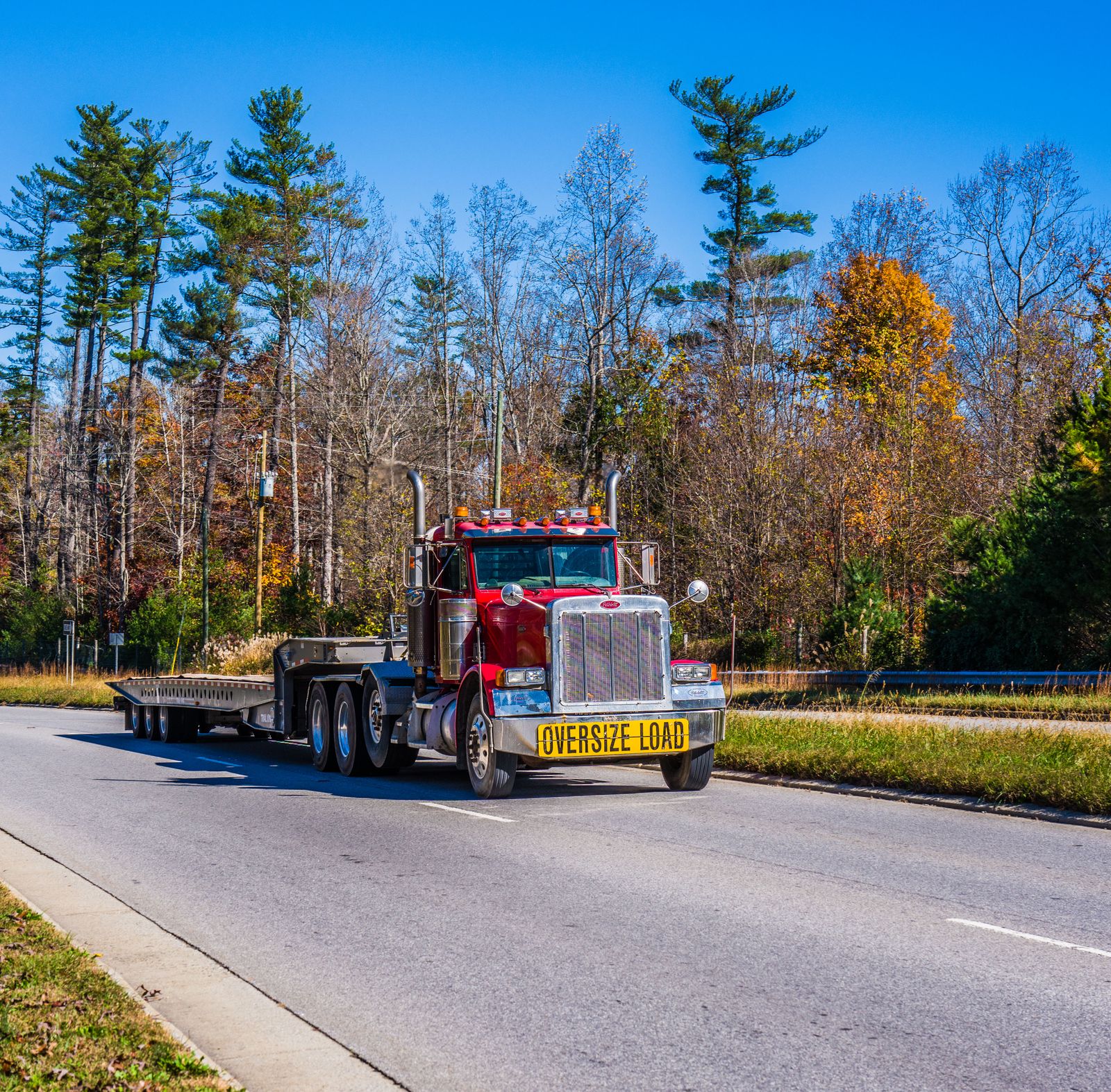
Legal limits are the hinge. Federal Interstate maximums sit at 80,000 pounds gross, 102 inches (8 feet 6 inches) wide; height limits are set by states, commonly 13 feet 6 inches. Past those lines, every state on the route wants its own permit — standard single-trip permits are often surprisingly cheap, $15 to $100 in many states, with farm-equipment guides putting typical state permits at $50 to $300 and processing at one to five business days — but escorts, route surveys ($500 to $2,000 in published guides) and daylight-only travel rules are where a permitted load's price actually climbs. Permits and escorts together commonly add 20 to 50 percent or more to a base haul.
For the machines rural customers move most, published examples land here: a large farm tractor of about 22,000 pounds moved 300 miles at roughly $1,400 to $1,900; a mid-size excavator of about 50,000 pounds over 800 miles at $3,500 to $5,000; a combine harvester over 600 miles at $2,800 to $4,200 — all assuming legal dimensions or minimal permits. And for short work, forget per-mile thinking entirely: local legal moves under about 100 miles are commonly quoted flat, around $300 to $800, because dispatch minimums, loading time and positioning the trailer dominate a short job. A local oversize move can be $800 to $2,500 or more on the same logic.
The rural surcharge has a name: deadhead
In a city, the carrier's trailer starts near your machine. In a rural county, the nearest lowboy may sit 80 miles away, and the truck drives those miles empty — deadhead — before your load earns it anything. Some carriers price deadhead openly as a mobilization charge. More fold it into a higher per-mile rate on short hauls, which is why a 100-mile rural haul can price at $6 a mile while a 500-mile haul prices lower per mile: the fixed costs of getting there, loading and permitting are spread over fewer paying miles.
Neither approach is a scam. What is worth refusing is a quote that will not say which approach it uses. Ask, in plain words: How far is your trailer coming from, and am I paying for those miles? A carrier who answers plainly — and most rural carriers, who live on repeat business from the same counties, will — has just told you how to compare their quote against the carrier two towns further away. The cheaper per-mile rate from 150 miles out can be the dearer job. The nearer trailer at a higher rate can be the bargain. You cannot see either until deadhead is on the table.
The same logic runs at the destination end. Hauling to or from rural areas typically costs more because route density is low: the truck that delivers your tractor to a farm is unlikely to find a paying load for the drive back, and your rate quietly carries part of that empty return. Terminal-to-terminal service, where it exists, is cheaper than door-to-door for exactly this reason — though for a machine that cannot travel the last miles on its own, door-to-door is usually the only real option, and the honest comparison is between complete quotes, not between a complete one and a partial one.
Scarcity, seasons and the waiting list
Rural heavy haul runs on a calendar city customers never see. Harvest season — roughly August through November for farm equipment — pushes rates up a reported 15 to 30 percent as every grower moves combines, tractors and sprayers at once; construction season does the same for excavators and dozers in spring and summer. Winter in northern states can shut oversize travel down for days at a time, and some carriers add winter surcharges of 10 to 15 percent. Against that calendar, a rural booking is not a purchase. It is a place in a queue.
Tactics that work with the queue, rather than against it:
Book against the season, not inside it. If a machine bought at a winter auction does not need to work until spring, say so and ask for the off-peak price. Carriers would rather fill a quiet February week at a lower rate than lose the job, and your flexibility is the one currency a rural customer reliably has.
Combine loads and neighbours. Two machines from the same area to the same area — yours and a neighbour's, a tractor and its implements, equipment for two jobs on one farm — can share positioning miles that would otherwise be charged twice. Dispatchers build these consolidations when customers give them the chance and the time; they cannot build them on a Friday-afternoon phone call.
Be movable on the day, immovable on the specification. Give the carrier a window of days and an exact machine: make, model, year, operating weight, and dimensions with attachments as they will actually travel. A combine at 12 to 20 feet wide depending on configuration, or a sprayer at 10 to 18 feet, crosses permit and escort thresholds on configuration alone — duals on or off, header on or off — and a quote built on a guessed width is a dispute scheduled in advance.
The site end: where rural bills are really written
Read enough complaints and a pattern emerges: the highway part of a rural equipment move is rarely the problem. The problem is the last half-mile and the first hour.
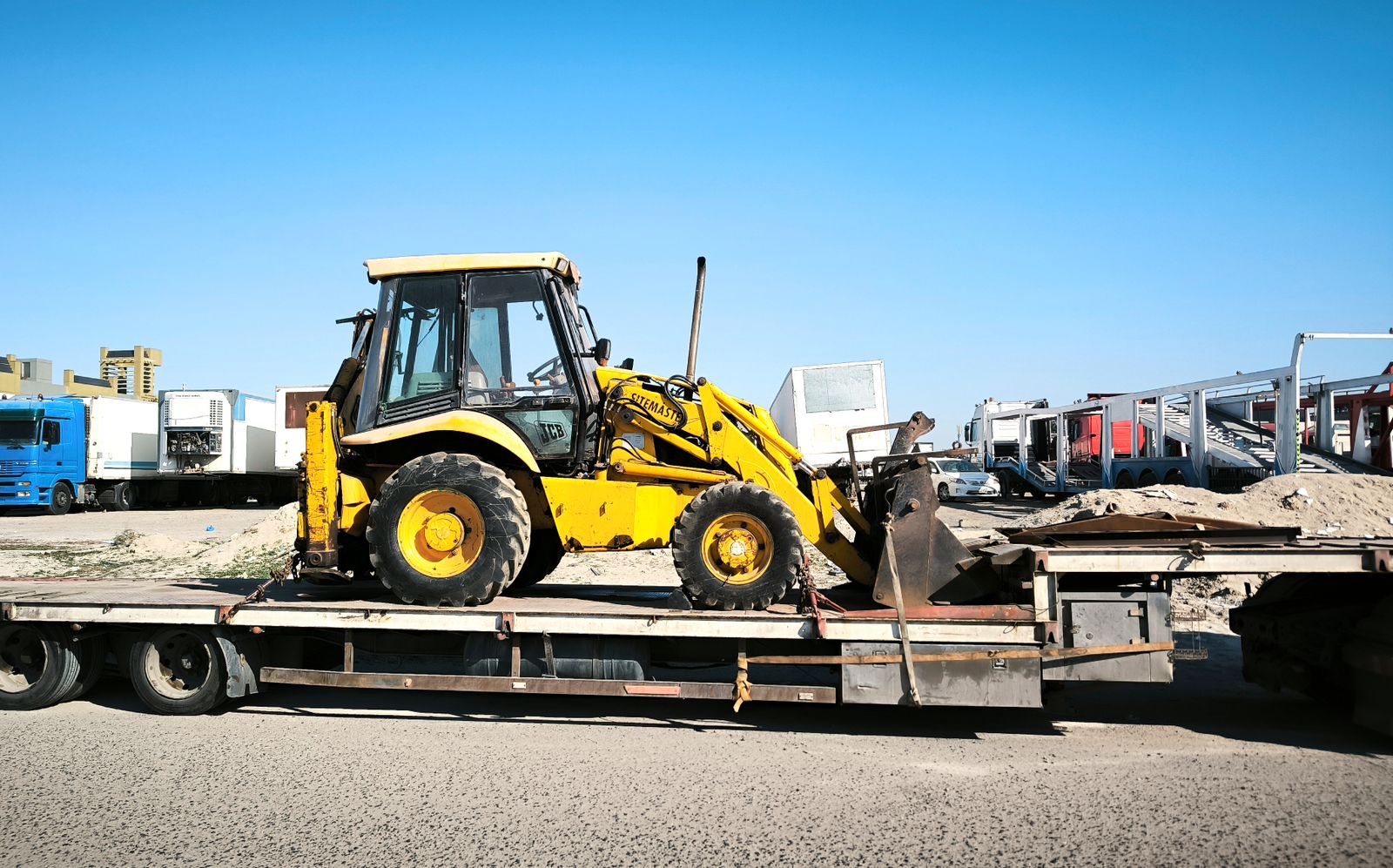
Access. A lowboy needs firm, level ground to load, room to manoeuvre, and a route out that clears gates, trees, wires and soft shoulders. A machine parked in a muddy field after rain, up a lane a long trailer cannot turn into, is a waiting-time charge ($75 to $150 an hour after the first few hours, in published guides) or a rescheduled day — at harvest prices. Walk the access before you book, photograph it, and send the photographs to the carrier. If loading needs a crane or forklift because the machine cannot drive onto the trailer under its own power, that is arranged and priced in advance — crane time runs roughly $200 to $800 an hour — or it becomes the most expensive improvisation of your year.
Timing rules. Oversize loads in many states travel in daylight only, sometimes not on weekends or holidays, and a rural move that starts late can legally have to stop for the night, adding a layover and secure parking ($50 to $150 a night) to a bill the customer assumed was one day. Ask when the load must be rolling by to complete in a day, and be ready — machine fuelled or drained as instructed, attachments secured, keys and manuals in hand — before that hour.
Paperwork and value. Get the quote line-itemed: linehaul, fuel, permits by state, escorts, loading, waiting terms, and what happens if the move slips a day for weather. Confirm the carrier's cargo insurance and what value it actually covers on your machine; a tractor or excavator is often worth more than a standard cargo limit, and the time to discover that is before loading, not after an incident. Verify the carrier itself — a legal carrier has federal operating authority you can check — because rural customers buying on price from an online broker ad are the audience for the oldest trick in the complaint files: a low quote collected by a middleman, then re-sold to the customer at the carrier's real price on the day, with the machine as leverage.
Questions that separate a quote from a guess
- Is my load legal as configured, or permitted — and if permitted, which permits, in which states, at what cost?
- Where is your trailer coming from, and how are the empty miles priced?
- Does the price include escorts, loading, and waiting time — and after how many hours does waiting start billing?
- Can this move legally complete in one day, and what does a second day cost?
- What is the cargo insurance limit, and what does increasing it to my machine's value cost?
- What is the cancellation and weather-delay position, in writing?
A carrier who answers those six in numbers is quoting your job. A carrier who answers in reassurance is quoting a hope, and rural distances turn hopes into invoices.
When the local option is the expensive one — and when it is not
It is tempting, with a thin local market, to assume the answer is a national broker with a slick quote engine. Sometimes it is: a broker can find a truck already passing near your machine on another job, and that backhaul capacity is the one genuine discount in heavy haul. But the local carrier two counties away carries advantages no platform prices in — they know which bridge on the county road is posted, which farm lanes turn to soup in March, and that their name, in a small market, is worth more than one job's margin. This site lists 275 machinery movers and erectors alongside the 2,791 heavy equipment movers; in a rural search, call both lists, nearest first, and let complete, line-itemed quotes — not the first voice that answers — decide.
The rural math, done honestly, is not worse math. It is just more visible: empty miles, permit thresholds, seasons and site access are in every heavy move, and in the country nobody can pretend they are free. Get them in writing before the trailer leaves its yard, and the price you agreed is the price you will pay.
Sources
- O Trucking, RGN Trailer Rates 2026 — legal lowboy/RGN loads at $3.50–$6.00 per mile, permitted oversize/overweight at $5–$12, superloads at $10–$20+, escorts at $1.50–$3.00 per mile, and permits and escorts adding 20–50 percent or more.
- HTS Logistics, Heavy Equipment Transport Cost — the six-line quote structure (linehaul, fuel, permits, escorts, special crossings, loading and accessorials) and legal size and weight thresholds.
- Freedom Heavy Haul, Lowboy Trucking Rates — per-equipment examples (large farm tractor, mid-size excavator, combine), permit and pilot-car thresholds, crane, detention and parking ranges, seasonal and winter surcharges.
- TruckSpot Logistics, How to Ship Farm Equipment — farm machinery weights and widths by type, oversize permits at $50–$300 per state with one to five business days to process, and harvest-season rates 15–30 percent higher.
- Logi Transports, Heavy Equipment Transport Cost 2026 — federal Interstate limits of 80,000 lb gross and 102 inches wide, and local flat-rate ranges for short legal and oversize moves.
Photo by mali maeder, https://www.pexels.com/photo/69483/ Photo by Tayssir Kadamany, https://www.pexels.com/photo/yellow-construction-vehicle-on-flatbed-trailer-38095094/ Photo by R9 Media Photo Collective, https://www.pexels.com/photo/40840366/
More guides
- How to Hire a Moving Company That Won't Hold Your Furniture HostageMovers › Moving & Storage
- How Much Do Movers Cost? Local vs. Long-Distance Pricing ExplainedMovers › Moving & Storage
- Binding vs. Non-Binding Estimates: The Difference That Decides Your Final BillMovers › Moving & Storage
- Moving Insurance and Valuation: What 'Full Value Protection' Really CoversMovers › Moving & Storage
- Long-Distance Moving: A Start-to-Finish Guide for Household GoodsMovers › Household Goods Moving & Storage
- All Guides & ArticlesBrowse the full guides library