Movers › Heavy Equipment Movers
Heavy Equipment Movers on a Deadline: How to Get It Done Fast Without Getting Fleeced
From the dispatch desk, a rush heavy-equipment move looks different than the customer imagines. The customer sees a truck and a trailer. Dispatch sees a chain of things that each take time money cannot always shorten: the right trailer, in the right place, with a driver who has hours left; a machine whose true weight and width somebody has actually measured; and, if the load crosses a legal line, permits from every state on the route, issued by offices that keep office hours. Urgency does not repeal any of that. It just raises the price of every link in the chain — and, if you are not careful, adds a second price for confusion on top of the first.
Families meet this problem more often than you'd expect: a farm sale closing, an estate machine that has to be off the property by settlement, a contractor-relative's skid steer promised to a job. The good news from the desk is that a fair rush premium exists and is knowable. The bad news is that deadline callers are the easiest customers in this industry to overcharge, because they announce, in the first sentence, that they cannot walk away. This guide is how to need it fast without sounding like you will pay anything.

What you are actually buying
A heavy equipment move is priced in pieces, and a deadline quote should still show them. The core is linehaul: a per-mile rate that depends on the trailer. Current industry planning ranges put a legal-size lowboy or RGN (removable gooseneck) load at about $3.50 to $8.00 per loaded mile, a standard flatbed at $2.10 to $3.50, a step deck at about $3.00 to $3.50, and small hotshot work at $1.50 to $2.50. Push the load oversize or overweight and the all-in range climbs to roughly $5.00 to $15.00 or more per mile, because now the quote is carrying permits and escorts inside it. Short local moves break the per-mile logic entirely: dispatch minimums put a local legal move at roughly $300 to $800 flat, and a local oversize move at $800 to $2,500 or more, because the fixed costs — deadheading to you, loading, paperwork — do not shrink with the miles.
Around the linehaul sit the add-ons: permits for every state where the load is over legal size, pilot cars or escorts when width, height, or length triggers them, loading help if the machine cannot drive onto the trailer under its own power, and waiting time when the truck arrives and the site is not ready. For scale, one published example prices a 30,000-pound excavator moving 500 miles on a lowboy at roughly $2,000 to $3,000 — a useful anchor for what "normal" looks like before urgency enters the room.
The legal envelope decides what "fast" can mean
Federal limits on the Interstate system are 80,000 pounds gross, 20,000 pounds on a single axle, 34,000 on a tandem, and 102 inches — 8 feet 6 inches — of width. Height is set by states, most commonly 13 feet 6 inches in the East and 14 feet in much of the West. Inside that envelope, a move is a trucking problem: find a trailer, load, drive. Outside it, the move becomes a permitting problem as well, and permitting runs on government time.
The federal government does not issue oversize or overweight permits; each state does, for its own roads, under its own rules. A five-state run is five permit applications. Standard single-trip permits are often issued the same day to within one to three business days, at fees that are usually the small part of the bill — published state fees run from the teens to a few hundred dollars per state. Superloads — typically over about 120,000 pounds gross or 16 feet wide, with thresholds varying by state — are a different animal: route surveys, bridge analysis, and engineering review, taking two to four weeks or more. No rush fee paid to a mover shortens a bridge analysis. If your deadline move is a superload, the honest conversation is about the date, not the price.
Escorts scale with size in a pattern most states share: one pilot car is typical once a load passes roughly 12 feet wide, two escorts — front and rear — from about 14 to 16 feet, a high-pole car for very tall loads, and police escorts for the largest. Pilot cars run roughly $1.50 to $3.00 per mile per escort. That is the arithmetic that turns "it's only a foot over" into real money on a long route.
What a fair rush premium looks like
From the desk, here is what urgency legitimately costs. Deadhead and repositioning: the nearest suitable trailer may be 150 empty miles away, and somebody pays for those miles — on a rush job, that somebody is you, and it is fair. A higher per-mile rate inside the published bands: a carrier taking your load today is refusing other work; expect the top of the range, not a number above it. Permit expediting and after-hours dispatch time, where a state or a service actually offers speed for a fee. Escort scheduling at short notice, which can mean paying a pilot car's minimum day rate rather than a tidy per-mile figure.
And here is what is not a rush premium: a per-mile rate quoted above the published oversize band with no permit or escort math behind it; a "permit fee" stated as one large round number for a single-state move whose actual state fee is a fraction of it; or a fuel surcharge invented as a percentage nobody can tie to anything. The test from the desk is simple — every rush charge should name the thing it buys. "Top of the lowboy band because the trailer is coming from Tulsa" is a reason. "Deadline fee: $900" is a mood.
| Load | Normal planning range | What deadline pressure does |
|---|---|---|
| Local legal move, under ~100 miles | $300–$800 flat | Minimums firm up; expect the top of the range and a deadhead charge |
| Legal lowboy/RGN, per loaded mile | $3.50–$8.00 | Top of band; repositioning miles added |
| Oversize/overweight, all-in per mile | $5.00–$15.00+ | Permits and escorts still govern the date; price cannot buy permit speed that the state does not sell |
| Pilot car, per escort | $1.50–$3.00 per mile | Day-rate minimums more likely at short notice |
| Superload | Custom; published examples start around $10,000–$15,000 | Route survey and bridge review set a floor of weeks, not days |
The call that gets you the honest price
Dispatch can tell within a minute whether a caller will be easy to move and easy to charge. Be the other kind.
Lead with measurements, not adjectives. "Heavy" is not a dimension. Give the machine's make and model, its operating weight, its transport width, height, and length, whether it runs and steers, and what the ground is like at both ends. A dispatcher who can spec the trailer on the first call gives you a real price on the first call; everyone else is guessing, and guesses under deadline pressure resolve in the carrier's favor.
Say the deadline and the reason once, plainly, then stop selling it. "It has to be off the property by Friday because the sale closes" is information the dispatcher needs. Repeating how desperate you are is information the price uses.
Ask the three questions that reveal a real operator. Who issues the permits and how long do they take for this route? What trailer, exactly, and where is it now? What is included in this number — permits, escorts, loading, waiting time — and what is not? A legitimate heavy hauler answers all three without reaching for anything. This site lists 2,791 heavy equipment movers, so a vague answer is a reason to make the next call, not a reason to settle.
Get the quote as a build-up, in writing. Linehaul, permits by state, escorts, extras. A written build-up is not bureaucracy; it is the only version of the price that survives the invoice. Verbal totals on deadline jobs have a way of being remembered differently by the two parties, and the party with the invoice wins.
Keep the site ready. Waiting time is the one rush cost entirely in your control. A truck and escort crew standing idle because the machine is blocked in, fueled with the wrong fuel, missing its key, or sitting in mud it cannot be loaded from will bill you for the privilege, fairly. Clear the path, have the machine at the edge, have a person there who can run it.
When fast is not available at any price
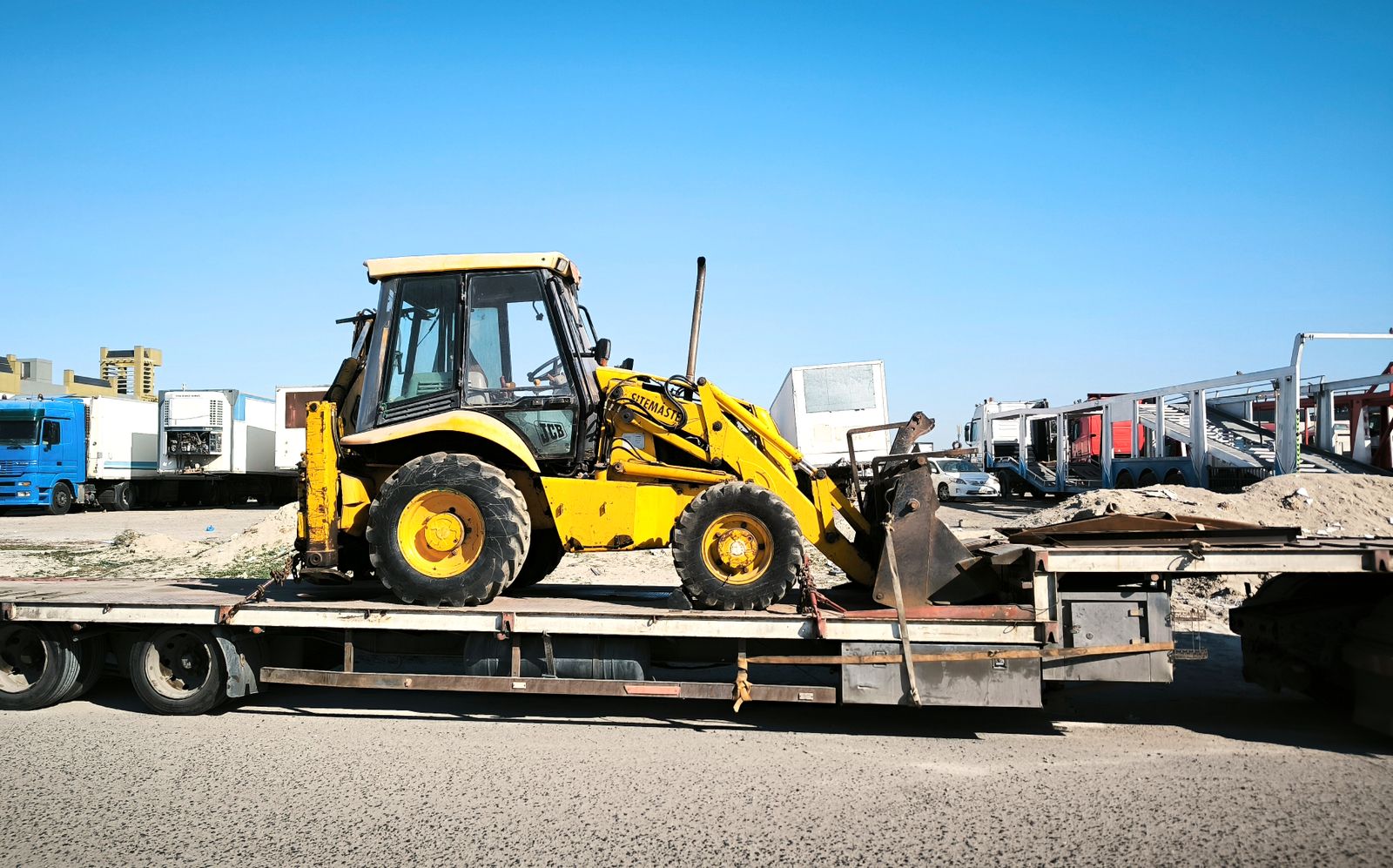
Part of protecting yourself is knowing which deadlines physics and paperwork will not meet. If the load needs a superload permit, the move is weeks away and any carrier promising days is promising something they do not control — walk away from that promise even though it is the one you want to hear. If the load is oversize and the route crosses states whose permits take two to three business days, a tomorrow pickup means a tomorrow start on paperwork, and the wheels turn after. And if the only available trailer is the wrong trailer — too light, too high a deck for your clearance — the correct answer to a deadline is still no. An overloaded or misloaded machine is how a scheduling problem becomes an insurance and liability catastrophe, and no closing date is worth it.
In those cases the real options are unglamorous: negotiate the date with whoever set it, armed with the permit timeline in writing from the carrier — sellers, executors, and site managers extend deadlines for documented permit delays far more readily than for "the truck guy said so" — or split the problem, moving the machines that can legally move now and permitting the big one behind them.
If you have already been overcharged
Deadline jobs generate a particular species of dispute: the invoice that arrives after the machine is delivered, larger than the quote, when your leverage is at its lowest. Work it in order. Compare the invoice line by line against the written build-up you were given — charges that were never in the build-up are the first to challenge. Ask for the permit receipts: state permit fees are documented to the dollar, and a carrier who charged $400 for a permit that cost $60 has some explaining to do. Put the dispute in writing, pay the undisputed portion, and say so. And if the carrier is an interstate operator, the same federal complaint channel that covers household goods movers — the FMCSA's, at protectyourmove.gov — is the escalation that carriers actually pay attention to.
The deadline version of this industry is not a scam by nature. It is a market where time is genuinely scarce — trailers, drivers' hours, and permit offices are all real constraints — and where scarcity is priced. Your protection is not slowness; you do not have slowness. It is precision: measured dimensions, a written build-up, and a carrier who can explain every line. Get those three, and fast costs what fast should cost. No more.
Sources
- Logi Transports, "How Much Does Heavy Equipment Transport Cost in 2026?" — 2026 planning ranges: legal lowboy/RGN about $3.50–$8.00 per loaded mile, oversize/overweight all-in about $5.00–$15.00+ per mile, local legal moves about $300–$800 and local oversize about $800–$2,500+; federal Interstate limits of 80,000 lb gross, 20,000 lb single axle, 34,000 lb tandem, and 102 inches width; a 30,000 lb excavator over 500 miles at roughly $2,000–$3,000; superload examples starting around $10,000–$15,000.
- O Trucking, RGN trailer permits and regulations guide — permits required beyond 80,000 lb, 8 ft 6 in width, or state height limits; standard permits issued same-day to 1–3 business days; superload review taking 2–4 weeks or more; pilot cars at roughly $1.50–$3.00 per mile per escort.
- TruckerToolsHub, oversize and overweight permit limits guide — escort pattern of one pilot car at about 12–14 ft wide, two at 14–16 ft, high-pole cars for tall loads, and police escorts for superloads; state height limits of 13 ft 6 in in the East and 14 ft in much of the West.
Photos: excavator on a work site — photo by mali maeder, https://www.pexels.com/photo/69483/ ; machine on a flatbed — photo by Tayssir Kadamany, https://www.pexels.com/photo/38095094/
More guides
- How to Hire a Moving Company That Won't Hold Your Furniture HostageMovers › Moving & Storage
- How Much Do Movers Cost? Local vs. Long-Distance Pricing ExplainedMovers › Moving & Storage
- Binding vs. Non-Binding Estimates: The Difference That Decides Your Final BillMovers › Moving & Storage
- Moving Insurance and Valuation: What 'Full Value Protection' Really CoversMovers › Moving & Storage
- Long-Distance Moving: A Start-to-Finish Guide for Household GoodsMovers › Household Goods Moving & Storage
- All Guides & ArticlesBrowse the full guides library