Movers › Moving Companies
Hiring a Moving Company Across Colorado: Big-City Choice vs. Small-Town Reality
Colorado is really two moving markets sharing one map. Along the Front Range — Denver, Boulder, Fort Collins, Colorado Springs — you can get five quotes by Friday, play companies against each other, and pick your date. In the rest of the state, in the mountain towns and the farming communities of the Eastern Plains and the Western Slope, you may have two realistic options, one of which is driving in from ninety miles away and billing you for the trip. The rules are the same in both places. The leverage is not. If your budget is tight, knowing which market you're in — and adjusting your tactics to it — is worth more than any single negotiation trick.
This site lists 1,770 moving companies and another 1,214 companies listed under moving companies and equipment, which sounds like abundance. It isn't evenly spread. Those listings cluster where the people are, and most of Colorado's people live along one urban corridor. Here is how hiring actually works in each market, what it costs, and where the complaints I read come from.
The metro market: choice is your discount
In the Denver metro, competition does the negotiating for you. Dozens of permitted companies chase the same pool of weekend moves, which means quotes come fast, companies answer their phones, and a mover who quotes high on Tuesday will often match a rival by Thursday. The standard local pricing model is hourly: a crew and a truck, billed from when they arrive (sometimes from when they leave the lot — ask), with a two- or three-hour minimum.
Published Front Range rate cards and cost guides put a two-mover crew with a truck at roughly $110 to $175 an hour in the Denver area, three movers at about $150 to $265, and four movers at $180 to $345, depending on the company and the day. What that produces in totals:
| Home size | Typical Denver-area local total | Typical crew and time |
|---|---|---|
| Studio / 1-bedroom | $300–$600 | 2 movers, 2–4 hours |
| 2-bedroom | $500–$1,400 | 2–3 movers, 3–5 hours |
| 3-bedroom | $800–$2,000 | 3–4 movers, 4–7 hours |
| 4-bedroom and up | $1,200–$2,500+ | 4+ movers, 6–10 hours |
The budget moves in the metro are unglamorous: take the Tuesday or Wednesday slot instead of the Saturday one, avoid the last weekend of the month when every lease in the city turns over at once, and get at least three written quotes. In a market this deep, the spread between the highest and lowest comparable quote is routinely several hundred dollars on the same job.
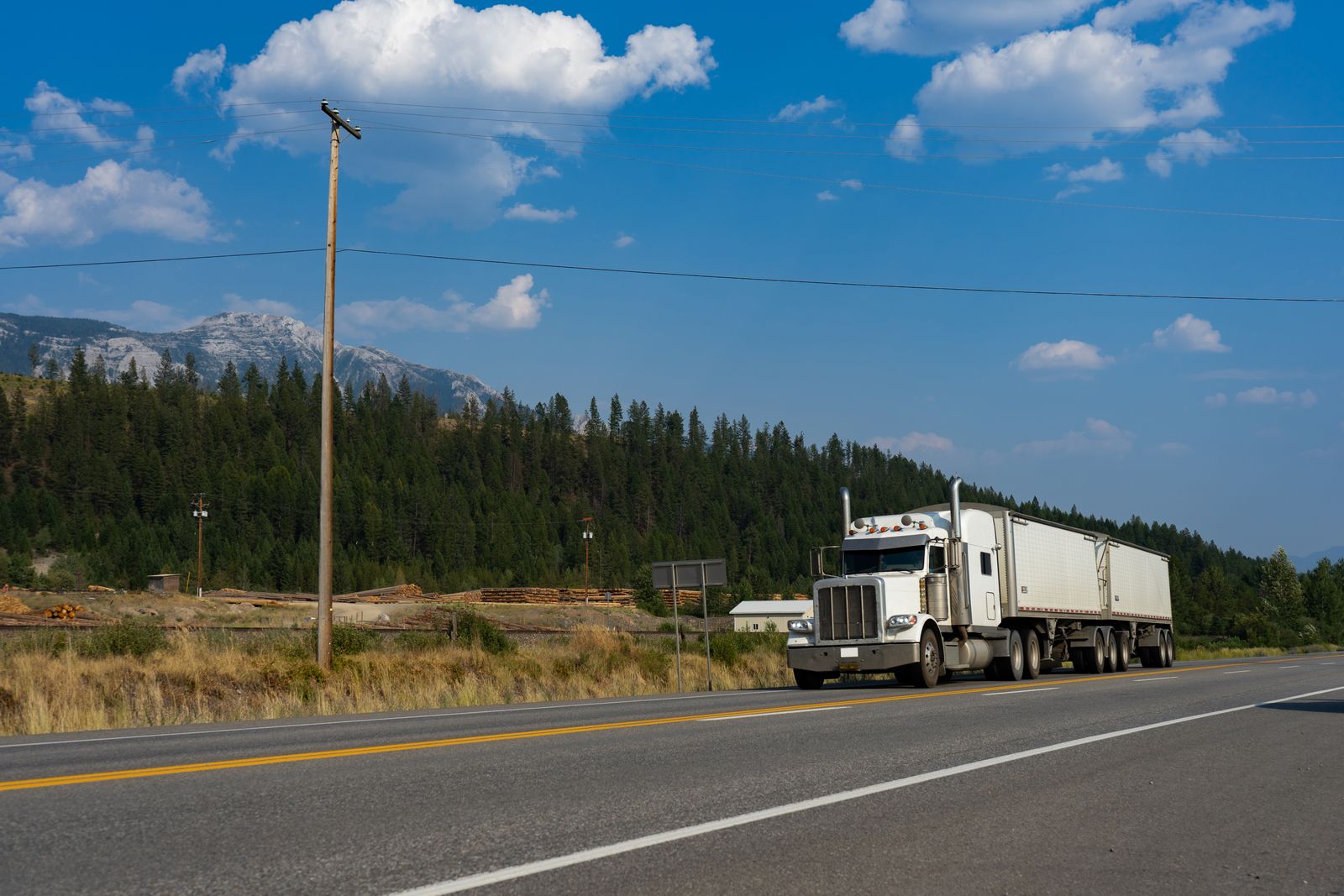
The small-town market: distance is the line item
Outside the corridor, the economics invert. A mover based in Grand Junction, Durango, Salida or Sterling may be the only permitted company within an hour's drive. That changes three things.
Travel time becomes real money. An hourly crew that drives an hour to you and an hour back adds two billable hours before a single box moves, unless the company charges a flat travel fee instead. Neither is a scam — the crew's day is genuinely consumed — but it must be in the written quote, in numbers, before you book. The complaint files are full of moves that were "cheap" until the drive time appeared on the final bill.
Scheduling runs on their calendar, not yours. A small operator with two trucks cannot absorb a cancellation or a date change the way a Denver fleet can, and in peak season they may batch jobs — your move happens on the day their truck is already coming through your county. Flexibility is the currency here. If you can take the day they offer rather than the day you want, you are a cheaper customer to serve, and some small movers will price that in.
Your alternatives are different, not worse. Where the full-service market is thin, the hybrid move often wins on price: rent the truck yourself, and hire a local crew for loading and unloading only — this site lists 166 moving labor services alongside the full-service companies. You give up the single point of responsibility a full-service mover provides, and you should be honest with yourself about that trade. But in a town with one full-service quote you don't like, labor-only plus your own driving is the competing bid that actually exists.
The one check that matters in both markets: the PUC permit
Colorado regulates movers who operate inside the state through its Public Utilities Commission, and this is the fact that national moving guides most often get wrong about Colorado. For a move that starts and ends inside Colorado, the credential that matters is not a federal USDOT number — it is a Colorado PUC household goods permit, the number beginning with "HHG" that state law requires the mover to print in its advertising.
The permit is not a rubber stamp. Permitted movers must register annually, file proof of motor vehicle, cargo and general liability insurance with the Commission, and give you written documentation of the services and their costs before the move. The law also gives you protections that are worth knowing before you need them: a mover may not withhold delivery of your goods if you pay the amount specified in the shipping document, the mover must accept at least two forms of payment from a list that includes cash, cashier's check, personal check and credit card, and if there is a fee dispute, the mover must tell you where your goods are being stored. Movers who break the rules face civil penalties from $550 to $11,000 per day, and refund disputes with household goods movers go through a binding arbitration process under state law.
Verifying takes two minutes. Find the HHG number in the mover's ad or on its quote — if it isn't there, ask, and treat hesitation as information. Then check it in the PUC's online permit search, or call PUC Consumer Affairs at 303-894-2070 (1-800-456-0858 outside the Denver metro). Do this in Denver and do it in the smallest town in the state. In a thin market the temptation is to hire whoever will come; an unpermitted operator leaves you with no state recourse at all if the day goes wrong, and that is exactly when you can least afford it.
One boundary to keep straight: the moment your move crosses a state line, it becomes an interstate move under federal rules instead. Then the FMCSA registration and USDOT number are the check, the federal estimate rules apply — including the rule that on a non-binding estimate you cannot be required to pay more than 110 percent of the estimate at delivery — and complaints go to the FMCSA's National Consumer Complaint Database rather than the PUC.
Season: the calendar prices your move twice
Colorado's moving calendar has two peaks of pain. The first is summer. Late spring through early fall is the busiest and most expensive stretch, driven by home closings and families moving between school years; experienced Denver companies advise booking six to eight weeks ahead for a summer date, and the last days of June and July are the hardest dates in the year to secure. Summer on the Front Range is also hail season, running roughly late spring through September, with afternoon thunderstorms building over the foothills most days. A morning start is not a nicety here; it gets the loading done before the day's storm window opens.
The second is winter, which cuts the other way on price and the hard way on logistics. Winter is the slowest season, rates soften, and a week or two of notice can be enough — along the Front Range, many winter days are sunny and entirely workable. But any move that crosses the high country inherits I-70. The stretch from the Eisenhower Tunnel to Vail Pass closes multiple times each winter for avalanche control, crashes and storms, and when it closes there is no practical alternate route for a moving truck. Independence Pass, the direct route to Aspen, closes entirely from late October until around Memorial Day. Colorado's traction law can also sideline an unprepared vehicle on mountain highways. A winter move to a mountain town booked for one fixed day, with no backup, is a gamble; build a flex day into the plan and check CDOT conditions the morning of the move, not the night before.

Altitude and access: the Colorado surcharges nobody lists
Denver sits at 5,280 feet, and mountain towns run far higher — Silverthorne, for example, is at about 9,035 feet. Thinner air tires a crew faster, and an unloading day above 8,000 feet genuinely takes longer than the same job on the Front Range. An honest mountain mover builds this into the estimate; a low quote from a company that has never worked at your elevation is a quote that will grow on the day.
Access is the other quiet cost. Foothill and mountain neighborhoods were not built around a 26-foot truck: steep driveways, switchback streets, unpaved access roads and HOA rules that restrict moving to set windows. If the truck cannot reach the door, the fix is a shuttle — a smaller vehicle ferrying loads — and shuttles cost money. Send your mover photos or a video of the driveway and street before quote day. In the metro the equivalent issues are building freight-elevator reservations, loading-dock windows and, in dense Denver neighborhoods, a temporary no-parking permit for the truck. Every one of these is cheap to solve a week ahead and expensive to solve on the morning.
If it goes wrong
Work the problem in the order the system is built for. First, the paperwork: your written pre-move documentation and the shipping document are what the PUC's protections hang on, so keep them, photograph the truck's condition and your goods at loading, and note damage on the delivery paperwork before the crew leaves, not after. File a written claim with the mover for loss or damage promptly, in writing, with photos and values.
If the mover won't resolve it, file a complaint with PUC Consumer Affairs — that is the channel for moves inside Colorado, and it is also how the Commission finds the operators worth penalizing. For a move that crossed state lines, file with the FMCSA instead, and remember its hotline at 1-888-368-7238. Reading complaint files for a living teaches you one pattern above all: the consumers who recover money are the ones with a written quote, a permit number, and photographs. The ones with a verbal deal and a cash payment have a story instead.

Questions to ask, wherever in Colorado you are
- What is your PUC household goods permit number — and is it in your advertising, as the law requires?
- Is travel time billed, from when to when, and is it in this written quote as a number?
- What forms of payment do you accept? (State law requires at least two of cash, cashier's check or money order, personal check, and credit card.)
- Who actually does the move — your own crew and truck, or is this booked through a broker or subcontracted?
- Have you worked at this elevation, and can your truck reach my street and driveway? What happens if it can't?
- If weather closes the pass or a storm hits on move day, what is the reschedule policy — and is there a fee?
- What is your claims process, in writing, if something is damaged?
Colorado rewards the mover-shopper who works the market they are actually in. On the Front Range, that means quotes, competition and timing. Everywhere else, it means verifying the permit, pricing the distance honestly, and staying flexible on the calendar. Both are cheaper than the alternative, which is learning the complaint process from the inside.
Sources
- Colorado Public Utilities Commission, "Understanding PUC Regulation of Household Goods Movers" — establishes the permit, insurance and annual registration requirements, the written pre-move documentation rule, the ban on withholding delivery when the documented fee is paid, the two-forms-of-payment rule, and civil penalties of $550 to $11,000 per day.
- Richard J. Bara, "Colorado Household Goods Mover Permit" — establishes that the permit is annual, that advertising must carry the permit number, and that refund disputes with household goods movers go through binding arbitration under C.R.S. 40-10.1-507.
- moveBuddha, "Who Regulates Moving Companies?" — confirms the Colorado PUC as the state's mover regulator and that it registers movers without setting their rates.
- Extra Space Storage, "How Much Do Movers Cost in Denver in 2026," and Legacy Moving Denver, "How Much Does It Cost to Hire Movers in Denver?" — Denver-area local totals by home size and hourly crew rates.
- Star Van Lines, "Colorado Movers (2026)" — Front Range hourly crew rates ($126–$173 for two movers with a truck) used to cross-check the rate ranges.
- Kenna Real Estate Group, "Best Time to Move in Colorado" — establishes the season pattern: summer as the highest-demand, highest-price window with six-to-eight-week booking lead times, hail season overlapping it, and winter as the cheapest window with pass-closure risk.
- We Move Everywhere, "Winter Moving in Colorado: Snow, Ice & Mountain Passes" — establishes I-70 closure patterns between the Eisenhower Tunnel and Vail Pass, the seasonal closure of Independence Pass, and Colorado's traction law requirements.
- Majestic Mountain Movers, "Complete Guide to Moving in Silverthorne, CO" — establishes Silverthorne's elevation of about 9,035 feet and the access, HOA and altitude effects on mountain-town moves.
- FMCSA, Protect Your Move FAQ — establishes federal registration for interstate movers, the distinction between movers and brokers, and the National Consumer Complaint Database and hotline for interstate complaints.
Photos: mover carrying boxes — photo by Artem Podrez, https://www.pexels.com/photo/man-carrying-boxes-beside-a-van-5025669/ ; truck on the road — photo by Braeson Holland, https://www.pexels.com/photo/a-truck-on-the-road-8994766/ ; family unpacking — photo by cottonbro studio, https://www.pexels.com/photo/family-unpacking-after-moving-4569340/
More guides
- How to Hire a Moving Company That Won't Hold Your Furniture HostageMovers › Moving & Storage
- How Much Do Movers Cost? Local vs. Long-Distance Pricing ExplainedMovers › Moving & Storage
- Binding vs. Non-Binding Estimates: The Difference That Decides Your Final BillMovers › Moving & Storage
- Moving Insurance and Valuation: What 'Full Value Protection' Really CoversMovers › Moving & Storage
- Long-Distance Moving: A Start-to-Finish Guide for Household GoodsMovers › Household Goods Moving & Storage
- All Guides & ArticlesBrowse the full guides library