Movers › Moving Companies
Hiring a Moving Company Across New Jersey: Big-City Choice vs. Small-Town Reality
New Jersey is the most urbanized moving market in America squeezed against some of its quietest small towns, and a downsizing move here can touch both in a single day: out of a colonial in Morris County where the family lived for forty years, into a one-floor home in an Ocean County retirement community an hour south, with half the dining room going to a daughter in Cherry Hill. Dispatching in this state taught me that New Jersey's moving problems are never really about distance — Newark to Manhattan is about 11 miles, Newark to Philadelphia about 86 — they are about buildings, bridges, and paperwork. The state regulates movers more actively than almost any other, down to running undercover stings against unlicensed operators. For a senior handing a crew the contents of a lifetime, that regulatory energy is an asset, if you know how to spend it. This guide is how.

The license with letters: PM, PW, and PC
Every move that begins and ends in New Jersey is governed by the Public Movers and Warehousemen Licensing Act, administered by the Division of Consumer Affairs. An intrastate mover must hold a state license — PM for a public mover, PW for a warehouseman, PC for a combination of both — and holding out as a mover without one is unlawful. Licensed movers must maintain cargo liability insurance (with liability that cannot be limited below $1.00 per pound per article), bodily injury and property damage coverage, and workers' compensation insurance; they must register each moving vehicle with the state and keep vehicles properly marked and insured; and they must file a tariff with the Division and keep it at their main office for consumers. Unlicensed operation carries civil penalties of up to $5,000 for a first offense and up to $20,000 for each later one, and vehicles used in unlicensed moving may be impounded.
This is not a paper regime. In a widely reported enforcement action, the Division ran an undercover sting in Pequannock Township, Morris County, posing investigators as consumers, and cited 21 public movers for unlicensed operation, each facing a $2,500 civil penalty with a chance to halve it by becoming licensed within 30 days. Verify before you book: call the Division of Consumer Affairs at (800) 242-5846 — or the licensing line at (973) 504-6200 — to confirm a mover's license status and ask whether complaints have been filed against it. This site lists 1,770 moving companies to begin the search; the Division's answer is where a New Jersey search ends.
The consumer documents are where New Jersey really separates itself, and a downsizing family should collect every one of them:
The survey comes first, by law. An estimator is required to survey your goods before calculating an estimate — physically at your home, or through electronic communication with a video component. A mover may not send an estimator who also represents another mover. For a senior move, insist on the physical survey: forty years of house does not fit into a video call's field of view, and the survey is what makes the estimate honest.
The written estimate arrives at least 24 hours before the move. The mover must give you the state's brochure, "Important Notice to Consumers Using Public Movers and Warehousemen," and a fully completed written estimate stating plainly whether it is binding or non-binding. A non-binding estimate's charges may not exceed the rates in the mover's filed tariff. A binding estimate is a contract: the mover must perform the move for the price shown, and cannot charge more unless you request additional services. Note the trade the brochure itself explains — a binding-estimate mover may charge above tariff rates, in exchange for certainty. For a senior on a fixed budget, certainty is usually the right purchase: a binding estimate on a surveyed, fully inventoried downsizing move converts an open-ended hourly exposure into a number a family can plan around.
The order for service follows, also at least 24 hours ahead, and the paperwork trail — estimate, order for service, bill of lading — is auditable with the Division if anything goes wrong. Keep all of it, with the mover's license number, which must appear on the estimate.
What New Jersey moves cost
New Jersey prices sit between its two giant neighbors: a regional 2026 guide puts New York City pricing 15 to 30 percent above New Jersey's, and New Jersey well above Pennsylvania's. Local New Jersey moves are billed hourly by crew. Market compilations put a two-mover crew with truck at $115 to $173 an hour, three movers at $173 to $311, and four at $230 to $448. A New Jersey mover's own 2026 averages put hourly rates at about $131 an hour across the state, with most companies between $100 and $200 an hour for a two-to-three-person crew. By home size, regional data prices a New Jersey studio at $300 to $500, a one-bedroom at $450 to $750, a two-bedroom at $700 to $1,200, a three-bedroom at $1,100 to $1,900, and a four-bedroom house at $1,800 to $3,200. City-level data for a one-bedroom shows the state's internal spread: Newark at $400 to $750 on rates of $125 to $160 an hour, Jersey City at $450 to $800 on $130 to $170, and Hoboken at $475 to $825 on $135 to $175 — the mile-square city with the narrow streets and the long carries pricing exactly as a dispatcher would predict.
Short cross-river routes show the same pattern in totals: Newark to Jersey City full-service moves run $368 to $3,121 by home size in current route data, with two-to-three-bedroom homes at $645 to $1,952 and labor-only help at about $120 an hour.
| The New York-facing corridor: Hudson, Essex, and the northeast | South Jersey, the Shore, and the small towns | |
|---|---|---|
| Market shape | The densest mover market in the state — Jersey City, Hoboken, Newark, Elizabeth, Edison and the Middlesex suburbs — with deep competition and deep churn | Regional carriers around Princeton, Cherry Hill, and the Monmouth and Ocean County Shore towns; fewer companies, longer relationships |
| Where the money leaks | Buildings: elevator reservations in Jersey City and Hoboken towers, permit parking, long carries, and stairs in the older housing stock | Distance and dispersal: a downsizing move often has three destinations — new home, family, storage — across two counties |
| Senior-specific reality | Parents leaving walk-up and elevator buildings need the building's rules solved before the crew is booked, not during | The Shore and South Jersey retirement communities are the state's great downsizing destination; community move-in rules and one-floor living are the standard job |
| The interstate wrinkle | Constant: New York and, from the southwest, Philadelphia moves cross state lines and leave New Jersey's license system for federal rules | Occasional: Philadelphia suburbs pull South Jersey moves across the Delaware into interstate territory |
| Budget lever | A binding estimate on a surveyed inventory — certainty priced once, instead of hours priced forever | Splitting the move by destination stream, and using the region's warehousemen (the PW license exists for a reason) for the undecided stream |
The downsizing move, New Jersey style
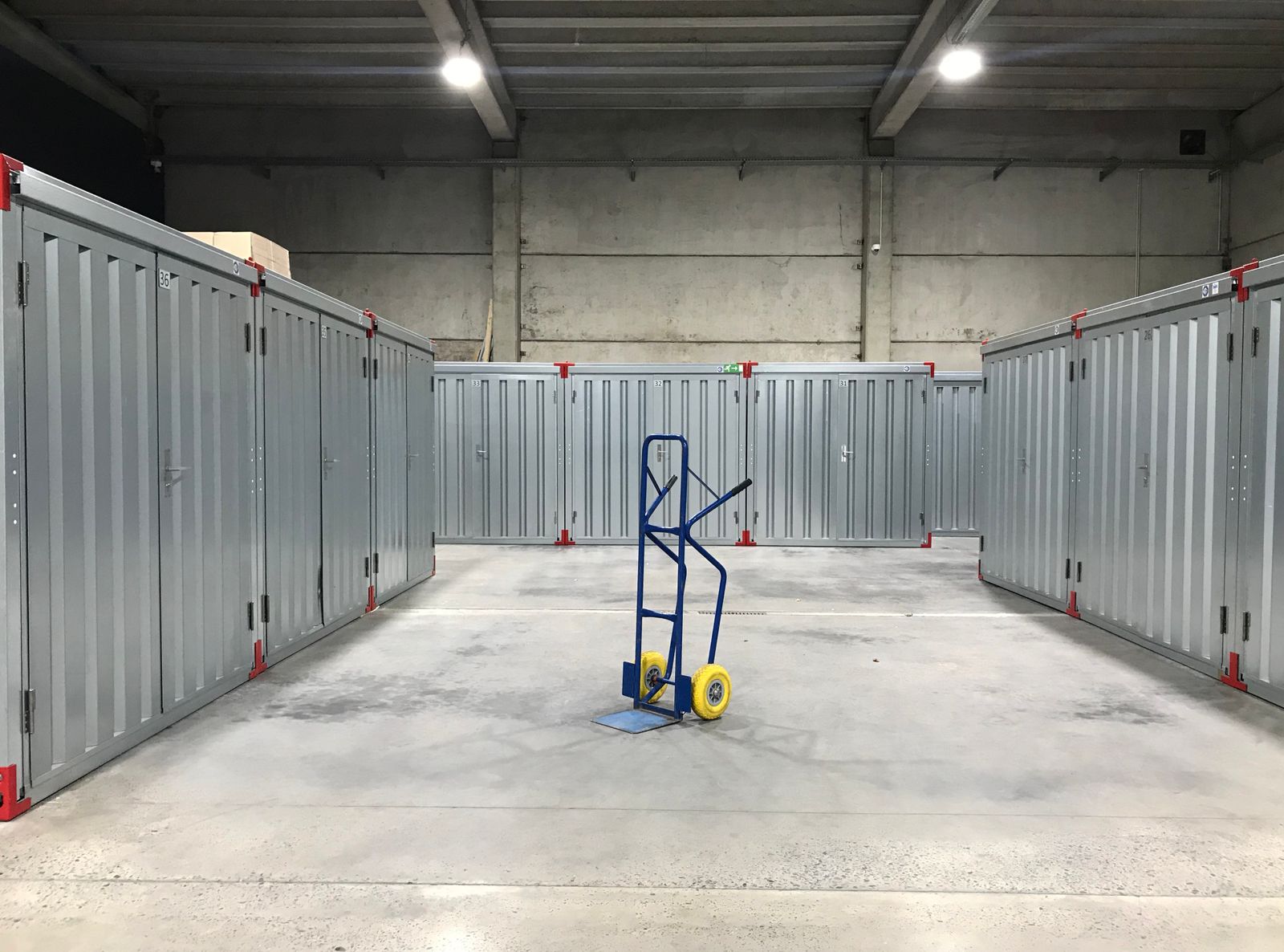
Use the warehouseman. New Jersey is one of the few states that licenses storage as part of the same system — that is what the PW and PC licenses are. A downsizing move here can be structured, under one licensed roof, as: move what the new home takes, store what the family has not decided, and deliver the stored stream when the decisions land. Get the storage and the eventual delivery priced in the original paperwork, while you have leverage, not six months later when the goods are already in the warehouse.
Sequence the destinations, not just the rooms. The classic New Jersey downsizing geography — origin house in the north or center, new home at the Shore or in South Jersey, children in Cherry Hill, Princeton, or out of state — turns one move into a small logistics program. Coordinated as separate, clearly estimated jobs (or one job with separately priced streams), it costs less and fails less than a single heroic day in which a tired crew loads for three destinations from one driveway. Dispatchers split these moves by default. Families should insist on the same.
Solve the origin building first. In the northeast corridor, the expensive surprises are vertical: a fourth-floor walk-up in Hoboken, an elevator in Jersey City that must be reserved and padded, a Newark building that wants the mover's insurance certificate days ahead. New Jersey's 24-hour paperwork rules work in your favor here — a mover who has surveyed, estimated, and issued an order for service a day ahead has already had the conversation with your building. A mover proposing to "figure it out on the day" is proposing to figure it out on your hourly rate.
Protect the small, irreplaceable stream separately. The Division's own consumer advice is blunt: never pack jewelry, money, or valuable documents with your goods. For a senior move, extend that list — medications, the documents folder for the closing and the new community, photographs that exist once. Those travel in the family's car, every time, in every state. It is the one rule in this guide with no local variation at all.

Small towns and the Shore: the relationship market
Outside the northeast corridor, New Jersey's moving market thins quickly: the farm towns of Hunterdon, Warren, and Sussex counties in the northwest, the Pine Barrens edge, and the smaller Shore and South Jersey towns are served by regional carriers whose names are known locally and whose licenses are just as checkable with the Division as any Hudson County operator's. Two things change. First, scheduling: a regional carrier running two or three trucks plans its week early, and a downsizing move — which rarely has a hard deadline — is the ideal flexible customer. Offer the flexibility and ask what it is worth. Second, scope: small-town New Jersey houses come with barns, outbuildings, and generations of accumulation that a survey must actually walk through. The state-required survey is your friend here; a mover who has walked the barn cannot be surprised by it, and neither can your bill.
The Shore adds a calendar. Summer in Monmouth and Ocean counties is the region's high season for everything, and retirement-community move-ins compete with vacation rentals turning over and second homes opening. A senior move that can land in September or October — after the season, in the Shore's mildest weather — will find better dates, calmer communities, and crews with time to place furniture carefully rather than quickly. In this market, patience is not a virtue. It is a pricing strategy.
Questions to ask, anywhere in New Jersey
- What is your license number — PM, PW, or PC — and may I verify it with the Division of Consumer Affairs?
- When will your estimator survey my home, in person, and when will I have the written estimate and the state brochure — at least 24 hours before the move?
- Is this estimate binding or non-binding? If non-binding, confirm the charges cannot exceed your filed tariff. If binding, confirm the price holds unless I add services.
- Can you price my move as separate streams — new home, family, and storage — with the storage delivery priced now?
- What does my building or my new community require from you — elevator reservation, insurance certificate, move-in window — and who handles it?
- What is your cheapest date in my window, and what does my flexibility buy?
The short version
New Jersey hands a downsizing family an unusually complete toolkit: a license you can verify with one phone call, an enforcement division that stings unlicensed operators, a mandatory in-person survey, a written estimate a full day before the move, a binding-estimate option that fixes the price, and licensed warehousemen for everything the family cannot yet decide. In the northeast corridor, spend that toolkit on the building and the binding estimate. At the Shore and in the small towns, spend it on sequencing, season, and the split move. The state's paperwork is not red tape. For a senior move, it is the care plan.
Sources
- New Jersey Division of Consumer Affairs, enforcement release on unlicensed public movers — establishes that intrastate movers must be licensed by the Division under the Public Movers and Warehousemen Licensing Act, must maintain cargo liability, workers' compensation, and bodily injury and property damage insurance, must register and mark each vehicle, must provide written estimates, and that 21 movers were cited in the Morris County undercover sting with $2,500 civil penalties; gives the verification line (800) 242-5846.
- New Jersey Division of Consumer Affairs, "Important Notice to Consumers Using Public Movers and Warehousemen" (N.J.A.C. 13:44D Appendix) — establishes the required survey of goods (in person or by video) before an estimate, the written estimate at least 24 hours before the move, the binding/non-binding distinction, the rule that non-binding charges may not exceed the mover's filed tariff, and that a binding estimate fixes the price unless the consumer adds services.
- IAM Consumer Portal, New Jersey compliance summary — establishes the PM, PW, and PC license types, cargo liability that cannot be limited below $1.00 per pound per article, the filed tariff kept at the mover's main office, the order for service at least 24 hours ahead, and penalties of up to $5,000 for a first unlicensed offense and $20,000 thereafter, with vehicle impoundment.
- N.J.A.C. 13:44D-4.2 — establishes the required contents of the non-binding written estimate, including the mover's license number, the survey date, per-truck and per-man hourly charges, and the statement that charges shall not exceed the filed tariff rate.
- Vector Movers, 2026 NJ–NYC–PA cost guide — establishes New Jersey ranges of $300–$500 for a studio, $450–$750 for one bedroom, $700–$1,200 for two bedrooms, $1,100–$1,900 for three, and $1,800–$3,200 for a four-bedroom house, crew rates of $100–$160 an hour for two movers rising to $220–$320 for five, and New York City pricing 15–30 percent above New Jersey.
- Optimum Moving, 2026 New Jersey costs — establishes average New Jersey hourly rates of about $131, most companies at $100–$200 an hour for a two-to-three-person crew, and one-bedroom costs of $400–$750 in Newark, $450–$800 in Jersey City, and $475–$825 in Hoboken with their hourly ranges.
- Star Van Lines, New Jersey market data — establishes two-mover crews at $115–$173 an hour, three movers at $173–$311, four at $230–$448, Newark to Manhattan at about 11 miles, and Newark to Philadelphia at about 86 miles.
- moveBuddha, Newark–Jersey City route data — establishes full-service pricing of $368–$3,121 by home size on the route, two-to-three-bedroom homes at $645–$1,952, and labor-only help at about $120 an hour.
- Family at new house photo by MART PRODUCTION, https://www.pexels.com/photo/7414910/
- Couple carrying boxes photo by Karolina Grabowska, https://www.pexels.com/photo/4506270/
- Storage corridor photo by David Slaager, https://www.pexels.com/photo/5759145/
More guides
- How to Hire a Moving Company That Won't Hold Your Furniture HostageMovers › Moving & Storage
- How Much Do Movers Cost? Local vs. Long-Distance Pricing ExplainedMovers › Moving & Storage
- Binding vs. Non-Binding Estimates: The Difference That Decides Your Final BillMovers › Moving & Storage
- Moving Insurance and Valuation: What 'Full Value Protection' Really CoversMovers › Moving & Storage
- Long-Distance Moving: A Start-to-Finish Guide for Household GoodsMovers › Household Goods Moving & Storage
- All Guides & ArticlesBrowse the full guides library