Movers › Moving Companies
Hiring a Moving Company Across Vermont: Big-City Choice vs. Small-Town Reality
Vermont has one real metro, and it is not very big. Burlington and the Champlain Valley hold most of the state's moving companies, most of its apartment turnover, and most of its choice. Everywhere else — the Northeast Kingdom, the Connecticut River valley towns, the villages along Route 7 and Route 100 — you are hiring in a small market, often from a short list, sometimes from a list of one. I dispatched trucks in this region, and the honest lesson is simple: the tactics that save money in Burlington can cost you money in Barton, and the reverse is also true. If you are moving on a tight budget, which market you are actually in is the first decision, even before you pick a company.
This site lists 1,770 moving companies and another 1,214 companies under moving companies and equipment nationally, so directories will happily show you pages of names. Very few of those trucks will drive to a farmhouse outside Orleans County for a two-room job without charging you for the privilege. Choice on a screen is not choice at your door.
The rule Vermont does not have
Start with the fact that surprises people most: Vermont does not license household-goods movers for moves inside the state. There is no state moving licence to check, no state tariff on file, and no Vermont rule that requires a mover to give you a written estimate or defines binding and non-binding estimates for an in-state move. A legal Vermont mover needs ordinary business registration with the Secretary of State, properly registered vehicles, and compliance with motor-carrier safety rules. Complaints about unfair or deceptive practices go to the Attorney General's Consumer Assistance Program under the Vermont Consumer Protection Act.
That light touch cuts both ways. It keeps small, honest local operators in business without a wall of paperwork. It also means the paperwork you create is the protection. In a licensed state, a regulator has at least confirmed the company exists in the form it claims. In Vermont, your written estimate, your inventory, your references, and your deposit terms carry the whole decision. Treat them that way.
The moment your move crosses a state line — to New Hampshire, Massachusetts, New York, or anywhere else — federal rules take over. An interstate mover must be registered with the Federal Motor Carrier Safety Administration, hold a USDOT number you can look up, give you a written estimate based on a survey of your goods, and hand you the federal booklet "Your Rights and Responsibilities When You Move" along with information about its arbitration programme and claims process. You also choose, in writing, between Full Value Protection and the minimal released value of 60 cents per pound per article. If a company quoting your Burlington-to-Boston move cannot produce a USDOT number, that conversation is over.

What a Vermont move actually costs
Local moves in Vermont are billed by the hour, by crew member or by crew, and published pricing surveys put the statewide average near $200 an hour per mover, usually with a two-hour minimum. Totals scale fast with house size:
| Home size | Typical crew and time | Typical local total |
|---|---|---|
| Studio | 2 movers, about 3 hours | About $850–$900 |
| 1 bedroom | 2 movers, about 4 hours | About $1,100–$1,200 |
| 2 bedrooms | 3 movers, about 5 hours | About $1,750–$1,800 |
| 3 bedrooms | 4 movers, about 8 hours | About $3,850–$3,950 |
| 5+ bedrooms | 5 movers, about 10 hours | About $6,700 |
Other surveys of Burlington-area crews quote a two-person crew with a truck at roughly $150–$230 an hour and a three-person crew at $224–$345 an hour, which is the same landscape seen from the crew side rather than the per-mover side. Either way, the budget levers are identical: crew size, hours, and travel. Labour-only help — a crew that loads and unloads your truck or container but does not drive it — runs far less, roughly $61–$81 per mover per hour in recent Vermont pricing, and a rental truck itself can start as low as $20–$99 a day before fuel, mileage, and equipment. For a tight budget, that gap is the whole game, and we will come back to it.
Watch the Vermont-specific add-ons. Long-carry fees when the truck cannot park near the door. Shuttle fees when a full-size truck cannot reach a house on a narrow or unpaved town road and the crew has to ferry goods in a smaller vehicle. Stair fees for walk-ups. None of these is a scam in itself; all of them are cheaper agreed in advance than argued on the day.
Burlington and the Champlain Valley: how to use real choice
In the Burlington area, and to a lesser degree around Rutland, Montpelier, and the Upper Valley, you have enough providers to run a genuine competition. Use it properly:
Get three written estimates, on the same inventory. Because Vermont does not prescribe an estimate format for in-state moves, companies will quote in different shapes — hourly with a minimum, flat rate, hourly plus travel. Force them onto common ground: the same rooms, the same list of large items, the same date, the same access facts. A quote that is cheap because it assumed a smaller job is not cheap.
Ask who is actually coming. In a metro market you will meet brokers and lead-generation brands alongside companies that own trucks. Ask whether the company quoting will perform the move itself, for its business registration name, and for references from moves in the last few months — not testimonials on a website.
Book the calendar, not just the company. Burlington turns over on student and hospital rhythms: late May, late June, and the end of July and August are brutal around the university and medical centre, and month-end weekends book out first everywhere. A midweek, mid-month move in the same town can be hundreds of dollars cheaper simply because the crew's day was otherwise empty. On a tight budget, flexibility on the date is worth more than haggling on the rate.
Solve parking before the truck does. In Burlington's denser streets, a truck that cannot legally stop becomes an hourly problem while you pay for it. Ask the company what it needs, reserve curb space where the city requires it, and tell neighbours. Ten minutes of circling, repeated at both ends, is real money at Vermont hourly rates.
Small-town Vermont: how to hire when the list is one name long
Outside the metro, the problem reverses. You may have one established local mover, a regional company that serves your county on certain days, and several distant companies whose travel charge quietly doubles the bill. The tactics change:
Travel time is a line item, not a detail. Ask, in writing: where does the clock start — at their depot, at your door, or at the county line? A crew driving ninety minutes each way from Burlington to the Kingdom will bill that time somehow, either as travel hours or inside a higher flat rate. A local crew that starts ten minutes away can be the cheaper quote even at a higher hourly rate. Do the whole-job maths, never the rate maths.
Ask which days they are already near you. Regional companies route rural work. If a crew is already delivering in your town on Thursday, your Friday job may carry little or no extra travel. Dispatchers — I was one — would rather fill a truck's return leg than drive it home empty, and a polite, flexible customer gets that empty leg at a better price. This is the single most underused saving in rural Vermont moving.
References replace regulation. With no state licence to lean on, call two recent customers in your area. Ask one question that matters: did the final bill match the written quote, and if not, why not? In a small town, a mover's reputation is a real asset they protect; a company that will not give local references is telling you something.
Expect access questions, and answer them honestly. Mud season, steep unpaved driveways, low bridges, long carries from a barn or a road the truck cannot climb — rural Vermont access decides whether the quoted crew and truck can do the job at all. Walk the route in your head with the estimator. A shuttle or a smaller truck arranged in advance costs a fee; a full-size truck stuck or turned away on the day costs the move.

The tight-budget playbook that works in both markets
Whether you have ten quotes or one, these moves cut cost without cutting corners:
- Shrink the job before you price it. Every hour in the tables above is mostly carrying things. Sell, donate, or dump before the estimate, not after. A two-bedroom job priced as a two-bedroom job and performed as a one-bedroom job is the cheapest upgrade there is.
- Split the service. Hire labour-only help to load a truck you drive, or hire a full-service crew only for the heavy furniture and move boxes yourself over several days. The labour-only rates above are roughly a third of full-service per-mover pricing.
- Pack yourself, completely. A crew waiting while you tape boxes is the most expensive packing service in Vermont. Finished, labelled, stacked boxes by the door turn an eight-hour estimate into a six-hour day.
- Move off-peak if your life allows it. Midweek, mid-month, and outside the late-spring and late-summer crunch, companies in both markets price and schedule more kindly.
- Put the whole agreement in writing anyway. Date, addresses, crew size, hourly or flat basis, travel terms, minimums, fees for stairs, long carries and shuttles, deposit and cancellation terms, and what happens if the job runs long. Vermont law will not supply these terms for an in-state move. Your one-page agreement can.
If something goes wrong
For an in-state move, start with the company, in writing, while the facts are fresh — photographs, the agreement, the final bill. If the dispute is about deceptive practice rather than an honest disagreement, the Vermont Attorney General's Consumer Assistance Program is the state route, and it enforces the Consumer Protection Act against unfair or deceptive acts. For an interstate move, you have the federal machinery as well: a written claim window of nine months for loss or damage, the mover's arbitration programme for qualifying disputes, and a complaint route through the FMCSA's National Consumer Complaint Database. Keep the bill of lading and inventory from any interstate move until the claim window has closed.
The Vermont verdict
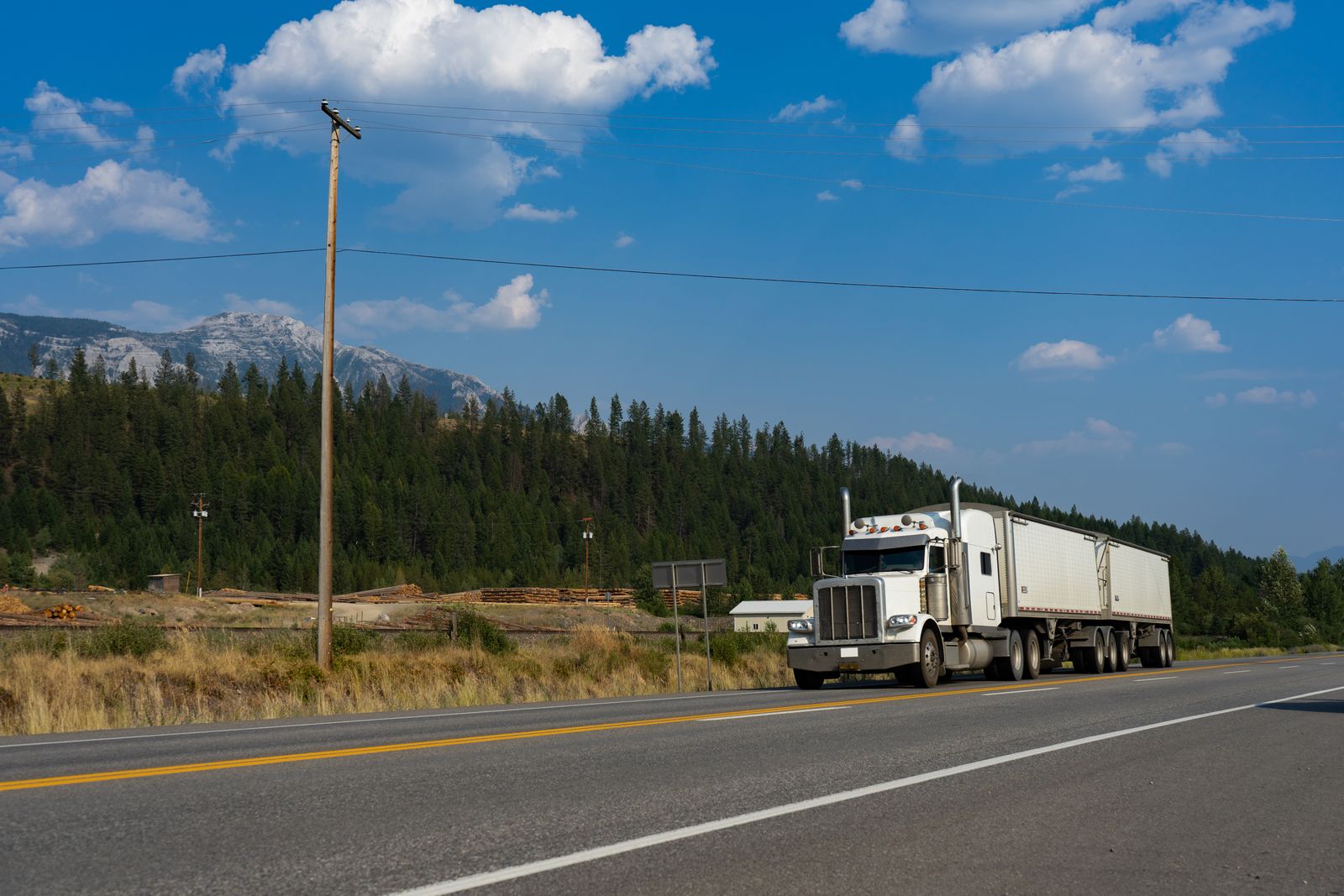
In Burlington, your budget is protected by competition: three comparable written estimates, a well-chosen date, and parking solved in advance. In small-town Vermont, your budget is protected by routing and reputation: a local or already-nearby crew, travel time in writing, and references you actually call. In both places, because this state lists 1,770 moving companies nationally on this site but licenses none of them at home, the winning move is the same at heart — get it in writing, shrink the job, and hire the truck that is closest to your door, not the name that is loudest on the screen.
Sources
- Vermont Attorney General, Consumer Assistance Program — enforces the Vermont Consumer Protection Act against unfair or deceptive practices, the state complaint route for in-state moves.
- IAM Consumer Portal, Vermont household goods compliance summary — no state licence or tariff for intrastate movers; business registration, vehicle insurance and safety rules still apply.
- FMCSA, "Your Rights and Responsibilities When You Move" — written estimates, USDOT registration, valuation choice between Full Value Protection and 60 cents per pound, arbitration and claims for interstate moves.
- moveBuddha, Vermont moving costs — local totals by home size, average hourly rate near $200 per mover, two-hour minimums, labour-only and rental-truck ranges.
-
Star Van Lines, Vermont movers pricing — Burlington-area crew rates of $150–$230 an hour for two movers and $224–$345 for three, and common Vermont fees for long carries, shuttles and stairs.
-
Photo by cottonbro studio, https://www.pexels.com/photo/family-unpacking-after-moving-4569340/
- Photo by Artem Podrez, https://www.pexels.com/photo/man-carrying-boxes-beside-a-van-5025669/
- Photo by Braeson Holland, https://www.pexels.com/photo/a-truck-on-the-road-8994766/
More guides
- How to Hire a Moving Company That Won't Hold Your Furniture HostageMovers › Moving & Storage
- How Much Do Movers Cost? Local vs. Long-Distance Pricing ExplainedMovers › Moving & Storage
- Binding vs. Non-Binding Estimates: The Difference That Decides Your Final BillMovers › Moving & Storage
- Moving Insurance and Valuation: What 'Full Value Protection' Really CoversMovers › Moving & Storage
- Long-Distance Moving: A Start-to-Finish Guide for Household GoodsMovers › Household Goods Moving & Storage
- All Guides & ArticlesBrowse the full guides library