Movers › Moving Companies
Hiring a Moving Company Across West Virginia: Big-City Choice vs. Small-Town Reality
Dispatch teaches you a state's real geography. West Virginia's is not Charleston, Huntington, and Morgantown with countryside between. It is three small metros, a ring of river and college towns, and then the hollows — where the address is a route and a hollow name, the driveway climbs at an angle a loaded truck thinks about twice, and the nearest backup crew is an hour away on roads that do not believe in straight. Families moving here, or within here, hire movers in that geography, not in the brochure version of it.
I will tell you the two things dispatchers know about West Virginia moves. First, the state is the exception in its own law book: household goods carriers are expressly carved out of the motor carrier statute most people assume licenses them, so there is no state mover's credential to hide behind — yours or theirs. Second, distance and access, not hourly rates, decide what a West Virginia move costs and whether it finishes on the day. Get those two right and the rest is packing.
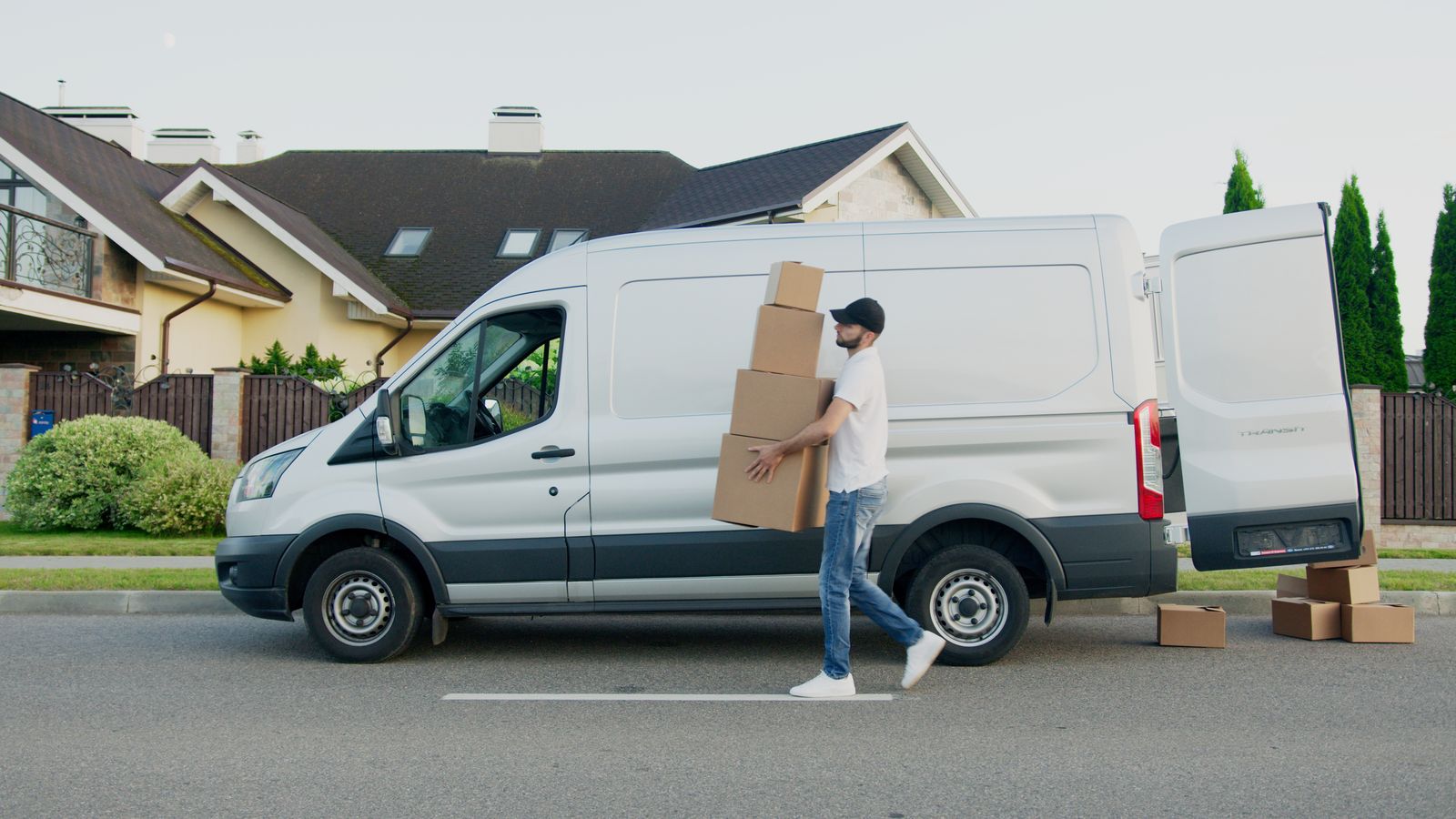
The exemption: why there is no West Virginia mover's license to check
West Virginia's motor carrier law, Chapter 24A of the state code, gives the Public Service Commission broad power over carriers for hire — and then, in its exemptions section, removes household goods carriers from it. Section 24A-1-3, exemption (14), states that the chapter does not apply to common or contract carriers engaged in transporting household goods, or to the vehicles used exclusively for that work. Read that again if you came here expecting to verify a PSC certificate for your in-state move: for household goods, the certificate regime does not govern. Some websites will tell you otherwise. The code is the code.
So what protects a West Virginia family? The ordinary tools, used deliberately. A real business with a findable address and a history under one name. A written estimate and a contract, because no tariff and no commission schedule will supply terms you failed to get. Insurance and valuation stated in writing — ask what the mover pays if it destroys your dresser, and make it answer in dollars, not adjectives. And the West Virginia Attorney General's Consumer Protection Division, which is where complaints about deceptive moving practices actually go. If your move crosses a state line — common here, since Huntington faces Ohio and Kentucky, Morgantown sits a short drive from Pennsylvania, and the Eastern Panhandle is functionally part of the Washington metro — federal rules apply instead: Federal Motor Carrier Safety Administration authority, a written estimate, and the 110 percent limit on what can be demanded at delivery under a non-binding estimate. Long-distance pricing from West Virginia runs by weight and distance; published tariff-based ranges for a two-bedroom home moving from West Virginia to its nearest major destinations run roughly $5,800 to $8,000 before accessorial charges like stairs, shuttles, and storage. That is the scale of money riding on the paperwork.
The three small metros: choice, of a limited kind
Charleston, Huntington, and Morgantown each support several moving companies, university-driven demand in Morgantown's case, and something resembling competition. Get two or three written quotes, expect hourly pricing for local work, and expect the market's ceiling to be set by small fleets: a company with three trucks that is booked for your Saturday is simply booked, and no amount of calling around manufactures a fourth truck. Book three to four weeks out in summer, earlier around the university calendar in Morgantown, where late July and August turnover consumes every crew in the county.
Access is the metro variable nobody quotes over the phone. Charleston's hillside neighborhoods, Huntington's older streets, and Morgantown's slopes all produce the same dispatcher problem: a truck that cannot get close, a carry that doubles, a piano that was not mentioned. Walk the route yourself — literally, from where a truck can park to your door — and describe it to every mover you ask for a price. The quote built on your description survives moving day. The one built on your address does not.
The rest of the state: distance is the product
In the coalfields, the Greenbrier Valley, the Potomac Highlands, and the small towns along the Ohio, your mover is selling you a day of driving as much as an hour of lifting. Companies based in the metros serve the whole state, but the truck that reaches a family in Logan, Welch, or Franklin has burned hours and fuel before the first box moves, and an honest quote says so. A suspiciously cheap one has either misunderstood your address — check that it has the right town, because West Virginia reuses its place names — or intends to renegotiate when it arrives and the leverage is loaded on its truck.
Family tactics for rural West Virginia, from the dispatch desk:
- Give the mover the access truth in advance. Gravel drive, low branches, a bridge with a weight limit, a lane a 26-foot truck cannot turn in. A smaller truck or a shuttle plan arranged beforehand costs a fraction of the same discovery made at the bottom of your hill.
- Consolidate to one load, staged at the door. Rural jobs die by second trips. Everything packed, disassembled, and as close to the truck's parking spot as you can put it.
- Build the weather and road margin into the date. Mountain roads in winter and heavy rain change what a day allows. If a lease or closing pins your date, tell the mover early — dispatch can plan around a hard date, but only if it knows.
- Keep the irreplaceable in your car. In a state with no mover-specific damage regime, family documents, photographs, and heirlooms ride with you. That is not distrust. It is geography and law agreeing with each other.

Comparing the markets
| Question | Charleston / Huntington / Morgantown | Rural West Virginia |
|---|---|---|
| State credential to check | None for household goods — Chapter 24A expressly exempts them | The same; rely on business history, insurance, and a written contract |
| Quotes available | Two to three | Often one local option plus one traveling metro crew |
| What drives the bill | Crew hours, access, university and summer peaks | Driving time, access, and whether one load truly holds the house |
| Biggest risk | A booked-out small fleet and a late, unverified substitute | A cheap quote from a mover who has never seen your road |
| Complaint route | Attorney General's Consumer Protection Division; FMCSA if interstate | The same |
This site lists 1,770 moving companies in its listings, West Virginia operators among them. Here more than in most states, the listing is only a starting point — the state has deliberately left this trade to contract and consumer law, so the family that papers its move well is the family the system protects.
The dispatcher's closing advice
Verify the business, not a license that does not exist. Get the estimate in writing after describing — or better, showing, by video — both addresses and the ground between the truck and the door. Ask what vehicle is coming and whether it can reach you. Put the valuation answer in dollars on paper. And schedule with margin, because in West Virginia the road always gets a vote. Families who do those five things find this state's movers to be what most of them are: small, local, and straight. The disasters I dispatched around were never really about the mountains. They were about surprises — and every one of them had been knowable in advance.
What to do when a West Virginia move goes wrong
Because household goods carriers sit outside the state's motor carrier chapter, a West Virginia family with a damaged load, a hostage-load threat, or a bill that doubled needs a plan that does not start with a nonexistent license board. Here is the order that works, from the dispatch desk's side of the phone.
First, the paper. Your estimate, your contract, your inventory, and any texts with the company are the case. Photograph damage before the crew leaves, note it on the delivery paperwork — a signature on a clean inventory is the single most expensive autograph in moving — and put your claim to the mover in writing, promptly, with photographs and the inventory references. Reputable small companies in this state settle most honest claims at this stage, because their next twenty jobs live within earshot of your story.
Second, the Attorney General. If the mover will not engage, or the practice itself was deceptive — a lowball quote converted at the truck, a deposit taken by a company that never arrived — the West Virginia Attorney General's Consumer Protection Division is the state's venue for exactly this, and a filed complaint changes a company's arithmetic even when it cannot order your specific refund.
Third, know which move yours legally was. If any part of your move crossed a state line, federal protections applied all along: you can check the carrier's authority and complaint record in the federal system and file through the Federal Motor Carrier Safety Administration's National Consumer Complaint Database, at 1-888-368-7238. Moves between West Virginia and Ohio, Pennsylvania, Maryland, Virginia, or Kentucky are interstate even when they feel like a trip across town — and the federal file follows the company in a way a local reputation does not.
The through-line is the same as the hiring advice: in West Virginia, documentation is not bureaucracy. It is the entire regulatory structure, carried in your kitchen drawer. Families who keep it move through this state's thin, mountainous market with the same protection a license board gives people elsewhere. Families who do not are relying on goodwill — which, to be fair to West Virginia, usually shows up. Just do not make it your only plan.
A note on price expectations in the Mountain State
Families arriving from other states often misread West Virginia quotes in both directions. A local hourly quote that looks low against a coastal city's is not automatically a scam — labor and operating costs here are genuinely lower, and a two-person Charleston crew is not priced like a Seattle one. Conversely, a long rural job quoted at a number that ignores the drive is not a bargain; it is a misunderstanding scheduled for your driveway. The honest West Virginia quote has a recognizable shape: it names the crew, the truck, the hours or the flat price, the travel it includes, and the access it assumes — and it changes, openly, when you tell the mover something new about the road or the load. Judge quotes by that shape rather than by the number alone. In a state with no tariff and no commission schedule, the structure of the quote is the closest thing to a published rate you will ever see, and companies that quote in structure are the ones whose final bills tend to resemble their first ones.
Sources
- West Virginia Code, Chapter 24A, §24A-1-3 — establishes that the motor carrier chapter does not apply to carriers engaged in transporting household goods (exemption 14).
- IAM Consumer Portal, United States licensing overview — establishes that no state license is required for intrastate household goods moves in West Virginia and that household goods carriers are exempt from the Public Service Commission's motor carrier law.
- USMPO, Huntington and West Virginia moving data — establishes published tariff-based long-distance ranges from West Virginia, including roughly $5,800–$8,000 for a two-bedroom move to the nearest major destinations, excluding accessorial charges.
- Federal Motor Carrier Safety Administration, consumer FAQs — establishes federal authority, written estimates, and the 110 percent delivery rule for interstate moves.
- Photo by Artem Podrez, https://www.pexels.com/photo/man-carrying-boxes-beside-a-van-5025669/
- Photo by cottonbro studio, https://www.pexels.com/photo/family-unpacking-after-moving-4569340/
More guides
- How to Hire a Moving Company That Won't Hold Your Furniture HostageMovers › Moving & Storage
- How Much Do Movers Cost? Local vs. Long-Distance Pricing ExplainedMovers › Moving & Storage
- Binding vs. Non-Binding Estimates: The Difference That Decides Your Final BillMovers › Moving & Storage
- Moving Insurance and Valuation: What 'Full Value Protection' Really CoversMovers › Moving & Storage
- Long-Distance Moving: A Start-to-Finish Guide for Household GoodsMovers › Household Goods Moving & Storage
- All Guides & ArticlesBrowse the full guides library