Movers › Household Goods & Furniture Storage
Household Goods and Furniture Storage by Season: When to Book, When to Wait, and What Timing Changes
Storage looks like the most placid purchase in a move: a locked room, a monthly bill, no truck, no crew, no drama. Yet two households can store the same furniture, in the same town, in the same year, and pay strikingly different amounts for it — and the largest single reason is the calendar. Storage demand follows the moving year, and the moving year is brutally seasonal. When you sign determines what is available, what it costs, what quality of space you are offered, and how much negotiating power you walk in with.
This matters most for the audience that can least afford a mistake: people downsizing, often on a house-sale timeline they did not fully choose, storing furniture that is part household goods and part family archive. Here is how the storage year actually runs, what timing changes in practice, and when the right move is to book early, book late, or wait.
The engine underneath: the moving calendar
Storage demand is a shadow of moving demand, and moving demand is concentrated to a degree outsiders rarely appreciate. moveBuddha's industry statistics put 41 percent of annual U.S. moves between May and August, with June the most common month and June 1 and June 30 the busiest individual dates of the year, September 1 and 30 close behind. Broader industry summaries describe the late-May-to-early-September peak as carrying the majority of the year's residential moves. The drivers are structural: school calendars, lease turnovers clustered on the first of summer months, the home-buying season, and military PCS moves, which the Army itself schedules from mid-May through August.
Every one of those moves that hits a gap — a closing that slips, a new home not yet ready, a downsizer between a sold house and a smaller one — becomes storage demand in the same weeks. Storage facilities and moving-company warehouses fill in the same rhythm, and price accordingly.
The year in storage, season by season
Late spring and summer (May–September): peak. Occupancy climbs toward its annual high; in high-demand markets, facilities can reach 95 to 100 percent occupancy in these months. Street rates — the advertised price a new tenant pays — are firmest from May through August, move-in specials thin out, and the specific unit you want (ground floor, climate-controlled, the size that fits a household rather than a closet) is the one most likely to be gone. Movers' warehouse storage tightens too: storage-in-transit capacity is finite, and in peak weeks carriers prioritize shipments already under contract. If your storage need lands in summer, the operative advice is unglamorous: book as early as your dates allow, and treat a confirmed reservation as an asset.
Autumn (October–November): the shoulder, and the planner's window. Demand falls off a cliff after Labor Day and the September lease turnovers. Availability returns, staff have time to talk, and the first promotional offers reappear. For a planned downsizing move — one where you control the listing date of the house you are leaving — autumn is frequently the best combined window of the year: mild weather in most of the country, movers bookable without peak premiums (industry guides put peak moving rates roughly 20 to 30 percent above off-peak), and storage operators motivated to fill space before winter.
Winter (December–February): the buyer's market. December is typically the lowest-occupancy point of the storage year, and street rates for standard units are softest from November through February. This is when first-month-free and half-off move-in specials concentrate, when 6- and 12-month rate locks (often worth 5 to 10 percent) are easiest to negotiate, and when a facility with empty units will discuss terms it would not entertain in June. The cautions are practical rather than financial: short days, weather risk on the move-in day itself in cold climates, and the fact that a winter move-in special does not freeze your rate forever — ask when, and by how much, the rent can rise after the promotion ends.
Early spring (March–April): the last quiet weeks. Demand is rebuilding but has not peaked. Operators who price by occupancy still have space to fill; one market analysis describes renters securing units in March or April as locking in lower rates before summer demand drives prices upward. If you know a summer move is coming — a house closing in June, a lease ending in July — March and April are when to sign for storage, even if the furniture does not move in until later, provided the facility will hold the unit or the math of an early start beats a peak-season rate. Run that math explicitly; a month of rent paid early is cheaper than a summer of peak pricing only sometimes.
| Season | Storage market | What it means for you |
|---|---|---|
| May–September | Peak occupancy; rates firmest May–August; specials scarce | Book early; expect the least choice of unit type and floor |
| October–November | Shoulder; availability returns, promotions reappear | Best combined window for a planned downsizing move |
| December–February | Lowest occupancy; softest street rates; richest move-in specials | Negotiate: rate locks, first month free, term discounts |
| March–April | Demand rebuilding, space still available | Sign ahead of a known summer move if the arithmetic favors it |
Two different products wear the word "storage"
Timing interacts with which storage you buy, because the two main products behave differently across the year.
Self-storage is a rented room: month-to-month, you load it, you keep the key, you can visit. Nationally, a standard 10×10 unit averaged about $119 a month in 2026 street rates, with climate-controlled space running higher — marketplace data for July 2026 put a climate-controlled 10×10 at about $97 against $83 standard in one national sample, and climate premiums of roughly 13 to 34 percent depending on size are typical. Self-storage pricing is dynamic and occupancy-driven: operators raise street rates 3 to 5 percent when a unit type passes 90 percent occupancy and more above 95 percent, and discount when it falls below 80 percent. That is the machinery under the seasonal pattern — your month of signing sets your entry price into a system that will keep adjusting it.
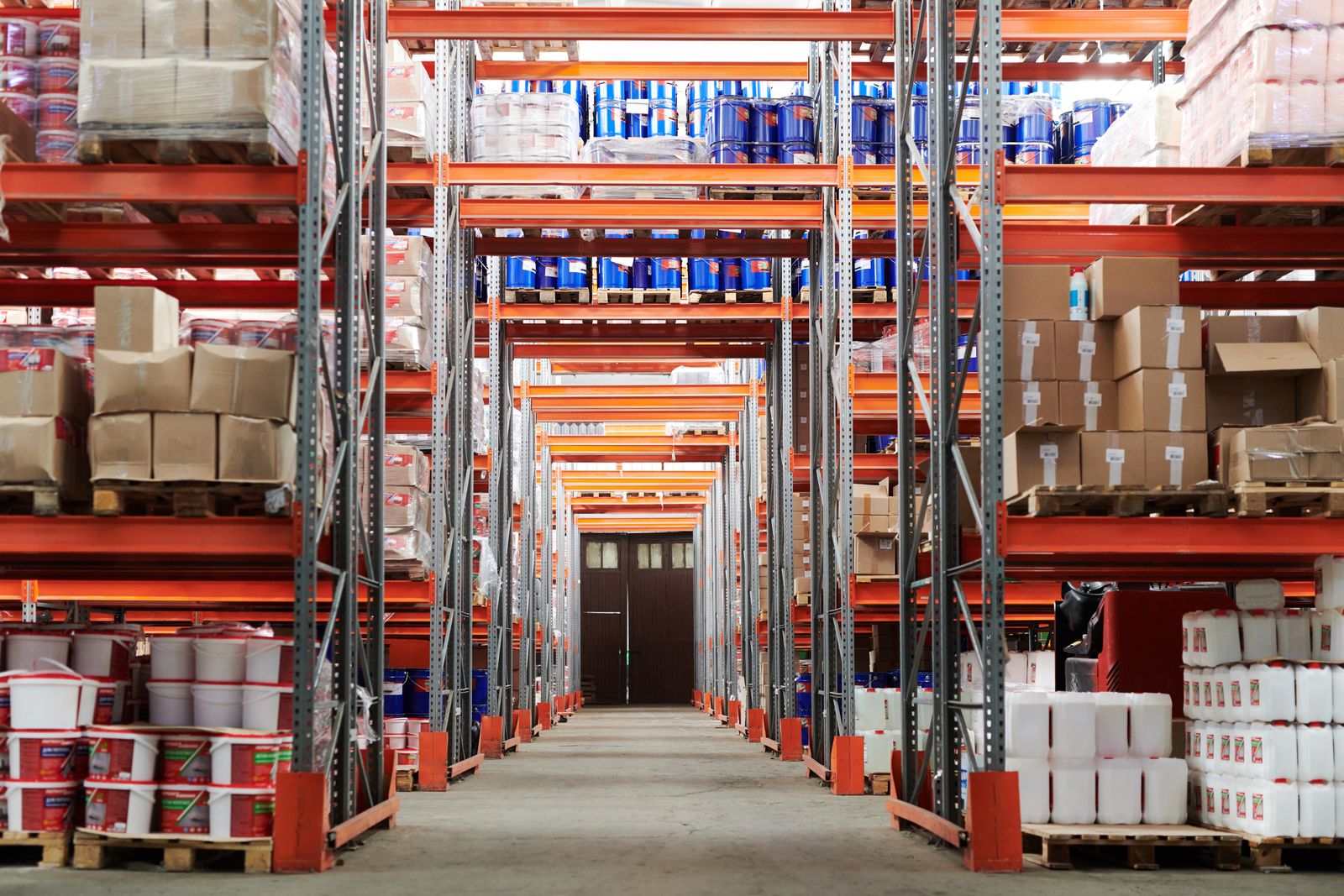
Mover warehouse storage — storage-in-transit (SIT) — is a service inside a moving contract. Your shipment is held at the carrier's warehouse, usually in wooden vaults, under the same bill of lading, typically for 1 to 90 days under most tariffs (some extend toward 180 before converting to long-term storage). Published 2026 bands put SIT around $300 to $800 a month for a standard shipment, with vault storage in some markets quoted at $90 to $200 per vault per month — a three-bedroom household filling three to five vaults. SIT costs more than self-storage per month and buys you the single-handling advantage: your goods are loaded once, vaulted, and delivered, never re-handled by you into a rental unit and out again. In peak season its constraint is availability, not price; in winter, carriers have vault space and dispatchers have time, and the conversation about including some SIT in a move estimate gets noticeably easier.
For a downsizer, the seasonal choice often looks like this: a short, uncertain gap (weeks) points to SIT whenever it can be had; a long, open-ended sort-out (many months, with visits to retrieve, donate and decide) points to self-storage, ideally signed in the cheap months.
What timing changes besides price
Quality of choice. In summer you take the unit that exists: the upper floor, the far building, the standard unit when the furniture — wood, leather, upholstered pieces, anything with glue joints and finishes — would be better served by climate control. In the off-season you choose. For furniture storage specifically, that choice is the product. A winter signing that secures a climate-controlled, ground-floor unit at a promotional rate beats a June signing at full price for a worse room, on every axis at once.
Rate trajectory. A move-in special is an entry price, not a lifetime price. Storage rents commonly rise after promotional periods and on occupancy triggers, and the tenant who signed at peak has the least leverage when the increase letter arrives. Ask, before signing in any season: How long is this rate guaranteed? What has the typical increase been at this facility? Is a rate lock available, and what does it cost? In winter, those questions have negotiating force behind them.
Handling quality at the mover's warehouse. Peak season strains crews as well as space. A shipment vaulted in a calm week gets inventoried carefully; the same shipment in the last week of June joins a queue. If your furniture is going into SIT, an off-peak move date improves the odds at every handling point — loading, vaulting, and the final delivery, which in peak season competes with every other delivery in the carrier's book.
Your own decision quality. This is the seasonal factor nobody prices. Downsizing storage fills, disproportionately, with furniture nobody has decided about. Stored through a summer at peak rates while a family deliberates, it becomes the most expensive furniture in the household. A winter timeline — store in the cheap months, decide by spring — at least makes the deliberation affordable. Set the decision date when you sign, whatever the season: storage is a bridge, and bridges are priced by how long you stand on them.

A booking playbook, by situation
- You control your dates (planned downsizing, no forced closing): aim the move for October–November or late winter, sign storage in the same window, and use the buyer's market to secure climate control and a rate lock.
- Your move is fixed in summer: reserve storage the moment the move is booked — March or April if you can — specify the unit type rather than accepting "a unit," and get SIT terms into the moving estimate in writing before peak capacity tightens.
- You are already storing at a peak-signed rate: the off-season is your renegotiation window. A facility facing winter vacancies would rather keep a paying tenant at a discussed rate than lose the unit entirely; ask, politely and in November, what they can do.
- The gap is short and uncertain: price SIT first. One handling, one contract, and no rental-unit logistics during a closing gap is worth a higher monthly figure for a month or two — but confirm the tariff's day limit and what the shipment converts to, and at what rate, if the gap outruns it.
Movers-Map's directory reflects how large this sector is: 9,547 listings under Household Goods Moving & Storage and 2,753 under Mini & Self Storage. Supply, in other words, is deep — except in the weeks when everyone wants it at once. The whole art of storage timing is refusing to shop in those weeks when you have any choice, and reserving early and precisely when you do not. The furniture does not care what month it is. Your bill, your choice of room, and your movers' attention span all do.

Sources
- moveBuddha, "Best Time to Move" and "When Is Peak Moving Season?" — 41% of annual U.S. moves occur May–August; June is the most common month; June 1 and June 30 the busiest dates; peak season May–September. https://www.movebuddha.com/blog/best-time-to-move/
- DriveSales, "Moving Industry Peak Season" — peak window late May to early September, rates typically 20–30% above off-peak, booking lead times of 4–8 weeks. https://www.drivesales.com/glossary/peak-season
- SelfStorage.com, "How to Find the Best Self Storage Deals" — seasonal and occupancy-based pricing; climate-controlled premiums of about 13–34% by size (July 2026 marketplace data). https://www.selfstorage.com/blog/how-to-find-the-best-self-storage-deals/
- RecNation and Storeganise figures, via Propty, "How Much Should a Storage Facility Charge for a 10×10 Unit" — national average 10×10 street rate about $119/month in 2026; rates softest November–February and firmest May–August; occupancy-band pricing practice; December as the typical low-occupancy point (per Extra Space Storage). https://www.getpropty.ai/learn/how-much-should-a-storage-facility-charge-for-a-10x10-unit
- Seasonal occupancy and promotional patterns in a high-demand market, via Estes Park Storage, "Storage Unit Costs" — 95–100% summer occupancy, winter occupancy 10–20% lower, March–April signings ahead of summer pricing, rate locks worth 5–10%. https://www.estesparkstorage.com/storage-unit-costs-in-estes-park-what-affects-monthly-price
- SafeBound Moving, "Booking Movers and Storage With the Same Provider in 2026" — storage-in-transit at $300–$800 per month for 1–90 days; self-storage $100–$400 and climate-controlled $150–$500 per month. https://www.safeboundmoving.com/blog/movers-plus-storage-same-provider
- Vault rates and SIT duration/conversion, via SafeBound Moving, "Moving to Florida: Storage Bridge and Settlement Date" — vaults at $90–$200 per month, a 3-bedroom home filling 3–5 vaults, SIT commonly capped at 90–180 days before converting to long-term storage. https://www.safeboundmoving.com/blog/moving-to-florida-rental-to-purchase
- Photo by Tiger Lily, https://www.pexels.com/photo/warehouse-with-concrete-floors-4483610/
- Photo by Andrea Piacquadio, https://www.pexels.com/photo/concentrated-woman-carrying-stack-of-cardboard-boxes-for-relocation-3791617/
- Photograph of taping a box via Pexels, https://www.pexels.com/photo/crop-man-taping-carrying-box-with-scotch-4246120/
More guides
- How to Hire a Moving Company That Won't Hold Your Furniture HostageMovers › Moving & Storage
- How Much Do Movers Cost? Local vs. Long-Distance Pricing ExplainedMovers › Moving & Storage
- Binding vs. Non-Binding Estimates: The Difference That Decides Your Final BillMovers › Moving & Storage
- Moving Insurance and Valuation: What 'Full Value Protection' Really CoversMovers › Moving & Storage
- Long-Distance Moving: A Start-to-Finish Guide for Household GoodsMovers › Household Goods Moving & Storage
- All Guides & ArticlesBrowse the full guides library