Movers › Mini & Self Storage
How Much Does Self Storage Cost? Prices by Unit Size and City Type
Self storage has a pricing trick that no other rental business gets away with quite so openly: the price on the website is the price for month one, and month one is the cheapest month you will ever have. The industry calls what happens next "revenue management." You will call it the letter that arrives in month five telling you your 10×10 now costs $31 more.
So the honest answer to "how much does self storage cost" has three parts: the street rate (what a new customer pays today), the city you're in (which can triple that rate), and the trajectory (what the rate becomes once your boxes are stacked and moving them feels unthinkable). Here is all three, with the numbers operators themselves publish.
The benchmark: one unit, one national number
The industry's standard measuring stick is the 10×10 — 100 square feet, roughly a one-bedroom apartment's worth of furniture. StorageCafe, which tracks advertised street rates across 812 U.S. cities using Yardi Matrix data, put the national average for a non-climate-controlled 10×10 at $119 a month in October 2026, down 0.8 percent from a year earlier. Across all sizes, the average street rate was $135, at an average of $1.26 per square foot.
Everything else in storage pricing is a variation on that $119. Here is how size moves it:
| Unit size | What it holds | Avg. monthly street rate (non-climate) | Rent per sq ft |
|---|---|---|---|
| 5×5 (25 sq ft) | Boxes, seasonal gear, a dresser or two | $52 | $2.08 |
| 5×10 (50 sq ft) | Studio or small bedroom's contents | $74 | $1.47 |
| 10×10 (100 sq ft) | One-bedroom apartment | $119 | $1.19 |
| 10×15 (150 sq ft) | Two-bedroom apartment | ~$150–$170 at most operators | ~$1.05 |
| 10×20 (200 sq ft) | Two- to three-bedroom house, or a vehicle | ~$171 average across listings | ~$0.86 |
The pattern matters more than any single figure: small units are expensive space. A 5×5 rents for $2.08 a square foot — 75 percent more per foot than a 10×10 — because you're paying for the door, the lock, the gate code and the account, not just the floor. Two 5×10s almost always cost more than one 10×10 holding the same things. If your stuff can consolidate, consolidate.
A note on averages: marketplace data from SpareFoot puts average booked prices lower (about $83 for a 10×10 in its 2025 figures), because marketplace listings skew toward discounted web rates and cheaper markets. Both numbers are real; they measure different doors into the same building. The street rate is what you compare facilities against. The booked rate is what the teaser pricing is designed to make you feel you're getting.
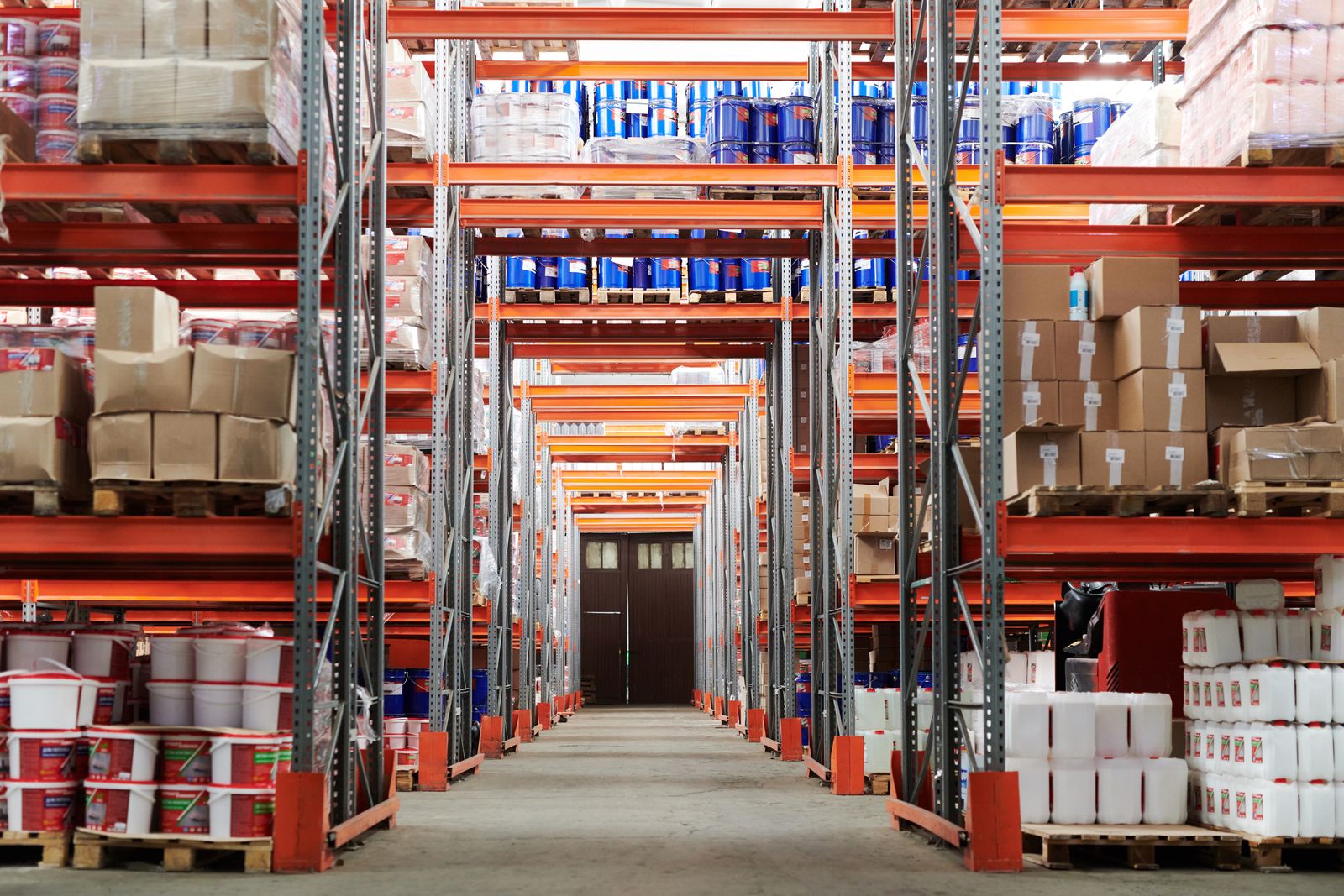
City type is the biggest price lever you have
The same 10×10, same month, same national data set:
| Market type | Example cities (10×10 avg.) | What you pay |
|---|---|---|
| Most expensive coastal metros | Los Angeles $277, New York City $271, Boston $268 | More than double the national average |
| Expensive coastal outliers | San Rafael and Santa Barbara, CA $325; Honolulu $313; San Francisco $307 | The priciest storage in America |
| Mid-priced big cities | Chicago $138–$141, Atlanta $133, Denver $130 | Near or modestly above average |
| Cheap Sun Belt and plains | Houston $98, San Antonio $98, Dallas $110, Oklahoma City $72 | At or below $1 per sq ft |
| Cheapest tracked city | Gainesville, GA $52 | Less than a New York 5×5 |
Why the spread? Storage rent is land rent with a roll-up door on it. In Los Angeles or New York, the operator's land cost, property taxes and construction costs are several times those in Oklahoma City, and zoning fights make new supply scarce — New York's priciest neighborhood, Yorkville, averaged $546 a month, while Hunts Point, in the same city, averaged $119. "City type" is really two questions: how expensive is land, and how much new storage has been built lately? Oversupplied Sun Belt suburbs — the industry built aggressively in Texas, Arizona and Florida — are where rates are softest and falling; StorageCafe's October 2026 figures show most big-city rates flat to down year over year, with Seattle off 5.5 percent and Los Angeles off 4.2 percent in the August comparison.
The practical consequence: a facility ten minutes further out, across a municipal line into a cheaper land market, can be 20–40 percent cheaper for the identical unit. Storage is one of the few purchases where driving away from the city reliably pays.
Climate control: a modest premium nationally, a big one locally
StorageCafe's national figures put a climate-controlled 10×10 at $133 against $119 for standard — a premium of about 12 percent. Treat that as the floor, not the rule. Operator pricing guides commonly describe premiums of 25–50 percent in hot, humid markets, where climate control is positioned as the default rather than the upgrade, and where the "standard" units in the comparison barely exist.
Pay it when the contents justify it: wood furniture, leather, electronics, instruments, photographs, documents, anything that mildews. Skip it for plastic bins, metal tools, patio furniture and the boxes of kitchen duplicates most people are actually storing. The honest test is replacement cost and sensitivity, not the salesperson's story about "most of our customers choose it."
The fees that sit on top of the rate
The street rate is not the bill. Budget for:
- Admin or setup fee: typically $15–$50, one time, at move-in. Sometimes waived for online booking — ask.
- Insurance or tenant protection: most facilities require coverage, either their plan (commonly $10–$30 a month for $2,000–$5,000 of coverage) or proof of your own homeowners or renters policy, which often already covers stored property. Bringing your own proof is the easiest $15 a month you'll save in storage.
- A lock: $10–$25 if you buy the disc lock at the counter; less at a hardware store, if the facility allows your own.
- Late fees: commonly $20–$50, and the start of a lien process if a balance ages — the one fee that can cost you the contents rather than cash.
Extra Space Storage's own guidance, cited in fee breakdowns, is that extras add roughly $65–$100 on top of rent, mostly in the first month. That matches the arithmetic: a $119 unit is realistically a $185–$220 first month and about $135 a month thereafter with a protection plan.

Why the first month is cheap and the sixth is not
Here is the part of the business model the industry discusses frankly — in its own trade press and investor filings — and rarely on its websites.
Move-in pricing is a customer-acquisition cost. Facilities advertise teaser rates — 50 percent off, sometimes $1 for the first month — because an occupied unit, even a discounted one, starts a clock. The recovery mechanism has an acronym: ECRI, existing customer rate increase. Public Storage's 2025 annual filing, as summarized in industry analyses, says it generally raises rents for tenants who have been in place at least five months, and repeats increases every six to twelve months. Extra Space reports raising existing tenants' rates at least once a year. Trade publication Modern Storage Media describes the current large-operator cadence bluntly: the first increase typically lands three to five months after move-in, a second and third follow within six to nine months, and individual increases can run from 20 to 75 percent where the move-in rate was deeply discounted. One analysis of Public Storage's filing puts the result in a single pair of numbers: in 2025, tenants moving in paid an average of $12.80 per square foot per year; tenants moving out paid $20.30.
The logic is not mysterious. By month five your unit is full, your belongings are stacked to the ceiling, and the alternative to paying the increase is renting a truck and spending a Saturday moving everything to save $25 a month. Operators model exactly how many tenants will leave over an increase — and price so that the ones who stay more than cover the ones who go.
What protects you? Less than you'd hope, but not nothing:
- Most states cap nothing. Outside a declared emergency (when price-gouging rules can bite), no state generally limits how much a storage facility can raise rent. Increases of 10–40 percent are common; the first post-promotion adjustment can be far steeper. Notice is typically around 30 days, set by your rental agreement and state law.
- California now requires disclosure. As of January 1, 2026, California operators must tell you in the rental agreement whether your move-in rate is promotional, that it can change, and the maximum rate that could be charged during your first 12 months. If you're renting in California, that maximum figure is the single most useful number on the page — compare facilities on it, not on the teaser.
- Your agreement is month-to-month. That cuts both ways: they can reprice, but you can leave. The threat is only credible if your unit is the size you actually need — an over-full, over-size unit is its own lock-in.
A worked example: what a "cheap" 10×10 really costs
Take a typical deal: a 10×10 advertised at $89 a month on a web special, street rate $119, in a mid-priced city.
- Month 1: $89 rent + $29 admin fee + $15 protection plan + $20 lock = $153 out the door
- Months 2–4: $89 + $15 = $104 a month
- Month 5: first ECRI, say 25 percent toward street: rent $111 + $15 = $126 a month
- Month 10: second increase to street rate: $119 + $15 = $134 a month
Twelve-month total: roughly $1,450 — against the $1,068 the $89 teaser implies. Nothing about that is fraudulent; every step was in the agreement. It is simply a different product than the headline sells, priced over a year rather than a month. Run every quote through that lens: ask for the street rate, the date and typical size of the first increase, and the facility's increase history, and compare twelve-month totals.
How to pay less, in order of impact
- Shrink the unit. The per-square-foot table above is the whole argument: one right-sized unit beats two small ones, and a ruthless sort before you rent beats both.
- Move outward. Price the same size one suburb further from the core. Storage is a land market; use it.
- Take the web rate, then plan for the ECRI. The teaser is real money in months 1–4. Just calendar month five and re-price the unit against competitors before the increase lands.
- Bring your own insurance proof. Your renters or homeowners policy likely covers stored goods already.
- Ask the ECRI question out loud. "When was this facility's last increase, and how much was it?" Independent operators with annual, modest increases exist and will say so; the answer — or the dodge — is information.
- Keep the exit cheap. Store on shelves, keep an aisle, don't fill to the door. A unit you can empty in one trip is a unit you can threaten to empty, which is the only negotiating leverage a storage tenant has.
This site's directory lists 2,753 mini and self-storage businesses alongside 24,571 moving-and-storage listings, so wherever you're renting, there is almost certainly a second quote within a short drive. Get it. In a market where the first month is a promotion and the sixth is a business model, the second quote is the only honest price check there is.
Sources
- StorageCafe, "Self Storage Industry Trends" and New York City market data (October 2026, Yardi Matrix street rates) — https://www.storagecafe.com/self-storage-industry-statistics/
- Storage Unit Costs, "Storage Unit Prices by City (2026)" (StorageCafe/Yardi Matrix data, August 2026) — https://storageunitcosts.com/storage-unit-prices/
- SpareFoot, "Storage 101" (2025 average booked prices by size) — https://news.sparefoot.com/storage-101.html
- StorageAtlas, "Self Storage Statistics" (operator-published rates, 2026) — https://storageatlas.co/storage-statistics/
- StoreAssured Digital, "What Is an ECRI in Self Storage?" (Public Storage and Extra Space 2025 10-K summaries) — https://www.storeassuredigital.com/blog/what-is-ecri-self-storage
- Modern Storage Media, "Question the Strategy" (March 2026, ECRI cadence and California disclosure rules) — https://digital.modernstoragemedia.com/messenger/issue/march-2026sb/question-the-strategy/
- LegalClarity, "How Much Can Storage Units Increase Rent?" — https://legalclarity.org/how-much-can-storage-units-increase-rent/
- Storage Unit Costs, "Storage Unit Fees and Insurance: Hidden Costs Explained (2026)" — https://storageunitcosts.com/storage-unit-fees-and-insurance/
- Photos: warehouse interior — photo by Tiger Lily, https://www.pexels.com/photo/warehouse-with-concrete-floors-4483610/ ; woman on a cardboard box — photo by RDNE Stock project, https://www.pexels.com/photo/woman-in-black-tank-top-sitting-on-brown-cardboard-box-7464725/ ; man carrying boxes beside a van — photo by Artem Podrez, https://www.pexels.com/photo/man-carrying-boxes-beside-a-van-5025669/
More guides
- How to Hire a Moving Company That Won't Hold Your Furniture HostageMovers › Moving & Storage
- How Much Do Movers Cost? Local vs. Long-Distance Pricing ExplainedMovers › Moving & Storage
- Binding vs. Non-Binding Estimates: The Difference That Decides Your Final BillMovers › Moving & Storage
- Moving Insurance and Valuation: What 'Full Value Protection' Really CoversMovers › Moving & Storage
- Long-Distance Moving: A Start-to-Finish Guide for Household GoodsMovers › Household Goods Moving & Storage
- All Guides & ArticlesBrowse the full guides library