Movers › Moving Equipment & Supplies Rental
How to Choose the Right Moving Truck Size (Without Paying for Air)
Every rental counter asks the same question — how many bedrooms? — and it is the wrong place to start. Bedrooms do not move. Furniture, boxes, appliances and garage clutter move, and they occupy volume. A sparsely furnished three-bedroom house can take less space than a one-bedroom apartment owned by a book collector with a sectional sofa, a home gym and forty boxes of kitchen gear. If you size the truck by a bedroom label, you will either pay to haul air across town or discover, with the truck half loaded and the sofa still on the lawn, that you needed the next size up.
This guide works the problem the way a relocation consultant does: count cubic feet first, check the weight limit second, and only then look at what the rental companies call each truck. It also covers the part most size charts skip — the loading order that lets a smaller truck honestly do the work of a larger one.
Start with cubic feet, not bedrooms
A cubic foot is a box one foot on each side. Rental trucks are rated by how many of them fit inside the cargo box, and your household has a measurable volume too. Budget Truck Rental makes the arithmetic unusually plain on its own pages: it defines a room as roughly 150 to 200 cubic feet of belongings. That single definition explains most sizing mistakes. A "two-bedroom" home is rarely two rooms of stuff. Count the living room, kitchen, dining area and garage and a modest two-bedroom house is five or six rooms — 750 to 1,200 cubic feet before anyone opens a closet.
The fleets do not agree with each other, which is why the bedroom shortcut fails. Penske rates its 16-foot truck, at 800 cubic feet, for two to three rooms. Budget rates its 16-foot truck, at only 658 cubic feet, for three to four rooms. The larger truck claims fewer rooms. Neither company is lying; they are simply using different, unstated ideas of what a room contains. Cubic feet are the only number on the page that means the same thing at every counter.
So do a room-by-room inventory. Walk each room with a phone and list the large pieces, then estimate boxes honestly — most people undercount boxes by a third, because closets, drawers and shelves have not yet become boxes in their imagination. As working figures: a standard sofa runs about 50 to 70 cubic feet, a sectional 90 to 130, a queen mattress set about 25 laid flat and less stood on edge, a medium moving box about 3 cubic feet and a large box about 4.5. Add the rooms up, then add 10 to 20 percent. That padded total, not your bedroom count, is the number you take to the rental counter.
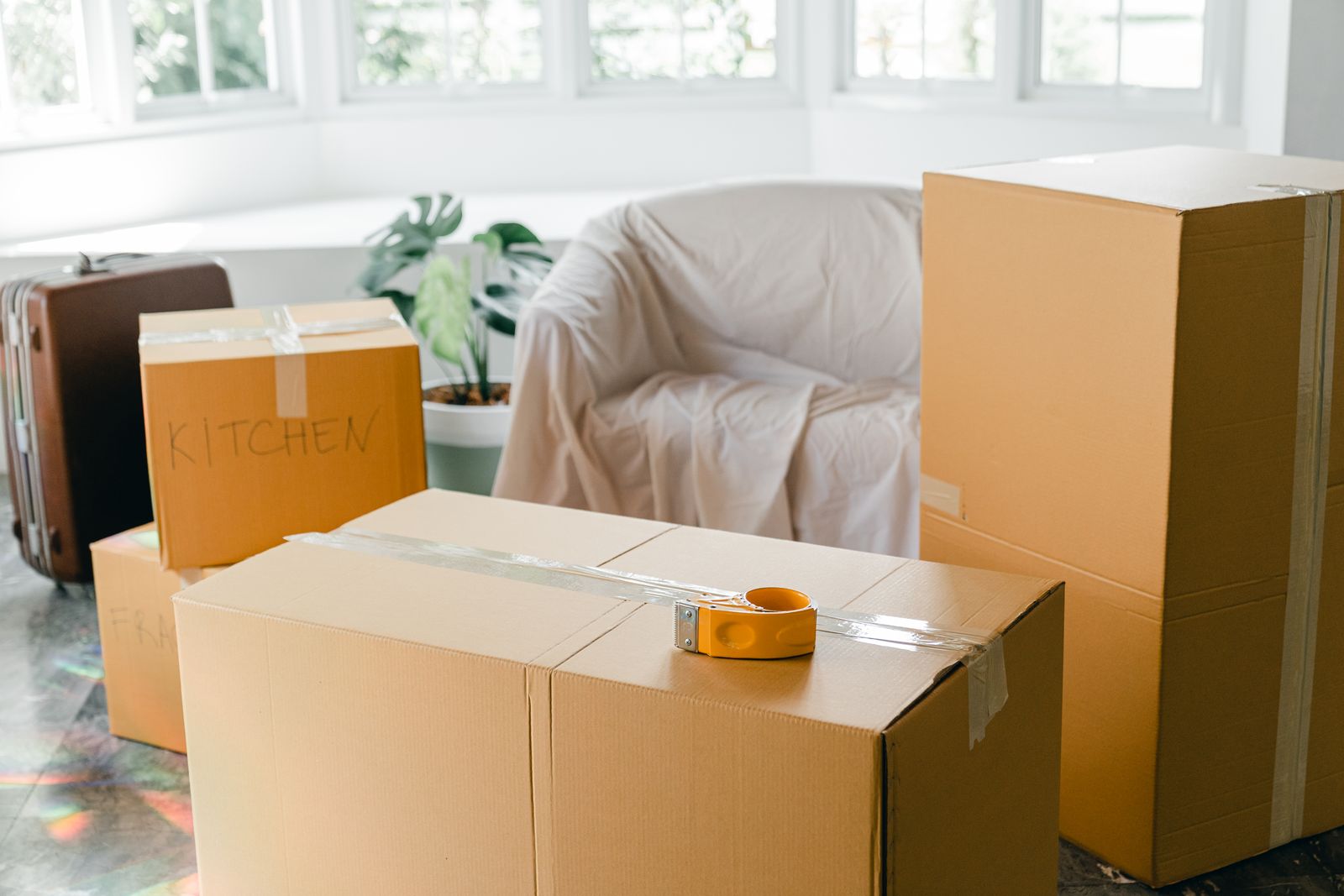
What the rental companies actually sell
The three national fleets sell overlapping but not identical lineups, and the name on the door is a class, not a measurement. Read the cubic feet and the payload, not the number painted on the side.
| Truck class | Published volume | Payload | The fleets' own guidance |
|---|---|---|---|
| U-Haul 10 ft | 402 cu ft | 2,850 lb | Studio to 1-bedroom apartment |
| Penske 12 ft / Budget 12 ft | 450 / 380 cu ft | 3,100 / 3,610 lb | 1–2 rooms; Budget's is not recommended for a king bed |
| U-Haul 15 ft | 764 cu ft | 6,385 lb | 1-bedroom home to 2-bedroom apartment |
| Penske 16 ft / Budget 16 ft | 800 / 658 cu ft | 4,300 / 4,460 lb | Penske: 2–3 rooms. Budget: 3–4 rooms, a 1-bedroom home |
| U-Haul 20 ft | 1,016 cu ft | 5,700 lb | 2-bedroom home to 3-bedroom apartment |
| Penske 22 ft | 1,200 cu ft | 10,000 lb | 3–5 rooms |
| 26 ft (all three fleets) | 1,682–1,700 cu ft | 9,180–12,859 lb | U-Haul: 3–4 bedroom home. Penske: 5–7 rooms. Budget: 5–8 rooms, a 2–3 bedroom home |
Three lessons hide in that table. First, a 16-foot truck is not a 16-foot truck: Penske's holds 800 cubic feet and Budget's 658, a difference of more than forty medium boxes. Second, the 26-foot class converges — all three fleets land within 18 cubic feet of each other — while the middle sizes diverge, so cross-shopping matters most exactly where most households rent. Third, payload does not rise smoothly with size. U-Haul's 20-foot truck is rated for 5,700 pounds, less than its own 15-foot truck at 6,385 pounds. A longer box can be the wrong answer for a heavy load of books, tools or gym equipment, even when the volume fits.
Movers-Map's own directory underlines how much of the moving business is this equipment layer: the site lists 5,379 businesses under Moving Equipment & Supplies Rental and another 2,451 under Moving & Storage Equipment & Supplies Retail, alongside 24,571 listings in Moving & Storage overall. Rental counters are not a sideline to the industry. For a large share of American moves, they are the industry — which is why their sizing charts are written to be reassuring rather than precise.
The weight limit nobody reads
Volume gets the headline; weight delivers the surprise. Every truck has a maximum load, and dense households reach it while the box still looks half empty. Books are the classic case: a medium box of hardcovers can weigh 40 pounds or more, and thirty of them are 1,200 pounds in about 90 cubic feet. Add a tool chest, a treadmill, a piano or a garage full of equipment and a small truck can be legally full long before it is visibly full.
Work the check in the other direction from the volume check. If your inventory leans dense — a library, vinyl, workshop tools, weight plates, canned goods you refuse to abandon — total the heavy groups separately and compare them against the payload column before you reserve. Where volume and weight point to different trucks, weight wins. An overloaded rental is not just a contract problem; it changes braking and handling in a vehicle most renters are already driving for the first time.
Ramps, attics and door openings
Three physical details decide whether the truck you sized on paper works at the curb.
The ramp. The smallest trucks have none. U-Haul's 10-foot and Penske's 12-foot are loaded by lifting everything to deck height — about 29 inches on the U-Haul 10-foot. That is a reasonable ask for boxes and a miserable one for a washer, a solid-wood dresser or a sleeper sofa with two tired helpers. If your load includes appliances or heavy case goods, the ramp alone can justify stepping up a class. U-Haul's ramps start at the 15-foot; Penske's at the 16-foot, which is also its smallest truck that can tow a vehicle.
Mom's Attic. U-Haul's 15-foot and larger trucks add a storage shelf over the cab. It is genuinely useful — for light, bulky, awkward things: lampshades, pillows, cushions, a stroller. It is not a place for books or anything you would regret dropping on the cab roof's other side. Count it as bonus space for soft goods, never as part of your base calculation.
The door. A king mattress is the standard trap. U-Haul lists a 5-foot-11 by 5-foot-7 door opening on its 10-foot truck, and a queen mattress at 60 inches wide passes on its long edge with inches to spare. Budget states plainly that its 12-foot truck is not recommended for a king-size bed. Measure your largest piece against the door opening in the published specs, not against the interior dimensions — plenty of loads fit the box and fail at the door.

The loading order that makes a smaller truck work
Here is the consultant's part of the guide, and the reason a well-loaded 15-foot truck routinely swallows loads that defeat a badly loaded 20-foot one. A truck is a three-dimensional puzzle with a weight problem: heavy things low and forward, everything built in flat, vertical layers — loaders call them tiers — and no wasted voids.
- Appliances and the heaviest furniture first, against the front wall, over and ahead of the rear axle's center of effort. Washer, dryer, refrigerator, the big dresser. They anchor the load and they are the pieces you least want to move twice.
- Mattresses on edge, along a side wall. Stood vertically, a queen set takes roughly a third less floor than laid flat, and it becomes a padded wall that protects what is loaded beside it.
- Sofas on end where ceiling height allows. A standard sofa stood on its arm, legs removed, converts a 60-cubic-foot floor hog into a tall, narrow footprint. Wrap it first; the floor of a rental box is not clean.
- Build tiers of boxes by weight, heaviest boxes at the bottom, each tier a flat layer across the full width of the box before the next layer starts. Uniform box sizes are what make this possible — one reason consultants push standard small, medium and large boxes over a scavenged assortment of whatever the grocery store had.
- Tables upside down, legs off, tabletops protected, the void under them filled with soft goods. Chairs stack seat-to-seat in pairs.
- Fill every void with soft, light things — cushions, bedding, clothing bags, lampshades in the attic. Air in a truck is not neutral; it is room for the load to shift, and shifting is what breaks things.
- Last on, first off: the essentials box, tools, hardware bags and the furniture pads you will need at the door go in last, at the rear.
Loaded this way, most households gain the equivalent of one truck class. Loaded the way most people load — furniture scattered, boxes wherever they land, mattresses flat — a household loses one. That swing, in both directions, is larger than the difference between Penske's and Budget's 16-foot trucks. Technique is a size.
What the wrong size actually costs
Oversizing is the quieter expense. Local rentals commonly run about $20 to $40 a day as a base rate plus roughly $0.79 to $1.19 a mile, with the larger classes at the top of both ranges, and fuel widens the gap: published estimates put a 10- to 12-foot truck near 12 miles per gallon, a 15- to 16-foot near 10, a 20- to 22-foot near 9, and a 26-foot near 8. On a local move those differences are tens of dollars. On a 1,000-mile one-way move, the fuel gap between a 15-foot and a 26-foot truck is on the order of $50 to $100, and one-way rental prices themselves step up with size — representative 2026 one-way totals for about 1,200 miles run from roughly $1,250 for a 15-foot to about $1,700 for a 26-foot, before fuel.
Undersizing costs differently, and worse. Locally, it costs a second trip: double mileage charges, a second round of loading labor, and a day that ends in the dark. One-way, there is no second trip. An undersized one-way truck means leaving things behind, shipping them at parcel prices, or renting a trailer you may not be equipped to tow. The asymmetry is the real rule of thumb: if your padded cubic-foot total lands within about 10 percent of a truck's rated volume, take the next size up. If it lands comfortably below — 75 percent of the box or less — stay put and load it properly. Paying for a modest amount of air is insurance. Paying for half a truck of it is waste.
Access belongs in the same calculation. A 26-foot truck needs a long, legal place to park, a wide turning approach, and clearance under trees and wires. In a dense neighborhood or an apartment complex with a tight lot, the smaller truck that fits the site beats the larger one that has to be loaded from half a block away — every carried item travels that distance twice, once per end of the move.
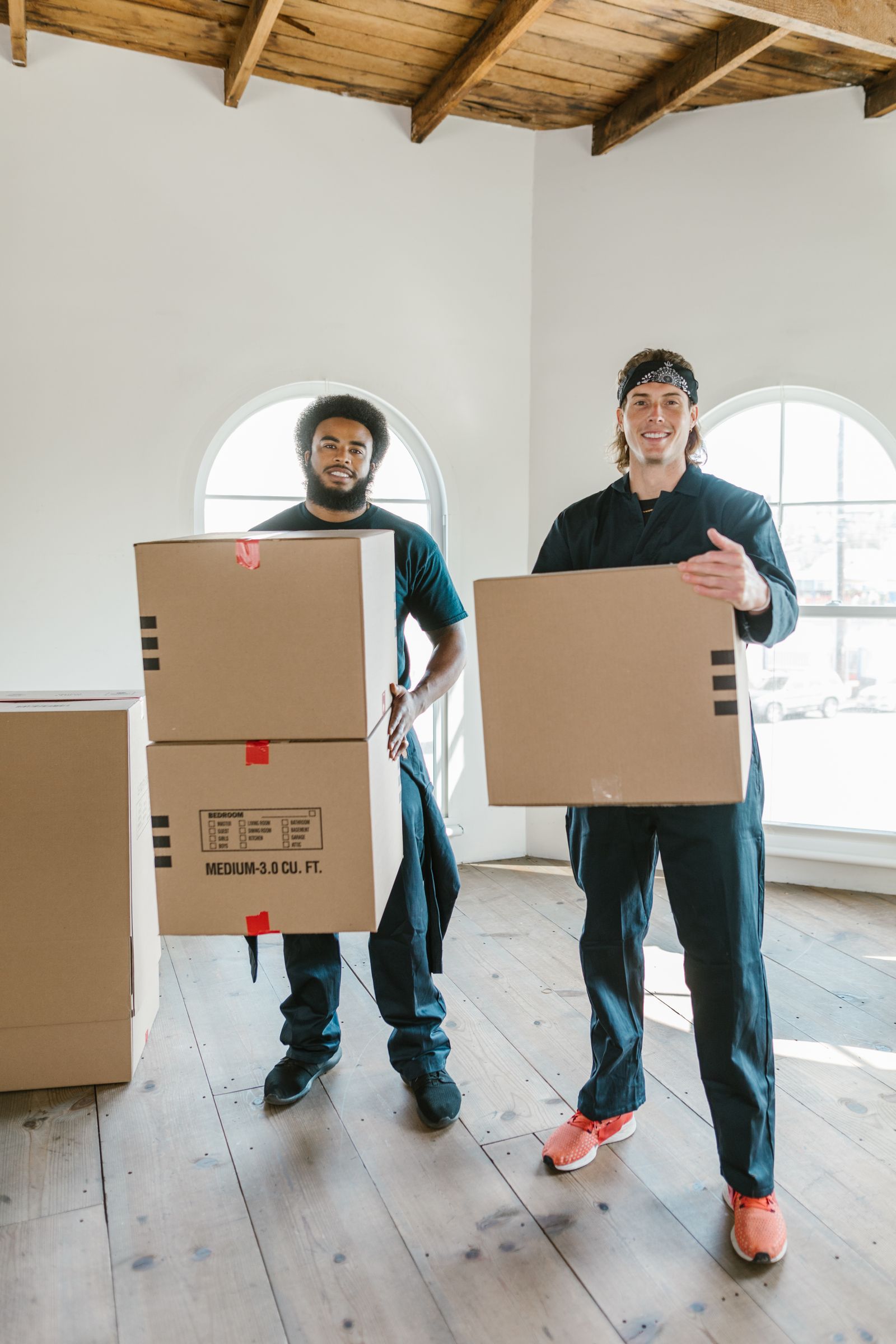
A five-minute sizing routine
Pull it together before you reserve:
- Inventory room by room, including closets, garage, basement and attic. Count boxes after a first pack of one room, and multiply — that measured rate beats any guess.
- Total cubic feet using the fleets' own convention of roughly 150 to 200 cubic feet per furnished room as a cross-check on your item count.
- Add 10 to 20 percent. Compare against published volumes for the specific fleet you will rent from — not a generic size chart.
- Check payload separately if your load is book-, tool- or equipment-heavy.
- Check the three physical gates: ramp, door opening for your largest piece, and parking for the truck's length at both addresses.
- Apply the 10-percent rule: close to the ceiling means one size up; comfortably under means load well and save the money.
Do that, and the question at the counter changes. You are no longer a number of bedrooms hoping the chart is kind. You are a measured load, in cubic feet and pounds, choosing the smallest box it honestly fits — which is the whole secret, and the only one the rental companies cannot put on a poster.
Sources
- U-Haul, "Moving Truck Sizes" — published volumes, payloads, interior and door dimensions, and home-size guidance for the 10-, 15-, 20- and 26-foot trucks. https://www.uhaul.com/Truck-Rentals/Moving-Truck-Sizes/
- Penske and Budget truck pages, via Fit My Load, "What Fits in a 10, 15, 20, or 26 Ft Truck?" — Penske 12/16/22/26 ft at 450/800/1,200/1,700 cu ft and Budget 12/16/26 ft at 380/658/1,698 cu ft, with payloads and room ratings. https://fitmyload.com/what-fits-in-a-moving-truck/
- Budget's definition of a room as roughly 150 to 200 cubic feet, and the fleets' conflicting room ratings, via "What Size Moving Truck Do I Need?" https://www.myfastmovers.com/blog/what-size-moving-truck-do-i-need/
- Per-item volumes and home-volume ranges, via Loading Crews, "What Size U-Haul Do You Need?" https://loadingcrews.com/guides/what-size-uhaul-do-i-need/
- Local daily and per-mile ranges, one-way totals and fuel economy by size, via "Cost to Rent a Moving Truck 2026." https://Moving-Calculator.net/guides/cost-to-rent-a-moving-truck-2026.html
- Photo by Ketut Subiyanto, https://www.pexels.com/photo/empty-apartment-with-packed-carton-boxes-before-moving-4246119/
- Photo by SHVETS production, https://www.pexels.com/photo/focused-young-couple-packing-carton-boxes-before-relocation-7203881/
- Photo by RODNAE Productions, https://www.pexels.com/photo/two-men-standing-carrying-cardboard-boxes-7464703/
More guides
- How to Hire a Moving Company That Won't Hold Your Furniture HostageMovers › Moving & Storage
- How Much Do Movers Cost? Local vs. Long-Distance Pricing ExplainedMovers › Moving & Storage
- Binding vs. Non-Binding Estimates: The Difference That Decides Your Final BillMovers › Moving & Storage
- Moving Insurance and Valuation: What 'Full Value Protection' Really CoversMovers › Moving & Storage
- Long-Distance Moving: A Start-to-Finish Guide for Household GoodsMovers › Household Goods Moving & Storage
- All Guides & ArticlesBrowse the full guides library