Movers › Piano & Organ Moving
How to Negotiate Piano and Organ Moving Quotes Without Burning the Relationship
Of all the complaint files I have read over the years, piano moves produce a particular kind of heartbreak. The instrument is heavy, fragile, often inherited, and frequently worth more than everything else in the truck combined. And a striking number of the disputes start the same way: not with a careless crew, but with a price negotiated so aggressively that the job the customer thought they bought was no longer the job the mover could afford to do.
That is the tension this guide is built around. Piano and organ moving is a small, reputation-driven trade — the directory behind this site lists just 377 piano and organ moving specialists — and the good ones have more work than they need. You absolutely can negotiate their quotes. People do it every week, successfully, and save real money. But you have to negotiate the parts of the quote that contain actual margin, trade things that cost the mover little and save you a lot, and leave alone the line items that exist because physics demands them. Squeeze the wrong line and you don't get a cheaper move. You get a smaller crew standing in your stairwell doing arithmetic about your grandmother's Steinway.
First, know what a fair quote looks like
You cannot negotiate a number you can't evaluate. Current published pricing for professional piano moving clusters like this:
| Job | Typical range | What drives it |
|---|---|---|
| Spinet / console upright, local, easy access | $150–$400 | 300–500 lbs; two or three movers |
| Full upright, local | $250–$600 | Heavier cabinet; often a third or fourth mover |
| Baby grand, local | $450–$900 | Legs, lid and lyre come off; moves on a piano board |
| Grand, local | $700–$1,400 | Full disassembly; four movers |
| Concert grand, local | $1,000–$2,500+ | 800–1,200 lbs; specialty crew, possibly a crane |
| Home / console organ, local | $400–$900 | Angi's 2026 organ range; speaker cabinets add trips |
| Any piano, long-distance | $500–$2,500+ | Priced by mileage and whether it rides dedicated or consolidated |
Angi's 2026 national average for a piano move is $400, with most jobs between $200 and $1,000 — but that average hides the spread between a spinet rolled across town and a concert grand lowered off a balcony. The add-ons are where quotes diverge: stairs run roughly $40–$130 per flight depending on the source and the staircase; long carries beyond about 75 feet add $50–$150; grand reassembly adds $50–$150; crane or hoist work runs $200–$1,000. A Hammond B-3 organ — 425 pounds of tonewheel machinery, with a separate Leslie speaker cabinet — sits at the awkward end of the organ range: professional moving runs $500–$2,000 depending on distance, and the instrument it protects can be worth $12,000–$20,000 restored. Keep that ratio in mind. It is the whole negotiation in miniature.

Where the margin actually is
A piano quote is not one number; it is a stack of decisions, and only some of them are negotiable. The flexible layers:
The calendar. Piano movers, like all movers, are slammed at month-end, on weekends, and in summer — and quiet on a Tuesday in mid-February. Scheduling flexibility is the single most valuable thing you can offer, because an empty slot in a specialist's week is worth nothing to them and a filled one at a discount beats it. Ask, in these words: "What is your slowest week in the next two months, and what would the price be if I took a day in it?" Discounts of 10–20 percent for off-peak flexibility are common in this trade, and unlike most negotiation wins, this one costs the mover nothing in quality.
Deadhead miles and route pairing. A specialist driving forty minutes to your house and forty back empty has priced that emptiness into your quote. If your move can pair with another job on the same route — or if you're flexible enough to be the second stop of a day — say so and ask. Long-distance piano pricing works the same way at larger scale: a piano riding as part of a consolidated load costs far less than a dedicated trip, and movers will discount to fill trailer space on a route they're already running.
Bundling with the household move. If a general mover is already moving your house and subcontracts the piano to a specialist at retail, there are two margins in your bill. Ask the household mover for the specialist's name and quote the piano separately — or ask the specialist whether they handle the whole move's heavy items. Conversely, a specialist already coming for the piano may move the organ, the safe, or the pool table on the same trip at a marginal price far below a second booking.
Storage timing. Need a month between houses? Movers price storage-in-transit and warehouse storage very differently, and a specialist with their own warehouse has room to deal on a multi-week hold in a way they cannot on labor. Ask for the storage rate and the transport rate as separate lines, and negotiate them separately.
The extras you don't need. Climate-controlled transit is worth paying for when a valuable instrument crosses the desert in August. It is a padded line item for a spinet moving six miles in October. Read every line, and cut the ones that don't match your instrument, your route, or your season — movers expect this, and it signals that you read quotes carefully, which itself improves the next quote.
What to trade instead of demanding a discount
The specialists worth hiring are small businesses whose owners often do the estimating and then show up on the crew. Straight percentage demands — "your competitor is 15 percent cheaper" — land badly, partly because the competitor's quote often isn't for the same job (more on that below) and partly because there's nothing in it for them. Trades work better:
- Offer certainty. A signed booking with a deposit on a slow date is worth money to a small operator. Trade commitment for price.
- Offer preparation. Clear the path, measure and report doorways and stair turns honestly, have the piano's interior emptied, arrange parking for the truck, and be ready at the agreed hour. A crew that never waits and never improvises is cheaper to run, and estimators remember which customers made a job easy — some will price the next one accordingly, and many will flex on this one if you raise prep during the quote, not after it.
- Offer flexibility at the destination. If the piano can be delivered within a window of days rather than on a fixed date, the mover can route it efficiently. Windows are worth discounts on long-distance work especially.
- Ask for value instead of a cut. If the number won't move, ask what they can include: the bench and pedals wrapped and inventoried, a post-move tuning referral, a free second placement if the piano needs to shift rooms within the week. Tuners and movers refer work to each other constantly; a mover who won't discount $75 will often happily make a call that saves you $150.
What never to squeeze
Now the other side, and this is where the complaint files begin.
Crew size. The quote says four movers for your grand because four movers is what a 700-pound instrument on a staircase requires. Talking a mover down to three doesn't save the price of one laborer; it converts the savings into risk — to the crew's backs and to your piano, in that order on the day and in the reverse order in the claim. If a quote's crew size looks padded, get a second specialist's quote and compare crew plans. Don't amputate one.
Insurance and valuation. The standard released-value coverage on a household move pays 60 cents per pound. On a 500-pound upright, that is $300 for an instrument that may be worth fifty times that. Upgrading valuation coverage is frequently the line budget shoppers cut first, because it feels like buying nothing. It is the only line in the quote that pays you. Negotiate almost anything else first.
Stairs, rigging, and crating. These fees look like padding and read like padding, right up until you understand that a crane day and a custom crate are pass-through costs with equipment and subcontractors behind them. A mover who waives the crane fee under pressure hasn't made the crane free; they've made it likelier that the crew attempts the balcony with straps and optimism instead. When a specialist insists a job needs rigging, the negotiation to have is about whether the job is scoped correctly — walk it with them, ask what the alternative path is — not about the rigging price.
The specialist premium itself. A general household crew will often quote a piano for half a specialist's price. Sometimes that's fine — a spinet, ground floor, straight shot. For a grand, a B-3, or anything with stairs, the premium you're looking at is the price of piano boards, skid boards, the right dollies, and a crew that has done the stair turn four hundred times. The complaint files are full of the other kind.

Organs: the negotiation is different
Organs split into three different negotiations. A home console organ prices like heavy furniture — Angi's $400–$900 band — and negotiates like a piano: calendar, bundling, prep. A Hammond B-3 with a Leslie is a specialist job where the instrument's value dwarfs the moving bill; there, negotiate scheduling and routing, and spend your energy verifying the crew has actually moved tonewheel organs, because the generator must be locked down before transport and a crew that doesn't know that will not learn it from your quote discussion.
A church pipe organ is not a moving quote at all. It is a building system — console, blower, wind chests, ranks of pipes — and its relocation is a dismantling project priced like construction. The negotiation there runs the other direction: the organ relocation market is active, and a well-maintained instrument from a reputable builder can be sold or donated to another congregation with the buyer paying for careful dismantling. Before paying anyone to remove a pipe organ, get an organ builder's opinion of its value. Churches have paid demolition prices for instruments another church would have paid them to take.
How to run the conversation
Get three quotes from specialists — the trade is small enough that three is a real market sample — and make every quote describe the same job: instrument make and size, stairs counted at both ends, carry distances, and dates or your flexibility window. Quotes that describe different jobs cannot be compared, and the cheapest one is usually cheapest because it assumed away a staircase.
Then negotiate in this order: date first, routing second, bundling third, extras fourth, headline price last and gently. Put the agreed scope — crew size, stairs, equipment, valuation, delivery window — in writing on the estimate. If a mover balks at writing down what you negotiated, the negotiation didn't happen; you just had a pleasant phone call.
And keep the relationship in proportion. You are asking a small crew of specialists to carry the most damageable valuable object you own down a flight of stairs. The goal of the negotiation is a fair price for the full, properly resourced job — not the lowest number a tired estimator will say out loud to end a phone call. The customers in my complaint files who saved the most money, in the end, were the ones who never had to file one.
Sources
- Coastal Moving Services, "Piano Moving Cost" (2026) — local ranges by instrument type and weight, stairs at $60–$130 per flight, long carries over 75 feet at $50–$150, grand reassembly at $50–$150, long-distance range of $700–$2,800: https://coastalmovingservices.com/moving-tips/piano-moving-cost/
- Angi, "How Much Does It Cost to Move a Piano? [2026 Data]" (updated October 14, 2026) — national average of $400, organ range of $400–$900, stair surcharges of $40–$100 per flight, crane and window work at $200–$1,000: https://www.angi.com/articles/piano-moving-cost.htm
- Extra Space Storage, "How Much Does it Cost to Move a Piano in 2026?" — local ranges by piano type (upright $150–$350, baby grand $250–$500, grand $300–$650), per-step stair fees, long-distance ranges by type: https://www.extraspace.com/moving/guides/tips/average-cost-to-move-a-piano/
- Curio Comp, "Hammond B-3 Organ Value & Price Guide" — B-3 values ($12,000–$20,000 fully restored; $15,000–$25,000+ with Leslie 122) and professional moving budgeted at $500–$2,000 depending on distance: https://curiocomp.com/musical-instruments/hammond-b-3-organ
- Otesse, "Church Organ Removal: Cost, Crew, and Options" — the four organ categories, pipe organs as relocatable assets with an active resale/donation market, and why pipe organ work prices like a building project: https://www.otesse.com/articles/church-organ-removal
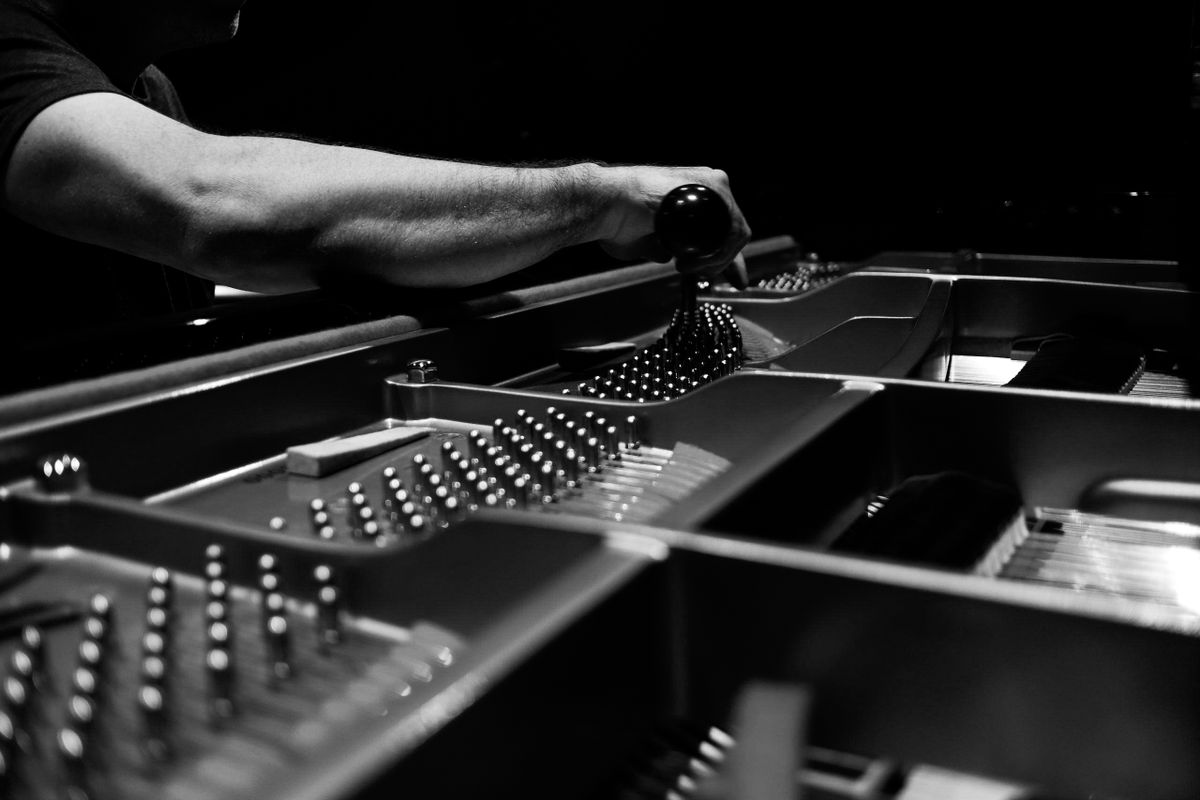
Photos: grand piano strings — photo by Pexels contributor, https://images.pexels.com/photos/14494758/pexels-photo-14494758.jpeg ; piano tuner at work — photo by Pexels contributor, https://images.pexels.com/photos/29039292/pexels-photo-29039292.jpeg ; piano by a window — photo by Pexels contributor, https://images.pexels.com/photos/18845890/pexels-photo-18845890.jpeg
More guides
- How to Hire a Moving Company That Won't Hold Your Furniture HostageMovers › Moving & Storage
- How Much Do Movers Cost? Local vs. Long-Distance Pricing ExplainedMovers › Moving & Storage
- Binding vs. Non-Binding Estimates: The Difference That Decides Your Final BillMovers › Moving & Storage
- Moving Insurance and Valuation: What 'Full Value Protection' Really CoversMovers › Moving & Storage
- Long-Distance Moving: A Start-to-Finish Guide for Household GoodsMovers › Household Goods Moving & Storage
- All Guides & ArticlesBrowse the full guides library