Storage › Moving
How to Pack for Storage So Everything Survives Six Months
Packing for a move and packing for storage look identical from across the room: boxes, tape, a marker going dry. They are not the same job. A move asks your belongings to survive a day of handling and a truck ride. Storage asks them to survive six months of sitting still in a sealed box of a room — through a season's heat, its humidity, its cold snaps, and the slow physics of weight pressing down on whatever is at the bottom of the stack. Almost nothing that ruins stored goods does it quickly. Mold, warping, rust, crushed corners, and the smell that never quite leaves a sofa are all slow damage, and slow damage is preventable damage, because every one of its causes can be dealt with on packing day.
Here is how to pack so that what comes out of the unit in six months is what went in.
The enemy list, in order
Moisture is first, and it isn't close. A standard drive-up unit tracks outdoor weather; in a humid climate its interior air can sit above 60 percent relative humidity for weeks, and that is the threshold at which mold gets what it needs to grow on fabric, paper, leather, and wood — sometimes within days on a warm, dusty surface. Condensation forms when warm moist air meets a cooler surface, and inside a closed unit it has nowhere to go. Nearly every other storage horror — mildew smell, rust, warped joints, stuck-together photographs — is moisture wearing a different hat.
Heat and cold are second. Summer heat inside a metal unit softens adhesives (laminated documents, photo albums, and glued furniture joints all fail this way), and freeze-thaw cycles crack finishes and split wood joints.
Weight is third. Six months is a long time for a cardboard box to hold up the three boxes above it, and an eternity for an upholstered chair to hold up anything at all.
Pests are fourth — and mostly they arrive inside your own boxes, invited by food residue, crumbs, and scented products. Neglect is fifth: the unit nobody visits is the unit where a small problem becomes a total loss.
Climate control is the broad-spectrum answer to the first two. A true climate-controlled unit holds roughly 55–85°F and manages humidity — typically somewhere in the 30–55 percent relative humidity range, depending on the operator. Note the wording trap: some facilities sell "temperature-controlled" space that heats or cools but does not dehumidify. For a six-month stay with furniture, paper, or electronics in it, ask specifically whether humidity is managed, and at what range. Operators commonly price climate-controlled space at a 25–50 percent premium over standard units; for a half-year stay with anything organic or valuable inside, that premium is the cheapest insurance in this entire guide. Everything below still applies inside a climate-controlled unit — it just applies with more margin for error.
Rule one: nothing goes in damp, dirty, or fed
Mold needs moisture and food, and households supply both. Before anything is packed:
- Clean it, then dry it — completely. Upholstery vacuumed and spot-cleaned, then left to air until it is dry to the core, not just the surface. Wood wiped down. Kitchen items washed, because a blender base with smoothie residue is a pest invitation and a smell generator in one.
- Launder and fully dry every textile. Curtains, bedding, and clothing packed with residual damp will mildew in a sealed box even in a decent unit. "Mostly dry" is the phrase that precedes the green coat on my books' cousins.
- Empty every cavity. Crumbs in the toaster, lint in the dryer, water in the iron. Check pockets, drawers, and the crisper drawer nobody opens.
Appliances: the 48-hour head start
Appliances are where six-month storage goes wrong most expensively, because they are machines for moving water and cold air, and both leave residue behind. Manufacturer guidance (Whirlpool, Samsung, GE, LG) converges on the same sequence: clean, defrost, drain, dry, and store with airflow.
| Appliance | The prep that matters | The mistake that ruins it |
|---|---|---|
| Refrigerator / freezer | Defrost fully at least 48 hours ahead; wipe interiors with a baking-soda solution; dry every surface and gasket; store upright, off the floor, doors propped ajar with a towel or wedge; an open box of baking soda inside | Closing the doors on a damp interior — the classic mold farm; laying it on its side in transit, which shifts compressor oil |
| Washing machine | Drain hoses and the pump/filter completely; run a cleaning cycle and let the drum dry with the door open; refit transit bolts for the move if you kept them; tape hoses and cords to the back | Leaving water in the pump and hoses to stagnate (smell) or freeze and crack fittings (in cold climates) |
| Dishwasher | Drain residual water, clean the filter, leave the door ajar | Sealing it wet — same mold story, smaller box |
| Small appliances | Empty, wash, dry; wrap cords; pack the carafe and the base in the same box, labeled | Storing a coffee maker with water in the reservoir |
Two cross-cutting rules: wrap appliances in breathable covers — moving blankets or cotton — never sealed plastic, which traps the very moisture you're trying to escape; and keep refrigerators upright during the move and in the unit, elevated on a pallet or boards rather than sitting on bare concrete, which wicks cold and moisture.
Furniture: cover it with something that breathes
The single most repeated error in storage is shrink-wrapping furniture. Plastic against wood or leather in a humid unit is a terrarium lid: moisture condenses inside and stays against the finish for months. Use cotton furniture covers, old clean sheets, or moving blankets — protection from dust and scuffs that still lets the piece breathe.
- Wood: clean, dry, and — for a long stay — a coat of furniture wax adds a moisture buffer. Disassemble what comes apart (table legs, bed frames, removable shelves); a disassembled piece stores flatter, stacks safer, and doesn't spend six months stressing its own joints. Bag the hardware, label the bag, and tape it to the underside of the piece it belongs to.
- Leather: clean and condition before storage; leather dries and cracks in low humidity and molds in high, which is why it tops the climate-control list.
- Upholstered pieces: vacuum thoroughly (crumbs again), dry fully, cover in cotton. Never stack boxes on a sofa or an armchair — six months of point load will leave permanent dents in foam and fabric. The sofa is floor furniture in storage, not a shelf.
- Mattresses: a breathable mattress bag (they exist; the sealed plastic kind is for moving day, not for six months), stored flat if the manufacturer allows or on its long edge if space demands — and never with boxes resting on it.
Boxes, bins, and the physics of stacking
Cardboard is fine for six months in a dry, climate-controlled unit and a gamble anywhere else: it absorbs ambient moisture, softens, and then the stack starts to lean. Lidded plastic bins shed water and stack honestly, which is why the standard advice — bins for the vulnerable, cardboard for the sturdy — holds up. Whichever you choose:
- Small boxes for heavy things. Books, tools, and records go in small boxes, full stop. A large box of books is too heavy to move safely and its bottom will eventually agree with that assessment.
- Fill every box completely. A half-full box crushes from above; fill voids with packing paper (not newspaper against anything ink would mark). A full box with the flaps flat is a building block; anything else is a pillow in a stack.
- Stack by weight, heaviest at the bottom, and cap the height. In practice: book and tool bins on the floor, mid-weight boxes above, linens and light goods on top. Keep stacks to a height you can lift the top box off without pulling — if you have to yank, it's too high.
- Nothing irreplaceable on the floor. Raise the bottom layer on pallets, shelving, or even 2×4 runners. Concrete sweats, units occasionally take water at the door line, and six inches of elevation defeats both.
- Leave an aisle and air gaps. Boxes pressed against exterior metal walls inherit the wall's condensation. A few inches of space, and a walkway to the back, turn "check on the unit" from an excavation into an inspection.
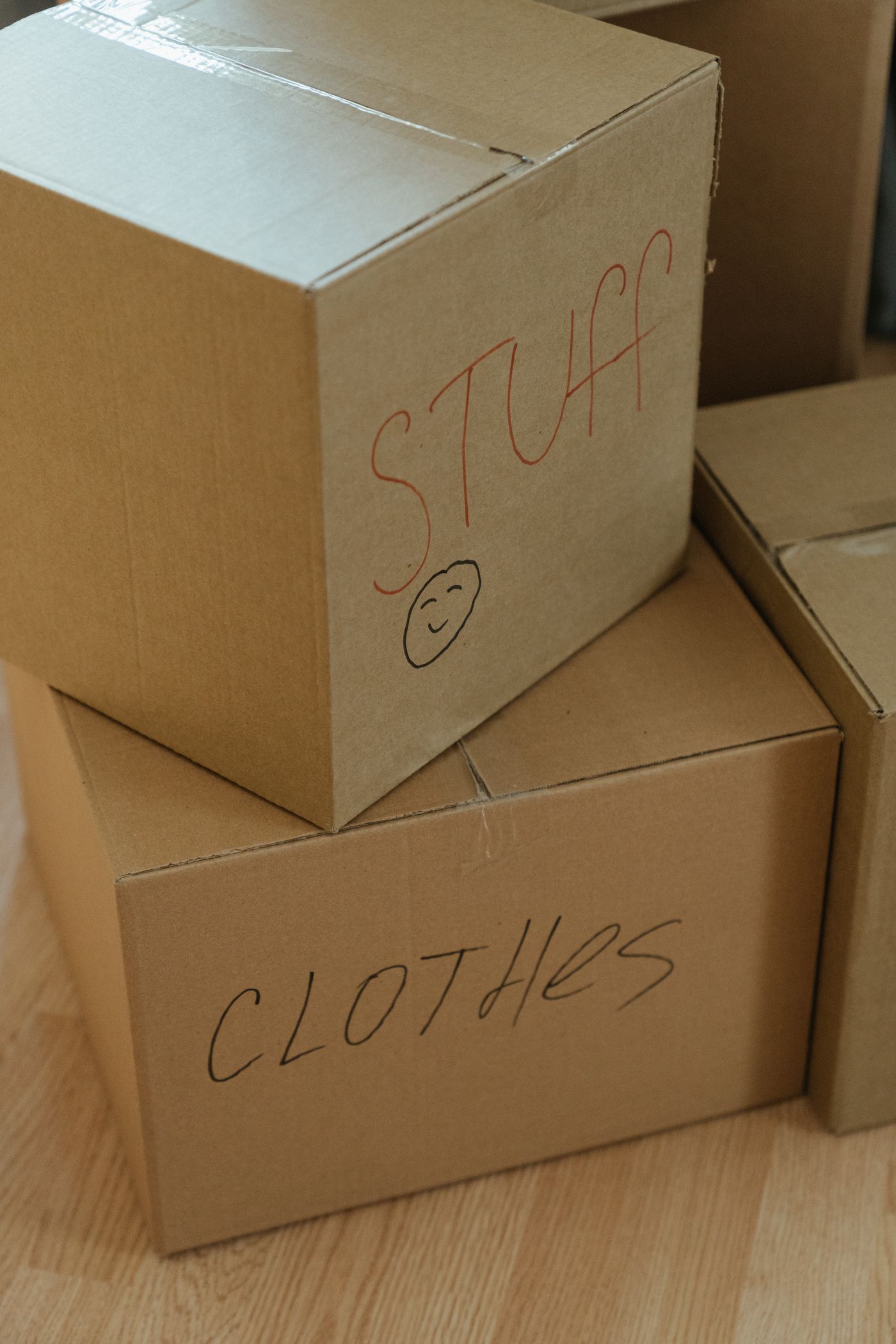
Label every box on two sides with contents and room — in six months you will not remember, and the box you need will be at the bottom of the back stack unless the labels say otherwise. Photograph the contents of the important boxes before you seal them; if you ever need to prove condition or value, packing day is when the evidence exists.
The special cases that punish assumptions
Paper, books, and photographs. Paper is mold's favorite food and humidity's favorite victim. Store documents and photos in bins, off the floor, in the driest part of the unit — and if the collection matters, that means climate control, no debate. Photographs should never be loose against each other in a warm unit; heat-softened emulsion sticks. Interleave or keep albums upright like books.
Electronics. Remove every battery — six months is enough for a leaking cell to kill a remote, a flashlight, or a camera. Coil cables with their devices, and keep screens upright, unstacked, and padded; a television travels and stores upright, ideally in its original box.
Clothing and textiles. Clean first (body oils and food stains are pest food and set permanently in storage). Cardboard wardrobe boxes are fine for a dry unit; for anything humid, bins with a desiccant packet inside. Vacuum bags are excellent for bulky synthetics and duvets, but don't vacuum-seal leather or natural-fiber pieces you care about — months of compression can crease and crack them.
Desiccants help at the margin. Silica gel packets inside bins and a bucket-style moisture absorber in the unit genuinely pull water from the air — but they saturate, so they are a supplement to climate control and dry packing, not a substitute. If you use them, note the date and check them when you visit.
What may not go in at all. Storage leases almost universally prohibit perishable food, plants, flammable and hazardous materials (fuel, paint thinner, propane, fireworks), and anything alive. Beyond the lease: gasoline in a mower or trimmer should be drained or stabilized, candles can melt and re-set into modern art in a hot unit, and anything with a scent — potpourri, scented candles, pet food — is pest advertising. When in doubt, ask the facility; a prohibited-items problem discovered by the operator becomes your problem at the worst possible price.
The visit: storage is not a vault, it's a slow process
Put a reminder in your calendar for every four to six weeks. A visit takes ten minutes: look for water at the door line, sniff for mildew, check that stacks haven't leaned, confirm the desiccant hasn't saturated, and make sure nothing has nested. Catching a problem at week six is a wipedown; catching it at month six is a write-off. If the unit is far away, that cadence is itself an argument for paying the climate-control premium — distance converts small risks into total ones.
Six months from now, the opening of that unit will tell you exactly how packing day went. The people whose sofas smell like sofas and whose books open clean did nothing exotic: they packed dry, covered with cloth instead of plastic, kept weight honest in the stack, raised everything off the concrete, and chose a unit whose humidity was managed rather than hoped for. This site's directory lists storage options alongside its 1,770 moving companies — including 834 listings that pair self-storage with movers — so the combination of a decent unit and a crew that packs for the stay, not just the day, is usually available in the same search. Pack for the season your things will live through, not the afternoon you load them, and the unit will give everything back the way it went in.

Sources
- Moishe's Self Storage, "Climate Controlled Storage" (typical climate-controlled ranges of 55–85°F and roughly 45–55% relative humidity; not all "climate controlled" units manage humidity; mold growth conditions above ~60% RH, citing EPA data): https://www.moishesselfstorage.com/climate-controlled-storage/
- The Storage Advantage, "Climate-Controlled Storage Units" (temperature held at 55–85°F; humidity kept below ~55% RH as the threshold below which mold growth becomes unlikely; heat damage to adhesives in laminated documents, photo albums, and glued furniture joints): https://www.thestorageadvantage.com/storage-type/climate-controlled-storage
- Storage Building Central, "Climate Controlled vs. Non-Climate Controlled Storage" (humidity range of 30–50% RH; mold beginning above 60% RH, potentially within 24–48 hours in warm conditions): https://www.storagebuildingcentral.com/blog/climate-controlled-vs-non-climate-controlled-storage
- Island Park Storage, "Storing 3 Months or More? When Climate Controlled Storage Pays" (climate-controlled premium of roughly 25–50% over standard units; breathable covers rather than plastic wrap on wood and leather; pallets and desiccants as supplements): https://www.islandparkstorage.com/blog/do-i-need-climate-controlled-storage
- Homestead Storage (Greeley), "How to Prepare Appliances for Self Storage" (defrost and clean refrigerators at least 48 hours ahead; drain washers and dishwashers; breathable moving blankets instead of plastic; keep appliances upright and off the floor, doors ajar): https://homesteadgreeley.com/post/how-to-properly-prepare-household-appliances-for-self-storage
- Inline Storage, "Appliance Storage Guide" (manufacturer-based refrigerator preparation sequence; moisture sealed behind a closed door as the cause of odor and mold; upright transport and standing time before restart): https://blog.inlinestorage.com/blog/appliance-storage-guide
- Photo by cottonbro studio: https://www.pexels.com/photo/4554242/
- Photo by cottonbro studio: https://www.pexels.com/photo/4568710/
More guides
- How to Hire a Moving Company That Won't Hold Your Furniture HostageMovers › Moving & Storage
- How Much Do Movers Cost? Local vs. Long-Distance Pricing ExplainedMovers › Moving & Storage
- Binding vs. Non-Binding Estimates: The Difference That Decides Your Final BillMovers › Moving & Storage
- Moving Insurance and Valuation: What 'Full Value Protection' Really CoversMovers › Moving & Storage
- Long-Distance Moving: A Start-to-Finish Guide for Household GoodsMovers › Household Goods Moving & Storage
- All Guides & ArticlesBrowse the full guides library