Movers › Moving
How to Pack Fragile Items So They Survive the Truck
Nobody opens a box after a move and finds a broken plate because the truck hit a pothole. In fifteen years around moving trucks, I can count the genuinely unlucky breakages on one hand. The rest — the cracked china, the stemware in shards, the mirror that arrives with a corner gone — were decided days earlier, at a kitchen table, by how the box was packed.
That is good news. Breakage is not weather. It comes from three causes, and every professional technique in this guide exists to remove one of them: pressure from weight stacked above, movement inside a box with empty space in it, and hard surfaces touching each other with nothing in between. Control those three, and your fragile things ride the same truck the professionals' customers' things ride — and arrive the same way.
This guide is for people packing themselves while a moving company handles the transport. That split matters, and not just for technique: as the liability section below explains, who packed the box changes what you can claim if something does break.
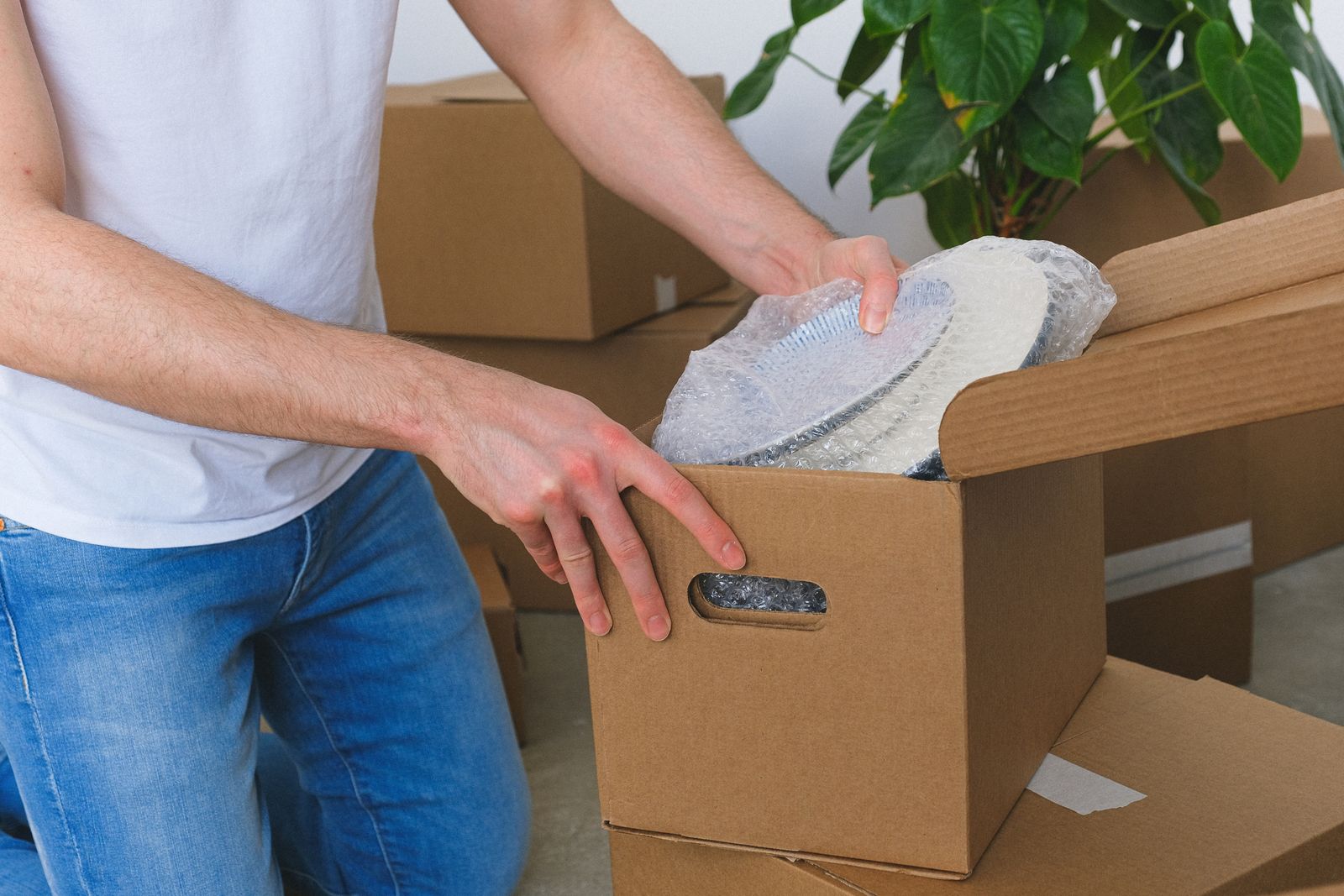
Start with the box, not the wrap
The first decision in packing fragile items has nothing to do with bubble wrap. It is the carton.
Professionals reach for small and medium boxes for anything breakable, and for the kitchen they reach for a specific one: the dish pack (also sold as a dish barrel), a tall, double-walled carton built to take weight without sagging. Double walls matter because a fragile box will not ride alone. It will be stacked, carried, set down on driveways and hallway floors, and slid across a truck deck. A thin grocery-store carton flexes under all of that, and everything inside flexes with it.
Build the box like it will be dropped six inches, because it will be. Tape the bottom seam, then add a second strip perpendicular to the first — crews call it the H pattern — so the flaps cannot peel apart under load. Then, before a single dish goes in, line the bottom with two to three inches of crumpled packing paper. Every time someone sets that box down, the bottom takes a small impact. The cushion decides whether your plates feel it.
Keep fragile boxes light enough to carry without a struggle — around 30 pounds is the working ceiling most crews use for dish packs. A large box full of plates gets heavy enough to sag, bulge, and tempt whoever is carrying it to set it down hard for the last few feet. Small boxes are not a lack of ambition. They are the technique.
The materials that actually earn their keep
You do not need a specialty store's whole aisle. You need the right five things, in enough quantity that you do not start rationing them at 11 p.m. the night before the truck comes.
| Material | What it is for | What to skip or avoid |
|---|---|---|
| Unprinted packing paper | Wrapping every piece; crumpled, it is also your void fill and bottom cushion | Newspaper against china or porcelain — the ink transfers |
| Dish pack / double-walled boxes | Plates, bowls, glassware — the heavy fragile loads | Large single-wall cartons for anything breakable |
| Cell divider kits | Stemware and glasses — one piece per cell, nothing touches | Loose glasses in a plain box, however much paper surrounds them |
| Bubble wrap | A second layer over paper for the most fragile pieces; electronics and decor | Bubble wrap alone against fine surfaces — paper goes on first |
| Mirror / picture boxes | Framed art, mirrors, glass tops — flat, adjustable cartons that keep them upright | Laying framed pieces flat in a general box under other freight |
Budget for more paper than feels reasonable. Paper is the cheapest material on the list and the one people run out of, and a box packed at midnight with the last sheet folded thin is where breakage stories start.
Dishes and glassware: the core method
Wash and dry everything first — grit between two plates is an abrasive, and damp paper loses its cushioning. Sort by size and type, clear a table, and work one category at a time.
Plates and bowls travel on their edges, never flat. This is the single most valuable rule in this guide. A plate standing on its rim, like a record in a crate, carries pressure from above through its strongest dimension. A plate lying flat takes that same pressure across its weakest one — the center. Wrap each plate individually in two or three sheets of packing paper, starting at a corner and rolling it toward the opposite corner, tucking as you go. Bundles of three or four wrapped plates can get one more layer around the group, then stand the bundle on its edge in the cushioned box, heaviest pieces at the bottom.
Glasses and stemware get stuffed, wrapped, and separated. Crumple a small ball of paper and push it gently into the bowl of each glass — the glass is weakest where it is hollow. Wrap the outside in paper, paying attention to the stem of wine glasses, which snaps at the join. Then into a cell divider if you have one, upright, one glass per cell. Without dividers, glasses stand upright in a snug box with crumpled paper packed between them so no two can touch, and nothing heavy goes on the top layer. Delicate stemware rides in the top layer only.
Fill every void. When the box is full, pack crumpled paper into every remaining gap, then add a top cushion of paper or bubble wrap before closing. The test is physical: close the box, shake it gently, and listen. If anything moves, open it and add paper. Movement inside the box is cause number two, and it is entirely within your control at the table — and entirely out of it once the truck door closes.
Label like the crew reads at speed, because they do. Mark FRAGILE and THIS SIDE UP on two sides and the top, and write the room and a plain-words contents note ("kitchen — dinner plates"). A labeled box gets placed on top of a stack and opened first in the right room. An unlabeled one gets treated like books.
Framed art, mirrors, and glass tops
Flat glass fails differently from dishes: it cracks from flexing and from point pressure, so the method is about keeping it rigid, padded, and upright.
Run painter's tape in a cross or star across the glass first. Tape does not prevent a break; it holds the pieces together if one happens, which protects everything — and everyone — around it. Protect the corners, which are where frames actually get damaged: foam corners if you have them, folded cardboard if you do not. Wrap the whole piece in paper, then bubble wrap, and slide it into a mirror or picture box sized close to the piece. Two smaller framed pieces can share a box back-to-back with cardboard between them, never glass-to-glass.
On the truck, framed pieces ride upright, on edge, secured against a wall or between mattresses — never flat with weight on top. Tell the crew chief which boxes hold art and mirrors when loading starts. Crews build the load in tiers, and the time to claim a safe slot for your mirror is before the tier closes, not after.
Electronics and lamps
For televisions and monitors, the original box with its original foam is still the best container ever made for the job — if you kept it, use it. If not, a TV box kit with foam corners is the substitute. Photograph the back of every device before you unplug a single cable; the photo is your reassembly manual. Coil each cable, tape it to the device it belongs to, and put remotes, screws, and small hardware in a labeled bag taped to the item — not in a junk drawer box you will find in March.
Remove bulbs from lamps and pack them separately in paper; they break if they ride in the socket. Lampshades are fragile in a way people forget — they dent rather than shatter — so a shade gets its own box or nests inside another shade with paper between, and nothing else shares that box. Ink cartridges come out of printers, toner gets bagged, and anything with a glass bed (scanners, framed photos you are scanning someday) gets the flat-glass treatment above.

How fragile boxes should be loaded
You are not loading the truck, but you are handing the crew the raw material of the load, and a five-minute conversation at the start of the day is worth more than any label. Point out the fragile boxes. The professional pattern, and what you should hear the crew describe back to you, is simple: fragile cartons go on top of tiers, never under furniture or book boxes; heavy items ride low and against the walls; art and mirrors ride upright and strapped; nothing loose rides on top of a dish pack where it can slide and land on it.
If you are moving locally with a rented truck and loading yourselves, follow the same order in reverse of instinct: the fragile boxes are not filler for the gaps at the end. Load them last, high, and wedged so they cannot travel — a box that can slide six inches will, at the first stop sign, gain speed and hit something.
The liability catch with packing your own boxes
Here is the part of self-packing nobody mentions at the kitchen table. Under federal rules for interstate moves, your mover must offer two levels of liability: Full Value Protection, under which the mover is responsible for the replacement value of lost or damaged goods in your whole shipment, and Released Value, the no-extra-charge option that limits the mover to 60 cents per pound per article. The Federal Motor Carrier Safety Administration warns consumers explicitly that packing your own boxes is one of the actions that can limit your mover's liability: if articles you packed are damaged, it may be more difficult to establish your claim against the mover for the boxes you packed.
The logic from the carrier's side is blunt: they cannot verify how an item was packed inside a sealed box you handed them, or what condition it was in when it went in. So the practical strategy for a self-packer is a split:
- Pack the everyday fragile yourself — the daily dishes, the ordinary glassware — using the method above. The savings are real and the risk, packed properly, is low.
- Let the mover pack the irreplaceable and the expensive — the inherited china, the large mirror, the artwork, anything whose value exceeds $100 per pound, which federal rules treat as an article of extraordinary value. Items of extraordinary value must be notified to the mover in writing in any case; having the crew pack them puts both the packing and the claim on their side of the line.
- Photograph condition as you pack. A quick phone photo of each valuable piece before it is wrapped is the cheapest claims evidence that exists, whichever side packed it.
If something does arrive damaged, note it on the delivery paperwork before you sign, and do not sign a receipt that releases the mover from liability. For interstate moves you have nine months from delivery to file a written claim, and interstate movers are required to offer a dispute-resolution or arbitration program for claims they do not settle.
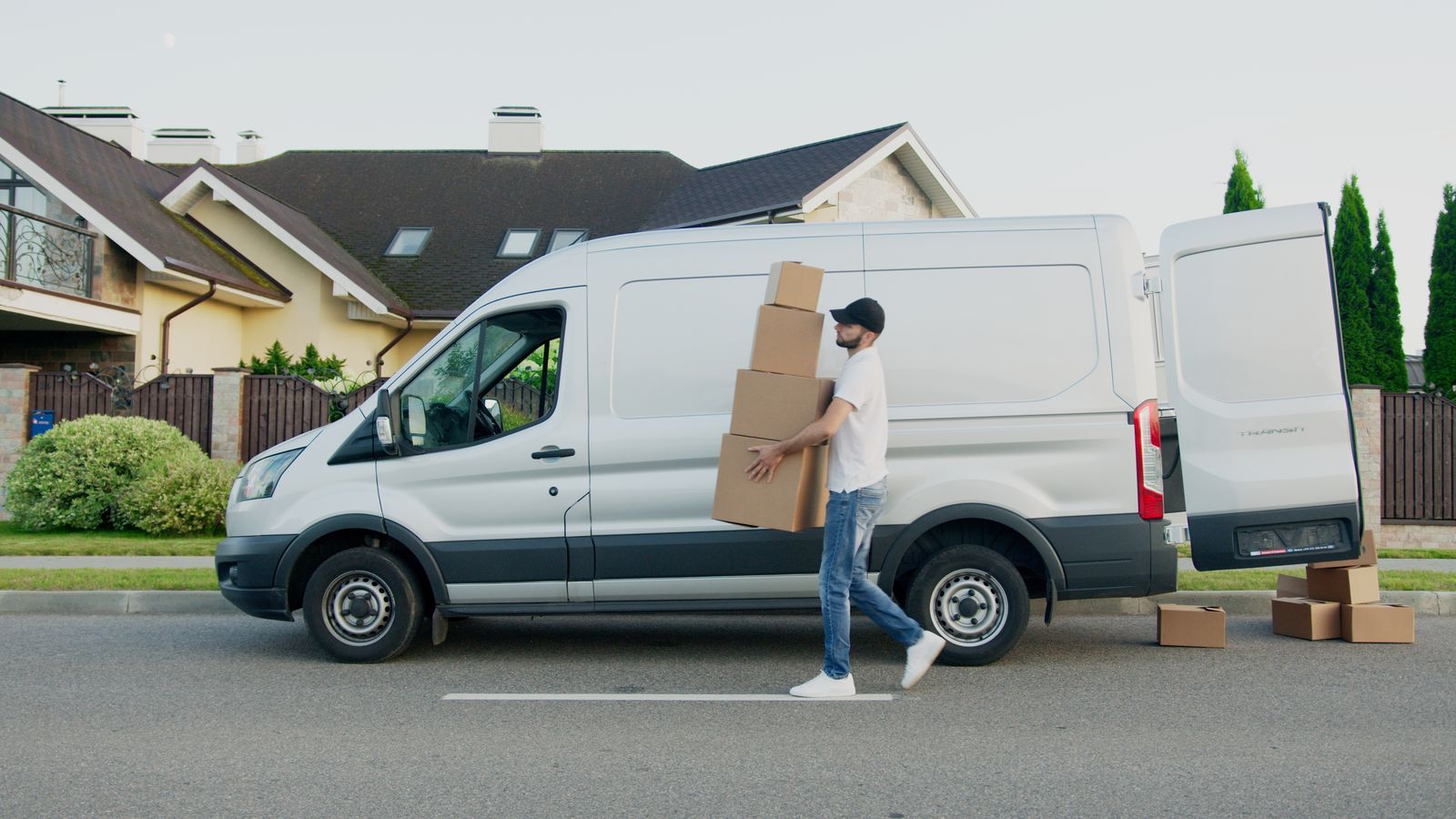
A short pre-truck checklist
- Every fragile box is small or medium, double-walled for the heavy loads, H-taped, and cushioned top and bottom.
- Plates are on edge, glasses are stuffed and celled, nothing touches anything else, and a shake test moves nothing.
- Art and mirrors are taped, corner-protected, boxed flat-pack style, and marked to ride upright.
- Boxes are labeled FRAGILE and THIS SIDE UP on three faces, with room and contents in plain words.
- Extraordinary-value pieces are listed for the mover in writing — and ideally packed by the crew.
- You have said, out loud, to the crew chief: these are the fragile boxes, and this is the art.
Do those six things and you have done what the professionals do, which is all this ever was: not luck, not padding for its own sake, but pressure, movement, and contact — removed one box at a time. This site's directory lists thousands of moving companies, including 6,562 listings under Moving alone, and the good ones will recognize a properly packed dish pack the moment they pick it up. Pack like you expect them to.
Sources
- Federal Motor Carrier Safety Administration, "Liability & Protection" — Full Value Protection and Released Value (60 cents per pound per article), the warning that packing your own boxes can make a damage claim harder to establish, articles of extraordinary value (over $100 per pound), and the nine-month window to file a written claim: https://www.fmcsa.dot.gov/consumer-protection/protect-your-move/are-you-moving/liability-protection
- This Old House, "How To Pack Dishes for Moving" — double-walled dish pack boxes, packing paper over newsprint, and cell dividers for stemware: https://www.thisoldhouse.com/moving/how-to-pack-dishes-for-moving
- Conroe Moving, "Packing Fragile Items" — plates on their edges, glass taped and corner-protected for art and mirrors, and the three causes of breakage (pressure, movement, contact): https://www.conroemoving.com/fragile-dishes-glass-and-art-how-pros-pack-what-breaks-easiest
- Packing glassware into a box — photo by SHVETS production, https://www.pexels.com/photo/7203848/
- Family packing boxes together — photo by cottonbro studio, https://www.pexels.com/photo/4569340/
- Mover carrying boxes beside a van — photo by Artem Podrez, https://www.pexels.com/photo/5025669/
More guides
- How to Hire a Moving Company That Won't Hold Your Furniture HostageMovers › Moving & Storage
- How Much Do Movers Cost? Local vs. Long-Distance Pricing ExplainedMovers › Moving & Storage
- Binding vs. Non-Binding Estimates: The Difference That Decides Your Final BillMovers › Moving & Storage
- Moving Insurance and Valuation: What 'Full Value Protection' Really CoversMovers › Moving & Storage
- Long-Distance Moving: A Start-to-Finish Guide for Household GoodsMovers › Household Goods Moving & Storage
- All Guides & ArticlesBrowse the full guides library