Movers › Mini & Self Storage
How to Prepare for Mini and Self Storage: The Week Before, the Day Itself, and After
If you are renting storage between leases, you are probably doing it under time pressure: one landlord wants you out, the next one is not ready, and a unit looks like the simplest bridge between the two. It can be. But the complaints that cross my desk about mini and self storage rarely start with a dishonest facility. They start with a renter who signed in a hurry, guessed the size, skipped the insurance question, and loaded a damp sofa into a sealed metal box. Preparation is not fussiness here. It is the difference between a boring month of storage and a claim nobody will pay.
This guide is organised the way the job actually happens: the week before, the day itself, and the weeks after.
The week before: decide what the unit is for
Write down, in one sentence, what has to be true when the unit is emptied. For most renters between leases it is this: everything comes out undamaged, on a known date, and goes straight into the next home. That sentence settles arguments you will otherwise have with yourself at the facility gate.
Measure, do not guess. The most common sizing mistake is renting by room count instead of by volume. A 5×5 unit is a large closet — about 25 square feet — and suits boxes, a bike and small furniture. A 5×10 holds a studio's worth. A 10×10, the most commonly rented size in the country, holds the contents of a one-bedroom flat with care, or a two-bedroom home only if large pieces are disassembled. SpareFoot's 2025 pricing data put average monthly rents at about $35 for a 5×5, $51 for a 5×10, $83 for a 10×10, $109 for a 10×15 and $132 for a 10×20 — useful anchors, because the step up a size is usually cheaper than a second trip, a second unit, or a month of paying for a unit you then have to swap.
Book the right kind of unit, not just the right size. Ask three questions before you pay:
- Drive-up or interior? Drive-up units load fast and suit heavy furniture; interior units are usually cleaner, better lit at the corridor, and kinder to fabrics and electronics.
- Climate-controlled or standard? Climate control typically holds a unit roughly between 55 and 80 degrees and moderates humidity. It earns its premium — often 15 to 40 percent over a standard unit — for wood furniture, leather, musical instruments, electronics, photographs, documents and anything that would suffer in a hot garage in August. For plastic tubs, metal tools and garden furniture, it usually does not.
- What are the real access hours? Gate hours are not office hours, and neither is the same as 24-hour access. If your new lease starts on a Sunday, confirm you can actually get in on a Sunday.
This site lists 2,753 mini and self storage businesses, so in most towns you have a genuine choice. Use it: get the total first-month cost in writing from two facilities — rent, administration fee, lock, insurance or protection plan, and any move-in promotion's expiry date — because the advertised first month is rarely the second month's price.

The week before: the paperwork that protects you
Read the rental agreement before moving day, not at the counter. Four clauses decide almost every later dispute:
- Lien and late-fee terms. Storage is governed by state lien laws, and facilities can eventually sell the contents of a delinquent unit. Note the exact number of days before a late fee lands, the size of that fee, and when a lien attaches. Put the payment on autopay, and keep a card on file that will not expire mid-lease.
- Rate-increase language. Month-to-month means the facility can usually raise the rent with written notice, often 30 days. A cheap introductory month followed by a sharp rise is the single most common billing complaint I see, and it is usually disclosed — in the agreement nobody read.
- Insurance or protection. The facility's insurance covers the facility, not your things. Many agreements require you to insure your contents, either through your renters or homeowners policy — check whether it covers property away from the home, and what the limit is — or through the facility's tenant protection plan. One operator's published plan, for example, prices $2,000 of coverage at $12 a month and $10,000 at $33 a month, covering burglary, fire, wind and water damage other than flood. Whatever you choose, photograph everything before it goes in; an inventory with photos is what turns an argument into a claim.
- Prohibited items. Every agreement bans a similar list, and storing a banned item can void your coverage and end your lease: petrol, propane and other flammables; paint, solvents and pesticides; perishable food and pet food, which draw pests into neighbouring units; plants and anything living; and illegal or stolen goods. Ammunition is banned almost everywhere even where an unloaded, locked firearm is allowed. Empty the fuel from mowers and tools before they go in — that one is both a rule and simple sense.
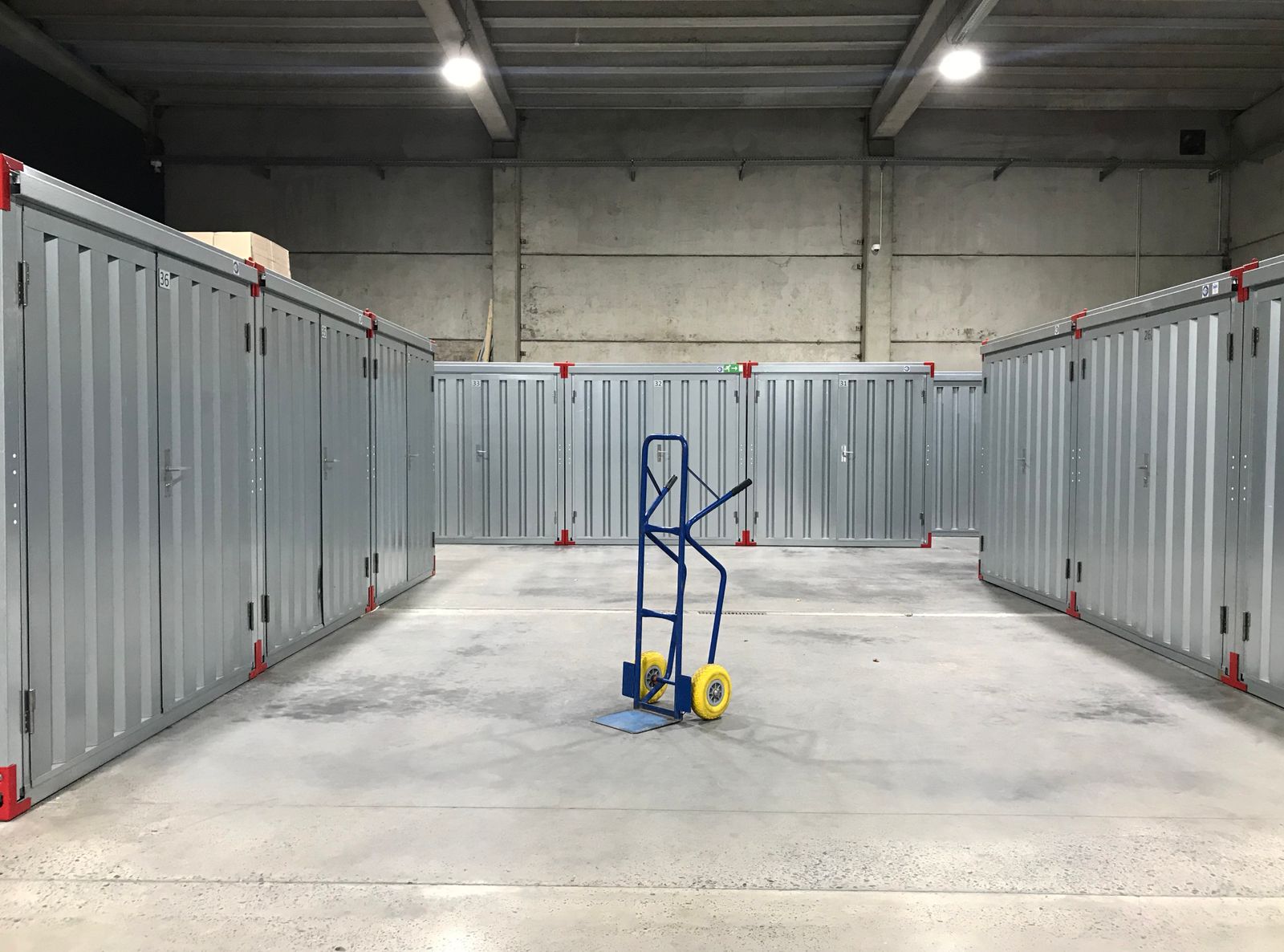
Reserve the logistics. Book the van or truck for the morning, not the afternoon. Confirm the facility has a trolley or dolly you can borrow, or bring your own. Buy the lock the facility recommends — a disc or cylinder lock resists bolt cutters far better than a cheap padlock, and some protection plans reduce or waive a deductible if you use one.
The week before: prepare the things, not just the unit
Storage rewards boring preparation:
- Clean and dry everything. A refrigerator stored with the door shut and a trace of moisture inside will be a science project in a month. Defrost it, dry it, and store it with the door wedged open. Wipe wood furniture, empty and dry the washing machine, and never store anything damp — in a sealed unit, mildew is a when, not an if.
- Box by destination room, and pack an inventory as you go. Number each box, keep a simple list on your phone of what is in it, and mark the two or three boxes you will need first at the new place so they go in last, nearest the door.
- Take furniture apart properly. Bag the screws and bolts, tape the bag to the piece they belong to, and photograph anything complicated before you dismantle it. Remove table legs where you can; a flat table travels and stores better than an assembled one.
- Keep the never-store box out of the unit entirely. Passports, lease paperwork, medication, chargers, tools for reassembling furniture, and a change of clothes for the gap days should travel with you, not sit behind a sofa in unit 214.
The day itself: load it like you will have to unload it
Arrive during office hours for your first load-in, even if you have gate access. Walk the unit before anything goes in: check for a dry floor, a door that closes and latches cleanly, no signs of water staining, pests or a previous tenant's leftovers, and take dated photos of the empty unit. If it is not clean and dry, ask for another one now — that conversation is easy before the truck is unloaded and miserable after.
Then load in this order:
| Load first (back of unit) | Load last (by the door) |
|---|---|
| Heaviest furniture, pushed to the walls | Boxes you will need first in the new home |
| Mattresses, stored on their long edge and covered | The vacuum, cleaning kit and tools |
| Long-term boxes, stacked heaviest at the bottom | Anything you may need during the gap — documents tub, seasonal clothes |
| Appliances, doors wedged or taped safely | A clear walking path's worth of empty space, if you can spare it |
Three loading rules prevent most damage claims. Leave an aisle if you can — a narrow path costs a little space and saves you unloading half the unit to reach one box. Keep everything off the floor where possible: pallets, shelving or even flattened cardboard under boxes protect against the small amount of water that can creep under a door in heavy rain. Do not seal the unit airtight around soft furnishings — use breathable covers or old sheets on sofas and mattresses rather than wrapping them in plastic, which traps moisture against the fabric.
Before you lock up: take photos of the loaded unit from the doorway, note the unit number and gate code somewhere you will actually find them, fit the lock, and tug it. Then go to the office and confirm, in person, that your payment method, mailing address and email are correct — lien notices go to the address on file, and "they sent it to my old flat" is the saddest sentence in storage disputes.

After: the month in storage is not a pause
Visit once in the first fortnight. You are checking for the things that get worse quietly: a damp smell, a door seal letting in driving rain, evidence of pests, or a lock that has been tampered with. Early, a problem is a phone call; after two months, it is a ruined sofa.
Keep paying attention to the bill. Confirm the first autopay actually left your account, and diarise the date any promotional rate ends. If a rate increase notice arrives, that is your prompt to compare the new price against the cost and effort of moving — sometimes staying is right, but it should be a decision, not a surprise.
Protect the exit date. Tell the facility, in writing and within the notice period your agreement requires, when you will vacate. Many agreements keep charging until you have emptied the unit, removed your lock and notified the office — all three. On move-out day, sweep the unit, photograph it empty, hand back or confirm removal of the lock, and get written confirmation that the account is closed with a zero balance. Keep that email. A surprising share of post-storage complaints are charges that continued because a tenant moved out physically but never administratively.
When you unload at the new home, inspect as you go. If anything is damaged, photograph it in the unit and again in place, and notify the facility or your insurer promptly — protection plans and policies have claim deadlines, and damage discovered and reported late is harder to prove than damage reported the same day.
The short version
A week before: measure, compare two facilities on total cost, read the lien, rate and insurance clauses, clean and dry everything, and box with an inventory. On the day: inspect and photograph the empty unit, load heavy and long-term first, keep boxes off the floor, leave an aisle, and confirm your contact details at the office. After: visit within a fortnight, watch the first payment and the promotion's end, and close the account in writing when you leave. None of that is glamorous. All of it is cheaper than the alternative — which, if my inbox is any guide, is exactly the point.
Sources
- SpareFoot, Storage 101 and 2025 pricing data — average monthly rents by unit size, from a 5×5 to a 10×30.
- Self Storage Association, 2025 Demand Study — how widely households use self storage and for how long.
- The Storeroom Mini Storage, Tenant Protection — published protection-plan pricing by coverage level and the perils covered.
- StorageAtlas, What You Cannot Store in a Storage Unit — the standard prohibited-items categories and the insurance and lease consequences of storing them.
Photo credits: - Labeled boxes — photo by cottonbro studio, https://www.pexels.com/photo/4554242/ - Storage corridor — photo by David Slaager, https://www.pexels.com/photo/5759145/ - Warehouse aisle — photo by Tiger Lily, https://www.pexels.com/photo/4483610/
More guides
- How to Hire a Moving Company That Won't Hold Your Furniture HostageMovers › Moving & Storage
- How Much Do Movers Cost? Local vs. Long-Distance Pricing ExplainedMovers › Moving & Storage
- Binding vs. Non-Binding Estimates: The Difference That Decides Your Final BillMovers › Moving & Storage
- Moving Insurance and Valuation: What 'Full Value Protection' Really CoversMovers › Moving & Storage
- Long-Distance Moving: A Start-to-Finish Guide for Household GoodsMovers › Household Goods Moving & Storage
- All Guides & ArticlesBrowse the full guides library