Movers › Storage
How to Prepare for Storage: The Week Before, the Day Itself, and After
Storage enters a renter's life at the seam between leases: the old place ends on the 31st, the new one starts on the 15th, and a household has to live somewhere in between. I coordinate relocations for a living, and the storage piece is where tidy moves quietly become expensive ones — a unit one size too big rented for a year, a fridge stored with the door sealed and food inside, a protection plan nobody read until the claim. None of it is complicated. All of it is sequencing. Here is the sequence, in the three acts the title promises.
The week before: decide, size, and purge the prohibited
Size the unit from the inventory, not from anxiety. The standard ladder is well established. A 5×5 (about $35–$53 a month in national averages) takes boxes and seasonal gear. A 5×10 (about $51–$75) holds a studio. The 10×10 — the most popular size in the country, averaging roughly $80 to $123 a month depending on the source — takes a one-bedroom apartment, or a tightly packed two-bedroom. A 10×15 (about $109–$176) covers two to three bedrooms; a 10×20 (about $130–$216), a three- to four-bedroom home or a vehicle. National average across all sizes runs about $89 a month. Renters between leases chronically overshoot by one size "for safety," and safety, at $30 to $60 a month for twelve months, is a $700 decision. Walk your rooms with the ladder in hand and commit.
Decide climate control by material, not by marketing. Climate-controlled units — which typically hold a band around 55–80°F and run roughly 10 to 25 percent above standard rates — earn their premium for wood furniture, leather, electronics, photographs, documents, instruments, and anything with glue joints or finishes. For plastic bins, metal tools, and patio furniture, a standard drive-up unit is honest storage. The deciding question is not "is it valuable?" but "is it made of something the weather can change?"
Purge what cannot legally go in. Every rental agreement prohibits the same four families, and the week before is when they are easiest to remove: hazardous materials (gasoline, propane — including "empty" tanks with residue — paint, solvents, pesticides, pool chemicals), perishables and food of any kind (the pest clause — it endangers your neighbors' units, not just yours), living things, and illegal or stolen property. Add the working rules: drain fuel from mowers and equipment before they go in; vehicles must be registered, insured, and operable; and cash, jewelry, and irreplaceables are usually capped or excluded by facility policy and by common sense — those ride with you, in a safe-deposit box or a personal bag. Storing a prohibited item does not just break a rule; it can void your coverage and terminate the lease, which is a bad discovery to make from a notice taped to a unit door.
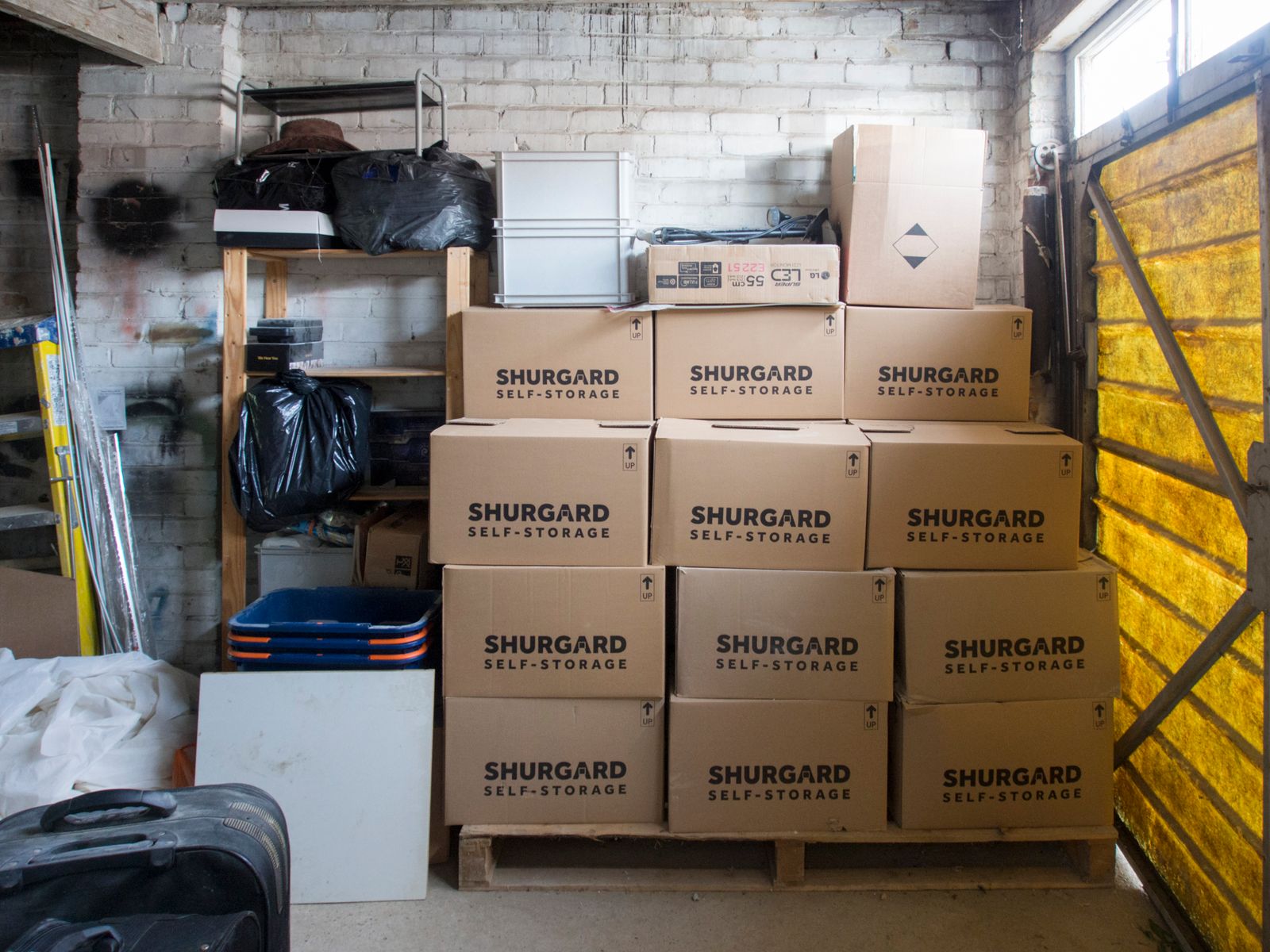
Build the box discipline now, not on loading day. Uniform boxes are the difference between a unit that stacks like a warehouse and one that avalanches by week two. Pick two sizes — a small book box and a medium box — and pack nearly everything in those, because same-size boxes stack tight, waste no vertical space, and let you estimate the unit load by counting. Keep every box under about 40 to 50 pounds: heavier boxes crush the ones beneath them, defeat the person carrying them (often you, alone, in a corridor), and split at the handles at the worst moment. Books and tools go in the small boxes, always; linens and clothes are the light filler that tops off heavy ones. Wardrobe boxes earn their rental for exactly one job — hanging clothes that would wrinkle or stretch folded — and everything else they hold is air you are renting by the month. Label on two adjacent sides plus the top, in room-and-contents language your future self can parse at arm's length: "Kitchen — pans, wraps, oils (no food)" beats "Kitchen misc" every time. And keep one box out of the system entirely: the documents-and-valuables tote that rides in your car, never in the unit, holding lease papers, IDs, chargers, medications, and the small things a gap between homes turns urgent without warning.
Do the paperwork while you are calm. This site lists 2,753 mini and self-storage facilities, so comparison is genuinely possible: ask each finalist for the total move-in cost (first month, deposit, admin fee, lock), the rate-increase history in plain terms, gate hours, and the insurance or protection-plan requirement. Most facilities require your stored property to be covered — by your renter's or homeowner's policy, or by the facility's tenant protection plan — and the time to discover which is before a claim, not after one. Photograph everything you intend to store as you pack it; the inventory you build this week is the claim file, the retrieval map, and the "did we store the good pan?" answer, all in one.
The day itself: load it like you'll need something from the back
Clean and dry before anything crosses the threshold. Storage punishes moisture more reliably than it punishes anything else. Wipe down appliances, run the fridge empty and dry with the door propped for transport (and store it with the door ajar — a sealed stored fridge grows a smell that no cleaning fully removes), launder textiles, and let wooden furniture dry after any wipe-down. A single damp item in a closed unit is a mold colony with a head start.
Load in reverse order of need. The unit's geography is the whole craft:
| Zone | What goes there |
|---|---|
| Back wall | Longest-stay items: off-season furniture, archived boxes, anything you will not touch until move-out |
| Middle | The bulk: stacked same-size boxes, heaviest at the bottom, labels facing the aisle |
| Front | The retrieval shelf: documents tote, tools, the box of first-night things for the new place, anything with a chance of being needed mid-gap |
| Vertical space | Mattresses on edge, furniture pads between wood surfaces, shelves or a bookcase used as storage racking |
Leave a narrow walkway if the unit is 10×10 or larger and the stay is longer than a month; the first time you need one document from the back of a wall-to-wall unit, the walkway pays for itself. Keep everything a few inches off the floor on pallets, shelving, or even flattened boxes if the facility allows — concrete sweats, and drive-up units can take water under the door in a hard rain.
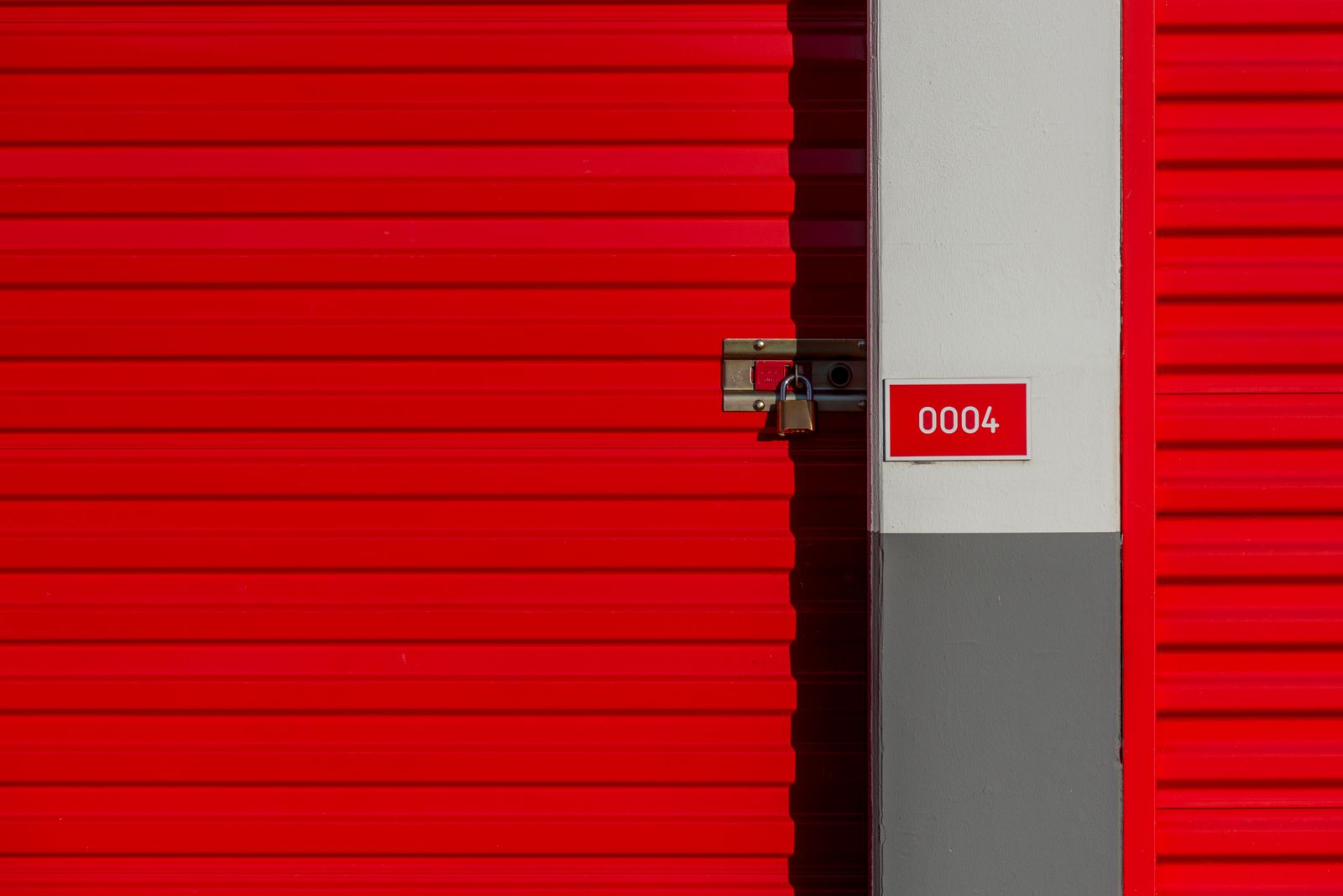
Lock, photograph, register. Use a disc or cylinder lock — the shrouded kind a bolt cutter cannot grip — rather than a hardware-store padlock. Photograph the loaded unit from the door before you close it. Then do the unglamorous trio: confirm your payment method and autopay, confirm the facility has your current phone and email (lien notices and gate-code changes go to the contact on file), and note your unit number and gate code somewhere that is not a photo on a phone you might lose.
After: the checks that keep storage cheap and intact
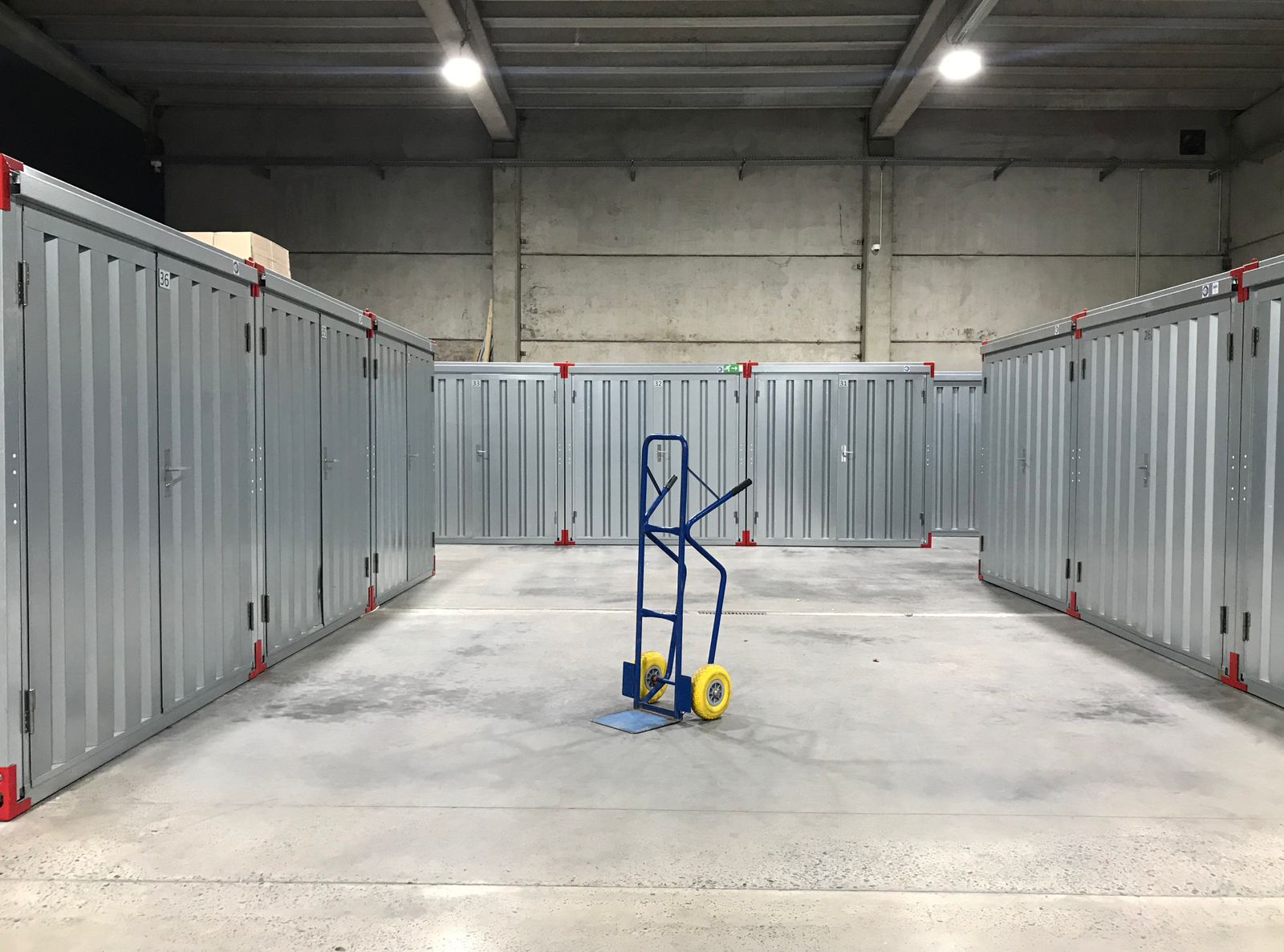
Visit once in the first month. Not from anxiety — from calibration. You are checking for water intrusion after the first real rain, for any smell that says something went in damp, and for whether the size you chose is the size you need. Facilities generally let you transfer to a smaller unit without penalty beyond paperwork; renters who check early downsize early, and renters who never visit pay the extra $50 a month for years out of pure inertia.
Calendar the money. Storage's business model includes scheduled rate increases — introductory rates expire, and month-to-month renters absorb raises that compound quietly. Put two dates in your calendar: the end of any promotional period, and a quarterly five-minute review where you ask the only question that matters — is everything in this unit still worth more than the rent it is consuming? Between leases, the honest answer changes as the new place fills. Every box you pull out permanently is a downsize conversation you have earned.
Keep the insurance and the inventory alive. If you bought the facility's protection plan, know its per-claim cap and its exclusions (cash, jewelry, and documents are commonly limited); if your renter's policy covers the unit, confirm it still does after your address changes — policies follow households, and a move is exactly when coverage assumptions go stale. Update the inventory photo set whenever you add or remove anything significant. Ten minutes, twice a year, is the entire maintenance burden of storage done properly.
Retrieve like you loaded: in order, and on purpose. Mid-gap retrievals are where renters quietly damage things — climbing a stack for one box, leaving the unit disorganized, re-stacking heavy on light in a hurry. Work the front zone first (you built it for this), and if you truly need something from the back, unload to the walkway and rebuild the stack properly rather than tunneling. Every retrieval is also an audit: anything you touch and realize you no longer need should leave with you — to the new place, to donation, or to sale — because a unit emptied gradually, on decisions made calmly, costs a fraction of a unit emptied in a panic on the last weekend. If the gap between leases stretches, that audit habit is what turns "temporary" storage back into a tool instead of a second rent.
Plan the exit before you need it. Most agreements require notice before move-out and the unit left broom-clean to avoid fees; know your facility's notice period now, while it costs nothing. When the gap between leases closes, empty the unit in daylight, photograph it empty, and close the account in writing. The best storage story is a boring one: right-sized, dry, documented, and ended on the day it stopped being necessary.
Sources
- RecNation Storage, storage cost guide (SpareFoot data, May 2026) — establishes the national average of about $89.09 per month and size-by-size averages from $34.89 (5×5) to $130.14 (10×20).
- Extra Space Storage, storage unit pricing guide — establishes average monthly prices by size for standard and climate-controlled units (10×10 at $119.50 standard, $124 climate-controlled).
- Neighbor, average storage unit size guide — establishes the 10×10 as the most popular size, what fits in each standard size, and national average prices.
- Forward Storage and StorageAtlas prohibited-items guides — establish the four universal prohibitions (hazardous materials, living things, perishables, illegal property), fuel-draining rules, vehicle registration and insurance requirements, and that violations can void coverage and terminate leases.
- RecNation Storage, what can and can't be stored — establishes facility policy families including insurance requirements for stored property and vehicle storage rules.
Photos: stacked storage boxes — photo by Brett Jordan, https://www.pexels.com/photo/30444797/ ; padlocked storage door — photo by Jan van der Wolf, https://www.pexels.com/photo/38573375/ ; storage corridor — photo by David Slaager, https://www.pexels.com/photo/5759145/
More guides
- How to Hire a Moving Company That Won't Hold Your Furniture HostageMovers › Moving & Storage
- How Much Do Movers Cost? Local vs. Long-Distance Pricing ExplainedMovers › Moving & Storage
- Binding vs. Non-Binding Estimates: The Difference That Decides Your Final BillMovers › Moving & Storage
- Moving Insurance and Valuation: What 'Full Value Protection' Really CoversMovers › Moving & Storage
- Long-Distance Moving: A Start-to-Finish Guide for Household GoodsMovers › Household Goods Moving & Storage
- All Guides & ArticlesBrowse the full guides library