Movers › Machinery Movers & Erectors
Machinery Movers and Erectors at Three Budgets: What Budget, Mid-Range and Premium Really Buy
Ask three machinery movers to move the same CNC mill across town and you can get quotes of $3,500, $9,000, and $22,000 — all from legitimate companies, none of them simply padding. Machinery moving is not one service. It is a bundle that can include anything from "we pick it up and set it down" to a turnkey project where engineers plan the lift, millwrights disconnect and reconnect the machine, and it is leveled, anchored, and aligned to tolerance before the crew leaves. The three quotes are usually three different bundles wearing the same label.
That is why comparing machinery movers on the headline number alone fails, and why the useful question is not "what does it cost?" but "what am I buying at each level?" Published 2026 pricing from U.S. rigging companies gives the market a shape: a rigging crew typically bills $200 to $500 an hour with a minimum of about four hours; a simple single-machine job starts around $3,000 to $3,500; most full machinery moving and installation projects land between $3,500 and $30,000 to $45,000; and complex plant relocations run well past $200,000. Movers-Map.com lists 275 machinery movers and erectors, and somewhere in that range of companies are all three tiers below. This guide walks through what each tier actually includes, what the step up buys, and where paying more stops helping.

How the price is built, in sixty seconds
Every rigging quote, at every tier, is assembled from the same parts: labor (riggers, millwrights, a foreman, sometimes an engineer), equipment (skates, jacks, forklifts, gantries, cranes), transport, and risk — the insurance and care the company takes with a machine that may be worth more than the building it sits in. Millwright labor alone runs roughly $75 to $150 an hour in published Southeast U.S. rates, and a mobile crane with an operator runs about $155 to $175 an hour for a small boom truck up to roughly $595 an hour for a 275-ton machine.
Tiers differ in how many of those parts are included, how senior the labor is, and how much of the risk and coordination the mover absorbs for you. Keep that frame in mind and the three levels below stop looking arbitrary.
The three tiers, side by side
The table uses the most common benchmark job in this trade — moving and setting one production machine — because it is the job all three tiers quote. Real-project data collected from U.S. rigging jobs in 2023–2026 puts a single machine move at about $4,600 to $22,700, with a typical figure near $11,700, which maps closely onto the tiers.
| Budget | Mid-range | Premium | |
|---|---|---|---|
| Typical price, one machine moved and set | $3,000–$5,500 | $5,500–$15,000 | $15,000–$45,000+ |
| Scope | Lift, transport, set in place | Survey, move, set, level and anchor | Turnkey: engineering, move, install, align to tolerance |
| Disconnect / reconnect | Yours — your electricians and techs | Coordinated by the mover; trades billed or included | Included, with millwrights and documentation |
| Planning | Phone quote from photos and a nameplate | Site visit before quoting | Engineered lift plan, path and floor analysis |
| Precision at set-down | Placed where you point | Leveled and anchored | Leveled, anchored, and aligned to manufacturer tolerance |
| If something goes wrong | Their insurance, your problem to manage | Their insurance, their foreman manages it | Contractual accountability, downtime commitments |
Budget tier: competent hands, your project to run
At $3,000 to $5,500 for a single machine — and crew rates near the $200-an-hour end — you are buying skilled rigging labor and the right equipment for the physical move, and not much else. A one-day move inside a plant, with a crew and a forklift, prices at roughly $3,600 to $4,600 at typical rates, and real examples sit right there: a lathe moved in California for about $4,600, a Haas CNC for about $5,400.
What budget buys, done well, is genuinely valuable: people who know how to lift from the correct points, skate a ten-ton machine through a doorway without gouging the floor, and set it down plumb and undamaged. What it does not buy:
- Preparation. The machine must be ready when they arrive — disconnected from power, air, and coolant, drained, cleaned, and with the path cleared. Crew waiting time is billed, and a four-hour minimum becomes an eight-hour day fast.
- Reconnection and calibration. Getting the machine running again is your electricians, your vendor techs, your schedule.
- Surprises. A floor that will not carry the load, a doorway two inches too narrow, a machine heavier than its plate says — at this tier, each surprise is a change order or a stopped job.
Budget is the right buy when the machine is simple and robust (a manual lathe, a press brake, a compressor), when you have your own maintenance staff to handle both ends of the move, and when a day of slippage costs you inconvenience rather than money.
Mid-range: the mover takes the middle of the job off you
The step from $5,500 to about $15,000 buys coordination and finish work. The defining marker of this tier is the site visit before the quote: someone walks the path, measures the doors, looks at the floor, photographs the machine's connections, and prices the job they actually saw. That single habit eliminates most of the surprise change orders that plague the budget tier.
Also typically included at this level: disconnection and reconnection arranged or performed, floor protection along the route, and — the item buyers most undervalue — leveling and anchoring at set-down. A machine set in place but not leveled is not installed; it is parked indoors. Millwright installation projects publish at about $4,500 to $8,500 as a standalone scope, which is roughly the difference between the budget and mid-range quotes for the same move.
Real mid-range examples: installing new equipment — rigged in, set, leveled, and anchored — runs about $9,200 to $22,700 in collected U.S. project data, and a crane swap of a pump, compressor, or HVAC unit runs about $6,700 to $15,600. Mid-range is the correct tier for most CNC equipment, printing presses, and production machinery where the machine must work correctly the week it lands, but where factory-tolerance alignment is handled by the machine vendor's own technician afterward.
Premium tier: you are buying certainty and tolerance
From about $15,000 upward for a single machine — and into six figures for production lines and plant relocations, which publish from about $64,800 for a line or production area — the extra money buys three specific things.
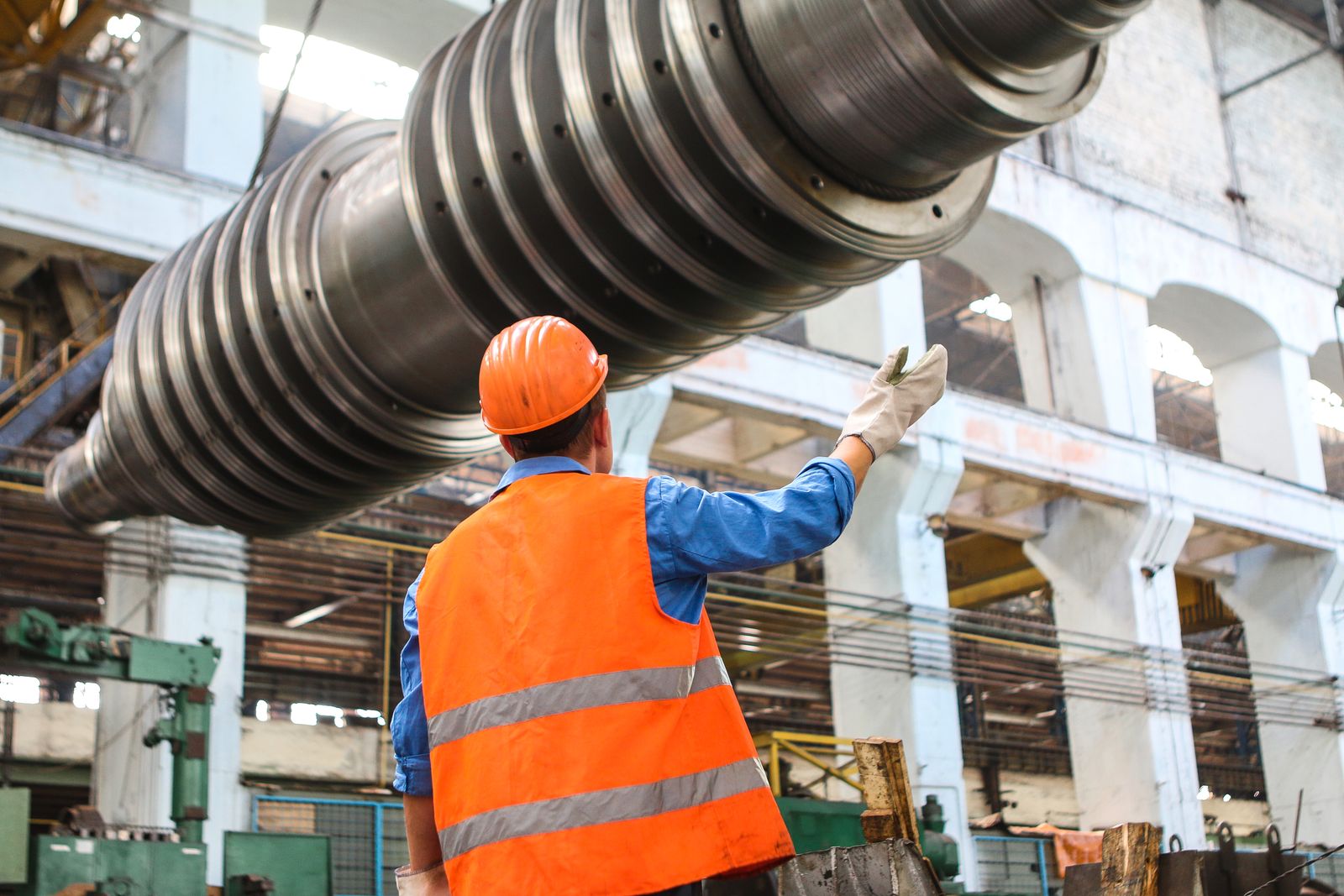
Engineering. Critical lifts get a written, engineered lift plan: calculated load weights and centers of gravity, rigging configurations, crane selection, ground and floor load analysis, and a named person responsible for the plan. For a machine that cannot be replaced — a one-off, a line whose loss stops the business — this is not decoration; it is the difference between a lift that was analyzed and a lift that was estimated.
Tolerance. Premium millwright crews align rotating equipment — motors, pumps, gearboxes, spindles — to manufacturer tolerances measured in thousandths of an inch, and document the results. Misalignment is a slow tax: it wears bearings, couplings, and seals for years. If the machine's value is in its precision, this is the tier that protects it.
Accountability. Premium contracts tend to carry higher insurance limits, certificates provided without being chased, written schedules tied to your shutdown window, and a single company answerable for the machine from disconnect to production-ready. When a day of downtime costs five figures, the premium is mostly payment for the mover absorbing schedule risk you would otherwise carry yourself.
Premium is wasted money on a simple machine with a forgiving tolerance and a flexible schedule. It is cheap insurance on a critical lift, a hard shutdown deadline, or equipment whose replacement lead time is measured in months.
Picking your tier: run the downtime number first
If you are torn between two tiers, the tiebreaker is almost never the machine — it is the calendar. Work out what one day of this machine being out of production actually costs you: lost output, idle operators, late-delivery penalties, expedited freight to cover the gap. If the honest answer is a few hundred dollars and an annoyed customer or two, buy the budget tier and spend the savings on good preparation. If the answer is thousands per day, the arithmetic flips: a mid-range or premium quote that is $6,000 higher but carries a site-surveyed plan, a named foreman, and a crew sized to finish inside your shutdown window only has to save you one day to pay for itself.
Two other quick tests. First, replacement: if this machine were destroyed in transit, could you buy another within your planning horizon? If the answer is no — discontinued, custom, or a nine-month lead time — you are not really choosing a moving tier, you are choosing how much engineering and insurance stands between that machine and the road, and that points up-tier. Second, skills in-house: shops with their own millwrights and maintenance crews legitimately buy budget transport because the ends of the job are already staffed. Shops without them who buy budget anyway have not saved the mid-range difference; they have deferred it, usually to the week after the move, at emergency rates.
The costs that sit outside every tier
Whichever tier you choose, some costs ride on top, and quotes differ in whether they mention them. Ask about each explicitly: permits and escorts for oversize transport; utility disconnections that must be done by the utility itself; foundation or concrete work for a machine whose new home needs a pad or pit; electrical and plumbing trades at both ends; after-hours or weekend premiums when the move must happen inside a shutdown window; and storage if the machine's new home is not ready when the old one must be vacated. A quote that is $2,000 lower because it silently excludes permits is not lower.
How to compare quotes without fooling yourself
Send every bidder the same information — machine make, model, and weight (or a nameplate photo), both addresses, access details and photos, and your dates — and require the quote to state, in writing: what is disconnected and reconnected and by whom; whether leveling and anchoring are included; the insurance certificate and its limits; what happens to the price if the job runs long; and which of the outside-tier costs above are excluded. A dispatcher learns to read a rigging quote the way you read a weather forecast: the number matters less than what it assumes. The company whose quote names its exclusions is usually the one whose final invoice matches its first number — and at any of the three tiers, that is the mover worth hiring.
Sources
- Alltracon, "How Much Do Industrial Rigging Services Cost? A Complete 2026 Pricing Guide" — rigging crew rates of $200–$500/hour, single-machine jobs from $3,000–$3,500, project ranges to $45,000, plant relocations past $200,000, and crane rates by size, alltracon.com
- Rigging-Busters, "Industrial Rigging & Machinery Moving Costs 2026" — real project data 2023–2026: single machine $4,600–$22,700 (typical ~$11,700), installations $9,200–$22,700, crane swaps $6,700–$15,600, production-line relocations from ~$64,800, rigging-busters.com
- All Pro Rigging, "Estimating the Cost of Hiring Millwrights" — millwright hourly rates of $75–$150 in the Southeast U.S. and pricing models, allprorigging.com
More guides
- How to Hire a Moving Company That Won't Hold Your Furniture HostageMovers › Moving & Storage
- How Much Do Movers Cost? Local vs. Long-Distance Pricing ExplainedMovers › Moving & Storage
- Binding vs. Non-Binding Estimates: The Difference That Decides Your Final BillMovers › Moving & Storage
- Moving Insurance and Valuation: What 'Full Value Protection' Really CoversMovers › Moving & Storage
- Long-Distance Moving: A Start-to-Finish Guide for Household GoodsMovers › Household Goods Moving & Storage
- All Guides & ArticlesBrowse the full guides library