Movers › Machinery Movers & Erectors
Machinery Movers and Erectors for Seniors: Costs, Comfort and the Adjustments Worth Asking About
Most people picture machinery movers in a factory: a crew in hard hats rigging a press while a plant manager watches the clock. The senior version looks nothing like that, and it is more common than the industry admits. It is a retired machinist selling the house with the garage shop he built over thirty years. It is a widow deciding what happens to a lathe, a mill and a gun safe before a property closes. It is an older farmer, a woodworker, a restorer — someone who owns one or two genuinely heavy, genuinely valuable machines and can no longer move them, supervise their move all day, or absorb the cost if one is dropped.
That difference matters, because the job is two jobs. The first is rigging: lifting, skating, loading and setting a machine that may weigh anywhere from 2,000 pounds for a knee mill to well over 10,000 pounds for a larger lathe or machining centre, without tipping it, twisting its bed or cracking a floor. The second is everything around the rigging — pacing, seating, decisions, paperwork in a form the owner can actually read, and a crew that does not treat a lifetime's workshop as scrap to be cleared. Good machinery movers and erectors do both. Complaint files, read closely, are usually about a firm that did the first job adequately and the second not at all.
This site lists 275 machinery movers and erectors, so an older customer is rarely choosing between the only two firms within reach. The choice is between very different ideas of what the price includes.
What a senior machinery job usually involves
Forget the production line. In homes, garages and small workshops, the recurring loads are narrower and more personal.
Workshop machine tools. Engine lathes, knee mills, surface grinders, cabinet saws, drill presses and compressors. They are top-heavy, precision-aligned and often worth far more than the moving bill. A move that leaves a lathe out of level or a mill out of tram has not finished the job, however neatly the machine arrived.
Safes and heavy household machinery. Large gun safes, cast-iron stoves, pianos are a separate specialism, but safes in particular are routinely handled by machinery crews because the weight, the stairs and the floor loading are rigging problems, not furniture problems.
Small-business and farm machinery being retired. When an older owner closes a small shop or sells land, a compact tractor, a small loader, a generator or a single production machine may need to go to a child, a buyer or a smaller premises. The machinery mover's part is the load, transport and set; the harder part is often deciding, machine by machine, what is worth that cost at all.
Erection at the far end. "Erectors" in the trade name is not decoration. It means the crew does not only deliver — it sets, levels and, where agreed, helps position the machine for reconnection by licensed trades. For an older customer, that distinction is the whole purchase. A machine left on skates in the middle of a new garage is not moved. It is stranded.
What it costs, in plain ranges
Machinery moving is priced per job, not from a household tariff, and any firm quoting a firm price without the machine's make, model and weight, photographs of both ends, and a look at access is guessing with your money. Published 2026 pricing from United States rigging companies gives a usable frame.
| Job | Typical published range |
|---|---|
| Rigging crew, hourly | About $200 to $500 per hour, usually with a four-hour minimum |
| Simple single-machine rigging job | From about $3,000 to $3,500 |
| One-day in-plant move, crew and forklift | About $3,600 to $4,600 |
| One machine or heavy item, full project | About $4,600 to $22,700, with a typical figure near $11,700 at the larger end |
| Mobile crane with operator, if needed | About $150 to $600 per hour for common sizes |
Read those numbers the senior way. The smaller end — a single mill or lathe, flat access, short distance, machine prepared in advance — is where most home-workshop jobs should land. The larger end arrives with stairs, tight turns, a crane pick, long transport, or a machine that must be partly dismantled and re-erected. None of that should be a surprise on the invoice. Ask what would move your job from the first band to the second, and ask it before you sign, while the answer can still change the plan.
Three cost traps recur in complaints from older customers. The first is the verbal estimate: a low figure given on the phone from a description like "a lathe, about a ton," which becomes a different figure once the crew sees a 3,500-pound machine up a gravel drive. The cure is a written, itemised quote based on a survey — in person or by detailed photographs and measurements — that names the machine, the crew size, the equipment, transport and the set-and-level work at the far end. The second is preparation billed as discovery: disconnects, draining fluids, removing top-heavy parts and clearing the path are all work a customer or a licensed tradesperson can often do ahead of move day, for less than a rigging crew's hourly rate. Ask what preparation is assumed, and what it costs if the crew has to do it. The third is storage and redelivery: if the new home, workshop or buyer's premises is not ready, a heavy machine cannot simply wait on the truck. Agree the storage rate and the second set fee in writing before the first lift.
If the machine is crossing state lines as part of a household move, a separate federal layer can apply. Interstate household goods moves are regulated by the Federal Motor Carrier Safety Administration under 49 CFR Part 375: the mover must give you a written estimate, the booklet "Your Rights and Responsibilities When You Move," information about its arbitration programme and its claims process, and a bill of lading that is your contract and receipt. Pure commercial rigging arranged as its own job is not the same transaction, which is exactly why you should ask, in writing, whether your machine is travelling under a household goods contract, a commercial rigging contract, or two separate contracts — because your claim rights, deadlines and liability terms differ between them. Under the household goods rules, loss and damage claims must be filed in writing within nine months of delivery, and the choice between Full Value Protection and Released Value at 60 cents per pound per article must be made deliberately, not by default. On a 3,000-pound lathe, Released Value arithmetic is brutally small against the machine's real worth. Do not let it be chosen by silence.

Comfort, translated into things you can actually ask for
Comfort sounds soft next to tonnage. In practice it is a list of concrete adjustments, every one of which can be requested, priced and written into the order.
Pacing that respects the person, not just the schedule. A good senior job is staged: a survey visit on one day, preparation on another, the lift itself with no other decisions demanded that morning. No older customer should be asked to decide the fate of forty workshop items at crew speed while a forklift idles. Ask for the survey and the move on separate days, for a named start window rather than an all-day vigil, and for breaks built into any day where the owner is sorting alongside the crew. If adult children are coordinating from a distance, ask for one named contact who will call at agreed points — before the lift, after loading, after setting — rather than a tracking portal nobody in the family has the password for.
A safe place to be while the work happens. Rigging is exclusion-zone work. Nobody, of any age, should be in the fall zone of a suspended or skating load, holding a door, steadying a machine by hand, or standing where a slipped skate would send several thousand pounds. A respectful crew says this plainly and kindly at the start, provides a chair out of the path, and never asks the owner to "just guide this corner." If a firm expects the customer to help carry, steady or spot, walk away: that is not a saving, it is uninsured risk transferred to the person least able to bear it. Federal safety rules underline the point from the crew's side too — forklift operators must be trained, evaluated and certified by their employer under OSHA's powered industrial truck standard, 29 CFR 1910.178, and rigging gear must be rated for the load and inspected before use. A firm that is casual about its own people's safety will be casual about yours.
Communication in the customer's medium. Large-print or posted paperwork on request. A phone number answered by a person who knows the job. The quote, the lift plan and the far-end set instructions explained aloud, slowly, with time for questions, and repeated to a family member if the customer asks. None of this costs a serious firm anything but attention, and its absence is the single most common sentence in complaint files: we could never reach anyone who knew.
Help with the decisions before the decisions become emergencies. Machinery movers are not downsizing specialists, and should not pretend to be. But the firms experienced with older owners will work cleanly alongside one, or alongside family, in the right order: decide first, rig second. Where a family needs that decision layer itself, it exists as its own profession. Members of the National Association of Senior and Specialty Move Managers typically charge $60 to $120 an hour by the association's survey figures reported by AARP, with full projects commonly $1,500 to $5,000, billed separately from the rigging. For a workshop full of tools with family, sale, donation and scrap all in play, that layer can save more than it costs — starting with not paying rigging rates to move a machine nobody actually wants at the far end.
Dignity in the workshop. A retired machinist's shop is not clutter. Good crews are briefed for it: no commentary on what is kept or sold, no rushing a customer through a last look, fragile gauges, tooling and manuals packed and inventoried rather than swept into a bin. Ask how the firm handles the small, valuable accompaniments — chucks, tooling, collets, manuals — because a machine delivered without them has lost much of its value and all of its readiness. The inventory should describe them well enough to claim for.
The adjustments worth asking about, as a short script
You do not need leverage to get most of this. You need specificity, early. At quoting, ask: Will you survey in person, and is the quote written and itemised? What crew, what equipment, and who is the named contact on the day? Is set-and-level at the far end included, or only delivery? What preparation do you assume I have done, and what do disconnects cost if you do them? What liability cover is included, what does fuller cover cost, and which contract — household or commercial — is this machine travelling under? Can survey, preparation and lift happen on separate days? Where will I sit, and what do you need me not to do during the lift? How are tooling and manuals inventoried? What are storage and second-set fees if the far end is not ready?
A provider who answers plainly is demonstrating the service. A provider who treats those questions as fuss is also demonstrating the service, and you still have time to choose the other firm.

Red flags that matter more for older customers
The general rigging red flags apply — no written quote, no insurance, a demand for large cash in advance, a crew vague about equipment. Three more deserve special weight here. Pressure tied to a property deadline: "sign today or the house closing fails" is a sales device, not a lift plan; a staged job can almost always be sequenced around a closing honestly. The helpful offer to buy the machine: a mover who appraises, offers on and then transports the same equipment has a conflict you should not have to police — get an independent view of value before any such conversation. The disappearing far end: quotes that are detailed about pickup and silent about setting, levelling and positioning are quoting half the job to the customers least able to improvise the other half.
The bottom line
For a senior, a machinery move succeeds when the machine arrives set and level, the bill matches the written quote, and the owner was treated throughout as the customer — paced, seated safely out of the work, kept informed by a person with a name, and never rushed through decisions about a working life's equipment. That standard is not a premium tier. It is what the adjustments above add up to, and every one of them can be asked for before you sign. Ask, get the answers in writing, and let the firms that welcome the questions earn the lift.
Sources
- Alltracon, How Much Do Industrial Rigging Services Cost? A Complete 2026 Pricing Guide — rigging crew at about $200 to $500 per hour with four-hour minimums, simple single-machine jobs from about $3,000 to $3,500, and mobile crane rates.
- Rigging-Busters, Industrial Rigging and Machinery Moving Costs 2026 — projects from $3,500, one-machine projects at about $4,600 to $22,700, and one-day crew-and-forklift moves at about $3,600 to $4,600.
- Federal Motor Carrier Safety Administration, Your Rights and Responsibilities When You Move — written estimates, bill of lading, arbitration and claims information required for interstate household goods moves under 49 CFR Part 375.
- Wisconsin Department of Agriculture, Trade and Consumer Protection, Interstate Moving — 49 CFR Part 375 requirements, written claim within nine months of delivery, and dispute settlement under 49 CFR 375.211.
- Occupational Safety and Health Administration, powered industrial trucks, 29 CFR 1910.178 — employer training, evaluation and certification of forklift operators.
- Sherwood Company, What Is a Senior Move Manager and Do I Need One? — NASMM survey figures of $60 to $120 an hour for senior move managers, as reported by AARP.
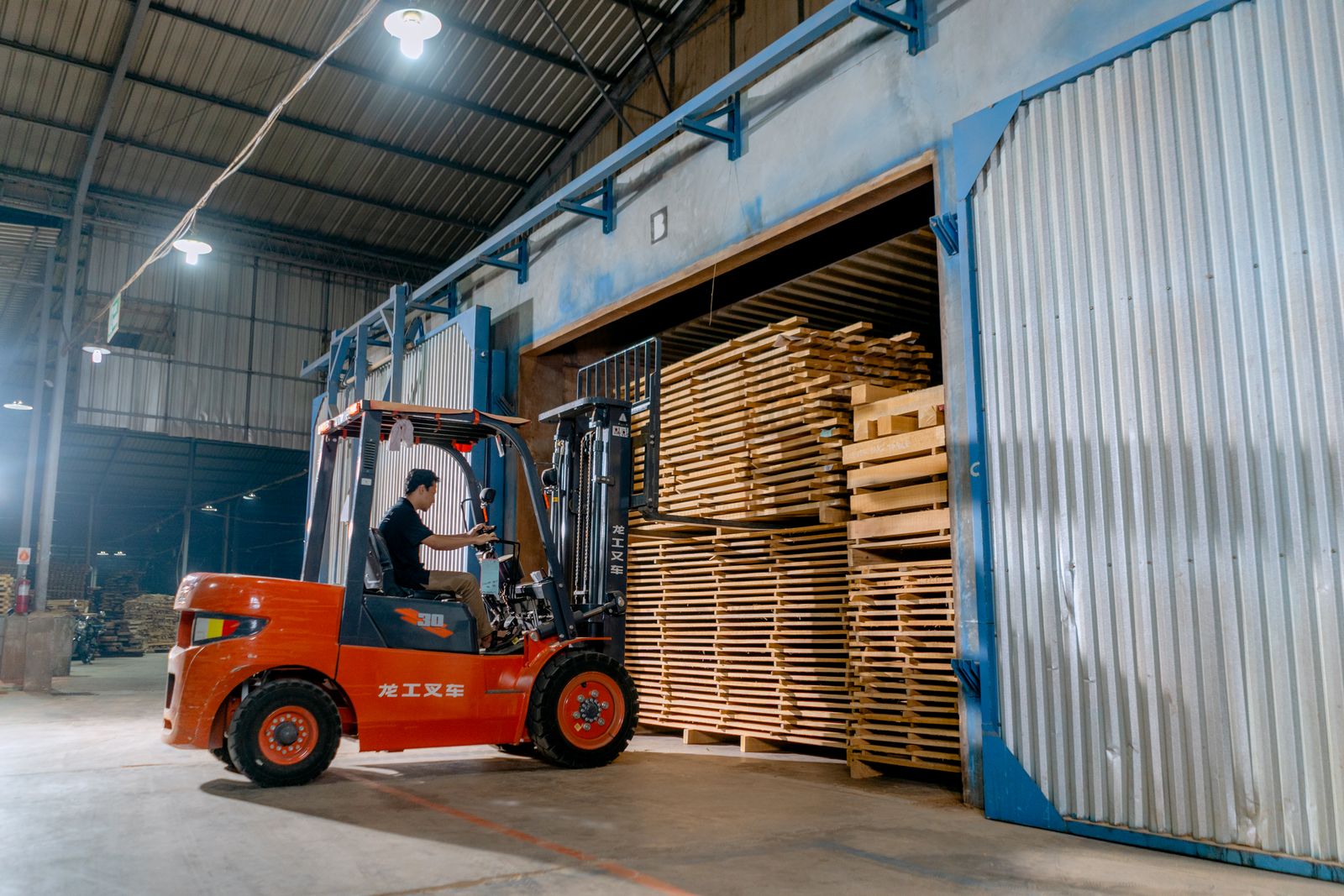
- Photo by Mandiri Abadi on Pexels, https://www.pexels.com/photo/a-man-driving-a-forklift-15016531/
- Photo by Tiger Lily on Pexels, https://www.pexels.com/photo/warehouse-with-concrete-floors-4483610/
- Photo on Pexels, https://www.pexels.com/photo/15071424/ — photographer name not confirmed in this run; credited to platform and URL only.
More guides
- How to Hire a Moving Company That Won't Hold Your Furniture HostageMovers › Moving & Storage
- How Much Do Movers Cost? Local vs. Long-Distance Pricing ExplainedMovers › Moving & Storage
- Binding vs. Non-Binding Estimates: The Difference That Decides Your Final BillMovers › Moving & Storage
- Moving Insurance and Valuation: What 'Full Value Protection' Really CoversMovers › Moving & Storage
- Long-Distance Moving: A Start-to-Finish Guide for Household GoodsMovers › Household Goods Moving & Storage
- All Guides & ArticlesBrowse the full guides library