Movers › Machinery Movers & Erectors
Machinery Movers and Erectors for Small Businesses: What Changes When It Is Not Personal
A household move is, at bottom, a logistics problem: boxes, furniture, a truck, a day. A machinery move is an engineering problem that happens to involve a truck. The lathe, press, CNC mill or commercial oven at the center of it is not furniture. It is the thing your business earns money with, it weighs more than everything in a three-bedroom house combined, it loses its accuracy if it is handled roughly, and every hour it sits disconnected is an hour it produces nothing.
That is why hiring machinery movers and erectors as a small business is a different purchase from hiring movers as a consumer — different in scope, in how the work is contracted, in what the insurance has to say, in how the cost lands in your books, and in the service level you should expect. Movers-Map lists 275 machinery movers and erectors, and the spread between the best and the rest of that field matters more here than in almost any other kind of move. Here is what actually changes when the move is not personal.
The scope is wider than "pick it up, put it down"
A consumer mover's job ends at placement: the sofa goes where you point. A machinery mover's job usually starts well before the lift and ends well after it. A full-scope machinery move typically includes some or all of:
- Disconnect and preparation — draining fluids, removing tooling, securing moving parts, match-marking components that will be separated so they go back together in the same relationship.
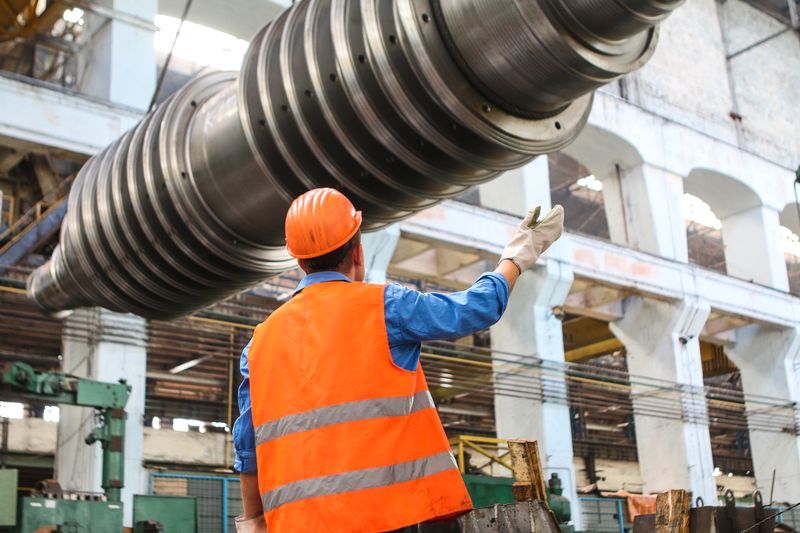
- Rigging — lifting and moving the machine inside the building on skates, jacks, forklifts, hydraulic gantries or a crane, along a path that has been checked for floor loading, door sizes and ceiling height.
- Transport — heavy-haul trucking, with permits and escorts where the load is oversize.
- Setting and erection — landing the machine on its new foundation, leveling it, anchoring it, and grouting where required.
- Millwright work — the precision reassembly, alignment and leveling that returns the machine to working tolerance, coordinated with electricians and the manufacturer's service technicians for reconnection and start-up.
The word erectors in the trade name is the tell: these firms do not just relocate iron, they put it back into production condition. When you compare bids, compare scopes line by line. A cheap bid that ends at the loading dock leaves you hiring millwrights, electricians and a leveling crew separately — and coordinating them yourself.
Volume changes the job, not just the price
For a household, more stuff means a bigger truck. For a business, more machines means a different kind of project altogether.
A single-machine move — one CNC mill swapped, one press replaced — is the entry-level job: a site visit, a lift plan, a crew for a day. A production-line move adds sequencing: machines must come out and go back in an order that respects how the line runs, and the labeling and match-marking discipline becomes the whole ballgame. A whole-shop or plant relocation is a phased program, often run over weekends or a planned shutdown, where the mover is effectively managing a small construction project with your production calendar as the deadline.
This is also where business moves diverge on timing. A family can flex a closing date by a week. A shop that has promised customers delivery dates cannot. Reputable machinery movers are used to working nights, weekends and holiday shutdowns precisely because the cheapest hour to move a machine is an hour it was not scheduled to run — and they price off-hours work accordingly.
Contracts: the paperwork carries the risk
Consumer moves run on estimates and a bill of lading. Business machinery moves run on scoped contracts, and the differences are worth money.
How the price is built. Published 2026 pricing guides from U.S. rigging companies put a rigging crew at roughly $200 to $500 per hour, usually with a four-hour minimum, and a simple single-machine job starting around $3,000 to $3,500. One market survey of real projects puts a single machine in the U.S. at about $4,600 to $22,700, with a typical figure near $11,700, and multi-machine or production-area work starting around $64,800. Those ranges are wide because access, weight and distance dominate. Quotes come in three shapes:
- Time and materials — hourly crew and equipment rates. Flexible, but delay risk sits with you.
- Fixed price (lump sum) — one price for a defined scope. Budget certainty; the mover prices in some risk, and anything outside the written scope becomes a change order.
- Per-piece or per-ton — common on larger relocations, with cranes, trucking and storage as separate lines.
What to get in writing. A site survey before the price is firm — a mover who quotes a press move from a phone description is guessing with your money. A named scope that says who disconnects and reconnects power, air and coolant (often a licensed electrician, and often not the mover). A schedule with the shutdown window stated. And a change-order rule: how extras are priced and who can authorize them, because the classic budget blowout on a machinery move is not the quote — it is the third day of "while we're here" additions nobody signed for.
| Consumer household move | Small-business machinery move | |
|---|---|---|
| Priced by | Weight/volume and distance | Scope: crew, rigging gear, cranes, trucking, downtime window |
| Core document | Estimate and bill of lading | Scoped contract with survey, lift plan and change-order terms |
| Job ends at | Placement in the room | Machine leveled, anchored and ready for reconnection |
| Main risk | Damage to household goods | Production downtime plus damage to a revenue-earning asset |
| Insurance question | Mover's valuation options | Riggers liability limits vs. the machine's replacement value |
| Timing | A chosen day | Nights, weekends and shutdowns, fixed by your production calendar |
Insurance: read for one specific exclusion
Here is the detail that separates a business-grade hire from a hopeful one. A standard general liability policy typically excludes property in the contractor's care, custody or control — which is a precise description of your machine from the moment the crew takes its weight. The coverage that answers for the machine itself is riggers liability, usually written as inland marine coverage, and it applies while the load is lifted, lowered, skidded, rolled and positioned. The transport leg is often covered separately, under motor truck cargo coverage. Ask which policy covers which leg of your move.
Before the job, collect a certificate of insurance and check four things: that riggers liability or inland marine appears as its own line, not just general liability; that the limit is at least the replacement value of the most expensive machine in the move — not its depreciated book value; that the policy dates cover the whole job including a weather or overrun day; and that you have stated the machine's value in writing to the mover before the lift. If the mover's limit is below your machine's value, that gap is a conversation to have with the mover and your own insurer before the job, not a discovery to make after a loss.

The tax and accounting treatment is business, not personal
A family paying to move house is paying a personal expense. A business moving machinery is spending on its operations, and the paperwork should be kept like it. Two practical points, both worth confirming with your own accountant because the details turn on your situation:
First, the invoicing should separate the elements — rigging labor, transport, crating, storage, millwright and installation work — rather than arriving as one lump sum. Your accountant will want that split, because the tax treatment of moving a machine you already own is not necessarily the same as the treatment of costs that are really part of installing a newly purchased machine; installation-type costs are commonly folded into the asset's cost basis and recovered through depreciation rather than written off at once. Clean line items make that call easy; a single round number makes it an argument.
Second, downtime is a real cost even though it never appears on an invoice. Track it anyway: the shutdown days, the expedited freight, the overtime to catch up. It is the number that tells you whether the fixed-price bid with the guaranteed weekend window was actually cheaper than the hourly bid that drifted — and it is the number you will negotiate from next time.
Service levels: what a business should expect
The service gap between consumer and commercial work is mostly about accountability. From a machinery mover working for your business, expect: a single named point of contact; a written lift plan for anything heavy, tall or top-heavy; a pre-move survey with the machine's make, model and weight — or a nameplate photo — on file; coordination with your electricians, your landlord and, for oversize loads, the permitting authorities; and a post-move sign-off once the machine is set and leveled. Expect also to be asked hard questions about floor loading, anchor patterns and utility locations. A mover who asks none of them is not being agreeable. They are being unprepared.
Permits, landlords and other people's rules
One more difference a consumer never meets: a business machinery move runs through other people's permission. Oversize or overweight loads need state — and sometimes city — transport permits, and some routes need escorts and fixed travel hours. Your landlord, at both ends, may require the mover's certificate of insurance before the crew is allowed on the dock, and may restrict crane work, elevator use or floor loads. The building you are leaving may want the anchor holes patched and the floor made good; the building you are entering may want the foundation and anchor pattern approved before the machine lands. None of this is difficult, but all of it has a lead time, and it belongs in the mover's scope and schedule rather than in a panicked phone call the day before the shutdown. Ask, in the first conversation, who handles permits and landlord paperwork — the answer tells you how much of this trade the firm actually does.
The bottom line
When the move is personal, you are buying labor and a truck. When it is a small business moving machinery, you are buying risk management: a surveyed plan, a contract that says who carries what, insurance that actually covers the machine while it hangs in the air, and a crew whose real product is the shortest possible gap between the machine's last part in the old shop and its first part in the new one. Judge bids on those terms — scope, insurance limits, downtime window, paperwork — and the price differences between the 275 machinery movers and erectors listed here start to explain themselves.
Sources
- Alltracon, "How Much Do Industrial Rigging Services Cost? A Complete 2026 Pricing Guide" — crew rates of $200–$500 per hour, single-machine jobs from about $3,000–$3,500, and the time-and-materials, fixed-price and per-piece pricing models: https://alltracon.com/how-much-do-industrial-rigging-services-cost-a-complete-2026-pricing-guide/
- Rigging-Busters, "Industrial Rigging & Machinery Moving Costs 2026" — real-project ranges: a single machine in the U.S. at about $4,600–$22,700 (typical about $11,700); several machines or a production area from about $64,800: https://rigging-busters.com/pricing/
- Rigging-Busters, "Riggers Liability Insurance: What It Covers" — riggers liability covers a customer's property while it is lifted, moved and set; general liability normally excludes property in the contractor's care, custody or control; motor truck cargo coverage for the road leg: https://rigging-busters.com/riggers-liability-coverage-scope/
- Equip Trucking & Warehousing, "What Is Riggers Liability Insurance? A Guide for Plant Managers" — the care, custody and control exclusion, and the certificate-of-insurance checks: limits above replacement cost, exclusions, and coverage for the full job: https://www.equiptrucking.com/blog/reasons-why-riggers-liability-insurance-is-important/
- Photos: worker guiding a machine component — Pexels photo 2760243, https://images.pexels.com/photos/2760243/pexels-photo-2760243.jpeg; engineers reviewing plans — Pexels photo 1216589, https://images.pexels.com/photos/1216589/pexels-photo-1216589.jpeg; excavator on site — Pexels photo 1078884, https://images.pexels.com/photos/1078884/pexels-photo-1078884.jpeg. Photographer names could not be confirmed through the routes available for this piece; credited to Pexels with the photo URLs.
More guides
- How to Hire a Moving Company That Won't Hold Your Furniture HostageMovers › Moving & Storage
- How Much Do Movers Cost? Local vs. Long-Distance Pricing ExplainedMovers › Moving & Storage
- Binding vs. Non-Binding Estimates: The Difference That Decides Your Final BillMovers › Moving & Storage
- Moving Insurance and Valuation: What 'Full Value Protection' Really CoversMovers › Moving & Storage
- Long-Distance Moving: A Start-to-Finish Guide for Household GoodsMovers › Household Goods Moving & Storage
- All Guides & ArticlesBrowse the full guides library