Movers › Mini & Self Storage
Mini and Self Storage Emergencies: What to Do in the First 24 Hours
The call usually comes in one of three forms. The facility rings to say there has been "an incident." A neighbor at the storage site texts you a photo of firefighters in your corridor. Or you roll up the door on a Saturday, for some small errand, and find water standing under your boxes, your lock cut, or the smell of smoke in everything you own.
I have coordinated relocations for employees whose lives were split between a new city and a storage unit back home, and I can tell you the difference between a storage emergency that gets paid for and one that doesn't is rarely the size of the loss. It is what happens in the first 24 hours. Evidence in a storage unit degrades faster than anywhere else in your life: water keeps wicking, facilities clean up, camera footage overwrites, and memories of exactly what was in box 34 dissolve within days. This is a calm playbook for that first day — what to do, in what order, and who to call first.
Hour zero: safety before property
Before anything else: if there is active danger — fire, smoke, standing water near electrical fittings, a break-in possibly still in progress — do not go in. Call 911 for emergencies, and the facility's emergency or after-hours number for everything else. Storage corridors after a fire or flood can have structural, electrical, and air-quality hazards that are not visible from the doorway, and no box of kitchenware is worth testing them.
If the facility has declared the area closed, respect it and get that closure in writing or by email if you can. Being locked out by the operator is not a problem for your claim; it is evidence for it, and it starts a paper trail showing you acted promptly and were prevented from doing more.
The four records you build on day one
Everything an insurer, a protection-plan administrator, or a court will ever ask you for reduces to four records. Build all four in the first 24 hours, while the scene is exactly as you found it.
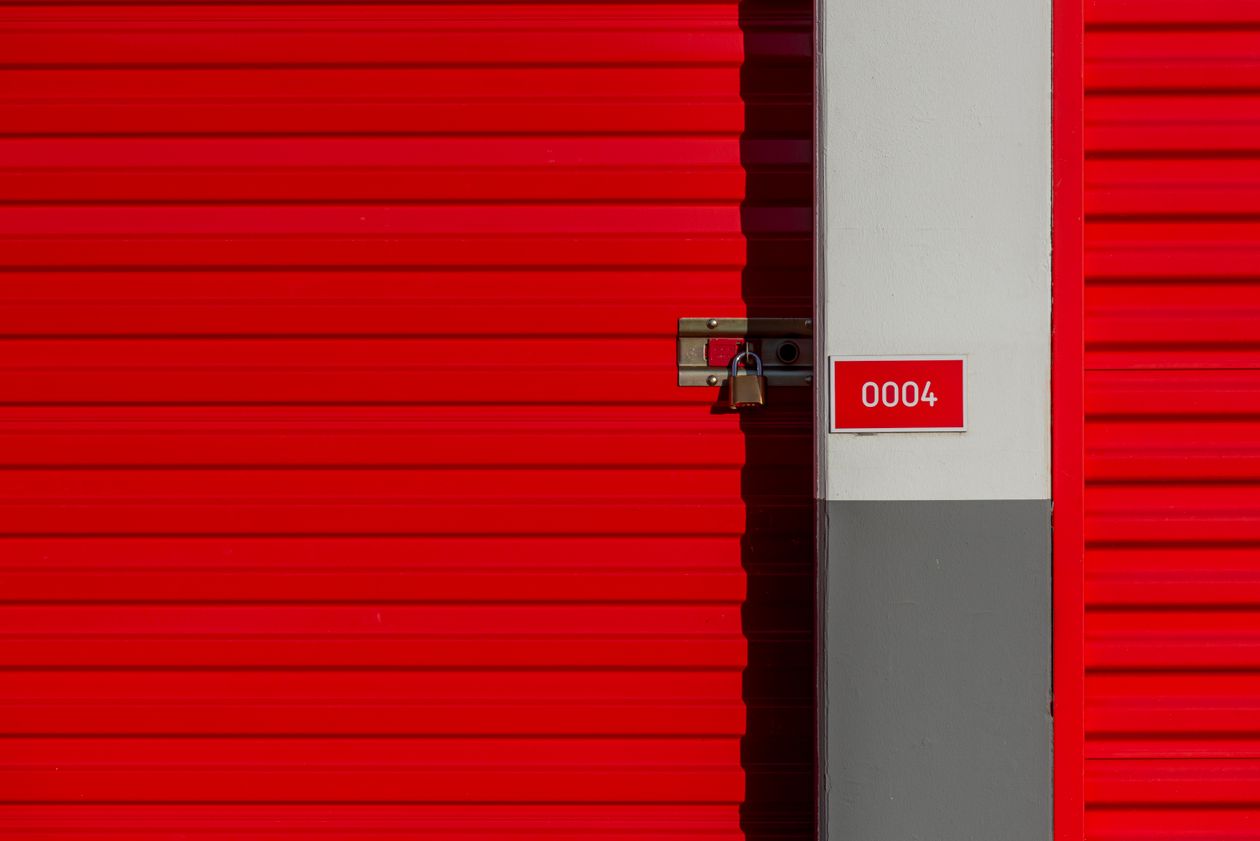
1. Photographs and video, before you touch anything. Shoot the unit number and the door first, then the lock and hasp in close-up — a cut lock, a pried latch, or an intact lock each tells a different story — then wide shots of the whole unit, then close-ups of every damaged or affected item, water lines on walls and boxes, scorch marks, and the floor. Storage claims specialists give the same advice in the same order: document the scene before moving, cleaning, or throwing anything away, because the evidence is strongest at the beginning. Keep the original files with their timestamps; do not rely on screenshots.
2. A written notice to the facility. A phone call is human; an email is evidence. Send a short written notice the same day: your name, unit number, when you discovered the problem, what you found, a request for a copy of the facility's incident report, and — this is the line people forget — a request that the facility preserve gate access logs and camera footage for the relevant dates. Facilities overwrite surveillance video on short cycles. Asking on day one, in writing, is often the difference between footage existing and not existing when an adjuster asks for it in week three. Ask the facility for its own incident report as well; insurers routinely want the operator's account alongside yours.
3. A police report, if a crime is involved. Theft, vandalism, or forced entry means law enforcement, not just facility management. File with the local agency where the unit is located, and record the report number and department name in your file. Protection plans and insurers commonly require a police report for burglary claims — one published tenant protection program's own claim instructions list it as step one — and a missing report is a classic reason a theft claim stalls.
4. A first inventory, written while it's fresh. List every item you believe is missing or damaged, with brand, model, and serial numbers where you have them, and a note of where proof might live — a receipt, a card statement, a photo from the day you moved in. You will refine this list for weeks. The day-one version exists because human memory of stored property decays shockingly fast, and because a prompt, specific list reads as credible in a way a list assembled two months later does not.
| Emergency | First call | Also within 24 hours |
|---|---|---|
| Break-in / theft | Police (non-emergency line, or 911 if in progress) | Written notice to facility; ask for footage and gate logs to be preserved; notify your insurer or protection plan |
| Water intrusion / flood | Facility manager or emergency line | Photograph water lines before cleanup; move dry goods out of the water only if safe; notify insurer promptly |
| Fire / smoke | 911 if active; then facility | Do not enter until cleared; request facility incident report; notify insurer; photograph from the doorway only |
| Roof leak / storm damage | Facility | Document the entry point and affected items; ask what the facility is doing to stop further intrusion; notify insurer |
| Pest or rodent damage discovered | Facility | Photograph evidence and affected items; check your agreement and plan terms — vermin damage is covered by some plans, excluded by others |
Who actually pays: the uncomfortable part
Here is the sentence in your rental agreement that matters most in an emergency: in standard self-storage agreements, your property is stored at your sole risk, and the facility is not your insurer. Published tenant protection plan terms state this bluntly — the rental agreement places the risk of loss on the tenant, and the operator is not liable for loss or damage except where the law imposes liability, for example where the operator failed to exercise reasonable care.
That leaves three possible sources of money, and day one is when you notify all of them:
Your homeowners or renters insurance. Policies typically cover personal property away from home, but commonly at a reduced off-premises limit — StorageCafe's insurance guidance puts it at roughly 10 percent of your personal property coverage — and standard policies frequently exclude flood and earthquake unless you bought specific coverage. Theft and fire are more commonly covered than rising water. Call your insurer on day one regardless; many policies impose prompt-notice expectations, and a late report hands the insurer an argument you don't want to have.
A tenant protection plan, if you bought one. These are the $2,000-to-$15,000-style plans facilities sell at move-in, and the first thing to understand is that most are not insurance. A protection plan is an addendum under which the operator retains limited liability for specified losses up to a stated cap — one widely used addendum, for example, reimburses actual cash value up to a $5,000 limit for listed causes, and expressly says the plan is not a policy of insurance. Typical covered causes include fire, burglary, vandalism, and certain water damage; typical exclusions include flood and rising water, mold, earthquake, and sewer backup. The plan's own notice procedure and deadlines govern, so find the addendum and follow its instructions exactly, in writing.
The facility itself, if it was negligent. The risk-of-loss clause is broad but not infinite. Where a loss traces to something the operator knew about and failed to address — a roof leak reported for months, a broken gate left unrepaired — operators and their protection plans can be liable for losses caused by the failure to exercise reasonable care. You will not settle that question on day one. Your job on day one is to preserve the evidence that would let someone else settle it later: your prior written complaints, if any, are gold. This is also why every maintenance complaint you ever make to a storage facility should be an email, not a hallway conversation.
Salvage: what to save, and how not to destroy your claim doing it
Once the scene is documented and the calls are made, the instinct to rescue your belongings is correct — insurers and plans alike expect you to take reasonable steps to prevent further damage. Move dry items away from a leak if it is safe. Get wet boxes off a wet floor. But observe two rules.
Do not throw anything away yet. Damaged property is evidence. Keep ruined items, packaging, and the cut lock itself until your insurer or plan administrator tells you otherwise, unless something is a health hazard — in which case photograph it exhaustively first and keep a sample where that's sensible. More claims are damaged by an enthusiastic dumpster run in hour six than by the water itself.
Treat paper, photos, and textiles as time-critical. FEMA's guidance for flood-damaged belongings, relayed in StorageCafe's disaster guide, is to start with the items of greatest sentimental value: gently air-dry them, clean with soft cloths or brushes, and dry photographs on paper towels or hung with clothespins rather than stacked wet. Mold colonizes wet cardboard and fabric fast, so ventilate and separate; a cheap replacement unit across the corridor, with your salvageable goods moved dry into it, is often the best money you will spend that week. Keep the receipt — reasonable mitigation expenses belong in your claim file too.
The calls, in order
If you remember nothing else, remember the sequence:
- 911 — only for active danger or a crime in progress.
- The facility — phone first for speed, email immediately after for the record, requesting the incident report and preservation of footage and gate logs.
- The police — for any theft, vandalism, or forced entry; get the report number.
- Your insurer and/or protection-plan administrator — report the loss through the channel your policy or addendum names, and write down every claim number you are given.
- Your own file — one folder, physical or digital, holding the photos, the notice you sent, the police report number, the claim numbers, and the day-one inventory. Every later document goes into the same folder.
Families mid-move are the most exposed people in storage — this site's directory lists 2,753 mini and self-storage businesses under its movers category alone, and a large share of their tenants at any moment are households between homes, with everything they own behind one roll-up door. If that is you, add one more call: your mover or relocation contact, because a storage emergency during a move can change delivery addresses, dates, and whose insurance is primary. Say it in writing there too.

After the first 24 hours
The emergency day ends; the claim grinds on. Expect to expand the inventory with purchase prices and replacement values, to be asked for proof of ownership you may have to reconstruct from statements and old photos, and to wait. What you will not have to do, if day one went right, is apologize for missing footage, a discarded lock, or an inventory built from guesswork.
And when the claim closes, do the unglamorous audit: photograph the entire contents of the new unit, keep a spreadsheet inventory with serial numbers somewhere that is not in the unit, store nothing irreplaceable at floor level, and read the protection plan's exclusions before you need them. Storage emergencies are not really about the storm, the leak, or the thief. They are about the fact that everything you stored was, for a while, out of sight. The first 24 hours are how you bring it back into the record.
Sources
- StorageCafe, "What To Do If Your Storage Unit Is Hit By A Natural Disaster" — facility incident reports, documenting before salvage, homeowners off-premises coverage (~10%), flood exclusions, and FEMA salvage guidance for photos and sentimental items: https://www.storagecafe.com/blog/what-to-do-if-a-natural-disaster-hits-your-storage-unit/
- SnapNSure, "How to File a Storage Insurance Claim Fast" — document before cleaning or discarding, incident reports, itemized inventory with age and value: https://www.snapnsure.com/blog/how-to-file-storage-insurance-claim/
- Price Self Storage, Protection Plan Addendum — a protection plan is not insurance; reimbursement at actual cash value up to a $5,000 limit for listed causes: https://www.priceselfstorage.com/upload/pdf/protection-plan-addendum.pdf
- Tenant Property Protection Plan Terms & Conditions — property stored at tenant's sole risk under the rental agreement; operator liability retained only up to the plan limit for losses from failure to exercise reasonable care: https://storage.googleapis.com/msgsndr/870ravI4ay1PBz1FbxSo/media/66be4c7da2eb38eb110d5cbc.pdf
- Photo by Jan van der Wolf, https://www.pexels.com/photo/38573375/
- Photo by David Slaager, https://www.pexels.com/photo/5759145/
- Photo by cottonbro studio, https://www.pexels.com/photo/4568693/
More guides
- How to Hire a Moving Company That Won't Hold Your Furniture HostageMovers › Moving & Storage
- How Much Do Movers Cost? Local vs. Long-Distance Pricing ExplainedMovers › Moving & Storage
- Binding vs. Non-Binding Estimates: The Difference That Decides Your Final BillMovers › Moving & Storage
- Moving Insurance and Valuation: What 'Full Value Protection' Really CoversMovers › Moving & Storage
- Long-Distance Moving: A Start-to-Finish Guide for Household GoodsMovers › Household Goods Moving & Storage
- All Guides & ArticlesBrowse the full guides library