Movers › Mini & Self Storage
Mini and Self Storage in Hawaii: Permits, Prices and Local Know-How
Storage in Hawaii is not storage on the mainland with a nicer view. Land is the scarcest commodity in the state, and storage rent is land rent: the same 10-by-10 room that averages a little over $120 a month nationally averages close to $300 in Honolulu. The climate works on your belongings while you are not looking. And the state's lien law runs on a clock — fifteen days, in the first instance — that catches out exactly the people who rent a unit during a chaotic move and then leave the island, change an address, or simply stop opening mail.
I investigate moving and storage complaints, and the Hawaii files share a shape: nobody lied to these customers, exactly. The prices, the tax line, the late fees and the auction timeline were all in the contract or the statute. What was missing was a local translation. That is this guide: what mini and self storage really costs in Hawaii, what paperwork does and does not exist, what Hawaii law lets a facility do when rent goes unpaid, and how island conditions change what you should store and how. This site lists 2,753 mini and self storage listings, so there are choices — but in Hawaii the choices narrow fast by island, and the fine print matters more than the facility's paint.
What it costs: island prices, honestly stated
Honolulu is the market with real competition, and even there the numbers sit far above mainland norms. Published Honolulu pricing data puts a 5-by-5 unit at about $117 a month on average, a 5-by-10 at about $176, a 10-by-10 at about $295 (with the lowest advertised around $214), and a 10-by-20 at about $393. Booking-platform data for Honolulu tells the same story from the other side: 10-by-10 units averaging around $308, with the cheapest near $177. For contrast, the largest national chain's own national averages run about $123 for a 10-by-10 — Honolulu costs roughly two and a half times the national figure for the same concrete and steel.
| Unit | Honolulu average | What it holds |
|---|---|---|
| 5 × 5 | About $117/month | A closet's worth — boxes, a bike, seasonal gear |
| 5 × 10 | About $176/month | A studio's furniture, or a one-bedroom's overflow |
| 10 × 10 | About $295/month | A one- to two-bedroom home's contents |
| 10 × 20 | About $393/month | A three-bedroom home, or a vehicle plus household goods |
Then add the Hawaii lines mainland renters do not expect. Your bill carries the state's general excise tax as a visible pass-through — one Kaneohe customer's rate notice itemized $51.46 of tax on $1,092 of rent, a roughly 4.7 percent add-on consistent with Oahu's tax rate — plus, at most facilities, an administration fee at sign-up and either a required insurance or protection-plan line, or proof of your own coverage. That same Kaneohe notice is a warning in another way: the customer's new monthly total had climbed to $1,143.46, with a late fee of $218.40 waiting if it went unpaid. Hawaii introductory rates are genuinely introductory. Budget for the rate your unit will have in month seven, not the one on the banner, and ask — in writing — how often the facility raises rents and by how much it raised them last year.
On the neighbor islands, expect thinner supply rather than better prices: fewer facilities, fewer size choices, and less leverage to negotiate. If your move is inter-island, price storage on the island where the goods will sit longest, and remember that everything you store on the wrong island eventually pays barge freight twice.
Permits and paperwork: what exists and what doesn't
Renters ask about permits because mainland advice columns mention them, so let us clear it up: you need no permit, license or state approval to rent a storage unit in Hawaii. What you sign is a private rental agreement governed by Hawaii's self-service storage facilities law, Chapter 507, Part III of the Hawaii Revised Statutes. The permits in this business sit on the facility's side of the fence — county zoning and building approvals for the site itself — which is one reason supply grows slowly and prices stay high: building storage on Oahu means clearing the same land-use hurdles as building anything else on Oahu.
Your paperwork is short but consequential. Bring a government photo ID, a payment method, and — this one matters under Hawaii law — an address and email you will still be reachable at in six months, because the statute runs its notices to your "last known address": the one in your rental agreement or a later written change you provide. If you move, deploy, or leave the state and do not update that address in writing, the law is satisfied with notices you never actually see. Facilities may also require the stored property's value to be declared, and Hawaii's modernized law expressly allows contracts to limit the facility's liability to a stated maximum value of stored property — which means the number you write down in a hurry at the counter can become the ceiling on any claim. Write a number you can defend.
One more document distinction the complaint files teach: a self-service storage facility under this law is not a warehouse. If a company takes possession of your goods and issues a warehouse receipt or bill of lading, a different legal regime (Chapter 490, the commercial code) applies. Mini storage means you keep the key and the access — and the responsibility.
Hawaii's lien law: the fifteen-day clock
Here is the part of the contract written in Honolulu that mainland guides describe in the abstract. Under section 507-63, when rent or other charges remain unpaid for fifteen consecutive days, the facility owner may deny you access to your unit, after sending the required notice to your last known address. The owner's lien itself, under section 507-62, attaches to all personal property in the facility for rent, labor and other charges under the agreement. From there the statute lays out a sequence — notice of lien, then a final demand and notice of sale, then sale — with your right, preserved in section 507-68, to stop the process by paying what is due before the sale happens. The 2017 modernization of the law let facilities send notices by email and other commercially reasonable methods, and addressed a Hawaii-flavored problem directly: vehicles and boats left in default for sixty days or more can be towed rather than auctioned, which matters in a state where a stored car or boat is a common unit-filler.
Read those timelines the way a complaints investigator does. Fifteen days to lockout is short — shorter than the mainland stereotype of a month or more — and the entire enforcement chain depends on an address many movers give carelessly on the worst week of their year. The defenses are dull and total: autopay from an account that will not lapse, a written address update every time you move, and a calendar note for the rent due date independent of the facility's reminders. And if you fall behind, contact the facility early and in writing: the statute sets the maximum pace of enforcement, not a mandatory one, and managers routinely work with customers who surface before the notices do.
Island conditions: what Hawaii does to stored things
The second way Hawaii storage differs is physical. Humidity is the default state of the air, salt rides it near the coast, and a sealed metal box in the sun is an oven with damp walls. The complaints I see are rarely theft; they are mildew on upholstery, rust blooming on tools, warped wood, photographs fused into a single block. Climate-controlled units — interior, air-conditioned space — exist in Honolulu and cost more, and for once the upsell has a point: for wood furniture, electronics, documents, art and musical instruments staying more than a few months, climate control is the difference between storage and slow damage. For surfboards, plastic bins and patio furniture, it is money for nothing.
Whatever you rent, pack for the islands. Plastic bins with latching lids instead of cardboard, which absorbs moisture and feeds pests. Everything up off the concrete on pallets or shelving, because floors sweat and occasionally take water. Silica gel or a moisture absorber inside the unit, replaced on a schedule. Nothing organic — no food traces, no unwashed beach gear — because Hawaii's insect life finds stored units the way it finds everything. And visit: a unit you check quarterly is a problem caught at the mildew stage; a unit you open after two years is a loss you document for a claim the contract probably caps.

The budget playbook for Hawaii storage
Because the rent is high, the arithmetic of "just one more month" is brutal — a 10-by-10 at Honolulu averages costs about $3,540 a year, more than the replacement value of many households' stored contents. Work the alternatives first. Portable containers and inter-island shipping make sense when the storage is really a pause inside a move with a known end date; a unit makes sense when access matters and the end date is genuinely unknown. Downsize before you store, not after: shipping donations to a charity or selling locally in Hawaii beats paying island rent to postpone the decision, and anything you might ship to the mainland later should be priced now, because freight will end the argument. Choose the smallest unit by packing vertically with shelving rather than renting floor space for air. And negotiate where negotiation exists — longer prepaid terms and off-peak move-ins occasionally move a manager, especially outside the summer crush, when military change-of-station season and university calendars squeeze Oahu supply hardest.
Hawaii storage is a good product priced by scarce land and governed by a brisk statute. Rent it with your eyes open — real rate, real tax line, real address on file, real plan for the humidity — and it does its job quietly. Rent it the way most complainants did, as an afterthought on moving day, and the islands will educate you at $295 a month.
Sources
- Hawaii Revised Statutes, Chapter 507, Part III (Self-Service Storage Facilities) — establishes the owner's lien, the fifteen-day default and access-denial rule, the notice and sale sequence, and the right to pay before sale.
- Hawaii Legislature, 2017 modernization of the self-service storage facilities law — establishes email and electronic notice, towing of vehicles and boats after sixty days of default, and contractual limits on stored-property value.
- Public Storage, Honolulu cost data — establishes Honolulu average monthly prices by unit size, from about $117 for a 5 × 5 to about $393 for a 10 × 20.
- SpareFoot, Honolulu booking data — establishes Honolulu 10 × 10 averages around $308 and the lowest prices near $177.
- Hawaii storage customer rate notices — establish the general excise tax shown as a separate line on storage bills and the scale of late fees.
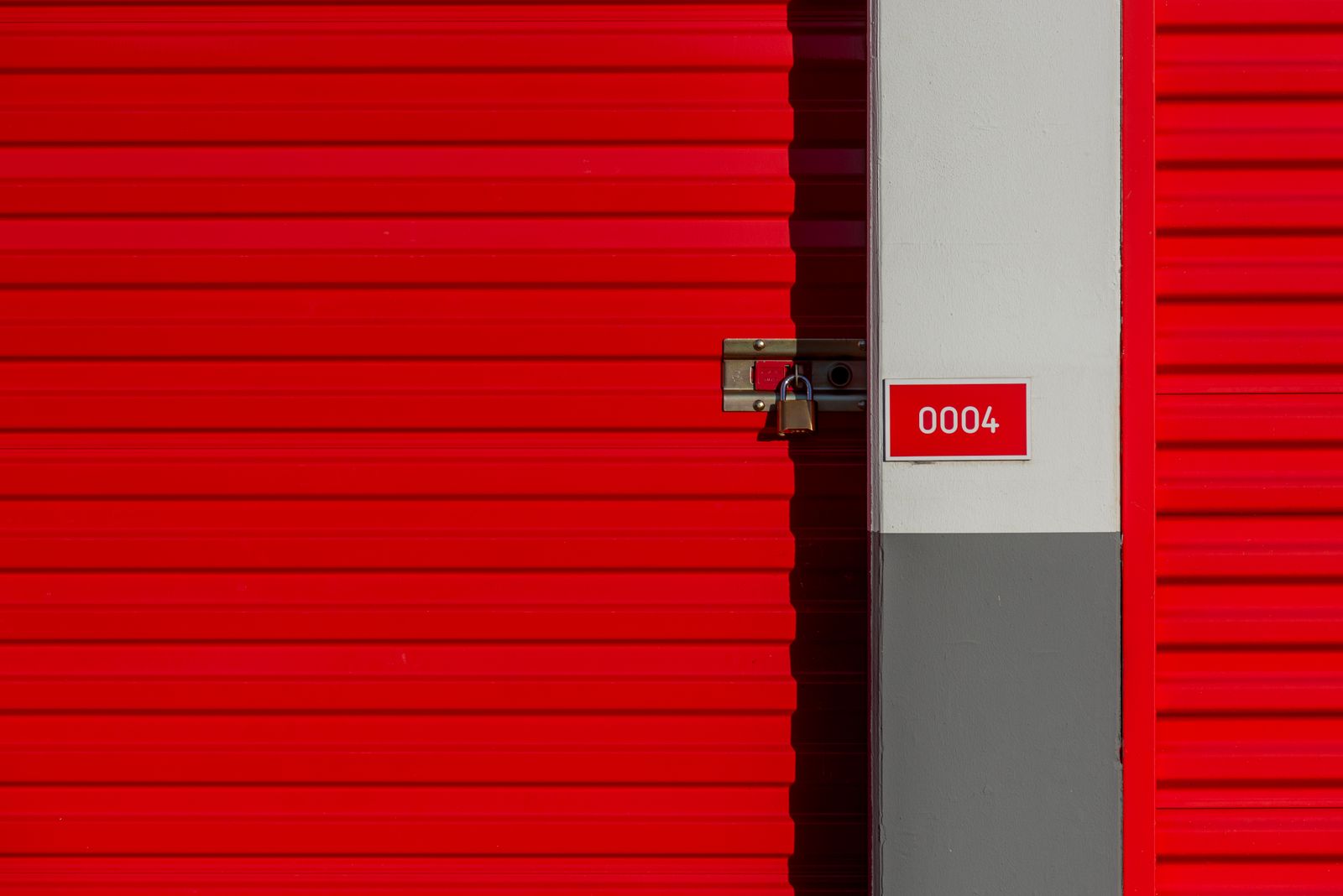
Photos: photo by Jan van der Wolf, https://www.pexels.com/photo/red-storage-unit-with-padlock-and-number-38573375/ ; photo by cottonbro studio, https://www.pexels.com/photo/family-unpacking-after-moving-4569340/
More guides
- How to Hire a Moving Company That Won't Hold Your Furniture HostageMovers › Moving & Storage
- How Much Do Movers Cost? Local vs. Long-Distance Pricing ExplainedMovers › Moving & Storage
- Binding vs. Non-Binding Estimates: The Difference That Decides Your Final BillMovers › Moving & Storage
- Moving Insurance and Valuation: What 'Full Value Protection' Really CoversMovers › Moving & Storage
- Long-Distance Moving: A Start-to-Finish Guide for Household GoodsMovers › Household Goods Moving & Storage
- All Guides & ArticlesBrowse the full guides library