Movers › Mini & Self Storage
Mini and Self Storage in Illinois: A Resident's Guide to Costs and Rules
Storage enters a downsizing move quietly. The house in Naperville or Springfield sells faster than expected, the smaller place is not ready, and a lifetime of furniture needs somewhere to sit for “a month or two.” In Illinois, that somewhere sits under a specific state law with a fast clock in it — and the gap between what Chicago pays and what downstate pays is wide enough to change the plan entirely.
National storage advice will tell you to compare prices and read your lease. Illinois advice has to be more precise: know the Self-Service Storage Facility Act, know that its lien timeline runs in weeks rather than months, and know which of your protections depend on an address the facility has for you. Here is the state version.
The law: one Act, no certificate, and a lien from day one
Illinois does not license storage facilities the way it — or neighbouring states — license movers. What it has instead is a detailed consumer statute: the Self-Service Storage Facility Act, 770 ILCS 95. If you store in Illinois, this Act, plus your rental agreement, is the whole rulebook. Its central provisions deserve to be known before you sign, not discovered in a notice.
The lien attaches immediately. Under Section 3, the facility owner has a lien on all personal property at the facility — for rent, labour and other charges, and for the costs of preserving or selling the property — and that lien attaches on the date the property is brought in. There is no grace period before the lien exists; there is only a process before it can be enforced.
Your agreement can bind you without a signature. The Act allows the rental agreement to be delivered and accepted electronically, and if you do not sign the written agreement the owner tendered but keep using the space, your continued use counts as acceptance on the same terms. “I never signed anything” is not a defence in Illinois storage. It is a description of how you agreed.
A value limit binds only if it shouts. If your agreement caps the value of what you may store — a clause that matters enormously for the antiques and documents downsizers store — that limit is enforceable only when it appears in bold type or underlined in the agreement. Read for it literally: if it is not bold or underlined, it does not bind you; if it is, store accordingly.
Nobody may live in the unit, and termination runs on notice. Residential use is prohibited, and an owner's written notice ending a rental must give at least 14 days to remove your property. Storage is a bridge, in law as in life — never a residence.
If you fall behind: the Illinois timeline is fast
This is where Illinois differs most from the national picture, and where downsizing households — with mail in transition between two addresses — are most exposed.
There is no minimum period of default in Illinois before the lien process can start. The claim only has to be due. From there the Act's steps run briskly:
| Step | Illinois timing |
|---|---|
| Rent due | The date in your rental agreement |
| Late fee | Only once rent is unpaid 5 days past the due date, and only if the agreement states it; a fee of $20 or 20% of monthly rent, whichever is greater, is deemed reasonable |
| Lien notice | Delivered in person, by verified mail, or by email to your last known address, with an itemized claim and a demand to pay within at least 14 days |
| Advertisement | Once a week for two consecutive weeks in a local newspaper of general circulation |
| Sale | No sooner than 15 days after the first advertisement — roughly 30 days after the notice |
Read that table as a senior, or as the adult child helping one, and the operational lessons write themselves. Autopay is not a convenience in Illinois; it is asset protection. A single missed month — a card replaced, a bank changed during the move — can put a unit about a month from sale. The address and email on the agreement are legal infrastructure. Notices go to the last known address you gave; a notice mailed to the house you just sold is still, in the Act's terms, delivered. Update the facility in writing when you move, and name a second contact — most agreements allow an alternate contact person, and a son or daughter who also receives word is the cheapest safeguard there is. And act on a notice the day it arrives: the 14-day demand window is short, but paying within it stops the process outright.
Two smaller mercies: rent and charges keep accruing while access is denied for non-payment, so delay compounds; and vehicles, trailers and boats get a longer fuse — they may be towed only after 60 days of unpaid charges or default. The furniture holding your family history gets no such patience.
What storage costs in Illinois: two states in one
Illinois storage pricing splits along the line every Illinoisan expects. In Chicago, a 10×10 — the workhorse size for a downsizing household — averages somewhere between $128 and $142 a month in the big operators' published figures, with marketplace booking data putting the Chicago 10×10 average higher still, around $168; the average Chicago unit across all sizes books at roughly $97 a month. A 5×5 averages about $42. Climate-controlled space in Chicago carries a clear premium — marketplace data averages a climate-controlled 10×10 at about $177 — and downtown and North Side locations price above neighbourhoods further out, where the same concrete box costs noticeably less a few miles away.
Downstate is a different market. Smaller cities and rural facilities price well below Chicago — in parts of southern Illinois, a 10×10 on a roadside sign goes for a fraction of the city average. For a downsizer, the geography cuts both ways: storing near the old house downstate is cheap, but every retrieval trip is a drive; storing near the new home in the Chicago area costs more per month and saves hours per visit. If the storage is truly temporary and untouched, store it cheap and far. If you will be visiting it monthly to extract what the new place needs next, proximity is worth rent.
| Unit (Chicago) | Typical monthly figure | Notes |
|---|---|---|
| 5×5 | About $42 average | Documents, seasonal items, a closet's worth |
| 10×10 standard | $128–$142 average (operator figures); ~$168 in booking data | One-bedroom contents; the downsizer's default |
| 10×10 climate-controlled | About $177 average | Wood furniture, instruments, photographs, electronics |
| 10×30 | About $367 average | Whole-house overflow — usually a sign to sort harder |
Season matters too. Chicago demand peaks with the spring and summer moving season; guidance from the large operators points to fall and winter as the cheaper renting window, when demand dips. A downsizer with any flexibility — and downsizers often have more than families chained to school calendars — can use that: a late-autumn move into storage is both easier to book and cheaper to hold. The counterweight is the Illinois winter itself. A drive-up unit visited in January is a cold, icy errand; for anything you will need before spring, an interior, climate-controlled unit earns its premium in comfort as much as in protection for wood, paper and photographs through freeze-thaw cycles and humid summers alike.

Choosing the facility itself
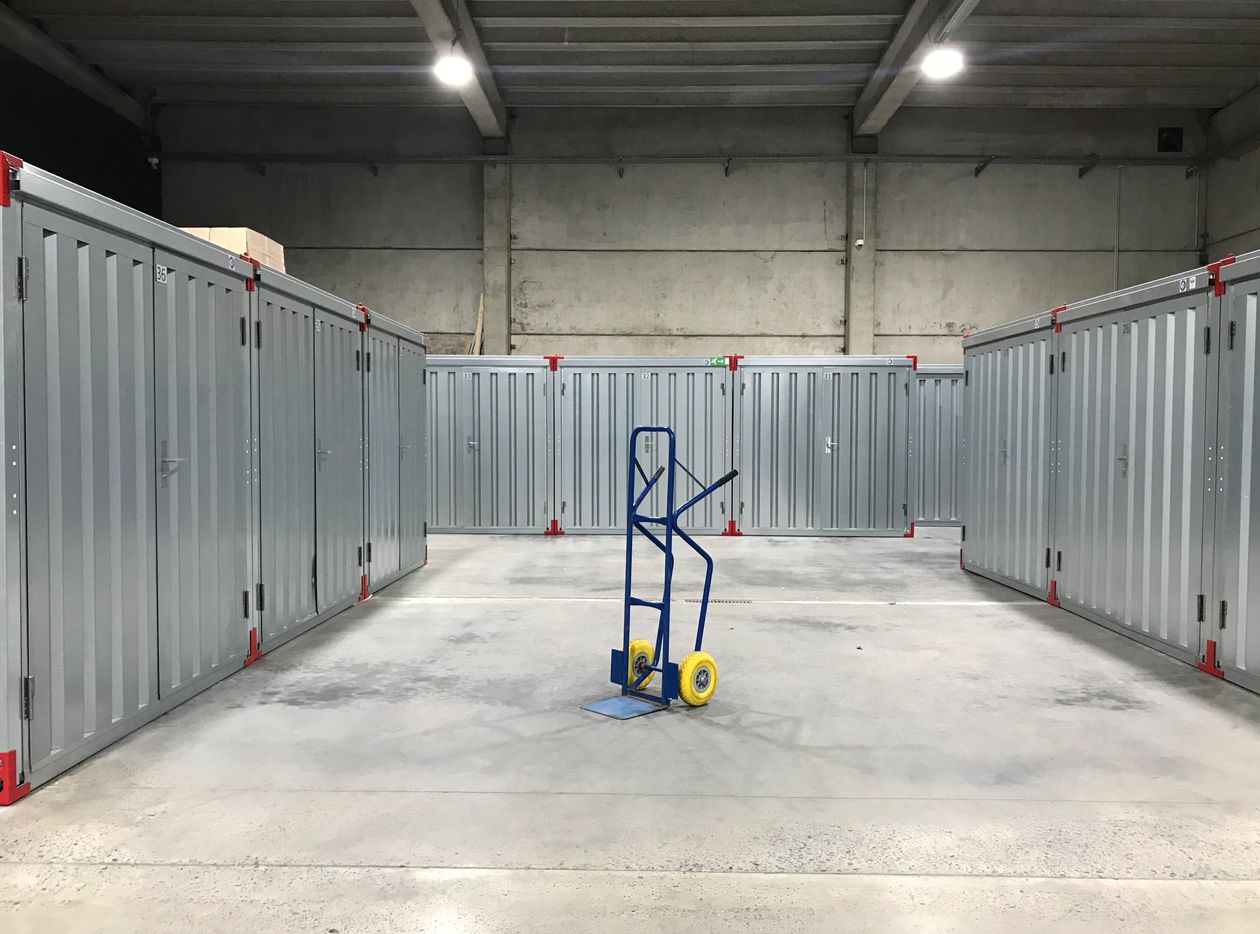
Illinois's market runs from Chicago high-rise-adjacent interior facilities with elevators and loading docks to gravel-lot drive-up rows outside county seats, and the right choice depends on how the storage will actually be used. A downsizer emptying a house in stages — some to the new home, some to children, some to be decided — will visit often, and should weight the visit heavily: interior access out of the weather, carts that actually roll, lighting in the corridor, and gate hours that match a retiree's day rather than a warehouse's. A household storing a sealed, finished load for a fixed gap can take the cheaper drive-up on the edge of town and never think about it again.
Security deserves a look in person rather than on a listing page: a gate that closes, cameras that exist rather than are advertised, a manager or a responsive remote operator, and other tenants' units kept locked and tidy are the visible signs. So is dryness — ask to see the actual unit, check the floor and the door seal, and be wary of any facility that will only show a “representative” space. In a state where your property is under lien from the day it arrives and the enforcement clock runs fast, the facility's own orderliness is not cosmetic. It is a preview of how carefully the paperwork — including the notice that could one day matter — will be handled.
Renting well, the Illinois way
- Read the agreement for the Act's fingerprints: the late fee ($20 or 20 percent, from day five), the bold-or-underlined value limit, the notice address, and the access-denial terms. If the late fee is not stated in the agreement, it cannot be charged.
- Set autopay and a second contact on day one, and update your address with the facility — in writing — the week you move.
- Inventory what goes in, with photographs. If a claim or a lien dispute ever arises, that list is your evidence; for estate and insurance purposes it is valuable regardless.
- Choose climate control by contents, not by habit: photographs, documents, wooden furniture, instruments and electronics justify it in an Illinois climate; patio furniture and tools do not.
- Put an end date on the bridge. Storage rented “for a month or two” at $140 becomes $1,680 a year. Decide at move-in what leaves, what goes to family, and when you will reassess — and write the reassessment date on the calendar of someone who will honour it.
This site lists 2,753 mini and self storage listings, and Illinois renters will find the state's market deep at every price point. Rent with the Act in mind — lien from day one, a fast clock if you fall behind, notices that follow the address you gave — and the bridge between the old house and the new one stays what it should be: a few quiet months, at a known price, with everything still yours at the end of it.
Sources
- Illinois General Assembly, Self-Service Storage Facility Act (770 ILCS 95) — Section 3 lien attaching on the date property is brought to the facility; electronic delivery and acceptance-by-use of rental agreements; Section 4 lien enforcement, notice and sale; Section 7.10 late fees.
- Legal Clarity, “Illinois Storage Unit Laws: Liens, Sales, and Tenant Rights” — the late fee rule (no fee until rent is five days overdue, fee must be stated in the agreement, $20 or 20% of monthly rent deemed reasonable) and the contents and delivery of the default notice.
- Stitch Storage, “Illinois Self Storage Lien Laws: Timeline and Rules” — no minimum default period, 14-day demand, advertising once a week for two consecutive weeks, sale no sooner than 15 days after the first advertisement, and the 60-day towing rule for vehicles and watercraft.
- Public Storage, “How Much Does a Storage Unit Cost in Chicago?” — Chicago 10×10 averaging $142 per month and starting at $75, and 5×5 units from $15.
- Extra Space Storage, “Storage Unit Prices in Chicago, IL” — Chicago averages of $42 for a 5×5, $128 for a 10×10 and $367 for a 10×30, and fall/winter renting when demand dips.
- SpareFoot, Chicago self-storage listings — booking averages of roughly $97 per month across unit sizes, about $168 for a 10×10 and about $177 for a climate-controlled 10×10.
Photos: - Storage facility hallway — photo by David Slaager, https://www.pexels.com/photo/5759145/ - Labeled moving boxes — photo by cottonbro studio, https://www.pexels.com/photo/4554242/
More guides
- How to Hire a Moving Company That Won't Hold Your Furniture HostageMovers › Moving & Storage
- How Much Do Movers Cost? Local vs. Long-Distance Pricing ExplainedMovers › Moving & Storage
- Binding vs. Non-Binding Estimates: The Difference That Decides Your Final BillMovers › Moving & Storage
- Moving Insurance and Valuation: What 'Full Value Protection' Really CoversMovers › Moving & Storage
- Long-Distance Moving: A Start-to-Finish Guide for Household GoodsMovers › Household Goods Moving & Storage
- All Guides & ArticlesBrowse the full guides library