Movers › Mini & Self Storage
Mini and Self Storage in Ohio: Why Prices Differ From the National Average — and How to Check the Local Rate
Every storage investigation I have worked starts the same way: someone in Columbus, Cleveland, or Cincinnati finds a national article saying a storage unit costs about $120 a month, rents one, and three months later is paying noticeably more than that — or, just as often, noticeably less, at a facility two exits away. Both people feel misled. Usually, neither was lied to. They were quoted two different kinds of price, in a state whose storage market does not behave like the national average in the first place.
Ohio is a useful place to learn how storage pricing really works, because almost every force that moves a storage price — land cost, new construction, climate, teaser discounts, and scheduled increases on existing tenants — is visible here in a moderate, readable form. This guide explains why Ohio prices sit where they do, and then gives you the exact method for checking the going rate in your own Ohio town before you commit to a unit.
The national yardstick, and why it misleads in Ohio
The industry's standard measuring stick is the 10×10 unit: 100 square feet, roughly a one-bedroom apartment's furniture. StorageCafe, which tracks advertised street rates using Yardi Matrix data, put the national average for a standard 10×10 at about $119–$120 a month in its 2026 figures, with the average across all unit sizes at $135 and an average of about $1.26 per square foot. Among twenty major cities, the same 10×10 ranged from $98 a month in Houston and San Antonio to $277 in Los Angeles, $271 in New York City, and $268 in Boston.
Two lessons hide in that spread. First, the "national average" is an average of places nothing like each other: storage rent is land rent with a roll-up door on it, and land in Los Angeles costs several times what land costs in Ohio. Second, even the average conceals a second split — between the street rate, the advertised asking price a new customer sees, and the booked rate, what customers actually pay after web discounts and move-in specials. Marketplace data has put average booked prices for a 10×10 far below the street average, because listings skew toward discounted online rates and cheaper markets. When an Ohio facility quotes you a number well under $119, it is usually quoting the second kind of price. When your rent climbs toward and past it over the first year, you are meeting the first kind.
Ohio's three big metros — Columbus, Cleveland, and Cincinnati — are mid-priced, land-affordable markets, nothing like the coastal extremes in the table below. Expect Ohio street rates for a 10×10 to compete with the broad middle band of American cities rather than with either coast, and expect the suburbs and smaller Ohio cities — Dayton, Akron, Toledo, and the towns between them — to price below the metros, for the same land-cost reason Houston prices below Boston.
| City (10×10 street rate, monthly) | Rate | What it shows |
|---|---|---|
| Houston / San Antonio | $98 | Cheap land, heavy new supply |
| Charlotte | $103 | Fast growth, still-affordable land |
| Minneapolis | $114 | Mid-priced northern metro |
| National average | ~$119–$120 | The yardstick, not a quote |
| Chicago | $141 | Large metro, modestly above average |
| Boston / New York / Los Angeles | $268–$277 | Coastal land scarcity, more than double the average |
Why Ohio prices land where they do
Land and construction. Ohio metros grew outward onto comparatively cheap land, and storage developers followed the rooftops. Where several facilities compete along the same suburban corridor — the ring around Columbus, the I-275 loop outside Cincinnati, the suburbs south and west of Cleveland — no operator can hold a price far above the facility across the road. New supply is the strongest downward pressure storage prices ever feel, and Ohio's buildable land keeps supplying it.
The three metros are three different markets. Columbus has been Ohio's growth engine, and growth means move-ins, apartment turnover, and storage demand that supports firmer prices, especially near the expanding northwest suburbs. Cleveland's market is older and slower-growing, with softer demand and, in many neighborhoods, softer rates. Cincinnati sits between, with demand pulled across the river into Kentucky suburbs — a reminder that a "Cincinnati" search that stops at the state line misses part of the real market, including facilities your belongings may sit in under another state's contract law.
Climate is a priced feature here, not a luxury. Ohio winters cycle through freeze and thaw, and summers are humid. That is why climate-controlled units — priced at a premium over standard units everywhere — sell on a genuine use case in Ohio: wood furniture, electronics, photographs, documents, and anything with glue joints or a battery suffer in an unheated drive-up unit through a January cold snap followed by a wet March thaw. The honest question is not whether climate control is "worth it" in the abstract, but what you are storing and for how long. A six-week summer bridge between leases rarely justifies it. A winter-long store of a household's good furniture often does.
Seasonality is real and local. Demand peaks with the moving season and the academic calendar — Columbus absorbs Ohio State's turnover, and every Ohio college town from Athens to Oxford to Kent sees the same May and August squeeze. Facilities price into that demand. A unit rented in January, in a market full of empty units and running winter specials, is frequently the same physical unit that commands full street rate in August.
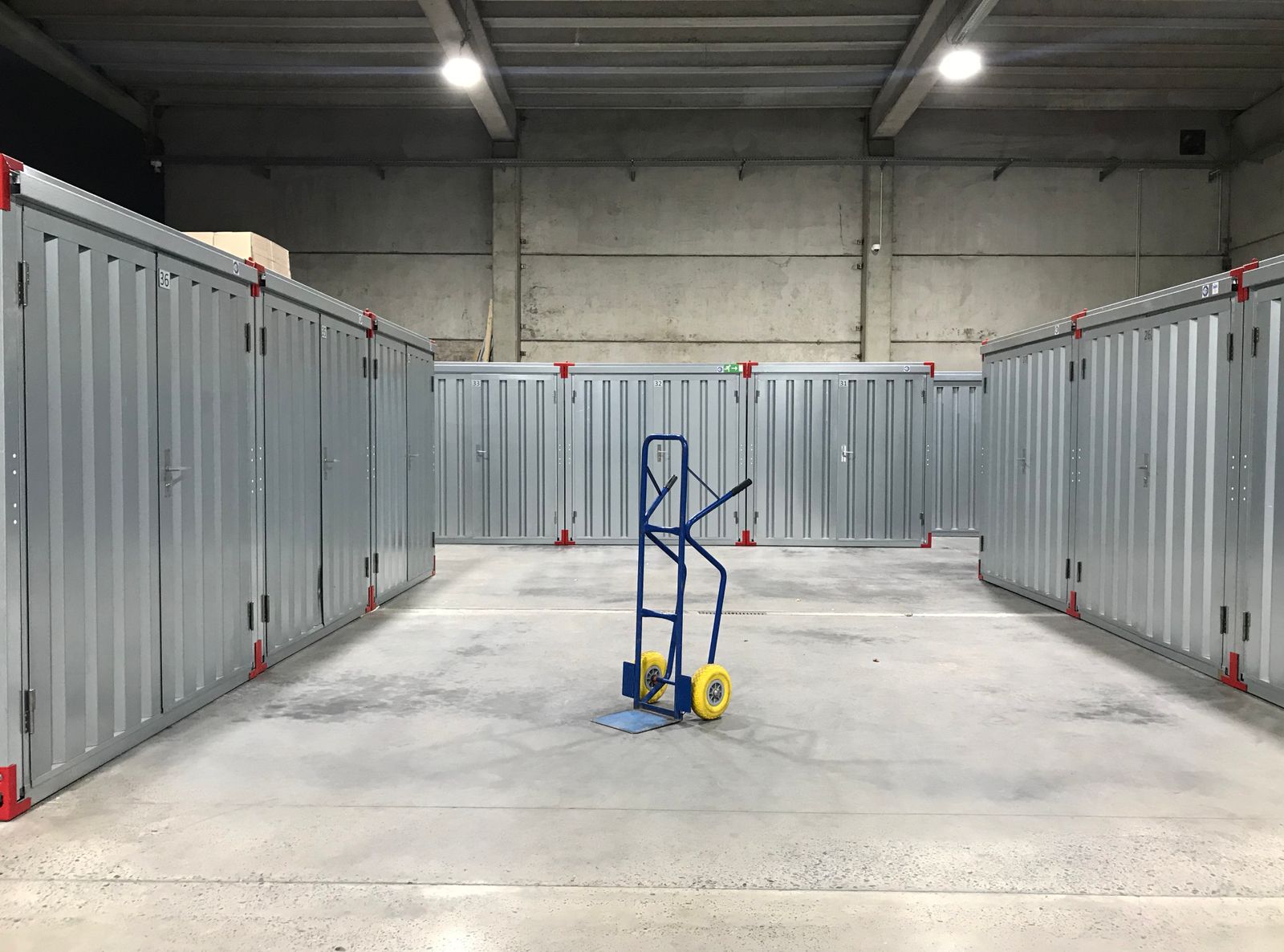
The two prices every Ohio renter meets
The first price is the one on the website, and it is engineered. Move-in specials — half off the first month or two, occasionally a dollar for the first month — are a customer-acquisition cost, and the industry recovers them with a mechanism that has its own acronym: ECRI, existing customer rate increases. Large operators' own filings describe raising rents for tenants who have been in place at least five months, and repeating increases every six to twelve months; trade coverage puts the first increase typically at three to five months after move-in, with further increases following within the first year, and individual jumps that can run from 20 to 75 percent where the move-in rate was deeply discounted. One analysis of a major operator's filing found tenants moving out paying, per square foot, well over half again what tenants moving in paid.
None of this is hidden, exactly. It is simply not on the pricing page. For an Ohio renter on a tight budget, the practical translation is: budget on the street rate, not the special. If the unit is $59 for two months and $118 after, your price is $118, and the special is a coupon. Ask, before you sign, three questions that facilities answer readily when asked directly: What is the full monthly rate after the special ends? When was this facility's last increase for existing tenants, and by how much? Is there an administrative fee, a required insurance or protection charge — typically $10 to $30 a month — and a lock to buy, on top of rent? A one-time admin fee is standard practice at large chains; the point is to see your whole first-month and steady-state totals in writing before the truck is loaded.
This site lists 2,753 mini and self-storage providers among its listings — choice is not the problem in Ohio. The problem is that the cheapest advertised unit and the cheapest year of storage are often different units at different facilities.
Ohio's rules: what the state does and does not do
Two regulatory facts shape an Ohio storage rental, and consumers routinely get both backwards.
First, Ohio does not license self-storage facilities the way it licenses, say, a mover. There is no state storage license to look up, and a facility's legitimacy rests on ordinary business standing, its rental agreement, and Ohio's self-storage lien law, which governs what an operator may do when rent goes unpaid — including notice requirements and the eventual sale of a delinquent unit's contents. That makes the rental agreement itself the document that matters: read the lien, late-fee, and rate-increase clauses before you sign, because in an unlicensed trade the contract is most of the protection you have. Consumer complaints about Ohio storage businesses go to the Ohio Attorney General's consumer protection section, which also publishes guidance on rental practices.
Second, do not confuse storage with moving. If the same company is also transporting your household goods within Ohio, that side of the business is regulated: intrastate household-goods movers operate under the Public Utilities Commission of Ohio (PUCO), which handles mover certification and consumer complaints about moves. A company can be a perfectly lawful storage operator and an uncertified mover at the same time. Check each service against its own regulator.
How to check the going rate in your Ohio town
This is the part of the guide to keep. It takes about forty minutes and works in any Ohio market.
Step 1 — Fix the comparison unit. Choose one size — the 10×10 if you are storing a household, a 5×10 for a studio or a room — and one type, standard or climate-controlled. Every quote you collect must be for the same box, or the comparison is fiction.
Step 2 — Collect five street rates within your real radius. Pull advertised rates from at least five facilities within the distance you would actually drive — usually five to eight miles in a metro, further in a small town. Record the post-special monthly rate, not the banner price. Facilities just outside a metro's fashionable suburbs, along the next highway exit out, are routinely cheaper for the same building type; storage is one of the few products where a ten-minute drive reliably buys a discount.
Step 3 — Add the mandatory extras. For each facility, add the admin fee (amortize it over your expected stay), the required insurance or protection charge, and a lock if you must buy one. Now the five numbers are comparable.
Step 4 — Ask the ECRI question. Call your top two facilities and ask when existing tenants last received an increase and what the typical first-year pattern is. A facility that answers plainly is telling you something about itself. A facility that will not answer is also telling you something.
Step 5 — Sanity-check against the yardstick. Compare your local median against the national 10×10 street average of about $119–$120. In most of Ohio, a standard 10×10 priced far above that figure needs a specific explanation — a genuinely central location, full climate control, or a shortage you can verify — and a price far below it needs the Step 4 question asked twice.
| Check | What "good" looks like |
|---|---|
| Post-special rate in writing | The full monthly figure, dated, before you sign |
| Fees | Admin fee, insurance/protection, and lock all itemized |
| Rate increases | A straight answer on timing and typical size |
| Contract | Lien, late-fee, and increase clauses readable in plain language |
| Access | Hours and gate access that match when you actually move |

When the local rate is worth paying
Price investigations end with a temptation to always buy the cheapest unit. Resist it on three specific grounds. Access: a unit you cannot reach outside working hours is a poor bridge during a move, when evenings are when the work happens. Water: in Ohio's thaw season, ask any facility how it handles drainage and whether ground-floor units have ever taken water — a cheap unit that floods in March is the most expensive one in the state. Distance during the stay: if you will visit monthly, the fuel and time on a cross-metro drive will quietly consume a small rate saving within a few months.
Pay the local median, at a facility that answered the increase question straight, with the full rate in writing. In Ohio that strategy reliably lands you below the national average for a better-documented rental — which is the actual bargain this market offers, once you stop comparing banner prices and start comparing years.
Sources
- StorageCafe self-storage price data (Yardi Matrix street rates) — the national average for a standard 10×10 at about $119–$120 a month, an all-sizes average of $135 at about $1.26 per square foot, and a twenty-city range from $98 in Houston and San Antonio to $277 in Los Angeles, $271 in New York City, and $268 in Boston.
- SpareFoot, "Storage 101" booked-price data — average booked prices run well below street rates because marketplace listings skew toward discounted web rates and cheaper markets.
- Public Storage and Extra Space disclosures on existing customer rate increases, via industry analyses — increases generally beginning for tenants in place at least five months and repeating every six to twelve months; trade coverage in Modern Storage Media puts the first increase typically at three to five months, with individual increases of 20 to 75 percent after deep move-in discounts.
- Storage Unit Costs, fees guidance — a one-time administrative fee (for example, $50 at Extra Space Storage), insurance or protection plans of about $10 to $30 a month, a disc lock at $10 to $20, and post-special increases commonly of 5 to 10 percent every 6 to 18 months.
- Public Utilities Commission of Ohio — the state regulator for intrastate household-goods movers and their consumer complaints; Ohio Attorney General consumer protection — the complaint route for Ohio consumer businesses including storage.
Photos: storage unit corridor — photo by David Slaager, https://www.pexels.com/photo/5759145/ ; storage warehouse interior — photo by Tiger Lily, https://www.pexels.com/photo/4483610/
More guides
- How to Hire a Moving Company That Won't Hold Your Furniture HostageMovers › Moving & Storage
- How Much Do Movers Cost? Local vs. Long-Distance Pricing ExplainedMovers › Moving & Storage
- Binding vs. Non-Binding Estimates: The Difference That Decides Your Final BillMovers › Moving & Storage
- Moving Insurance and Valuation: What 'Full Value Protection' Really CoversMovers › Moving & Storage
- Long-Distance Moving: A Start-to-Finish Guide for Household GoodsMovers › Household Goods Moving & Storage
- All Guides & ArticlesBrowse the full guides library