Movers › Mini & Self Storage
Mini and Self Storage in Oregon: Why Prices Differ From the National Average — and How to Check the Local Rate
Dispatch teaches you one thing about storage: nobody rents it when life is going well. They rent it at 4 p.m. on a Friday, in the rain, because the closing slipped, the new place is not ready, and a truck full of a senior couple's furniture has nowhere else to go. In Oregon that call comes with a particular confusion. The national average says a standard unit should cost about $119 a month. Portland quotes come back at $140, $160, sometimes more — and then a facility twenty minutes out offers the same size for under $100. Both prices are real. Understanding why is the difference between a short, fairly priced bridge between homes and a unit that quietly eats a fixed income for a year.
I dispatched in this state. This is how Oregon storage pricing actually works, what the rain does to the maths, and how to check the local rate before your furniture is already behind a roll-up door.

The Oregon benchmark, in dispatch numbers
The comparison size is the 10×10 — 100 square feet, the contents of a one- to two-bedroom home in transition. Nationally, a standard non-climate-controlled 10×10 averages $119 a month, with climate-controlled at $134, on Yardi Matrix figures published through SpareFoot and StorageCafe.
Portland sits well above that line. StorageCafe's October 2026 Portland figures put a standard 10×10 at $136 a month — about 14 percent above the national average, and down 2.2 percent on the year — with a climate-controlled 10×10 at $139. Read that second number again: in Portland, climate control on the benchmark unit costs about $3 a month extra. That tiny gap is an Oregon story in itself, and I will come back to it.
Portland is not Oregon, any more than Denver is Colorado. Within the Portland market itself, StorageCafe's published area street rates for a standard unit ranged from about $82 in Cully and $91 in West Centennial to $121 in South Tabor and $282 in North Central Gresham. That is not a typo or a different product. That is one metro, one unit type, and a more than threefold spread driven by neighbourhood supply. Statewide, smaller Willamette Valley cities and eastern Oregon towns with cheaper land and newer supply generally quote below Portland — but they also fill faster in the summer moving season, because there are fewer of them.
| Place | Standard 10×10 street rate | Against the $119 national average |
|---|---|---|
| United States | $119 | — |
| Portland | $136 | About 14% above |
| Portland, climate-controlled | $139 | About 4% above the $134 national climate average |
| Cully (Portland area) | about $82 for a standard unit | Well below |
| West Centennial (Portland area) | about $91 for a standard unit | Below |
| South Tabor (Portland area) | about $121 for a standard unit | About at the line |
| North Central Gresham | about $282 for a standard unit | More than double |
And one more number dispatchers learn to respect: the advertised rate is not the settled rate. Modelling that follows Portland's street rate through the first increase for existing tenants puts the six-month true average for a 10×10 at roughly $162 a month, against an advertised figure in the low $140s. The gap between the quote and the half-year cost is where most storage complaints are born.
Why Oregon prices sit above the national line
Portland land, Portland rules. Storage is a land business wearing a lock. In a metro where industrial and commercial land is constrained — by the urban growth boundary, by competition from housing and warehousing, and by the simple geography of rivers and hills — facilities in the close-in neighbourhoods price like the scarce thing they are. Drive outward, past the tightest supply, and the same door gets cheaper fast. The Cully-to-Gresham spread is that principle with the gloves off.
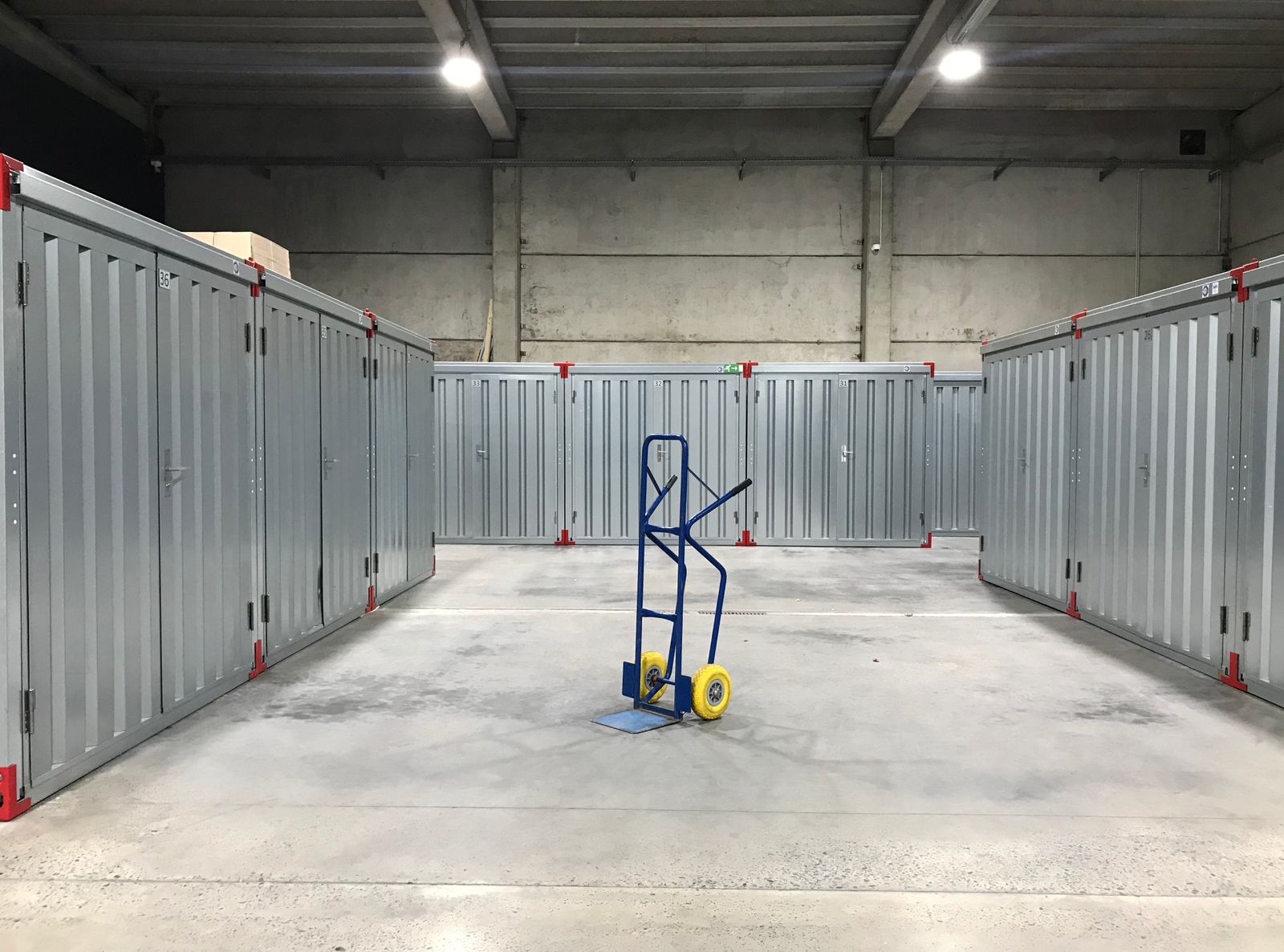
Rain makes interior space the real product. In much of Oregon, the cheapest unit on the lot — an exterior drive-up with a door that faces the weather — is also the riskiest place to keep a downsized household through a Willamette Valley winter. Months of rain find the gaps: door seals, concrete that wicks moisture, boxes that soften from the bottom up. That is why Portland's climate premium has collapsed to about $3 on a 10×10: interior, climate-controlled buildings are not a luxury tier here, they are a large share of the modern supply, and they compete with each other. When the premium is $3, take the interior unit for furniture, books, photographs, textiles and anything with glue, veneer or electronics in it. Save the drive-up for tools, plastic and things rain cannot ruin.
The season is compressed. Oregon moving — and therefore storage demand — bunches into the drier months. From late spring through early autumn, every mover, truck rental and storage facility in the valley is working the same short window, and units near universities and fast-growing suburbs turn over quickly. A senior move that can be timed even a few weeks off the peak will usually find both a better unit and a calmer price than one forced into the busiest weeks of summer. In dispatch, the most expensive sentence in Oregon was always the same: "It has to be this Saturday."
No state cap on storage rent increases. Oregon's well-known rent stabilisation rules are residential tenancy law. They do not apply to self-storage. No Oregon statute caps how much a facility may raise your storage rent; most agreements allow increases on advance notice, commonly 30 days. That single fact should shape how a senior renter chooses: the facility's increase history matters more than its opening offer, because the state will not slow the second price down for you.
Oregon's lien law: the 30-day demand and the day-45 sale
If money gets tight mid-move — and in a senior downsizing, with two properties' costs overlapping, it can — Oregon's Self-Service Storage Facility Act (ORS 87.685 to 87.695) is the rulebook. Its shape is different from most states', and the difference favours the renter who reads early:
- The lien is automatic and broad. Under ORS 87.687, the facility has a possessory lien on everything in the unit — whether or not you own it — for unpaid rent, agreed charges, and the costs of preserving and selling the property. No court judgment is needed.
- The notice can come early; the deadline cannot. A facility may send its notice of foreclosure and sale as soon as you default, by registered, certified or other verified mail, or by email, to your last known address. But that notice must demand payment by a date at least 30 days after the default. A notice demanding full payment in ten days does not match the statute.
- Advertising and sale add roughly two more weeks. If the property is worth more than $1,000, the sale must be advertised once a week for two consecutive weeks, and the sale itself must be at least 15 days after the first advertisement — which puts the earliest lawful sale at about day 45 after default. You can pay and stop the sale up to the moment it starts, and any surplus from a sale is yours to claim.
- Late fees are capped by statute. ORS 87.694 limits a late fee to the greater of $20 or 20 percent of the monthly rent, charged once per month, and the amount and the date it applies must be written in your rental agreement. A late fee that is larger than that, charged twice in a month, or missing from your agreement is challengeable — in writing, citing the section.
- Access denial is contractual, not automatic. A facility can only lock you out during a default if your rental agreement specifically allows it. Check whether yours does before you need to know.
One Oregon mover rule belongs in the same folder. If a moving company — not a storage facility — is holding your goods in transit, intrastate movers here are certified by the Oregon Department of Transportation, may charge only the rates in a tariff filed with and approved by ODOT, and must give written estimates after actually inspecting your goods. Binding estimates are not permitted on Oregon intrastate moves; instead, a final bill more than 10 percent above the estimate is treated as an underestimate ODOT can investigate, and you may defer the excess above estimate-plus-10-percent for 15 days. Complaints about an in-state move go to ODOT's Commerce and Compliance Division at 503-779-9083. In dispatch, the certificate number was the first thing we ever checked on a competitor — and the first thing you should check on anyone who will touch your furniture.
How to check the local rate: the dispatch method
- Price the benchmark, not your guess. Get quotes for a 10×10 standard and a 10×10 interior climate-controlled unit from every facility, even if you think you need a different size. It is the only size every facility prices competitively, and it exposes who is actually expensive.
- Quote one facility outside your neighbourhood. The Portland spread — $82 to $282 inside one metro — means a single extra quote a few miles out is the highest-value phone call in the whole move. If the saving is under 15 percent, stay close; if it is over, take it, because downsizing storage is visited rarely and priced monthly.
- Ask for the increase history, out loud. "When did existing tenants last get an increase, and how much was it?" A facility that answers plainly is telling you how it behaves. One that will only talk about the move-in special is also telling you.
- Do the six-month maths. Multiply honestly: promotional months, then the expected settled rate. In Portland that exercise turns a $136 street rate into something near a $162 average. Compare facilities on the six-month figure, never the first month.
- Visit in the rain if you can. Oregon-specific, and I mean it. A visit on a wet day shows you the pooling at the doors, the state of the seals, whether the corridor floors are dry, and whether boxes already stored there sit directly on concrete. Ten minutes in November weather is worth an hour of a sales tour in July.
- Read three clauses before signing: the late fee (against the $20-or-20-percent cap), the access-denial clause, and the value or insurance statement — Oregon agreements must state whether the owner insures your property, and most do not. Photograph everything you store, keep the inventory at home, and keep the facility's address and your unit number with a family member.
The dispatcher's bottom line
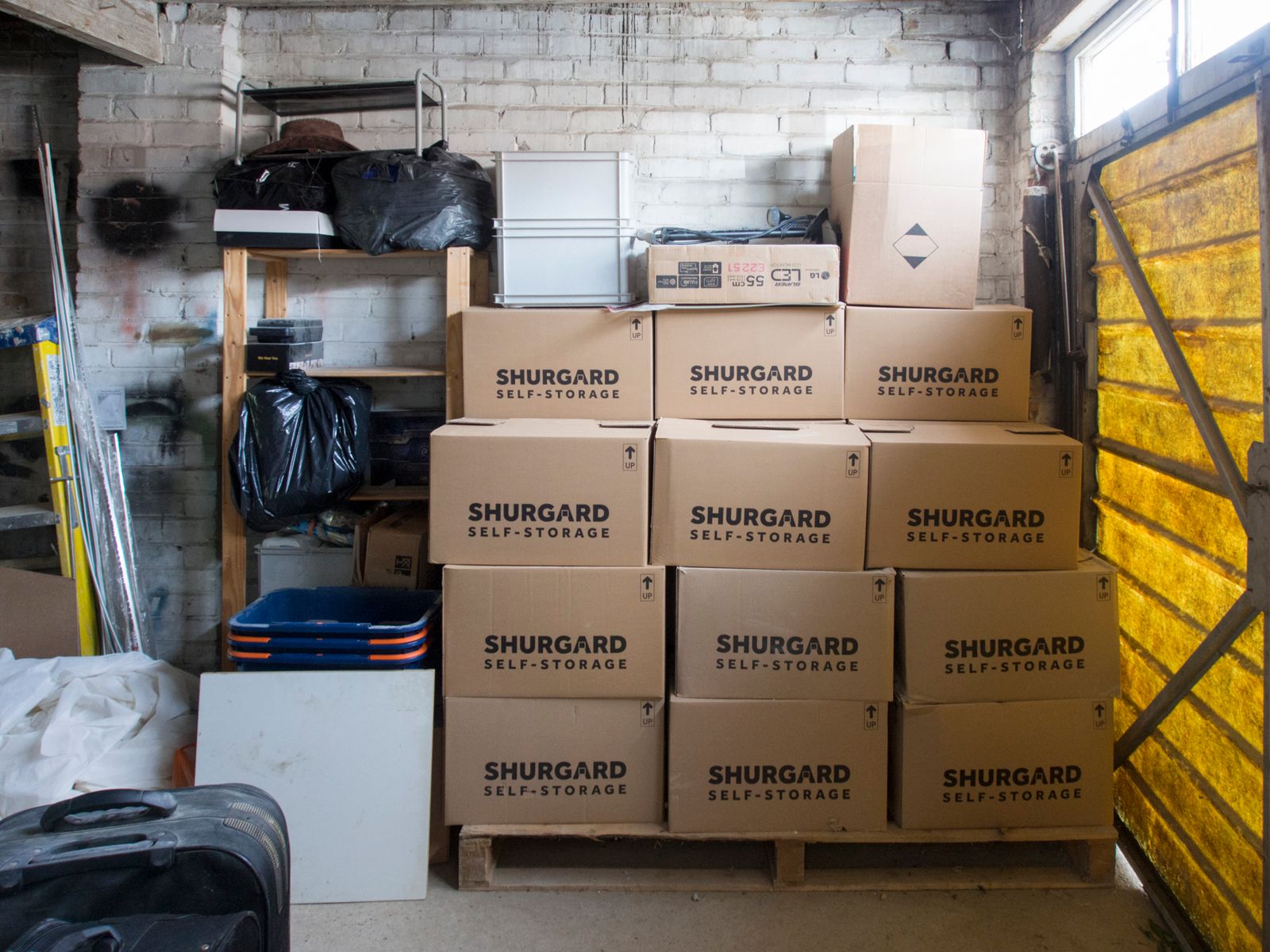
Oregon storage costs more than the national average because Portland land costs more, the dry season is short, and rain quietly converts the cheapest units into the most expensive mistakes. But this is a market with enormous local spread — this site lists 2,753 mini and self storage listings — and spread is the consumer's friend if you do the checking before the truck is loaded. Fix the benchmark size, quote outside your neighbourhood, price the sixth month instead of the first, and know that Oregon law gives you at least 30 days after a default before payment can be demanded and roughly 45 before anything can be sold. Storage booked that way is what it should be for a senior move in this state: a dry, dull, predictable pause between two homes.
Sources
- StorageCafe, Portland self storage market statistics (October 2026) — Portland standard 10×10 at $136/month, down 2.2 percent year over year; climate-controlled 10×10 at $139; area street rates for a standard unit of about $82 in Cully, $91 in West Centennial, $121 in South Tabor and $282 in North Central Gresham (September 2026 area figures).
- SpareFoot, U.S. Self-Storage Industry Statistics, drawing on Yardi Matrix (January 2026) — national average 10×10 at $119/month non-climate-controlled and $134 climate-controlled.
- TrueTrueCost, Portland storage true-cost modelling — advertised 10×10 around $143/month, rising to roughly $186 after the first increase, for a six-month true average of about $162.
- Oregon Self-Service Storage Facility Act, ORS 87.685 to 87.695 — possessory lien on all property in the unit under ORS 87.687; foreclosure notice by verified mail or email demanding payment by a date at least 30 days after default under ORS 87.689; advertisement once a week for two consecutive weeks for property over $1,000 and sale at least 15 days after the first advertisement under ORS 87.691; late fee capped at the greater of $20 or 20 percent of monthly rent, once per month, under ORS 87.694; no Oregon statute caps storage rent increases.
- Oregon Department of Transportation, Commerce and Compliance Division, Household Goods Moving guidance and General Information Bulletin (form 735-9943) — intrastate movers must be ODOT-certified and charge only ODOT-approved tariff rates; estimates are non-binding and must follow an inspection; a final charge more than 10 percent above the estimate is an underestimate ODOT can investigate, with the excess deferrable for 15 days; intrastate complaints at 503-779-9083.
Photographs
- photo by Jan van der Wolf, https://www.pexels.com/photo/38573375/
- photo by David Slaager, https://www.pexels.com/photo/5759145/
- photo by Brett Jordan, https://www.pexels.com/photo/30444797/
More guides
- How to Hire a Moving Company That Won't Hold Your Furniture HostageMovers › Moving & Storage
- How Much Do Movers Cost? Local vs. Long-Distance Pricing ExplainedMovers › Moving & Storage
- Binding vs. Non-Binding Estimates: The Difference That Decides Your Final BillMovers › Moving & Storage
- Moving Insurance and Valuation: What 'Full Value Protection' Really CoversMovers › Moving & Storage
- Long-Distance Moving: A Start-to-Finish Guide for Household GoodsMovers › Household Goods Moving & Storage
- All Guides & ArticlesBrowse the full guides library