Movers › Mini & Self Storage
Mini and Self Storage in Wisconsin: Why Prices Differ From the National Average — and How to Check the Local Rate
Here is the Wisconsin storage paradox in one pair of numbers. Nationally, the average street rate for a standard 10×10 storage unit is about $119 a month, and about $133 for the climate-controlled version. In Wisconsin, the same standard 10×10 averages about $85 a month, with climate control at about $112. That is roughly 22 percent below the national figure one pricing survey cites — real money over a six-month house move, and the opposite of what many families assume when they budget a move using a national calculator.
But "Wisconsin average" is doing a lot of work in that sentence. Milwaukee is not Superior. Madison in August is not Madison in February. A drive-up unit on cheap land outside Green Bay and an interior unit in a converted Milwaukee warehouse are both "self storage," and their prices have almost nothing in common. This site lists 2,753 mini and self storage listings nationally, which tells you the category is vast; it does not tell you what your unit should cost. This guide explains why Wisconsin prices sit where they do, what pushes a specific facility above or below that average, and — most usefully — a short method for checking the true local rate before you sign anything.
The numbers, side by side
Start with the standard unit almost everyone rents first, the 10×10 — roughly a one-car garage, holding the contents of a one- to two-bedroom home:
| Measure | Wisconsin | National |
|---|---|---|
| Standard 10×10, monthly | About $85 | About $119 |
| Climate-controlled 10×10, monthly | About $112 | About $133 |
| Climate premium | About $27 (roughly 32%) | About $14 on that survey's figures |
| Milwaukee 10×10 average | About $89, with listed units from $57 | — |
| Milwaukee 5×5 / 5×10 averages | About $29–$37 / about $52 | About $52 / about $74 |
The sources behind these figures do not agree to the dollar — no storage survey does, because "average" can mean street rate, online rate, or in-place rent — but they agree on the shape. Wisconsin is a below-average-price state, Milwaukee sits a little above the state average rather than far above it, smaller Wisconsin communities sit below it, and the climate-control premium in Wisconsin is large enough to deserve a decision, not a default. Other Wisconsin pricing guides put typical units broadly between $60 and $200 or more a month depending on size and features, with small units around $60–$95 and medium units around $95–$150 before climate add-ons — consistent with the same picture once you mix sizes together.

Why Wisconsin runs cheaper than the country
Land and buildings cost less. Storage is a real-estate business wearing a service costume. Where land is cheaper and older industrial or retail buildings can be converted, operators can profit at rents that would not cover a coastal mortgage. Much of Wisconsin — outside a few tight urban pockets — offers exactly that: plentiful sites along highways and on city edges, and a deep stock of buildings suitable for interior conversions.
Supply is healthy in the metros. Milwaukee and Madison each have dozens of facilities competing within a short drive of most homes. Competition does not just lower the headline rate; it produces the move-in specials, first-month discounts, and online-only prices that pull the effective rate below the posted one. A market with one facility has no reason to run any of those.
Demand is steadier, and less frantic. National storage demand spikes with housing churn. Wisconsin's housing market moves, but it does not churn at Sun Belt speed, and national reports through 2026 describe a sector stabilising after a supply surge, with street rates drifting slightly down rather than up. In a steadier market, operators price to fill units and keep them filled — which favours the renter who shops.
Winter disciplines everyone. A Wisconsin facility earns its year in a climate that punishes empty drive-up units and rewards occupancy. Operators would rather lock in a reliable tenant at $85 through the winter than hold out for $110 and carry a vacant unit into January. That seasonal realism is built into Wisconsin pricing in a way it simply is not in places where demand never sleeps.
Why your quote might still come in high
Below-average state, above-average quote — it happens constantly, for identifiable reasons:
Madison's student calendar. Prices in Madison rise in early August as students arrive for the new semester, and the same pressure hits late spring when they leave and store rather than ship. Renting a Madison unit in August without comparing facilities is paying the semester premium at full price.
Milwaukee's spread is wide. The same 10×10 in Milwaukee is listed anywhere from the high $50s to well above the $89 average depending on neighbourhood, building type, and whether the price you saw was a promotional online rate. The average is a midpoint of a wide market, not a going rate you can assume.
Climate control, decided badly. That roughly $27-a-month Wisconsin premium buys protection against humidity and temperature swings for wood furniture, electronics, instruments, photographs, and documents. For garden tools, plastic bins, and a metal bed frame through one winter, it buys very little. Over a year, the premium is more than $300 — worth it for the right contents, waste for the wrong ones. Wisconsin winters are cold rather than damp in a heated-building sense, but unheated units cycle hard in spring thaw; ask what "climate controlled" actually means at that facility — heated only, or temperature and humidity both managed.
Boat and lake-season pressure up north. Wisconsin's lake culture fills northern facilities with boats every October. If you are storing near lake country in autumn, vehicle and large-unit availability tightens and prices firm up in a way no statewide average will warn you about.
The rate you keep is not the rate you sign. Introductory pricing is the industry's favourite shape: a low first month or half-price opening, then the standard rate, then — at many large operators — a rent increase a few months in. The honest comparison is the total for your whole expected stay, not month one.
How to check the local rate in about twenty minutes
This is the method I wish every family I dispatched for had used:
- Define the exact unit. Size, drive-up or interior, climate or not, ground floor or elevator. Comparisons fail when facilities quote different products.
- Pull five real prices within your actual driving radius. Use facility websites and listing pages — this site lists 2,753 mini and self storage listings, a useful starting map — and record the standard monthly rate, not just the promotion.
- Convert promotions into a stay total. Add up what you would actually pay over your expected months: promo months plus standard months, plus any admin or set-up fee, plus required insurance or protection-plan charges.
- Call the two cheapest credible facilities. Ask three questions: When was the last rent increase for existing tenants, and how often do they happen? Is the online price the price I will be billed in month three? What is included in the quoted figure? Vague answers are data.
- Check the calendar against your town. Madison in August, lake country in October, anywhere at month-end — if your timing is flexible by even two weeks, say so and ask whether it changes availability or price.
- Visit one facility before committing anything valuable. Look at drainage after rain, door seals, lighting, gate access hours, and whether drive-up lanes will be passable and ploughed in February. In Wisconsin, winter access is not a footnote; it is half the product.
The Wisconsin rules behind the rental
Wisconsin's self-service storage law, section 704.90 of the statutes, gives operators a lien on stored property for unpaid rent and charges — and gives you a defined process before anything can be sold. A tenant is in default after rent stays unpaid for seven consecutive days, and an operator may then deny access until what is due is paid. Before a sale, the operator must send the required notices, including a second notice demanding payment within a period not sooner than 14 days after the notice date, advertise the sale in a newspaper of general circulation, and wait at least 15 days after that advertisement before selling. Property worth less than $100 in fair market value may instead be donated, disposed of, or recycled. Sale proceeds beyond the lien do not simply vanish; the balance is reported and delivered under the state's unclaimed-property chapter.
None of that is a reason to fear storage. It is a reason to do three ordinary things: keep your contact details current with the facility so notices actually reach you, name the additional contact person the agreement allows, and never let a unit drift into default over a billing problem you could have fixed with a phone call. The timeline in the statute is measured in weeks, not months — which is exactly why the address on file matters.
What to do with all this, if you are mid-move
If you are a family between houses, storage is usually a bridge, and bridges should be short and cheap. Rent the smaller unit you can stack well rather than the larger one you can toss things into. Skip climate control unless the contents list genuinely needs it. Prefer a facility near the new home rather than the old one — you will visit it more at the unpacking end. And set a calendar reminder for the month your promotional rate ends; that date, not moving day, is when your storage starts costing what it really costs.
Wisconsin storage is cheaper than the national average for structural reasons — land, supply, steadier demand, and winters that reward full buildings. You capture that advantage only if you verify the local rate where you actually live: five real prices, promotions converted into stay totals, two phone calls, and one visit. Do that, and the state's below-average market becomes your below-average bill, in Milwaukee, Madison, or anywhere the snow reaches.
Sources
- StorageCafe, self-storage industry statistics — national average street rate of about $119 a month for a standard 10×10 and about $133 for climate-controlled, with national rent per square foot figures.
- TheHowMuch, storage unit prices in Wisconsin — Wisconsin 10×10 at about $85 standard and $112 climate-controlled, described as about 22 percent below its national comparison figure.
- Public Storage, Milwaukee pricing pages — Milwaukee 10×10 average about $89 with units listed from $57, and size-by-size Milwaukee averages for smaller and larger units.
- Storage Rental of America, Wisconsin storage pricing guide — typical Wisconsin ranges by unit size, climate add-ons, and higher prices in Milwaukee, Madison and Green Bay than in smaller communities.
-
Wisconsin Statutes section 704.90 — the self-service storage lien: default after seven days unpaid, access denial, notice periods of at least 14 days, newspaper advertisement, sale at least 15 days after advertisement, and treatment of property valued under $100.
-
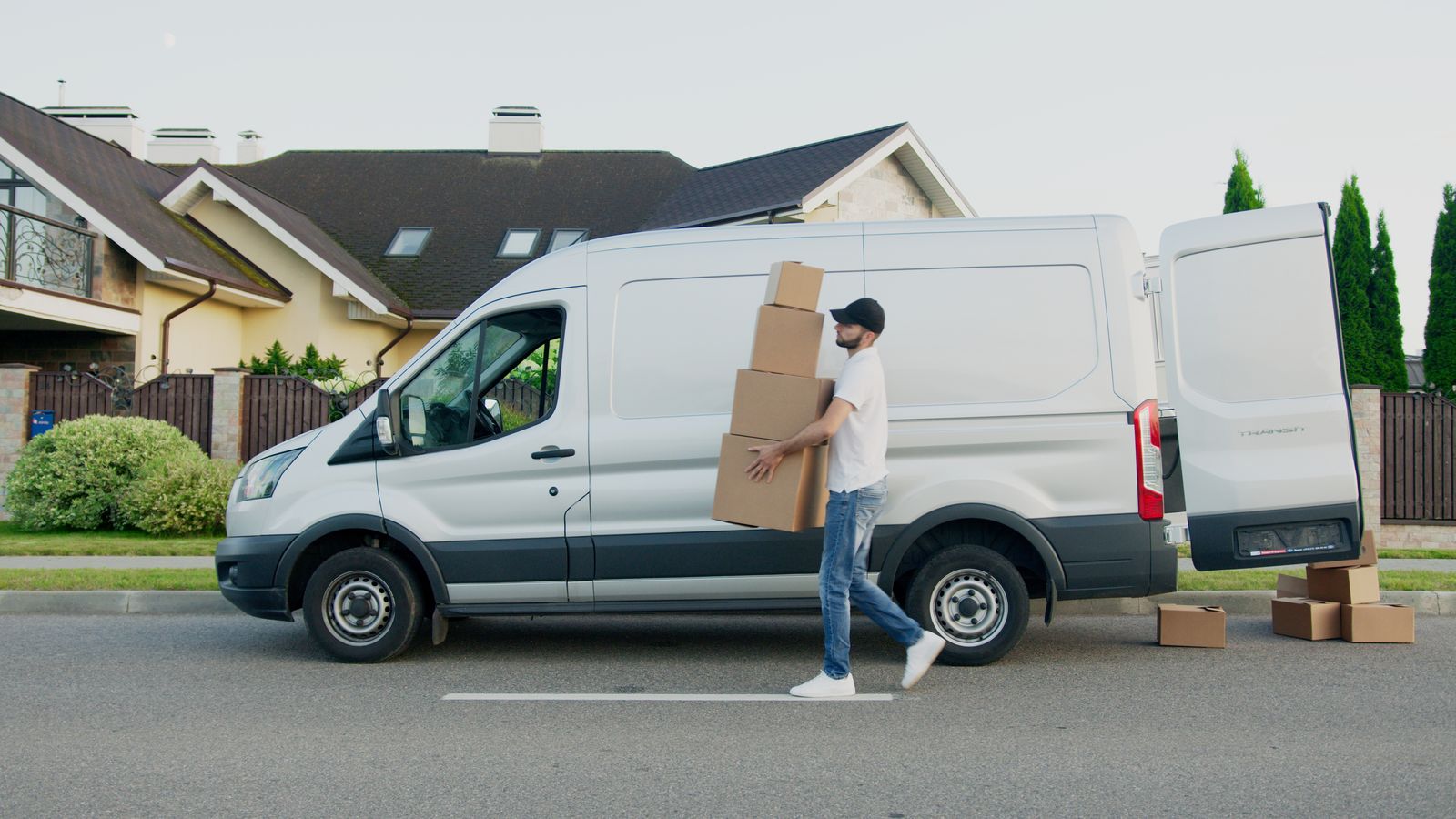
Photo by cottonbro studio, https://www.pexels.com/photo/family-unpacking-after-moving-4569340/
- Photo by Artem Podrez, https://www.pexels.com/photo/man-carrying-boxes-beside-a-van-5025669/
- Photo by Braeson Holland, https://www.pexels.com/photo/a-truck-on-the-road-8994766/
More guides
- How to Hire a Moving Company That Won't Hold Your Furniture HostageMovers › Moving & Storage
- How Much Do Movers Cost? Local vs. Long-Distance Pricing ExplainedMovers › Moving & Storage
- Binding vs. Non-Binding Estimates: The Difference That Decides Your Final BillMovers › Moving & Storage
- Moving Insurance and Valuation: What 'Full Value Protection' Really CoversMovers › Moving & Storage
- Long-Distance Moving: A Start-to-Finish Guide for Household GoodsMovers › Household Goods Moving & Storage
- All Guides & ArticlesBrowse the full guides library