Movers › Mini & Self Storage
Reviews of Mini and Self Storage Providers, Read Properly: Separating Signal From Noise
Every relocation I have coordinated eventually produced the same moment: a family between houses, a gap of six weeks, and a shortlist of storage facilities separated by a few tenths of a star. The instinct is to pick the 4.6 over the 4.3 and move on. That instinct wastes the reviews. A star average is the least informative number on the page — a compression of hundreds of experiences, across years, managers, and ownership changes, into a figure that cannot tell you the one thing you need to know: what will happen to you, with your unit, over your next six months.
Read properly, storage reviews are unusually honest documents, because storage is a long relationship and reviewers report its turning points: the rate increase at month four, the gate that failed on a Sunday, the manager who solved a problem and the one who vanished. This site lists 2,753 mini and self storage providers, and nearly all of them have a review trail. Here is how to mine it — which patterns predict your experience, and which are noise wearing a star rating.
The signal: complaints that repeat with specifics
Rate increases are the industry's signature complaint — so measure them. The most common grievance across storage reviews, from independent facilities to the largest chains, is the post-move-in rate increase: a teaser rate that climbs within a few months, sometimes repeatedly. ConsumerAffairs' profile of Public Storage — 2.1 stars across more than 1,600 reviews — lists "frequent rent increases" as the defining con, and individual reviews there describe long-term tenants pushed from a rate they signed toward double it while new customers were offered the old price. U-Haul's own storage guidance warns shoppers about exactly this pattern and advises asking whether a rate is locked for a set period before signing.
So do not read rate complaints for their anger; read them for their numbers and timing. A review that says "raised my rent" is weather. Three reviews that say "raised about 30 percent at month four" is climate — that is the facility's business model, and it will happen to you on the same schedule. The counter-signal is just as specific: reviews praising a facility for no increase over a year or more, or mentioning a written rate guarantee, are among the most valuable sentences in the entire pile, because they describe the one cost that compounds for as long as you stay.
Access failures are binary and believable. When multiple reviewers independently describe the same broken gate, the keypad that fails in rain, the office that is never staffed during posted hours, or access hours shorter than advertised — believe them. These are not matters of taste; they are mechanical facts a reviewer has no reason to invent in identical detail. Storage trade guidance lists the same cluster as the industry's core operational red flags: billing surprises, access failures, pests and water, unreachable staff, and security lapses. A single mention is an incident. A pattern across months is a maintenance budget, and you are reading its size.
Water, pests, and security incidents are low-frequency, high-weight. One review describing a flooded unit or a break-in does not damn a facility — water finds every building eventually. What damns it is the sequel: reviews that describe how the facility responded. Did they notify tenants, move belongings, document damage? Or did tenants discover it themselves, weeks later? Storage is a product you buy precisely for the bad day. Reviews of the bad day are the product review. Weight them accordingly — and weight a facility's response, when it posts one, even more: a specific, non-defensive reply naming what was fixed is evidence of a functioning operator. Silence, or a copy-pasted apology under forty identical complaints, is also evidence.
Management changes are plot twists — date everything. Storage facilities change owners and managers, and the reviews change character when they do. Reviewers often narrate it directly: the RV-storage customer whose multi-year tenancy soured "shortly after the transition" to a new owner in the summer of 2026 is describing two different facilities under one name. This is why recency is not a tiebreaker but a filter: reviews from the last six to twelve months describe the operation you will actually rent from, and a glowing average built on a previous regime is a historical document. Read the timeline, not the total.
The noise: patterns that mean less than they look
The star average itself. A 4.6 built on thirty reviews of move-in week — when staff are attentive and the teaser rate is in force — tells you less than a 4.2 built on three hundred reviews spanning years of tenancy. Volume and timespan beat altitude. One widely used benchmark treats 4.5 stars across 50 or more reviews, consistent across platforms, as a quality marker; the operative words are 50 or more and across platforms, not the 4.5.
Move-in reviews generally. The industry's happiest customers are its newest, which skews every facility's recent-review stream positive in exactly the way that hides the month-four rate increase. When you sort by newest, you are reading the honeymoon. Sort also by lowest, and by longest — the platforms that let you filter for long reviews are doing you a favor, because detail correlates with tenancy length, and tenancy length is where the truth about storage lives.
Single-issue hurricanes. A facility's page will sometimes show a burst of one-star reviews in a single week: a local news story, a dispute that mobilized a family, a competitor. Check the dates. Ten one-stars in six days describing one event is one data point, not ten. Conversely, a slow drip of similar complaints across two years cannot be explained away as an event at all.
Vague praise and vague rage. "Great facility!" and "Worst place ever" carry the same information: none. The reviews worth your time name things — a dollar figure, a month count, a gate, a manager, a policy. Specificity is the reviewer's credential. A page where the five-star reviews are specific ("no increase in 14 months, manager called me when the lock looked tampered with") is a genuinely strong signal; a page where only the complaints are specific is telling you something too.
Cross-platform mirages. The same facility can sit at different averages on Google, Yelp, and complaint boards because the platforms collect different populations — complaint boards collect the aggrieved by design, which is why a chain can hold ordinary ratings on maps and a 2.1 on a complaints site simultaneously. Neither is lying. Use the complaint boards for what they are good at — cataloguing failure modes and testing whether the company resolves them (a resolved-complaint rate above roughly 80 percent is a reasonable quality marker) — and use the broad platforms for the overall texture.
| Review pattern | Signal or noise | What to do with it |
|---|---|---|
| Repeated rate-increase complaints with amounts and timing | Signal — it is the business model | Assume the same schedule applies to you; ask about rate locks |
| Multiple identical access/gate/staffing failures | Signal — maintenance reality | Believe it; visit at the hour you would actually come |
| A bad-day story (flood, break-in) with a documented response | Signal — the product working or failing | Weight the response more than the incident |
| Praise naming no increases over 12+ months | Signal — rare and valuable | Move this facility up the list |
| High average on few, recent, move-in reviews | Noise | Discount; look for long-tenancy reviews |
| A one-week burst of one-star reviews | Mostly noise — one event | Count it once, then look for the underlying pattern |
| Vague praise or rage, no specifics | Noise | Skip; read only reviews that name things |
| Low score on a complaints-only platform | Context, not verdict | Use it to catalogue failure modes and resolution rates |
What the facility's replies tell you
There is a second author on every review page: the business itself. Facilities that respond to reviews leave a parallel record, and it is worth reading as deliberately as the complaints. Look first at coverage — does the operator reply to criticism at all, or only to five-star praise? Selective gratitude is a posture, not a service culture. Look next at substance. A reply that names the specific issue, states what was changed, and invites the reviewer to verify it ("the gate motor was replaced in June; here is the office number if it fails again") is an operator documenting a fix in public, where lying about it would be quickly exposed. A reply that apologizes in identical language under a billing complaint, a pest complaint, and a break-in complaint is a reputation-management subscription, and the facility underneath it may be entirely unmanaged.
Finally, look at what the replies argue with. Operators who use responses to dispute reviewers' honesty — rather than to address the gate, the rate, or the water — are showing you how your own complaint will be handled if you ever have to file one. In a business where the product is a promise kept over months, the replies are the closest thing to a preview of the complaint process, and the complaint process is the part of the service you most hope never to test and most need to trust.
A thirty-minute method
Put it together and the shortlist exercise looks like this. For each candidate facility: read the ten most recent reviews, then the ten most detailed negative ones, then search the page for the words increase, gate, access, water, and manager. Note the rate-increase schedule if one emerges. Check whether the negatives cluster before or after any ownership or management change reviewers mention. Then take the two or three specific fears the reviews have given you — not generic questions, those fears — and put them to the facility before you sign: How often have rates risen here in the past year, and will you put a lock period in writing? What are the real access hours? What happened with the flooding the March review described?
A facility that answers specifics with specifics has passed the only review that finally matters: yours. The 2,753 providers on this site will generate more reviews while you deliberate. The skill is not finding a facility with no complaints — in a business built on teaser rates and month-four increases, that facility's reviews are simply too few or too new to trust. The skill is finding the one whose complaints you have already read, priced, and decided you can live with.
Sources
- ConsumerAffairs, Public Storage reviews — a 2.1-star average across 1,600+ reviews, with frequent rent increases as the defining complaint pattern.
- U-Haul, "4 Important Things to Consider When Renting a Storage Unit" — teaser-rate and rate-increase warnings, and the value of a written price lock.
- Vail Airport Storage, "Storage Facility Reviews and Rating Systems Explained" — rating benchmarks, recency weighting, red-flag patterns, and BBB complaint resolution rates.
- Self Store USA, "The 5 Biggest Self-Storage Issues" — the industry's core complaint categories: price increases, hidden fees, security, maintenance, and access.
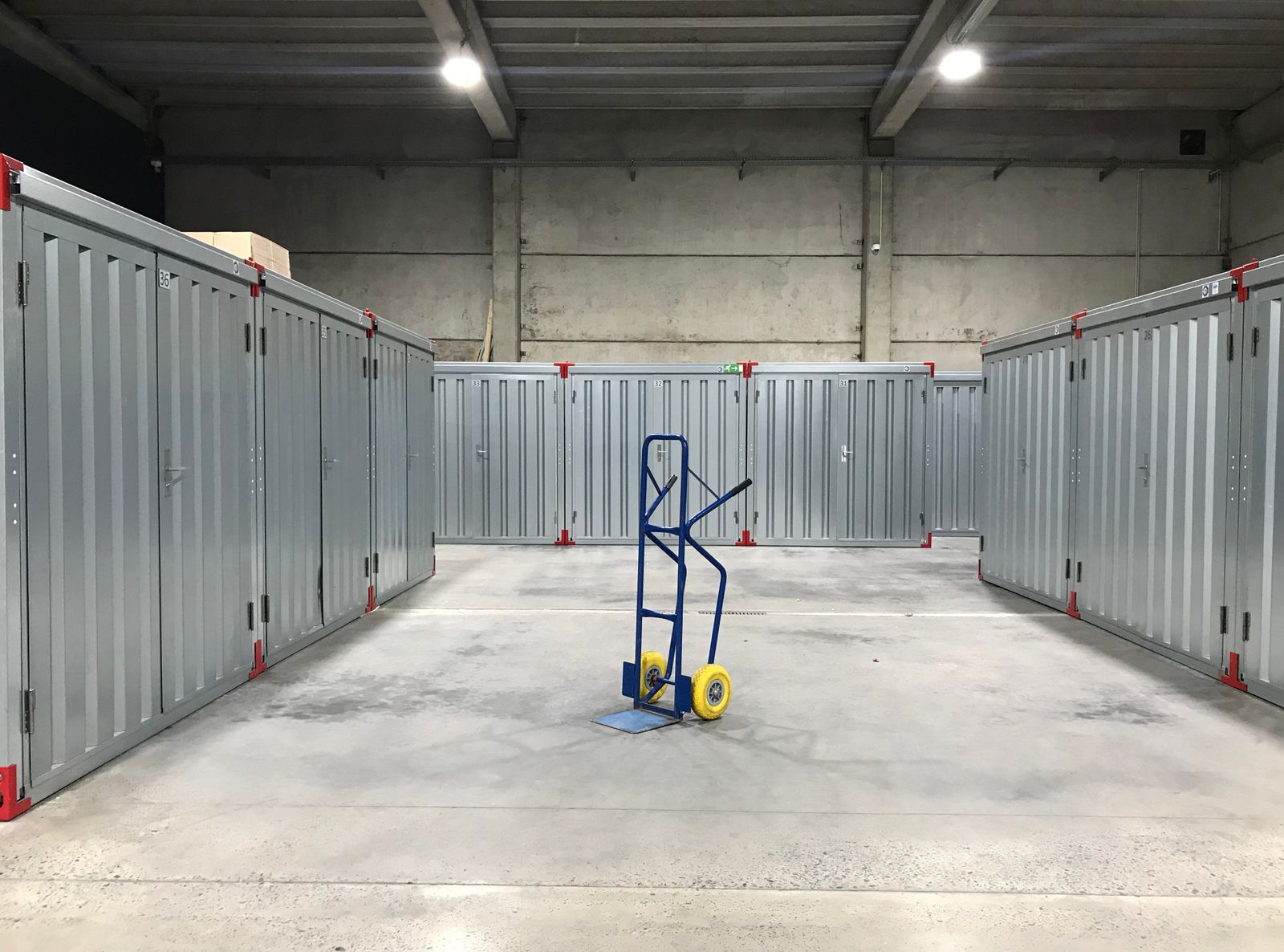
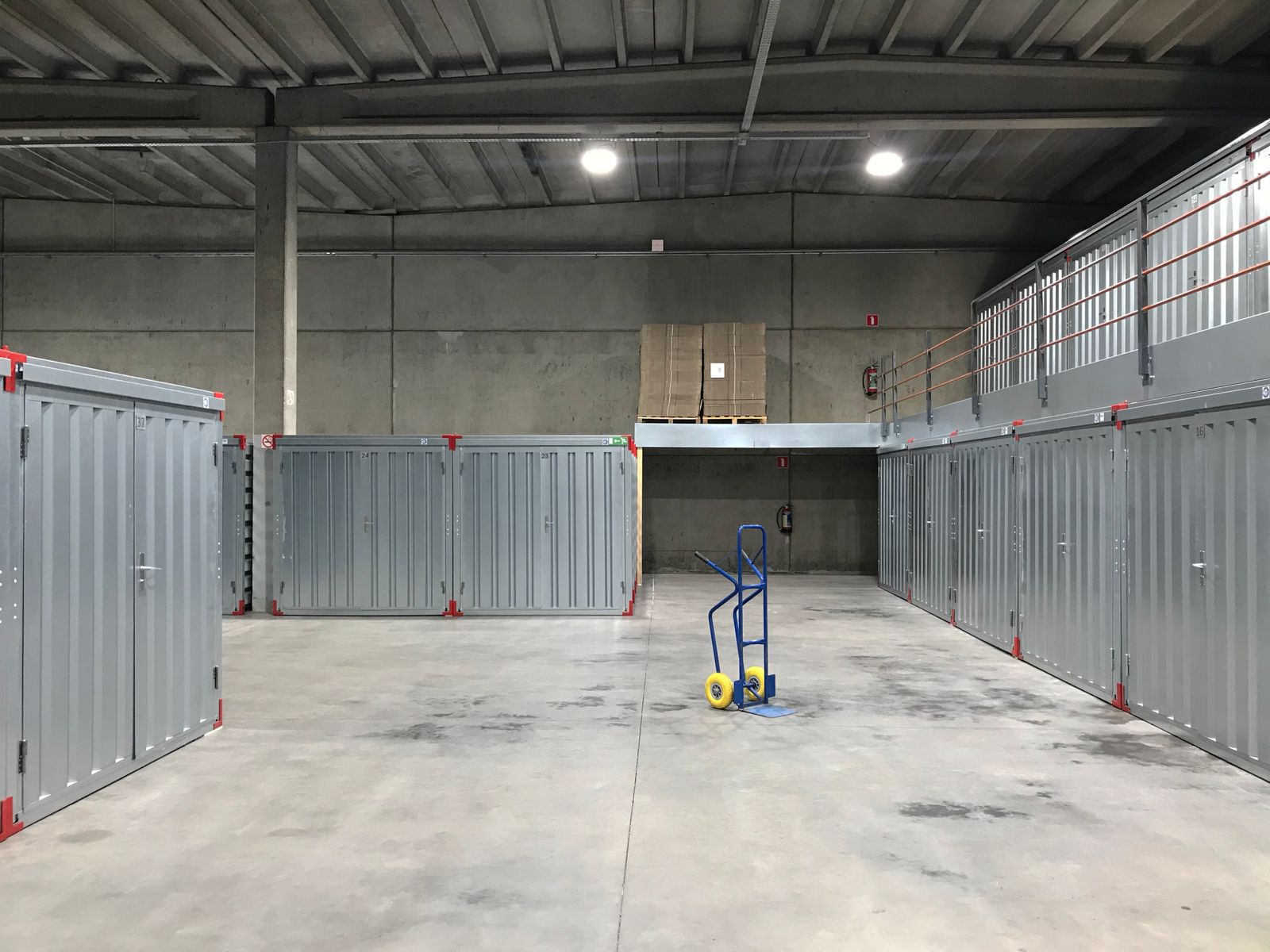
Photos: storage units with a hand truck — photo by David Slaager, https://www.pexels.com/photo/5759145/ ; indoor storage corridor — photo by David Slaager, https://www.pexels.com/photo/5759147/
More guides
- How to Hire a Moving Company That Won't Hold Your Furniture HostageMovers › Moving & Storage
- How Much Do Movers Cost? Local vs. Long-Distance Pricing ExplainedMovers › Moving & Storage
- Binding vs. Non-Binding Estimates: The Difference That Decides Your Final BillMovers › Moving & Storage
- Moving Insurance and Valuation: What 'Full Value Protection' Really CoversMovers › Moving & Storage
- Long-Distance Moving: A Start-to-Finish Guide for Household GoodsMovers › Household Goods Moving & Storage
- All Guides & ArticlesBrowse the full guides library