Movers › Moving Companies
Moving Companies in a Small Town or Rural Area: Fewer Choices, Different Math, Better Tactics
In a city, hiring a moving company is a buyer's market with a website. A dozen firms quote against each other, reviews run into the thousands, and if one crew cancels, another can be there by noon. In a small town, the market is one or two local companies, a regional firm that serves your county on certain days, and — arriving by search result — national brokers who own no trucks at all. The complaints I investigate from rural customers rarely say the movers were bad. They say the price logic was never explained: the clock that started before the truck arrived, the minimum that turned a two-hour job into four billed hours, the travel charge that cost more than the loading.
This site lists 1,770 moving companies, but a rural customer's real shortlist is the handful willing to drive to their road. This guide is about the math that governs that shortlist — travel time, minimums, service days and backhauls — and the tactics that get a fair price inside it, for people moving on a tight budget.

How local movers charge, before the countryside gets involved
Local moving — generally a move within the same state, often under 100 miles, done in a day — is priced by time, not weight or distance. Published rate surveys converge on a familiar band: about $100 to $200 an hour for two movers and a truck, $150 to $250 for three movers, $200 to $350 for four, with each additional mover adding roughly $50 to $80 an hour. Most companies bill a minimum of two to three hours, some four, so a small job has a floor price of a few hundred dollars before anything else is added. Typical totals follow the hours: a studio or one-bedroom takes two to four hours, a two-bedroom three to six, a three-bedroom five to nine or more.
Billing models differ in a way that matters enormously outside a metro, so learn the three clocks:
- On-site billing charges for loading and unloading time only.
- Door-to-door billing runs from arrival at the old home to completion at the new one, including the drive between them.
- Travel or dispatch billing adds the crew's journey from the company's base to you, and sometimes back — as billed time at the crew's hourly rate, or as a flat travel fee calculated from your addresses.
In a city, the three clocks differ by minutes. When the company's yard is 45 miles from your farmhouse, they differ by hundreds of dollars, and a quote that does not say which clock it runs is not yet a quote.
The rural line items, named
Travel time is the big one. A regional firm serving your county from a town an hour away must get a crew and a truck to you and home again. Honest firms price this openly: a flat travel fee based on time and distance, or travel billed at the hourly rate, or — in the version to watch for — a service area in which your address sits in a dearer zone. All three are legitimate. The complaint-file version is the travel charge that appears first on the final invoice. Ask for it as a number, in the quote, and compare quotes on the total for your job, never on the hourly rate alone: a firm at $180 an hour based twenty minutes away will usually beat a firm at $140 an hour based ninety minutes away, once travel is billed, and the cheaper-looking rate wins only in the advertisement.
Minimums bite harder at distance. A two- to four-hour minimum is a rounding error on a full-day city move. On a small rural job — a one-bedroom flat, a partial household, moving a parent's belongings into storage nearby — the minimum is the price, and travel may or may not count toward it (one published Boston tariff, to take a city example of the mechanism, counts travel time inside its three-hour minimum; other firms bill it on top). Ask whether travel counts toward the minimum. On a small job, that single answer can halve or double the bill.
Service days are a rural institution. Many regional movers do not serve every county every day. They run routes — your area on Tuesdays and Fridays, say — because a truck that drives out full and comes back empty needs its jobs clustered to make the day pay. This is not a deficiency; it is how rural service exists at all. But it means your move date may be chosen from their calendar, not yours, and that a missed slot can mean a week's wait at exactly the moment a lease or a closing fixes your date. Book earlier than city advice suggests, get the date confirmed in writing, and ask what happens — in dollars and in days — if the day slips on their side.
| Rural cost element | How it is usually charged | The question that exposes it |
|---|---|---|
| Travel from the mover's base to you | Flat travel fee, or time at the crew's hourly rate, or a higher zone rate | "What is the travel charge to my address, as a number?" |
| The minimum | 2–4 billed hours; travel may or may not count toward it | "Does travel time count toward the minimum?" |
| The drive between your old and new homes | Inside door-to-door billing, or as mileage/time on longer local moves | "When does the clock start, and when does it stop?" |
| A second trip because the truck filled | A second load at continuing hourly rates, plus the return drive | "Is one trip guaranteed for this inventory — and what if it is not?" |
| Waiting: keys, closings, access not ready | Continuing hourly billing while the crew stands | "How is waiting billed, and what stops the clock?" |
Scarcity changes how you vet, too
With one or two local options, the city ritual of collecting five quotes and reading five hundred reviews does not survive contact with the map. What replaces it:
Reputation travels by mouth, and it is checkable. In a small market, a mover's real review page is the hardware store counter, the estate agent, the storage facility office. Ask them. A company that has moved half the county carries a record you can verify in an afternoon of phone calls, and a company that has wronged half the county cannot hide behind a fresh website. Still do the formal checks — a real local mover has the state or federal authority their kind of move requires, insurance they can show you, and a physical address that exists — because the rural scam pattern is not the local firm at all. It is the distant broker who advertises into your search results, quotes low without seeing your home or your road, takes a deposit, and then finds — or fails to find — an actual carrier at the real price later. The local firm's higher, explained quote is frequently the honest document in that comparison.
The survey is where rural quotes are won. A mover who prices your job from a form may never have reckoned with your lane, your bridge, your low branches, the turn their truck cannot make. Good rural firms ask about access unprompted, because they have paid for that lesson before. Help them: send photographs of the approach, the parking place and the tightest turn, state the distance from truck to door at both ends, and list the inventory completely — the second trip in the table above is almost always born from an inventory that grew between the quote and the day.
Flexibility is your discount currency. The single most valuable thing a rural customer owns is a movable date. A mover with a truck already routed to your area on Thursday, or returning empty past your road on Friday, can price your job against miles they are driving anyway. Say your window out loud — "any day that week, and I can be ready with a day's notice" — and ask directly whether a backhaul or a shared day improves the price. City customers cannot offer this. You can, and in a thin market it is worth more than haggling over the hourly rate.
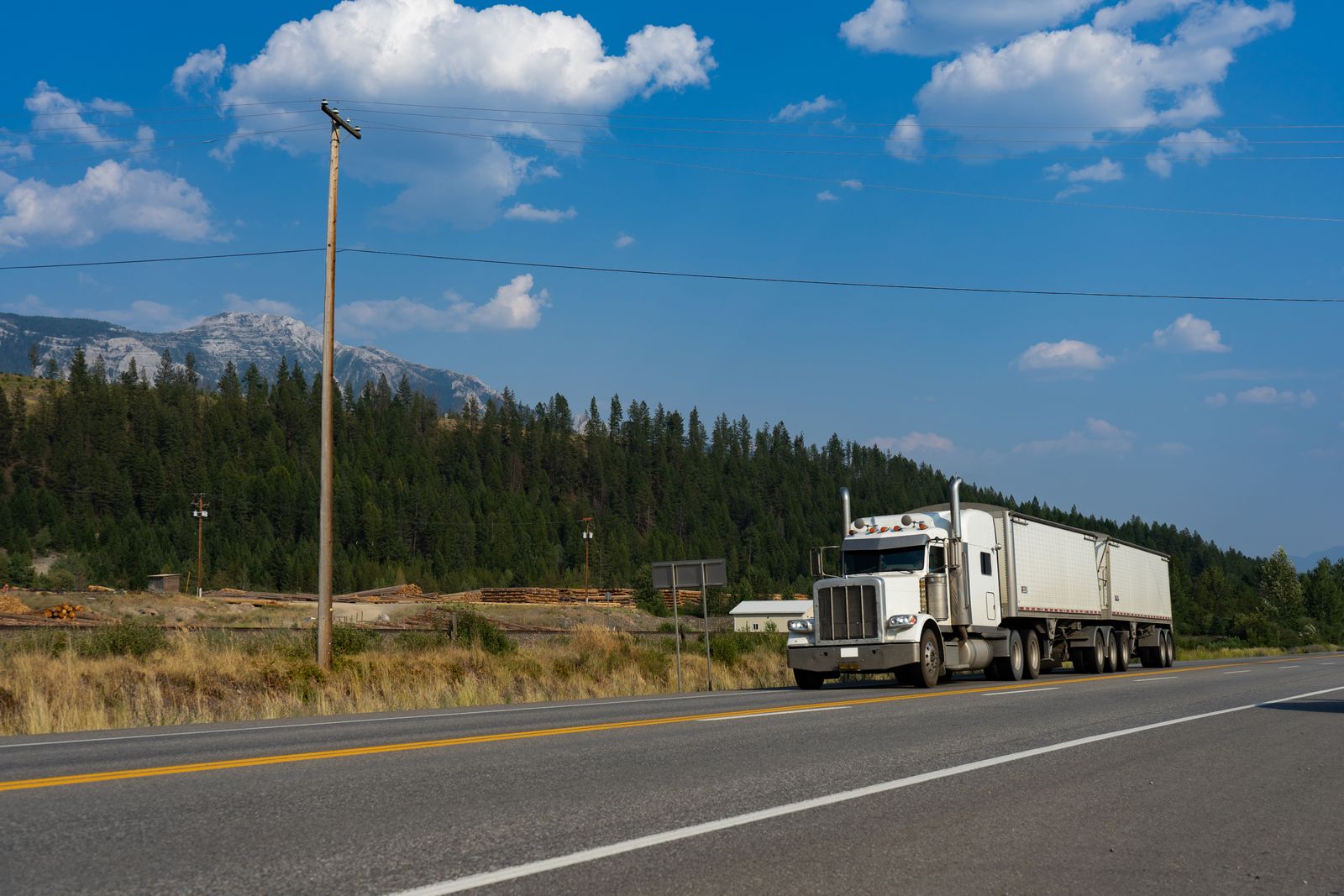
Doing part of it yourself is a rural tradition, not a failure
In thin markets, the sensible answer is often a hybrid the city rarely needs: the local crew for the heavy half-day, your own truck or trailer for the rest; labour-only help to load a rental you drive; or the mover for the old house and family hands at the new one. Labour-only crews charge less per hour than a crew with a truck — published guides put them around $60 to $80 an hour — because the truck, and its travel economics, are yours. Price the hybrid honestly, including your rental's mileage and your own day's work, and it wins for small, short moves. For a full household over a long rural distance, it usually loses to a single professional trip — which is the same lesson, from the other side: count everything, including yourself.
Red flags with a rural accent
- A quote far below the local firms, from a company that cannot name its own yard's town. Distance is a cost; a price that ignores it will find it later, on your bill or in a cancellation.
- A large deposit demanded before any survey, especially by phone or card to a company with no premises you could drive to.
- No answer on the clock questions. A firm that will not say when billing starts, what travel costs, or whether travel meets the minimum is not being casual. It is keeping the expensive parts unwritten.
- "We serve your area daily" from a firm based three counties away, at a city price, with no travel charge. One of those three claims will quietly stop being true.
The fair-price playbook, in one pass
Get the local firm's quote and one regional quote, both as totals for your stated inventory, your addresses and your date window, with travel, minimum and clock rules written on them. Offer your flexibility explicitly and ask what it buys. Verify authority and insurance, ask two local references you can actually call, and put the access photographs in the mover's hands before they price the day. Then choose the quote whose arithmetic you can follow to the end. In a small town, that is what a fair price looks like: not the lowest number, but the number with nothing left to discover.
This site lists 1,214 moving companies and equipment listings alongside the 1,770 moving companies, and for a rural move the equipment listings matter too — the rental counter in the next town is part of your market, whether you end up hiring the crew, the truck, or only the dollies. Map all of it, price all of it as totals, and the thin market stops being a trap. It becomes what it has always been for the people who live in it: a small number of known options, dealt with in the open.
Sources
- FreightWaves Checkpoint, Average Hourly Rate for Local Movers — two movers and a truck at $100–$200 an hour, three movers at $150–$250, four at $200–$350, and the on-site, door-to-door and travel-time billing models.
- Coastal Moving Services, How Much Do Movers Charge Per Hour — two movers and a truck at $100–$200 an hour in 2026, $50–$80 for each additional mover, two- to three-hour minimums, and typical job totals by hours.
- Lucky Mule Moving, Local Moving — hourly pricing plus a one-time travel fee calculated from the pickup and drop-off addresses, with a two-hour minimum.
- Born to Move, Boston Hourly Rates — a published tariff example in which the three-hour minimum includes travel time, billed at the crew's hourly rate.
- SpareFoot and Yelp cost guides — local move totals by home size, labour-only help at about $60–$80 an hour, and the under-100-miles working definition of a local move.
Photo by Artem Podrez, https://www.pexels.com/photo/man-carrying-boxes-beside-a-van-5025669/ Photo by Braeson Holland, https://www.pexels.com/photo/a-truck-on-the-road-8994766/ Photo by Curtis Adams, https://www.pexels.com/photo/8031882/
More guides
- How to Hire a Moving Company That Won't Hold Your Furniture HostageMovers › Moving & Storage
- How Much Do Movers Cost? Local vs. Long-Distance Pricing ExplainedMovers › Moving & Storage
- Binding vs. Non-Binding Estimates: The Difference That Decides Your Final BillMovers › Moving & Storage
- Moving Insurance and Valuation: What 'Full Value Protection' Really CoversMovers › Moving & Storage
- Long-Distance Moving: A Start-to-Finish Guide for Household GoodsMovers › Household Goods Moving & Storage
- All Guides & ArticlesBrowse the full guides library