Movers › Moving Equipment & Supplies Rental
Moving Equipment and Supplies Rental for Renters: What You Can Arrange, What Needs Permission and What the Landlord Covers
Most moving complaints I read are about price. The renter complaints are different. They are about permission. A tenant rents a portable container and the building manager orders it off the lot. A tenant books a freight elevator that was never theirs to book. A tenant drags an appliance dolly up a shared stairwell, gouges the wall on the landing, and discovers — at deposit time, weeks later — that the gouge, the container and the elevator were all the same argument, and they lost it on paper before moving day began.
Renting equipment is the easy part. This site lists 5,379 moving equipment and supplies rental listings, and most of them will happily rent you a dolly by lunchtime. What nobody at the rental counter can tell you is what your lease, your building and your landlord allow you to do with it. That is the part this guide covers: what a renter can arrange alone, what needs written permission first, and what is legally the landlord's cost, not yours.
What you can arrange on your own, no permission needed
If it rolls, folds, wraps or carries — and it never attaches to the building, blocks a shared space or touches a fixture — it is almost always yours to arrange.
Dollies and hand trucks. A utility dolly for boxes, a flat four-wheel furniture dolly for dressers and sofas, and an appliance dolly for the heavy, awkward pieces. These are rented by the day, returned the same way, and leave no trace when they are used properly. Published rental comparisons put a utility or furniture dolly at about $7 a day for a local rental and $12 for a one-way rental, and an appliance dolly at about $10 local and $15 one-way — small money against the cost of one dropped bookcase.
Furniture pads and blankets. Rented by the half dozen, at about $5 per half dozen per day locally. Rent more than you think you need. Pads are what stand between your furniture and the walls of a stairwell you do not own, and in a rental, protecting the building is protecting your deposit.
Boxes, tape, mattress bags and straps. Consumable supplies are bought, not rented, and no lease on earth regulates your tape. The one renter-specific note: buy mattress bags even for a short move. Shared hallways, shared elevators and shared loading areas are dirty in ways your own hallway never was.
A truck, for the hours you booked it. Renting the vehicle itself needs no landlord's blessing. Where the truck may stand while you load it is another question entirely, and it belongs in the next section.
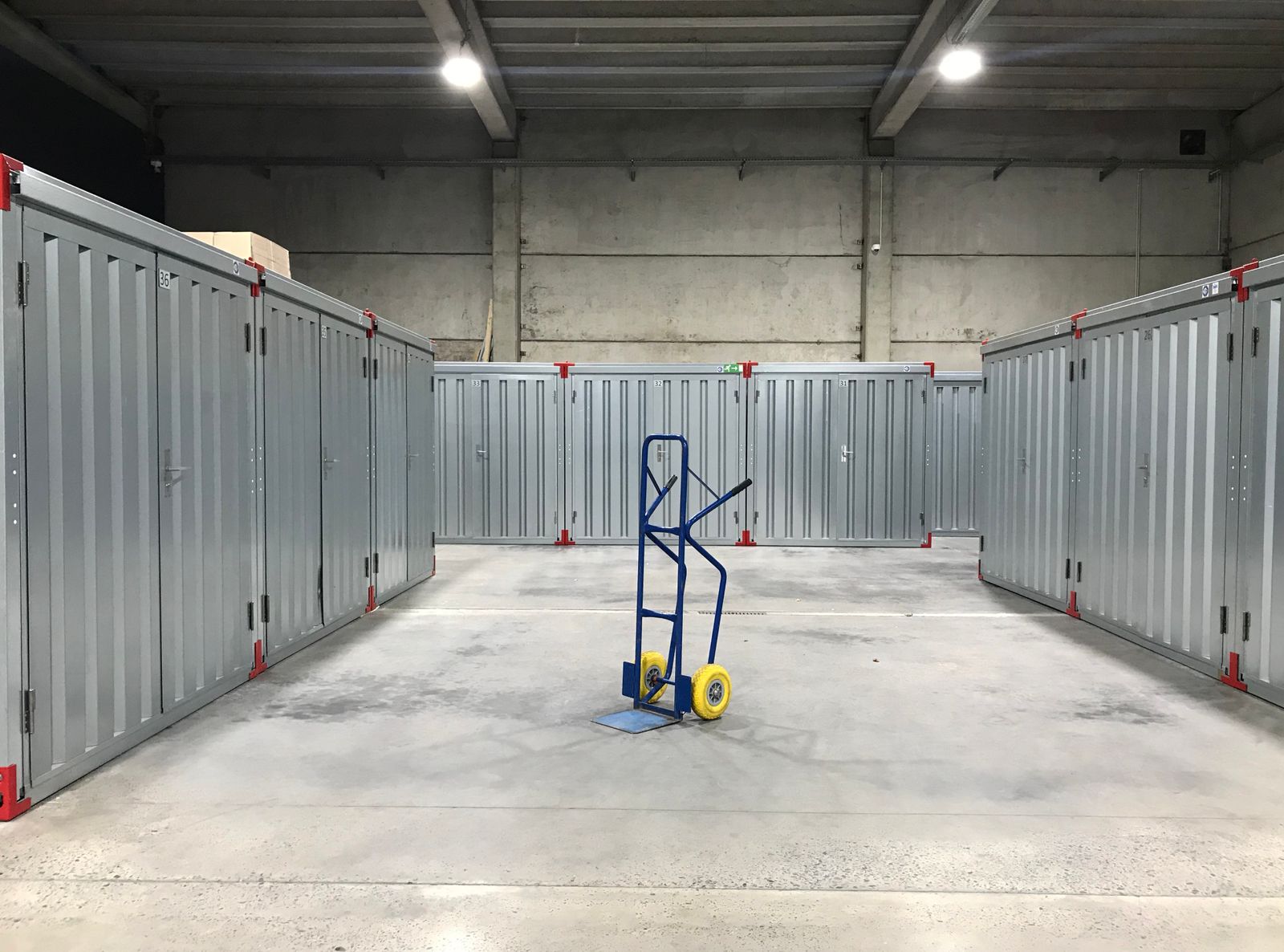
What the equipment actually costs
| Equipment | Typical local daily price | One-way / notes |
|---|---|---|
| Utility dolly (hand truck) | $7 | $12 one-way; big-box rental counters charge more, around $25 |
| Furniture dolly (four-wheel) | $7 | $12 one-way; around $15 at big-box counters |
| Appliance dolly | $10 | $15 one-way; around $30 at big-box counters |
| Furniture pads | $5 per half dozen | $6 per half dozen one-way; some big-box stores do not rent pads at all |
Two lessons hide in that table. First, the specialist rental counter is usually cheaper than the big-box store for the same dolly — the appliance dolly that rents for $10 in one place rents for $30 in another. Second, none of these numbers is the expensive part of a rental move. The expensive part is damage, and damage is a permission and preparation problem, not a rental problem.
What needs permission — in writing, before moving day
The elevator. In any building with a managed elevator, assume it must be reserved, padded and scheduled, and that only a tenant in good standing following the building's process can reserve it. Buildings commonly require the reservation days ahead, restrict moves to certain hours, and require the crew — even a crew of you and two friends — to use a service entrance. Show up with a rented dolly and no elevator booking on a Saturday when another tenant has it reserved, and your move does not start late. It does not start.
The loading area, the curb and the driveway. A truck, trailer or portable container has to stand somewhere, and in a rental that somewhere is rarely yours to grant. Apartment lots, assigned parking, homeowners-association streets and city curbs all have an owner, and a container that sits for three days needs that owner's explicit approval — sometimes a city permit as well. Get it in writing, with dates. "The manager said it was probably fine" is the sentence that precedes a towing bill.
Anything that touches a fixture. Disconnecting a washer, dryer or refrigerator that the landlord owns, capping a gas line, removing a door from its hinges to fit a sofa, or taking down a mounted item is work on the landlord's property. Ask first, in writing, and let the landlord decide who does it. If a landlord-owned appliance is disconnected wrongly and a supply line leaks overnight, the argument about whose cost that is will not go the tenant's way.
Floor and wall protection in common areas. Many buildings require it outright — runners in the hallway, pads in the elevator, corner protection — and some specify who supplies it. Where the building is silent, protect anyway, and photograph the hallway, elevator and stairwell, with timestamps, before the first box moves and after the last one. Those photographs are your evidence that the scuff on the landing was there in March.
A certificate of insurance, if the building asks. Larger managed buildings routinely require movers — including, sometimes, rental arrangements where a company delivers equipment or a container — to name the building on a certificate of insurance. You cannot produce one for a do-it-yourself move, which is exactly why some buildings restrict DIY moves to certain hours or docks. Ask early enough to change your plan.
What the landlord covers — and what lands on you
This is the part renters most often get backwards, paying for things that were never theirs and then being charged, correctly, for things that were.
The landlord's cost: deterioration from ordinary living. The legal shorthand is normal wear and tear — the aging that happens when a home is used reasonably. Carpet that has worn thin over years, paint that has faded, an appliance that fails at the end of its working life: landlords generally cannot deduct those from a security deposit, and cannot bill a departing tenant for them. If the refrigerator that came with the unit dies of old age mid-tenancy, its repair or replacement is the landlord's problem, not a moving cost of yours.
Your cost: damage beyond that line. A wall gouged by an unpadded dolly, a floor scratched by a dragged dresser, a door frame split by forcing a sofa — that is tenant damage, and it is lawfully deductible from the deposit at the real cost of repair. Notice the pattern: almost every item in the "your cost" column is a moving-day injury, and almost every one is prevented by the $7 dolly, the $5 pads and the photographs in the section above.
The grey zone, settled by paperwork: pre-existing damage. A landlord cannot properly charge you for a condition that was there when you moved in and that you did not make worse — which is why your move-in inspection report and dated photographs matter as much on the way out as the way in. Tenure matters too: the same scuff means less after five years in a unit than after five months. If a deduction looks wrong, the standard first move is a written request for the itemized statement and the invoices behind it; state deposit laws set deadlines for that accounting and, in many states, penalties for withholding without it.
One more cost that is not yours to absorb silently: if a landlord-owned appliance must be moved, repaired or disconnected as part of the landlord's own work — a replacement fridge being delivered as you leave, for instance — clarify in writing who arranges and pays for that handling before anyone rents anything for it.
The permission email: what to send, and when
Send one email, two to three weeks before the move, to the address your lease gives for notices, and keep the reply. It should ask, in plain terms:
- The date and hours of the move, and whether the elevator and loading area can be reserved for them.
- Where a rental truck — and a portable container, if you are using one — may stand, and for how long.
- Whether the building requires floor, wall or elevator protection, and whether it supplies any of it.
- Whether any landlord-owned appliances will need disconnecting, and who should do that work.
- Whether the building requires a certificate of insurance or restricts moving hours, entrances or days.
- What the move-out inspection process is, and when it happens relative to your last day.
A landlord or manager who answers those six questions in writing has, between you, written the rules of your moving day. A landlord who will not answer them has also told you something, and the photographs become doubly important.
A renter's rental list, in order
Work through it in this order and the permissions arrive before the equipment does:
- Three weeks out: send the permission email. Book the elevator and loading area.
- Two weeks out: reserve the truck and the equipment — appliance dolly if anything heavy or landlord-owned is moving with consent, utility and furniture dollies, and pads by the dozen, not the half dozen.
- The week before: buy boxes, tape, mattress bags and straps. Photograph the unit you are leaving and the common areas on your route.
- Moving day: protect floors and corners first, load second. Keep the written permissions on your phone.
- After the last load: photograph everything again, return the equipment the same day — daily rentals punish a forgotten dolly at a full extra day per item — and attend the move-out inspection in person if the landlord will schedule one.

The short version
Renters can rent almost anything. What they cannot do is improvise the building's part of the move. The equipment is cheap, standard and available on a day's notice — this site lists 5,379 moving equipment and supplies rental listings, so supply is never the problem. The permissions are free too, but they are only available in advance, in writing, from the one person the rental counter cannot speak for: your landlord. Ask early, pad everything, photograph the route, and the deposit argument most renters lose never has to happen.
Sources
- U-Haul, comparison of U-Haul and Home Depot truck and equipment rental — establishes the equipment price table: utility and furniture dollies at $7 a day local and $12 one-way, appliance dollies at $10 local and $15 one-way, furniture pads at $5 per half dozen, and the higher big-box counter prices.
- Lawyers.com, "Normal Wear and Tear vs. Damage: Security Deposit Deductions" — establishes that landlords cannot use a security deposit for ordinary wear and tear, that pre-existing condition and length of tenancy bear on deductions, and that deposits cover damage beyond reasonable use.
- Photo by David Slaager, https://www.pexels.com/photo/5759145/
- Photo by Artem Podrez, https://www.pexels.com/photo/5025669/
- Photo by cottonbro studio, https://www.pexels.com/photo/4569340/
More guides
- How to Hire a Moving Company That Won't Hold Your Furniture HostageMovers › Moving & Storage
- How Much Do Movers Cost? Local vs. Long-Distance Pricing ExplainedMovers › Moving & Storage
- Binding vs. Non-Binding Estimates: The Difference That Decides Your Final BillMovers › Moving & Storage
- Moving Insurance and Valuation: What 'Full Value Protection' Really CoversMovers › Moving & Storage
- Long-Distance Moving: A Start-to-Finish Guide for Household GoodsMovers › Household Goods Moving & Storage
- All Guides & ArticlesBrowse the full guides library