Movers › Packaging
Moving Packaging and Supplies Warranties and Guarantees: What They Promise and What They Quietly Exclude
Downsizing concentrates every hard problem in moving into one job. There is a houseful of decades — china that came from a grandmother, tools that still work perfectly, photographs that exist nowhere else — and a smaller destination that cannot hold all of it. The packing takes weeks, not days. And because the packing takes weeks, most downsizers pack themselves, a box or two a day, long before any mover arrives.
Which is why the warranties and guarantees attached to moving supplies matter more for this move than for any other — and why they disappoint more often. The word "guarantee" appears all over the moving-supplies aisle: on box bundles, on tape, on the mover's own packing service. Almost none of those guarantees promise the thing a downsizer actually cares about, which is that the contents arrive intact and someone pays if they don't. This guide walks through each promise you will encounter, translates it into plain terms, and marks the exact line where it stops applying. Read it before you buy a single box.
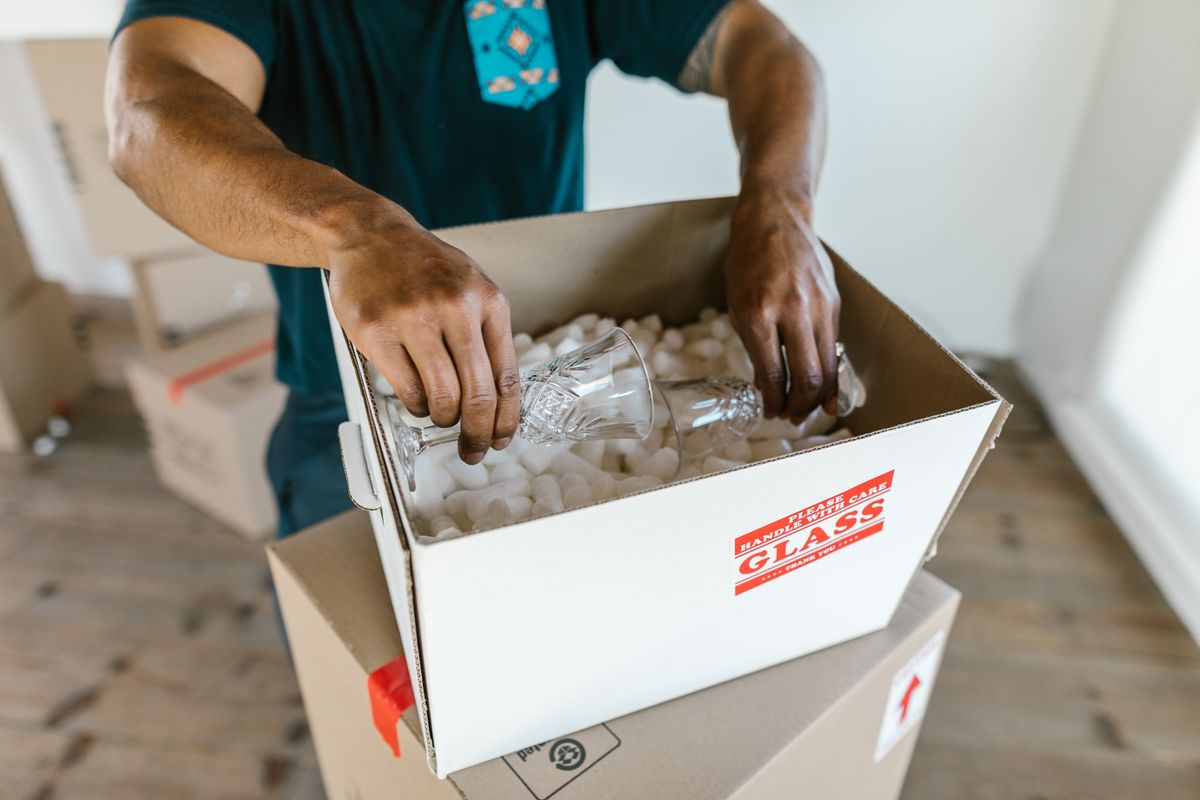
Guarantee No. 1: The buy-back promise — real, useful, and about money, not breakage
The most prominent guarantee in the industry is U-Haul's 100% buy-back: return any unused U-Haul moving supplies, with your receipt, to any U-Haul Center nationwide, and you are refunded the full purchase price. The company also runs a Best Price Guarantee on box bundles — find the same-quality bundle cheaper within seven days of purchase and it gives you $20 worth of free boxes.
Translated: this is a quantity guarantee, and for a downsizer it is genuinely valuable. Nobody can predict how many boxes a forty-year household will need, and the buy-back removes the penalty for over-ordering — buy generously, pack at your own pace, and return the surplus. But note the three quiet conditions, because each one excludes real people every week:
- Unused means unused. A box you assembled, taped, labeled, and then emptied because the contents went to your daughter instead is a used box. It is not returnable. Assemble boxes as you fill them, not in batches ahead.
- The receipt is the guarantee. No receipt, no refund — and a downsizing pack can stretch across two months and three separate supply runs. Keep every receipt in one envelope from day one. (Online orders can be returned to a store if the item is eligible for in-store pickup; everything else goes back by mail, and you pay the return shipping.)
- It covers U-Haul supplies at U-Haul. Boxes from a big-box store fall under that store's ordinary return policy — The Home Depot generally takes unused boxes back within 90 days with a receipt — not under any moving-supplies guarantee at all.
What the buy-back never promises: that the boxes will protect anything. It refunds cardboard, not china.
Guarantee No. 2: The strength printed on the box — a conformance statement, not a promise
Turn a moving box over and you will find a round stamp on a bottom flap: the box maker's certificate. It is the closest thing to a warranty a box carries, and it is widely misunderstood. The certificate, defined by freight classification rules (NMFC Item 222 and rail Rule 41), states one board-strength figure — either a bursting (Mullen) test in pounds per square inch or an edge crush test (ECT) in pounds per inch — plus a maximum size and a maximum gross weight for the packed box.
The standard moving box is 32 ECT, equivalent to 200-pound test, certified for up to 65 pounds gross weight and 75 inches of combined outside dimensions. Heavier grades exist: 44 ECT (about 95 pounds), and double-wall board starting around 48 ECT (about 120 pounds).
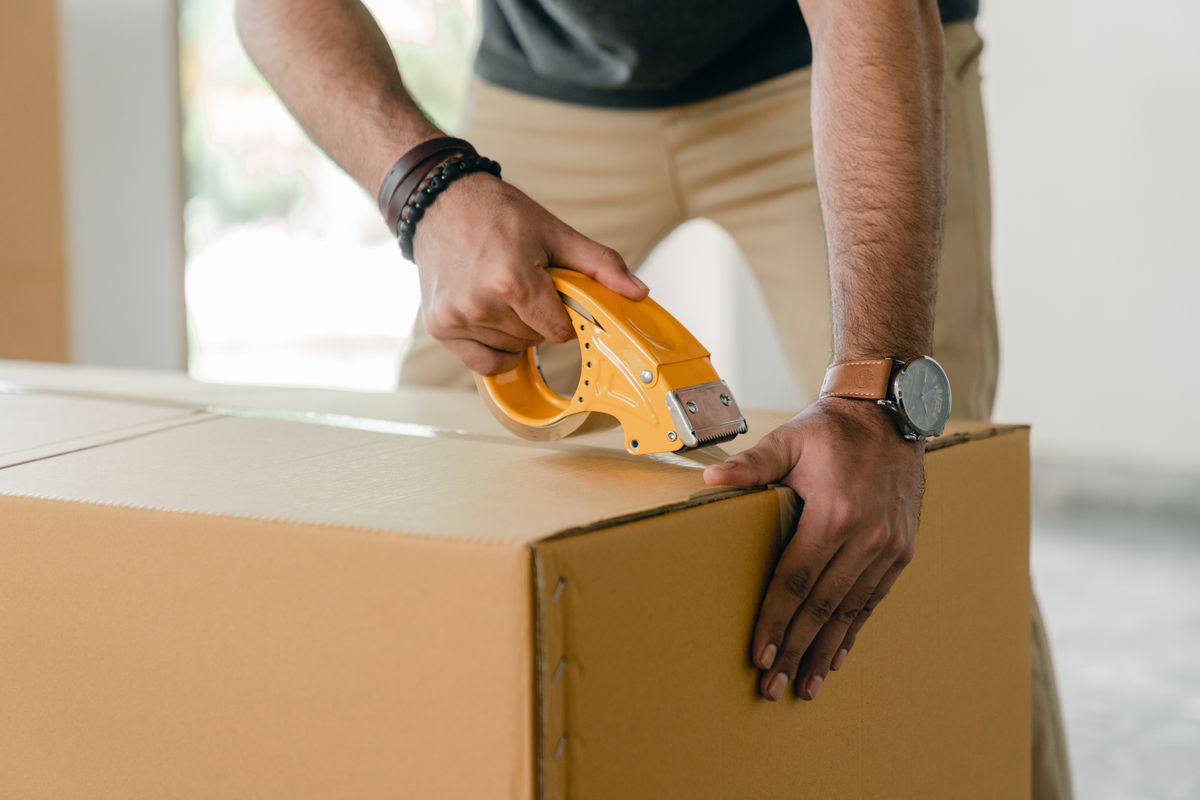
Here is the quiet exclusion, and it is the whole point: the certificate is a statement that the board was manufactured to a standard. It is tested on board samples, not on your finished, taped, loaded box. It does not promise your box will survive your move, and it gives you no claim if it doesn't. What it does give you is a way to avoid the most common downsizing packing failure — overloading. Books, files, and paperwork are the heaviest things in a downsizing house, and a large box of them easily exceeds 65 pounds, at which point the handles tear and the bottom is living on borrowed time regardless of brand. Use small boxes for books and papers, keep every box under its certificate weight, and step up to double-wall for the boxes that will sit at the bottom of the stack. That is the entire practical content of the box "warranty" — and used that way, it works.
Guarantee No. 3: The mover's packing — where the real protection lives, and where it ends
The guarantee that actually pays for broken belongings is not sold in the supplies aisle at all. It is created, or destroyed, by who packs the box.
Moving company tariffs state the rule bluntly. A typical carrier tariff's customer-packed-articles clause reads: the carrier "shall not be responsible for loss of or damage to the contents of cartons, boxes, containers, or other packages packed, loaded, sealed, or prepared by the Customer," nor for damage from inadequate packing, insufficient cushioning, or overpacking — and the carrier may mark those boxes "Packed by Owner," or PBO, on your shipping documents. Consumer guidance on claims says the same thing in plain English: a claim for broken contents inside a PBO box is almost always denied unless the box itself shows visible external damage — crushing or impact marks that prove the crew, not the packing, did it.
So the landscape looks like this:
| Who packed it | What a "guarantee" covers | What it quietly excludes |
|---|---|---|
| You (PBO) | The mover's liability for the box as an object; contents claims survive only if the box exterior shows damage | Contents broken by shifting, settling, or thin cushioning — the most common downsizing damage of all |
| The mover's crew | Contents, under the valuation you selected — the crew saw, wrapped, and logged what went in | Anything above your valuation tier; undeclared items worth over $100 per pound; damage from causes no tier covers (storms, inherent defects) |
| Nobody — it's the supplies themselves | Buy-back refunds on unused supplies with receipt; box board made to its certificate grade | Any damage to anything the supplies were protecting |
Two consequences deserve emphasis for a downsizing move. First, the hybrid approach most families choose — pack the everyday things yourself, have the mover pack the fragile and valuable — is sound, but only if the division is deliberate. The china, the crystal, the framed photographs, the good lamps: those are the boxes where the mover's packing converts a worthless claim into a real one. Second, if you do pack everything yourself, the exterior of your boxes becomes your only evidence. Pack so boxes don't crush: fill them fully so the top doesn't cave, tape them properly, and never exceed the certificate weight. A crushed PBO box with broken contents is a claim; an intact PBO box with broken contents is a condolence.
The other fine print that decides payouts
Valuation is not insurance, and supplies don't change it. Whatever you buy in boxes and paper, your recovery for mover-caused damage is set by the valuation tier on your bill of lading: the free released-value tier pays 60 cents per pound per item; full value protection obliges the mover to repair, replace, or pay current market value. A $40 set of premium boxes does not raise a $24 settlement on a destroyed television. If the contents matter, the money belongs in the valuation upgrade first and the supplies second.
High-value items need a declaration. Under full value protection, movers may limit liability for items worth more than $100 per pound — jewelry, silver, fine art, some antiques — unless you list them on the high-value inventory form. A downsizing household is dense with exactly these items, many of them small and heavy with value. List them, or the guarantee you think you bought stops at $100 a pound.
The claim clock and the inspection right. For an interstate move you have nine months from delivery to file a written claim, and the mover must acknowledge it within 30 days and pay, deny, or make a firm offer within 120 days. (State moves run on state rules — some are far shorter.) Movers also have the right to inspect damaged goods before settling. Keep the damaged item and its box and packing until the claim closes. Throwing away the evidence is the most common unforced error in the entire process, and in a downsizing move — where the instinct is to clear the new, smaller space quickly — it is the easiest one to make. Photograph everything first; discard nothing until you're paid.
What no guarantee covers at all. Standard exclusions recur across tariffs: damage from acts of God and weather; "inherent vice" — the hidden weakness in the item itself, like a dried-out glue joint in an old chair or a hairline crack in a vase; pre-existing damage; and items movers won't carry at all, from fuel and aerosols to, in most tariffs, documents, currency, and jewelry. For a downsizer, the practical translation is: carry the irreplaceable small things — documents, photographs that exist in one copy, jewelry, medications — in your own car, where no guarantee is needed because no handoff occurs.

A buying and packing plan that uses the guarantees as written
- Over-order supplies under the buy-back, keep every receipt in one envelope, and assemble boxes only as you fill them so the surplus stays returnable.
- Read one box maker's certificate and pack to it: small boxes for books and papers, nothing over the stamped gross weight, double-wall for the bottom of stacks and the heaviest fragile loads.
- Split the packing deliberately: you pack clothing, linens, kitchen everyday ware; the mover packs china, crystal, art, and lamps — the contents whose claims are worth having.
- Spend on valuation before supplies, and declare every item worth more than $100 per pound on the high-value inventory.
- Keep damaged goods, boxes, and packing until claims close; photograph damage the day it is found.
- Hand-carry the irreplaceables. No guarantee in this guide covers them as well as your own back seat does.
The supply shelves behind this advice are not small — this site's directory lists 234 packaging businesses, 2,169 boxes-and-bags suppliers, and 5,379 moving equipment and supplies rental listings — but no shelf sells the guarantee most downsizers imagine they're buying. That guarantee is assembled, piece by piece, from a receipt kept, a weight limit honored, a packing split chosen on purpose, and a valuation tier selected with open eyes. Now you know which pieces are yours to assemble.
Sources
- U-Haul, "Frequently Asked Questions: Moving Supplies" — the 100% buy-back guarantee on unused supplies with receipt at any U-Haul Center, online-return conditions and return-shipping terms, and the box-budget guidance describing the Best Price Guarantee ($20 in free boxes if a same-quality bundle is found cheaper within 7 days): https://www.uhaul.com/FrequentlyAskedQuestions/Moving-Supplies/
- LegalClarity, "What Happens If Movers Break Something: Know Your Rights" — PBO boxes and claim denials absent visible external damage; the $100-per-pound high-value declaration rule; claim deadlines (file within 9 months, acknowledgment in 30 days, settlement decision in 120 days); movers' inspection rights: https://legalclarity.org/what-happens-if-movers-break-something/
- Nomad Relocation Co. Massachusetts intrastate household goods tariff (2026) — the customer-packed articles clause (carrier not responsible for contents of customer-packed cartons, inadequate packing, or concealed damage; "Packed by Owner" notations) and excluded causes including acts of God and inherent vice: http://mass.gov/doc/nomad-relocation-tariff-2026-cert-26hg28-tpd/download
- California Movers USA, "Moving Boxes and Packing Supplies" — the box maker's certificate explained: a conformance statement under NMFC Item 222 / Rule 41 carrying one strength figure, a size limit, and a gross weight limit; 32 ECT / 200-lb test as the standard moving box grade (65 lb, 75 in): https://californiamoversusa.com/moving-services/packing-supplies/
- MH-USA, "ECT vs Burst Test: Box Strength Guide" — ECT-32 ≈ 200# test; ECT-44 ≈ 275#; double-wall ECT-48/71; what each test measures: https://mh-usa.com/packaging/box-strength-ect-vs-burst-test/
- MovingPlace, "Done Moving? Here's What To Do With Moving Boxes" — retailer return practice: U-Haul buy-back vs. Home Depot's 90-day window for unused boxes: https://www.movingplace.com/moving-advice/how-to-get-rid-of-moving-boxes
Photos: packing glassware — photo by Pexels contributor, https://images.pexels.com/photos/7464230/pexels-photo-7464230.jpeg ; taping a box — photo by Pexels contributor, https://images.pexels.com/photos/4246120/pexels-photo-4246120.jpeg ; packing boxes — photo by Pexels contributor, https://images.pexels.com/photos/7464466/pexels-photo-7464466.jpeg
More guides
- How to Hire a Moving Company That Won't Hold Your Furniture HostageMovers › Moving & Storage
- How Much Do Movers Cost? Local vs. Long-Distance Pricing ExplainedMovers › Moving & Storage
- Binding vs. Non-Binding Estimates: The Difference That Decides Your Final BillMovers › Moving & Storage
- Moving Insurance and Valuation: What 'Full Value Protection' Really CoversMovers › Moving & Storage
- Long-Distance Moving: A Start-to-Finish Guide for Household GoodsMovers › Household Goods Moving & Storage
- All Guides & ArticlesBrowse the full guides library