Movers › Packaging
Packaging: The Complete Checklist Before You Commit
Packaging is the part of a move people commit to first and think about last. The truck is booked, the date is set, and only then does the real question surface: who packs what, in what, to what standard — and who carries the risk if it arrives broken? By then the answers are often already locked into a quote nobody read closely, a pile of thin boxes from a grocery store, and a set of cartons marked, in the mover's shorthand, PBO: packed by owner.
This checklist is for the moment before that. Work through it before money or signatures are committed, and packaging stops being an afterthought and becomes what it should be: a set of deliberate decisions about scope, materials, standards, liability and timing, each one written down. This site lists 234 packaging listings under movers, alongside separate packing and crating specialists, so the market offers every level from a fragile-only crew for an afternoon to a full pack with custom crates. The checklist below is how you choose between them without guessing.

1. Decide the scope, room by room
Do not decide "packing: yes or no." Decide it by room and by category, because risk and cost are wildly uneven across a house.
- Full pack: the crew wraps, boxes, labels and inventories everything. Right for tight deadlines, long distances, limited mobility, or a house full of fragile and valuable pieces.
- Partial pack: the crew takes named rooms or categories — most often the kitchen, dining room, artwork and electronics — and you pack the rest. Published guides put fragile-only work at roughly $200 to $700 for most homes, and kitchen plus selected rooms at about $400 to $1,200.
- Self-pack: you pack everything; the mover loads and transports. Cheapest in cash, most expensive in time and in claim risk, as the liability section below explains.
- Crating and specialty packaging: antiques, fine art, large mirrors, chandeliers, instruments and anything whose shape defeats a standard carton. Priced per item, often $200 to $1,000 or more for custom crating, and quoted separately — if it is not a line on your quote, it is not in your job.
Write the scope into the quote by room and category. "Packing included" with no scope is the sentence that produces, on pack day, a crew expecting to pack a kitchen arguing with a customer expecting a house.
2. Price it three ways before you choose one
Packing is sold hourly, flat-rate, and per item, and each model rewards a different kind of vigilance. Current published guidance puts professional packers at roughly $50 to $100 per packer per hour, with whole-job labour commonly $300 to $900 for a small apartment and $2,000 to $5,000 or more for a large home. Materials may be included or billed on top — a difference of $150 to $400 on a typical three-bedroom home.
| Home size | Typical packing labour |
|---|---|
| Studio or 1-bedroom | $300–$900 |
| 2-bedroom | $600–$1,500 |
| 3-bedroom | $1,200–$2,500 |
| 4+ bedrooms | $2,000–$5,000+ |
Before you commit, settle these pricing questions in writing: Is the rate per packer per hour, and how many packers, for how many estimated hours? Is there a minimum? Are materials included, itemised, or marked up? Is unpacking included, quoted separately, or not offered — and does unpacking include debris removal, or will you spend your first week breaking down cartons? For flat-rate quotes, what survey was it based on, and what change in scope reopens the price? A flat rate built on a video walkthrough of tidy rooms will not survive a garage nobody filmed.
3. Settle the materials standard
Materials are not a detail; they are most of the protection. Check each item before you sign.
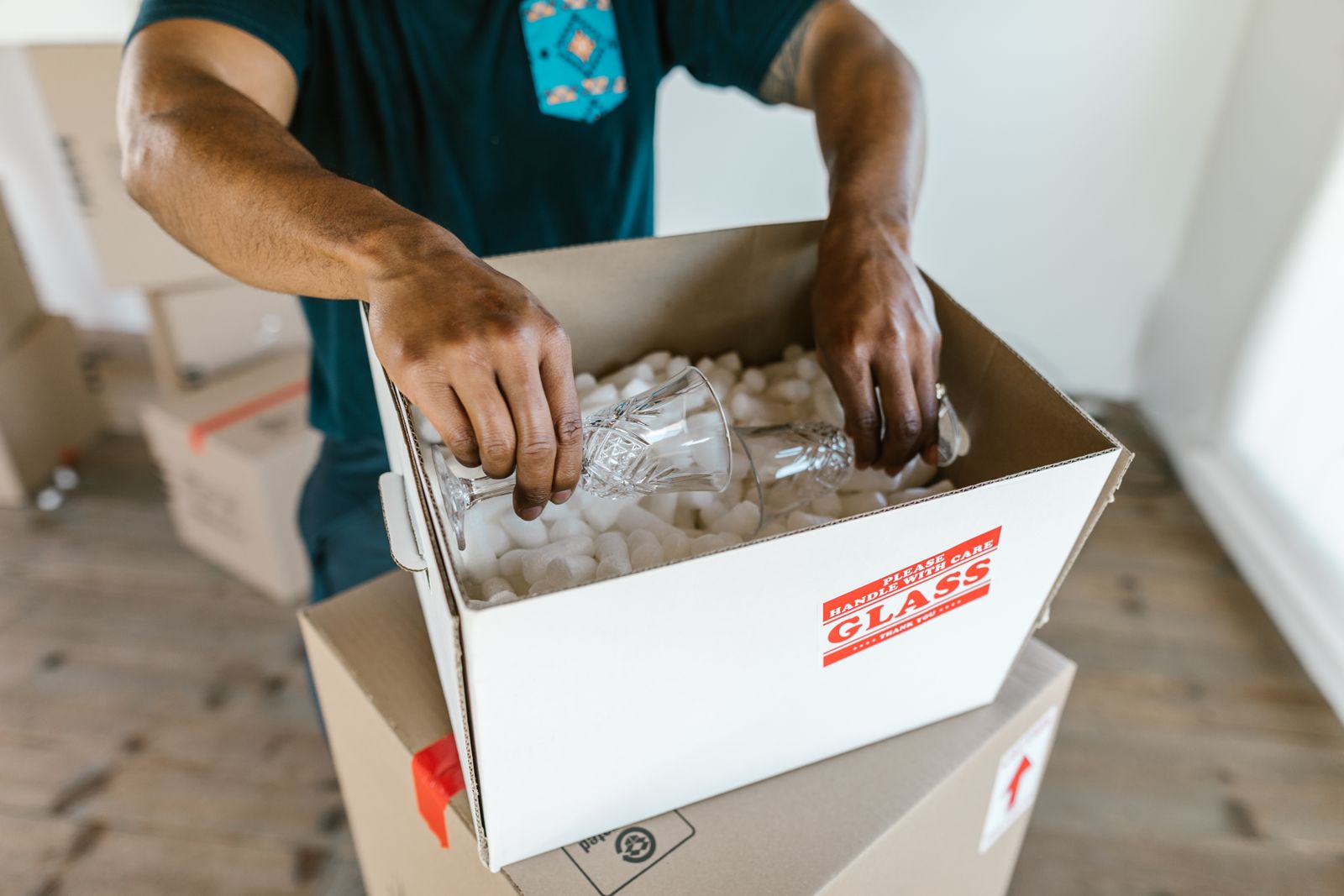
- Boxes: new or sound, right-sized, and strong enough for their load. Dish packs — double-walled cartons with cell dividers — for kitchenware; wardrobe boxes for hanging clothes; small boxes for books and other dense loads, because a large box of books defeats both the box and the person lifting it. Reject crushed, damp or previously failed cartons for anything fragile.
- Cushioning: clean packing paper for wrapping, bubble cushioning or foam for fragile surfaces, and enough void fill that nothing moves. The shipping world, which tests these things formally through the International Safe Transit Association, works to a simple rule of thumb worth borrowing: at least two inches of cushioning between an item and every wall of its box, more for the truly fragile, and double-boxing — an inner carton cushioned inside an outer one — for the pieces that matter most. A household box will not face a parcel network, but it will face stacking, vibration and one bad lift, and the same physics applies.
- The shake test: before any fragile carton is sealed, close it and move it gently. Anything that shifts, rattles or clinks gets reopened and repacked. Movement inside a box is damage in progress.
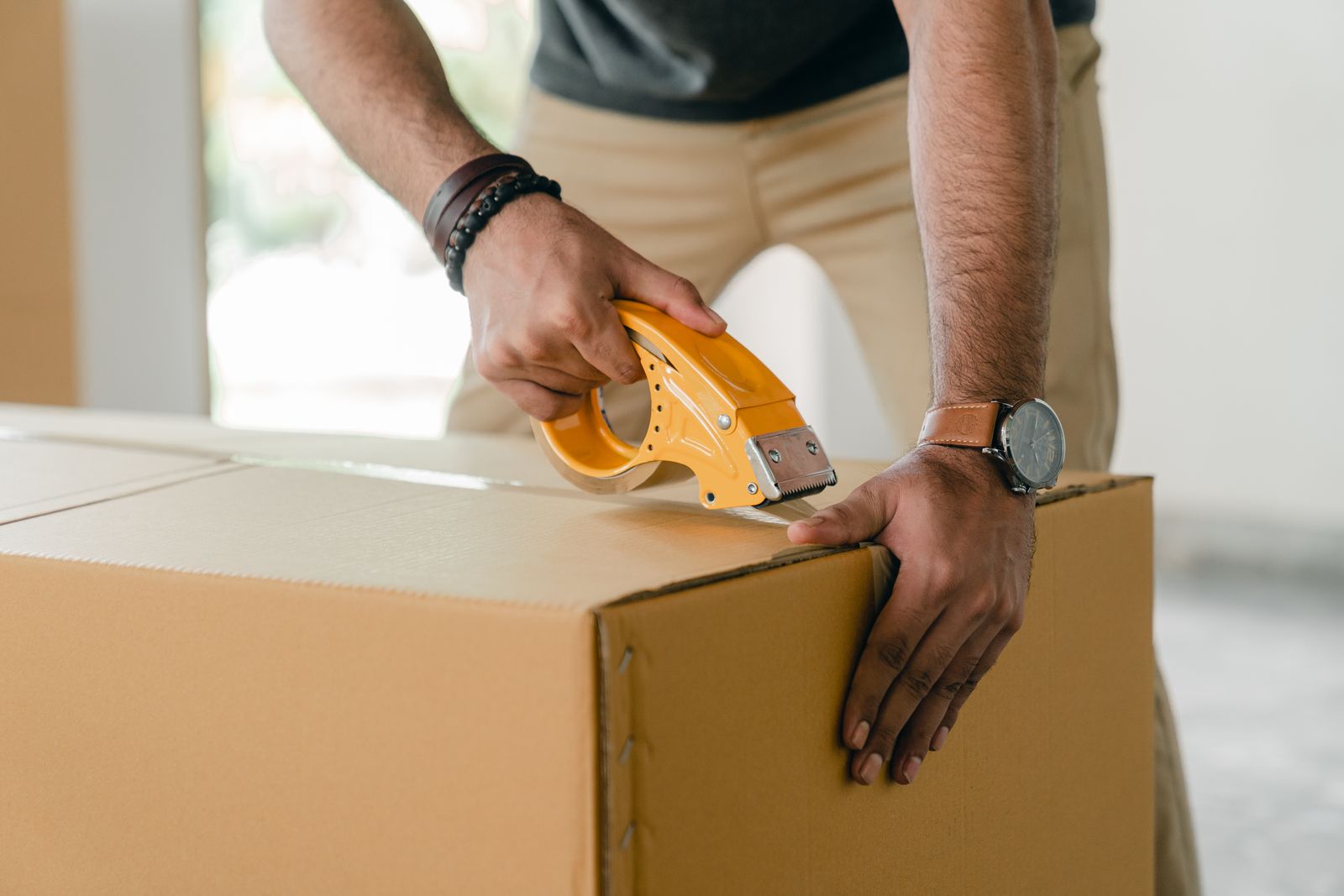
- Sealing and labelling: tape across the centre seam and both edge seams, top and bottom. Every box labelled with room, contents in enough detail to find things and to claim with, and fragile or this-side-up markings where they are true — a house where every box says fragile is a house where no box does.
- Prohibited and personal items, out: hazardous materials, perishables, cash, jewellery, documents, medications and irreplaceables do not go into mover-packed cartons at all. List what travels with you, separately, now — not on pack morning.
4. Understand the liability line before you cross it
This is the checklist item people skip, and it is the one that decides claims.
If the crew packs a box, the mover can be held responsible for its contents under the valuation you choose. If you pack it, the inventory will mark it PBO — packed by owner — and carriers routinely deny claims for damage inside a PBO carton that shows no external damage, on the straightforward ground that they never saw how it was packed. The exception is visible crush, drop or impact damage to the carton itself. That single distinction is worth real money: professional packing of your fragile and high-value items buys claim protection as well as labour, and self-packing your books and linens costs you nothing in protection, because books and linens do not break.
Valuation itself needs a deliberate choice on interstate moves. Federal rules require the mover to offer Full Value Protection and Released Value at 60 cents per pound per article; Released Value is free and, for anything light and valuable, close to worthless. Items worth more than $100 per pound must be listed on the high-value inventory to be covered at full value. Claims for loss or damage on an interstate move must be filed in writing within nine months of delivery; the carrier must acknowledge within 30 days and pay, deny or make a firm offer within 120 days. Photograph valuable items before they are packed, keep the inventory, and note damage on the delivery paperwork before the crew leaves. None of this can be reconstructed afterwards.
5. Fix the documents
Before commitment, you should hold, or have promised in writing:
- A written estimate that names the packing scope, pricing model, materials treatment and total, signed by the mover. No oral packing prices.
- The order for service, with pack date, move date and delivery window as separate, explicit dates — packing the day before loading is normal; packing the same morning as a long load is how corners get cut.
- The bill of lading, which is your contract and receipt, with the valuation choice recorded on it, not left to default.
- The inventory, which you or your representative check at packing and again at delivery. Be present, or appoint someone who can act for you; an inventory signed unexamined is evidence against you later.
- For interstate moves, the mover's booklet "Your Rights and Responsibilities When You Move," its arbitration information, and its claims process — all required to be provided, all worth actually reading before, not after.
6. Prepare the house so pack day works
Crews pack what they find, at the speed they find it. Preparation is the customer's half of the standard.
Sort before the crew arrives, not while they work: what goes, what is donated, what is sold, what travels with you. A crew paid by the hour to pack a house that has not been sorted is being paid to box your indecision. Disconnect and drain what needs it — appliances, electronics with their cables labelled and kept with their devices, anything with fuel or water. Set aside, physically and unmistakably, the do-not-pack area: documents, medication, chargers, keys, the kettle, and the box of first-night essentials you will open before any other. Arrange access: parking for the truck, elevators or loading areas booked where the building requires it, children and pets out of the packing path. And confirm, the day before, the crew size, start time and scope — in a message you can point to, not a memory of a phone call.
7. Plan the far end at the same time
Packaging decisions echo at delivery. Boxes labelled by room only work if the rooms at the new home are decided; furniture wrapped for transit needs a placement plan, or it will be unwrapped in the wrong room and moved twice. If you have bought unpacking, confirm whether it includes putting away, assembly of beds and tables, and debris removal on the day — the difference between arriving to a home and arriving to a warehouse of your own belongings. If goods may go into storage between homes, say so before packing, because cartons destined for months of stacking should be packed and labelled differently from cartons opened next week, and storage and redelivery terms belong in the written quote.
The commitment test
You are ready to commit when you can answer, from paper rather than memory: who packs each room; what it costs, by what model, with materials treated how; what standard the fragile items are packed to; which valuation covers them and whether the high-value list is complete; which dates packing, loading and delivery fall on; and what happens, in writing, if the far end is not ready. If any answer is "we discussed it," it is not settled. Get it in the quote, then sign. Packaging done to that standard is not the expensive option. Replacing what bad packaging breaks, with a claim the paperwork cannot support, is.
Sources
- Movers.com, How Much Do Packing Services Cost? — professional packers at about $50 to $100 per packer per hour, with labour by home size from $300 to $900 for a small apartment to $2,000 to $5,000 or more for a large home, and full, partial, fragile-only and specialty service levels.
- Jordan River Moving, full service packing guidance 2026 — full packing from $300 for a studio to $4,500 for a large home, fragile-only partial packing at $200 to $700, kitchen plus selected rooms at $400 to $1,200, and DIY packing time of 30 to 50 hours over two to six weeks.
- United Van Lines, What to Do If Something Breaks: How Moving Company Damage Claims Work — packed-by-owner limits, high-value declaration, and the nine-month written claim window.
- LegalClarity, What Happens If Movers Break Something — Released Value at 60 cents per pound, PBO claim denials absent external damage, carrier acknowledgement within 30 days and settlement within 120 days.
- VistaPrint, Packaging Fragile Items — the two-inch cushioning rule, double-boxing for fragile goods, the shake test, H-tape sealing, and ISTA 3A testing context.
- Photo by Ketut Subiyanto on Pexels, https://www.pexels.com/photo/4246193/
- Photo on Pexels, https://www.pexels.com/photo/7464230/ — photographer name not confirmed in this run; credited to platform and URL only.
- Photo by cottonbro studio on Pexels, https://www.pexels.com/photo/4246120/
More guides
- How to Hire a Moving Company That Won't Hold Your Furniture HostageMovers › Moving & Storage
- How Much Do Movers Cost? Local vs. Long-Distance Pricing ExplainedMovers › Moving & Storage
- Binding vs. Non-Binding Estimates: The Difference That Decides Your Final BillMovers › Moving & Storage
- Moving Insurance and Valuation: What 'Full Value Protection' Really CoversMovers › Moving & Storage
- Long-Distance Moving: A Start-to-Finish Guide for Household GoodsMovers › Household Goods Moving & Storage
- All Guides & ArticlesBrowse the full guides library