Movers › Packing & Crating
Packing and Crating Services in 2026: What Changed in Prices, Rules and Availability
If you last hired packers a few years ago, the quote you get in 2026 will surprise you twice: once at the total, and once at the line items. The packing itself — the labor of wrapping, boxing, and labeling a home — has not changed much. What changed is everything around it: the price of the cardboard the industry packs into, the way services are unbundled and sold, and how booked-up the good crews are in the months when everyone moves at once.
I spend my time reading moving complaints, and the packing complaints of 2026 have a distinct flavor. Fewer of them are "the crew was careless." More of them are "the materials charge doubled between the estimate and the invoice," "the crating was quoted per piece and there were eleven pieces," and "they packed it, but the claim was denied anyway." This update covers what actually moved in 2026 — prices, rules, and availability — and what a renter between leases, working to a fixed gap and a fixed budget, should plan around.
Prices: labor held, materials jumped
Start with the structure. Professional packing is sold three ways: by the hour per packer, as a flat price by home size, or per box. The 2026 published ranges from national marketplaces and cost guides are consistent with each other:
| Service | 2026 typical range | Basis |
|---|---|---|
| Full packing, 1-bedroom | $280–$700 | Thumbtack/HomeAdvisor-type data: $280–$650 labor and materials; mover guides put studios/1-bed at $300–$700 |
| Full packing, 2-bedroom | $530–$1,500 | Home-size tables cluster at $530–$1,000; larger mover guides to $1,500 |
| Full packing, 3-bedroom | $800–$2,500 | Most three-bedroom jobs land in this band nationally |
| Packer labor | $25–$150 per packer per hour | National middle around $50–$100; marketplace crews: two packers ~$85/hour combined |
| Packing materials only | $180–$750+ by home size | 1-bed $180–$250; 3-bed $500–$750+ |
| Partial (fragile-only) packing | $200–$700 | Kitchen, china, artwork — the fastest-growing tier |
The labor half of that table is not the story of 2026. The materials half is.
The cardboard shock. North American containerboard — the paper corrugated boxes are made from — went through three rounds of producer price increases in 2026. Industry analyses tracking the Fastmarkets index put the net result at linerboard up about $170 per ton on the year by September, after roughly 3.9 million tons of U.S. containerboard capacity — about 10 percent of the total — was permanently retired between February 2025 and March 2026. Crucially for movers, box prices follow board prices with a lag of roughly 60 to 90 days, as increases land at each converter's next price review. Translation: the box-cost wave that began at the mills in March was still arriving on moving invoices in the autumn, and the September round had not finished arriving at all.
You can see it in retail box prices. Thumbtack's 2026 packing data lists a small moving box at $3, a medium at $4, a large at $5, and a dish-pack box at $8 — before anyone wraps a single plate. A three-bedroom home typically needs 60 to 100 boxes. At those prices, the boxes alone for a full pack run into hundreds of dollars, and a mover's materials package — one Atlanta mover's published 2026 rate card charges $240 for a one-bedroom materials package rising to $1,080 for four bedrooms — is no longer a token line.
What to plan around: get the materials priced as a separate, capped line in writing. The complaint pattern of 2026 is the open-ended materials clause — "materials at cost" or "materials as used" — which converts a board-price increase you never heard about into an invoice increase you cannot dispute. A flat materials package, or a per-box price list attached to the estimate, closes that hole.
Crating: the per-piece economy
Crating is where packing stops being a household service and becomes a small manufacturing job: a wooden box built to the measurements of one object. In 2026 the published price bands from specialist firms are:
| Item | Typical custom crate cost |
|---|---|
| Small framed print or photo (under 24×30 in) | $150–$275 |
| Medium painting (to about 40×50 in) | $275–$500 |
| Large canvas or gilded frame (to 60×72 in) | $500–$900 |
| Oversized canvas or antique mirror | $900–$1,500 |
| Sculpture | $225–$1,200 by size |
Specialist art movers quote similar territory from the other direction: custom museum crates at $300–$800 per crate in New York pricing, with crating recommended when a piece is worth roughly $5,000 or more, is oversized (over about 48 inches on a side), has a fragile surface such as pastel or charcoal under glass, or is traveling long-distance. One Florida carrier's crating guide sets its "required" threshold lower, at framed pieces valued above $2,500 — a reminder that the trigger is the firm's policy, not a law, and worth asking about explicitly.
Two planning points follow. First, crating is priced per piece and quoted after a survey; a home with a wall of framed art and a marble-topped table can accumulate four figures of crating on top of the packing quote, and it should appear as its own line on the written estimate before moving day, never as a day-of discovery. Second, crating takes time — a crate is measured, built, and lined before the piece goes in. In a peak-season week, the crate shop's queue can be the constraint on your whole move. If your move includes crated pieces, the survey needs to happen weeks out, not days.
The rule that decides claims: who packed it
The most consequential "rule" in packing is not new in 2026, but rising prices are pushing more people into its path, so it deserves stating plainly: a mover's liability for the contents of a box depends on who packed the box.
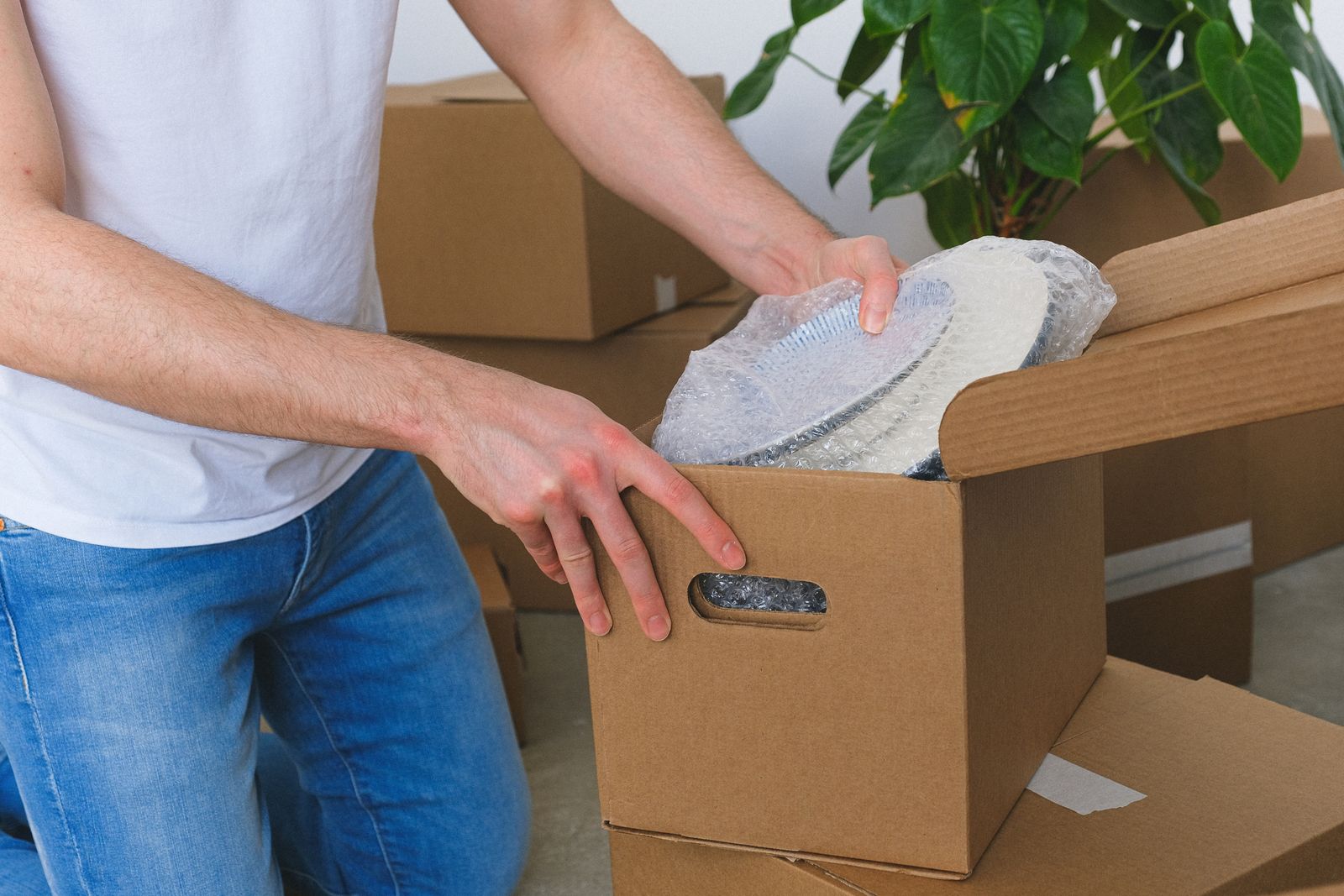
When the mover's crew packs an item, the mover is responsible for it under the valuation option on your bill of lading — Released Value at 60 cents per pound, or Full Value Protection if you bought it. When you pack a box yourself — "packed by owner," PBO in the industry's shorthand — the mover can and routinely does deny a claim for broken contents if the box itself arrives undamaged, on the logic that the failure was the packing, not the handling. An intact box with a shattered vase inside is, to a claims adjuster, evidence about your packing.
This is the real economics behind partial packing, the tier every 2026 cost guide identifies as the growth option: professionals pack the kitchen and the fragile pieces ($200–$700 for most homes), and you pack clothes, books, and linens. Read in complaint files, that split is not just a saving — it is a liability boundary drawn through your home. Everything the crew packs is their problem if it breaks. Everything you pack is yours. Choose which side of the line your grandmother's china sits on with that in mind, and remember the corollary: if you do pack fragile items yourself, photograph the packed box before it is sealed. In a PBO dispute, your photographs are the only evidence that will ever exist.
A related formality matters more as crating grows: items of extraordinary value — over $100 per pound under the federal definition, which captures jewelry, silverware, china, antiques, and art — must be specifically listed on the shipping documents for full liability to attach under Full Value Protection. A crated, listed painting is protected twice over. An unlisted one is protected by the crate and very little else.
Availability: the calendar tightened
Packing is labor, and labor follows the moving calendar. The practical changes renters report in 2026:
- Packing day and moving day are decoupling. Crews increasingly pack the day before the move rather than the morning of it — better for quality, but it means two appointments to schedule inside a lease gap, and a night living among sealed boxes.
- Peak-season lead times stretched. In June, July, and August, reputable packing crews in busy metros book out one to three weeks. The same-week availability that used to exist in shoulder seasons is now largely a winter phenomenon.
- Partial packing books faster than full packing. A two-hour fragile-only job fits into a crew's day in a way a full-home pack does not. If your dates are fixed and the calendar is against you, shrinking the scope is the reliable way to get a good crew rather than an available one.
- Unpacking is sold separately, and priced like it. Guides put professional unpacking at roughly $100–$1,400 on top of packing, and combined pack-and-unpack totals reaching $380–$3,600. In a between-leases move, unpacking help at the destination is often the first thing cut — fairly, since it is the one service with no liability attached to skipping it.
What a renter between leases should actually do in 2026
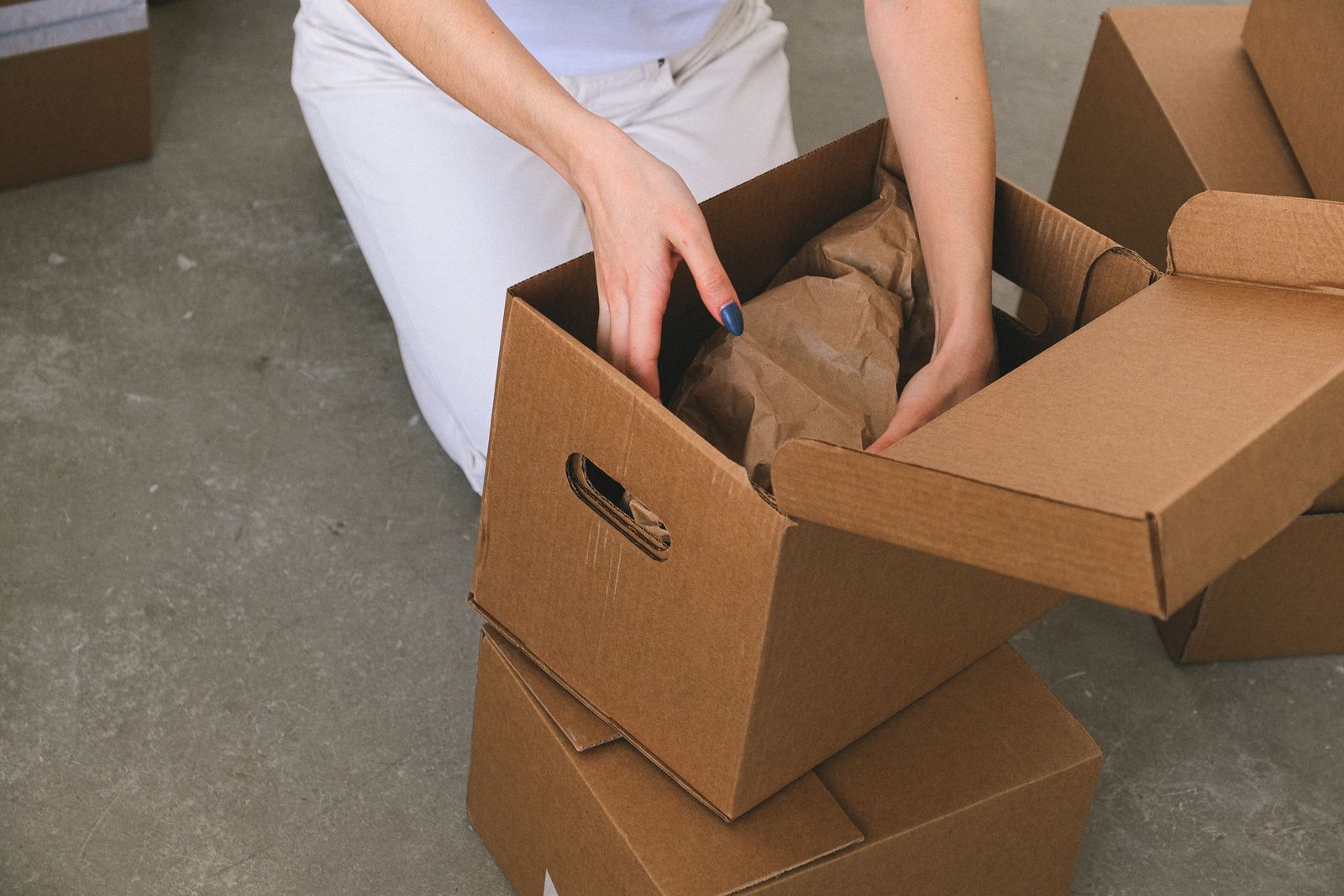
Your constraint is a gap: days or weeks where everything you own is in boxes, in storage, or in a truck. Packing decisions land differently under that constraint.
Price the whole episode, not the pack. A full pack for a two-bedroom at $530–$1,000, plus materials, plus any crating, plus storage for the gap, is a single budget. The households in my complaint files who came unstuck usually optimized one line — the cheapest pack — and paid for it in another: a denied claim, a materials overrun, a crate built in a rush.
Use partial packing as the default, full packing as the exception. For most renters, the kitchen-and-fragiles tier at $200–$700 captures most of the breakage risk and all of the liability transfer that matters, at a third of the full-pack price. Spend the saving on the materials cap and, if you have one genuinely valuable piece, on listing it properly and crating it if it clears the value thresholds above.
Book the survey early if anything might be crated. Crating is the only part of packing with a manufacturing lead time. A survey three weeks out costs nothing; a crate needed in three days costs whatever the rush costs, if the shop can do it at all.
Get three things in writing: the materials pricing (flat package or per-box list, not "as used"), the crating list with per-piece prices, and which rooms or categories the crew is packing — because that list is also the boundary of the mover's liability. If it is not written, it will be remembered differently by each side, in the direction you would expect.
This site's taxonomy lists 186 packing and crating listings under the Movers category — a small, specialist corner of an industry directory dominated by general movers, which matches the market: packing and crating expertise is concentrated, and in 2026 it is also repricing. The cardboard will not get cheaper this year; the board increases already announced have months of lag still to run. What you can control is the contract shape — capped materials, itemized crating, and a packing split chosen for its liability as much as its price. In the complaint files, that shape is the difference between a bad break and a paid claim.

Sources
- Thumbtack, "2026 Packing & Unpacking Services Cost" — national average range $289–$841; box prices (small $3, medium $4, large $5, dish-pack $8); per-box packing prices; crew rates (two packers ~$85/hour combined); home-size examples. https://www.thumbtack.com/p/packing-cost
- HomeAdvisor, "How Much Do Packers and Movers Cost in 2026?" — packing services $280–$2,200, average $1,000 including labor and materials; materials $180–$750+ by home size; unpacking an additional $100–$1,400. https://www.homeadvisor.com/cost/storage-and-organization/packing-unpacking-service/
- Jordan River Moving, "Full Service vs DIY Packing: A 2026 Cost and Time Comparison" — full-service packing $300 (studio) to $4,500 (large home); three-bedroom $800–$2,500; partial/fragile-only tiers $200–$700 and up; partial packing identified as the fastest-growing option; 60–100 boxes for a three-bedroom home. https://jordanrivermoving.com/full-service-vs-diy-packing-a-2026-cost-and-time-comparison/
- LIOO Moving, published packing rate card (Atlanta, October 2026) — crew labor $140/hour (two packers) to $220/hour (four); flat materials packages $240 (1-bed) to $1,080 (4-bed); per-item box prices. https://lioomoving.com/services/packing-services-atlanta/
- SafeBound Moving, "Custom Crating for Fine Art: Cost and When Required" (updated October 2026) — custom crates $150–$900 for most residential art, oversized $900–$1,500, sculpture $225–$1,200; crating treated as required for framed pieces valued above $2,500; crating as a separate estimate line item. https://www.safeboundmoving.com/blog/custom-crating-for-fine-art-cost-and-when-required?c6cbd55a_page=2
- MOVD NYC, "Art & Antique Movers NYC 2026" — custom museum crates $300–$800 per crate; crating recommended at values of $5,000+, sizes over roughly 48 inches, fragile media, or long-distance travel. https://www.movd.nyc/art-moving-nyc
- Crateform, "Why Custom Packaging Prices Are Rising" — three rounds of 2026 containerboard increases; linerboard up about $170/ton on the year by September; box prices follow board prices with a roughly 60–90 day lag. https://crateform.com/blog/why-custom-packaging-prices-are-rising
- Korpack, "2026 Packaging Costs: How Capacity Cuts Lift Containerboard Prices" — about 3.9 million tons of U.S. containerboard capacity (roughly 10%) permanently retired February 2025–March 2026; net +$100/ton in the first half of 2026. https://korpack.com/your-packaging-costs-went-up-in-2026-here-is-what-actually-drove-it/
Photos: packing plates — photo by SHVETS production, https://www.pexels.com/photo/7203848/ ; packing wrapped items — photo by SHVETS production, https://www.pexels.com/photo/7203849/ ; labeling a box — photo by Pexels contributor, https://www.pexels.com/photo/4246122/ . All Pexels License, free to use.
More guides
- How to Hire a Moving Company That Won't Hold Your Furniture HostageMovers › Moving & Storage
- How Much Do Movers Cost? Local vs. Long-Distance Pricing ExplainedMovers › Moving & Storage
- Binding vs. Non-Binding Estimates: The Difference That Decides Your Final BillMovers › Moving & Storage
- Moving Insurance and Valuation: What 'Full Value Protection' Really CoversMovers › Moving & Storage
- Long-Distance Moving: A Start-to-Finish Guide for Household GoodsMovers › Household Goods Moving & Storage
- All Guides & ArticlesBrowse the full guides library