Movers › Packing & Crating
Packing and Crating Services Myths, Debunked: What People Believe vs. What Is Actually True
Most moving complaints I read are not about villains. They are about beliefs — reasonable-sounding beliefs about packing and crating that turn out to be wrong in ways that cost families real money. The couple certain their mover's "insurance" covered the china they packed themselves. The seller who declined a $300 crate for a marble tabletop because cardboard "worked last time." The family that hired a full pack expecting white gloves and received three fast strangers and a materials bill nobody mentioned.
Packing is where a move is won or lost, and crating is its least understood corner. So here are the myths I encounter most, tested against how the work, the pricing and the federal rules actually operate.
Myth 1: "If the mover breaks it, the mover pays — no matter who packed it"
This is the most expensive myth in moving, and it collapses on two letters: CP and PBO. Your mover's inventory marks every box CP (carrier packed) or PBO (packed by owner). That marking is a liability distinction, not clerical trivia.
The logic is hard to argue with: a carrier can stand behind packing it performed and inspected. Inside a box you sealed yourself, it saw nothing — not the wrapping, not the fill, not the weight distribution. The FMCSA, the federal regulator for interstate moves, says it plainly: if items in boxes you packed yourself are damaged, it may be more difficult to establish your claim against the mover, and improper packing of your own containers is one of the things that can reduce the mover's normal liability. In practice, claims for broken contents inside an intact PBO box are routinely denied. The main exception cuts the other way: if the box itself shows clear external damage — crushing, impact — the carrier's handling is back in question, because rough handling is the carrier's responsibility regardless of who packed.
There is a second layer most families never hear about until a claim is denied. Even under Full Value Protection, a mover may limit liability on articles of extraordinary value — items worth more than $100 per pound, a category the FMCSA illustrates with jewelry, silverware, china, furs, antiques and oriental rugs — unless those items are specifically listed on the shipping documents. Read that again if you own good china: the contents of a single dish pack can fall under the high-value rule. Listing them is a form and five minutes. Not listing them is a ceiling on your recovery that you agreed to by silence.
What's actually true: who packs a box largely decides who bears the risk for what's inside it, and valuable items must be declared on paper to be fully covered on paper.
Myth 2: "Professional packing is just boxes and tape, marked up"
Professional packing is a materials discipline, and the materials are specific: dish packs — double-walled cartons with cell dividers — for kitchenware; wardrobe boxes so hanging clothes travel hanging; picture cartons and corner protection for art and mirrors; packing paper rather than newsprint, whose ink transfers; bubble cushioning where paper is not enough. Technique is the other half: plates packed vertically like records, not stacked flat; heavy items in small boxes so a carton stays liftable; every box filled to the top so it can bear the weight of the box above it, because a half-empty box in the middle of a tier is a collapse waiting for a pothole.
You can verify this empirically from the price structure. Published national figures put packing labor anywhere from about $25 to $80 per packer per hour depending on the source and market — ConsumerAffairs' 2026 guide reports most companies at $60 to $80 per packer per hour; This Old House, using HomeAdvisor data, lists $25 to $40 — with materials charged separately, typically $180 to $250 for a one-bedroom home and $500 to $750 or more for a three-bedroom. A worked example from ConsumerAffairs: two packers, four hours, at $70 an hour is $560 of labor before a single box is bought. This Old House's guide offers the simplest budgeting rule in the business: professional packing typically adds 15 to 30 percent to the cost of the move itself.
| Service level | What it means | Typical published range |
|---|---|---|
| Fragile-only / partial pack | Crew packs the breakables — kitchen, glass, art, electronics; you pack the rest | About $150–$900 depending on scope; kitchen-only often $150–$400 |
| Full pack, 1-bedroom | Crew packs everything, materials included or itemized | About $280–$650 |
| Full pack, 3-bedroom | A day of work for 2–3 packers, 70–120 boxes | About $1,030–$2,200 |
| Custom crating | A wooden crate built to one object's dimensions | About $150–$300 for a small art/mirror/TV crate; $300–$700 for a glass or marble top; $350–$900 for a chandelier or sculpture |
What's actually true: you are buying materials, technique and — per Myth 1 — a transfer of liability. Whether that bundle is worth 15 to 30 percent on top of your move depends on what you own, which is a different question from whether the bundle is real.
Myth 3: "Crating is an upsell — a fancy box for nervous people"
A crate is not a stronger cardboard box. It is a wooden structure built to one object's measurements, with internal bracing and foam positioned so that external loads travel through the crate's frame and never through the object. The candidates are consistent across every crating shop's list: large paintings and mirrors, glass and marble tabletops, chandeliers, sculpture, antiques, stone slabs — objects that are rigid, heavy, irreplaceable, or all three, and that fail by cracking, puncturing or shearing rather than by denting.
The pricing gives the myth away. Crating companies price by the crate's cubic footage and the bracing the object needs: published typical ranges run $150 to $300 for a small art, mirror or TV crate up to 10 cubic feet; $250 to $550 for a large painting or mirror; $300 to $700 for a glass or marble tabletop; $350 to $900 for a chandelier or sculpture. Nobody's margin fantasy looks like that table; it is carpentry, billed like carpentry. Specialty crating inside a moving quote generally runs $200 to $1,000 or more per item, which is why estimators reserve it for the pieces where a cardboard failure would cost five figures.
There is also a version of crating that is not optional at all. For international shipments, solid wood packaging — crates, pallets, skids — must comply with ISPM-15, the international standard requiring heat treatment (a core temperature of 56°C for 30 minutes) or fumigation, evidenced by the official IPPC stamp. A non-compliant crate can be rejected, quarantined or returned at destination customs, at your expense. Export crating in compliant, heat-treated wood typically adds about 15 to 25 percent to the crate's price. That is not an upsell. That is a border rule written in phytosanitary law.
What's actually true: crating is a targeted engineering purchase for a short list of object types — and a legal requirement, in stamped wood, the moment a wooden crate crosses a border.
Myth 4: "A full pack means they'll pack everything in the house"
Almost — and the exceptions matter. Packers will not pack hazardous materials: gasoline, propane, paint thinner, fireworks and their kin are barred from the truck entirely, and no service level changes that. Perishables and plants are generally excluded too. What surprises families is the judgment layer: a good crew chief will stop at the box of loose lithium batteries, the aerosol cans, the open bottles, and the jewelry drawer — jewelry and documents are items you should be carrying yourself in any case, and a reputable mover will tell you so.
The second misunderstanding runs the other direction. "Full pack" describes scope, not care level or speed. A full pack of a three-bedroom home is six to ten labor hours of work — one long day for a typical crew — and everything in it gets packed to a professional standard, but it gets packed fast, by people making hundreds of small decisions you are not supervising. Medications, chargers, the coffee maker, tomorrow's clothes: if you need it in the first 24 hours, it does not belong to the crew. Set your essentials aside, in a closed room or a labeled car trunk, before they arrive.
What's actually true: full pack means every packable household good, with hazmat, perishables and your personal essentials carved out — and the carve-outs are features, not fine print.

Myth 5: "Packing it myself saves the full price of packing"
It saves the labor line. It does not save the materials — $180 to $750 or more by home size, bought at retail, in the assortment of sizes you guessed at rather than the sizes the job needed — and it does not save your weekends, which self-packers consistently underestimate by about half. And per Myth 1, it quietly moves the damage risk for everything fragile from the carrier's side of the ledger to yours.
That is why the option most complaint files point toward is the one in the middle: the partial pack. You pack books, linens, clothes and the unbreakable bulk of the house — the boxes where PBO status costs you nothing, because nothing in them can break. The crew packs the kitchen, the glass, the art and the electronics, where technique matters and where a CP marking keeps the claim path open. Published partial-pack pricing reflects the logic: a few hundred dollars for the fragile core of a home, against $1,030 to $2,200 for a full three-bedroom pack. In the claim files, that is the split that would have prevented most of the losses I read about.
What's actually true: self-packing trades money for time and risk. A partial pack lets you keep most of the saving and shed most of the risk — if you split the house by fragility, not by room.
Myth 6: "Unpacking is included, and they'll put everything away"
Unpacking is a separate, priced service, and it comes in two forms that share a name. A standard unpack usually means boxes opened, contents set on the nearest flat surface, and the crew leaves with the empty cartons and paper — the debris removal is genuinely valuable, and the countertops-covered result surprises people anyway. Full put-away service — shelves lined, drawers filled, beds made — exists, costs more, and must be specified. If your estimate says "unpacking," ask which one it means, and whether box and paper removal is included, because a garage full of broken-down cartons is the most common post-move hangover in the business.
What's actually true: assume surface unpacking with debris removal only if the estimate says so, in those words.
How to buy packing and crating well
The myths all dissolve under the same treatment: get it in writing, itemized. A packing quote should state the service level (full, partial by named rooms, fragile-only), whether materials are included or billed separately and at what basis, the per-item price of any crating with the objects named, and the valuation you have chosen — with your high-value items listed on the shipping documents. Ask who performs the pack (the mover's own crew, or a third party), because the CP marking is only as good as the packer behind it. And decide the fragile/self-pack split before the estimator leaves, not on packing morning.
Movers-Map's directory lists 186 businesses under Packing & Crating as a specialty, alongside 234 under Packaging — a reminder that this is a distinct trade inside the moving industry, with its own specialists, and not merely an add-on a salesperson invented in your driveway. Treated that way — scoped, itemized, and bought where fragility actually lives — packing and crating stop being a leap of faith. They become what they should have been all along: the most predictable line items in your entire move.

Sources
- ConsumerAffairs 2026 packing cost guide, via College Bound Movers, "Do Movers Pack for You?" — most companies at $60–$80 per packer per hour; worked example of 2 packers × 4 hours × $70 = $560; home-size totals of about $280–$650 (1-bedroom) and $1,030–$2,200 (3-bedroom), materials $180–$750+. https://collegeboundmovers.com/do-movers-pack-for-you/
- This Old House / HomeAdvisor figures, via the same guide — $25–$40 per packer per hour, about 100 square feet packed per packer-hour, and professional packing typically adding 15–30% to the cost of a move. https://collegeboundmovers.com/do-movers-pack-for-you/
- Industry glossary pricing, via DriveSales, "Packing Services for Moving Companies" — $25–$50 per packer per hour, per-room rates of $75–$200, materials $150–$400 for a 3-bedroom home, specialty crating $200–$1,000+ per item. https://www.drivesales.com/glossary/packing-services
- FMCSA on CP vs. PBO and claim difficulty for owner-packed boxes, via Green Van Lines, "Do Movers Pack for You?" https://greenvanlines.com/guides/do-movers-pack-for-you
- PBO liability mechanics and the external-damage exception, via SafeBound Moving, "What Movers Are Never Liable For." https://www.safeboundmoving.com/blog/what-movers-are-never-liable-for?c6cbd55a_page=344
- The $100-per-pound extraordinary-value rule and the high-value inventory requirement, via Cross Country Movers Group, "Packing and Crating." https://crosscountrymoversgroup.com/packing/
- Custom crate pricing by item and the ISPM-15 export premium of about 15–25%, via JT Melia Moving & Storage, "Custom Crating Services." https://jtmeliamoving.com/services/crating/
- ISPM-15 heat-treatment standard (56°C core for 30 minutes) and customs rejection risk, via Y Sculptures, "Sculpture Shipping & Installation." https://www.ysculptures.com/insights/international-sculpture-shipping-installation-logistics-guide/
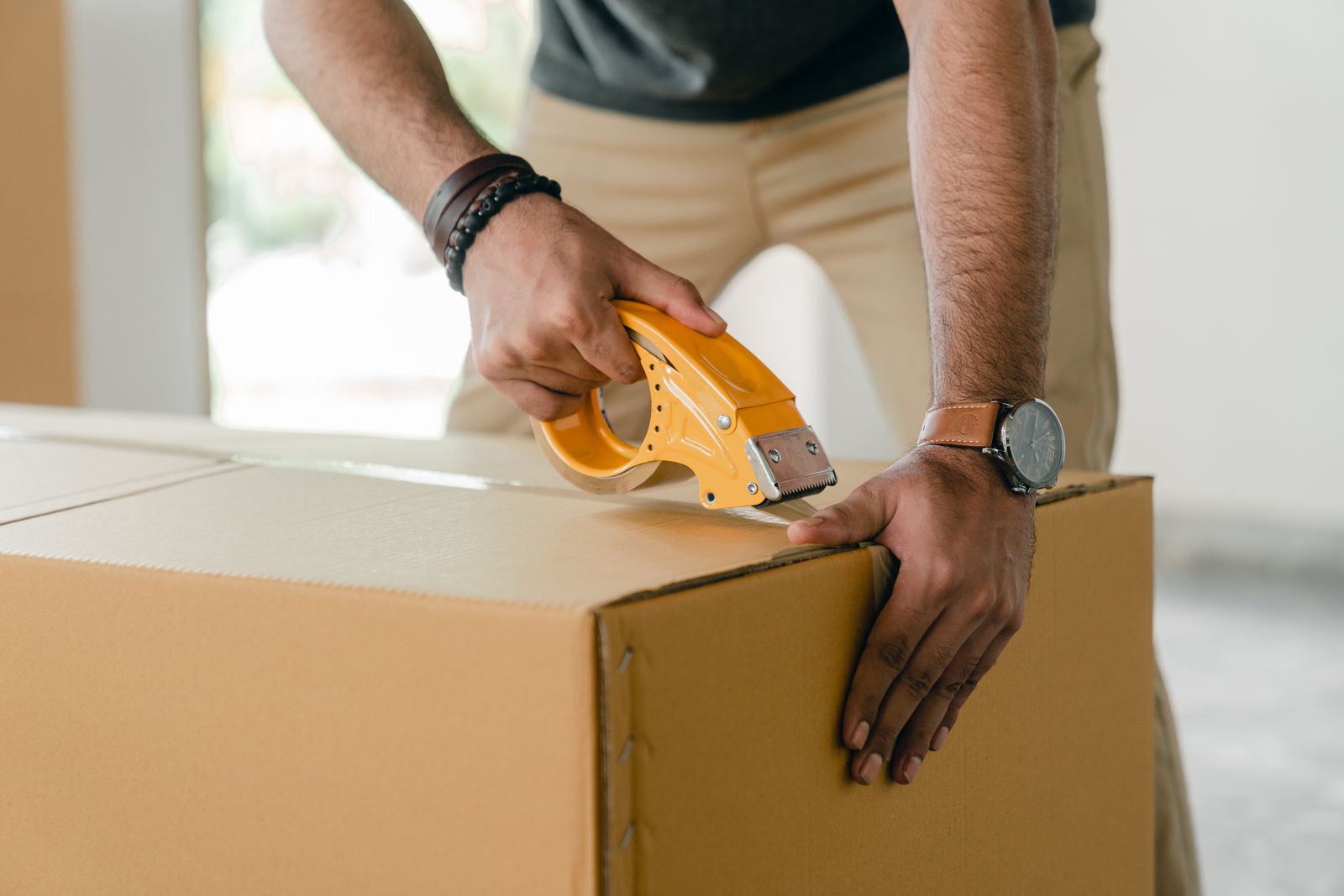
- Photographs via Pexels (Pexels License): taping a box, https://images.pexels.com/photos/4246120/pexels-photo-4246120.jpeg ; packing glassware, https://images.pexels.com/photos/7464230/pexels-photo-7464230.jpeg ; family packing, https://images.pexels.com/photos/4569340/pexels-photo-4569340.jpeg
More guides
- How to Hire a Moving Company That Won't Hold Your Furniture HostageMovers › Moving & Storage
- How Much Do Movers Cost? Local vs. Long-Distance Pricing ExplainedMovers › Moving & Storage
- Binding vs. Non-Binding Estimates: The Difference That Decides Your Final BillMovers › Moving & Storage
- Moving Insurance and Valuation: What 'Full Value Protection' Really CoversMovers › Moving & Storage
- Long-Distance Moving: A Start-to-Finish Guide for Household GoodsMovers › Household Goods Moving & Storage
- All Guides & ArticlesBrowse the full guides library